Thursday, December 29, 2016

Culmina extends its wine portfolio


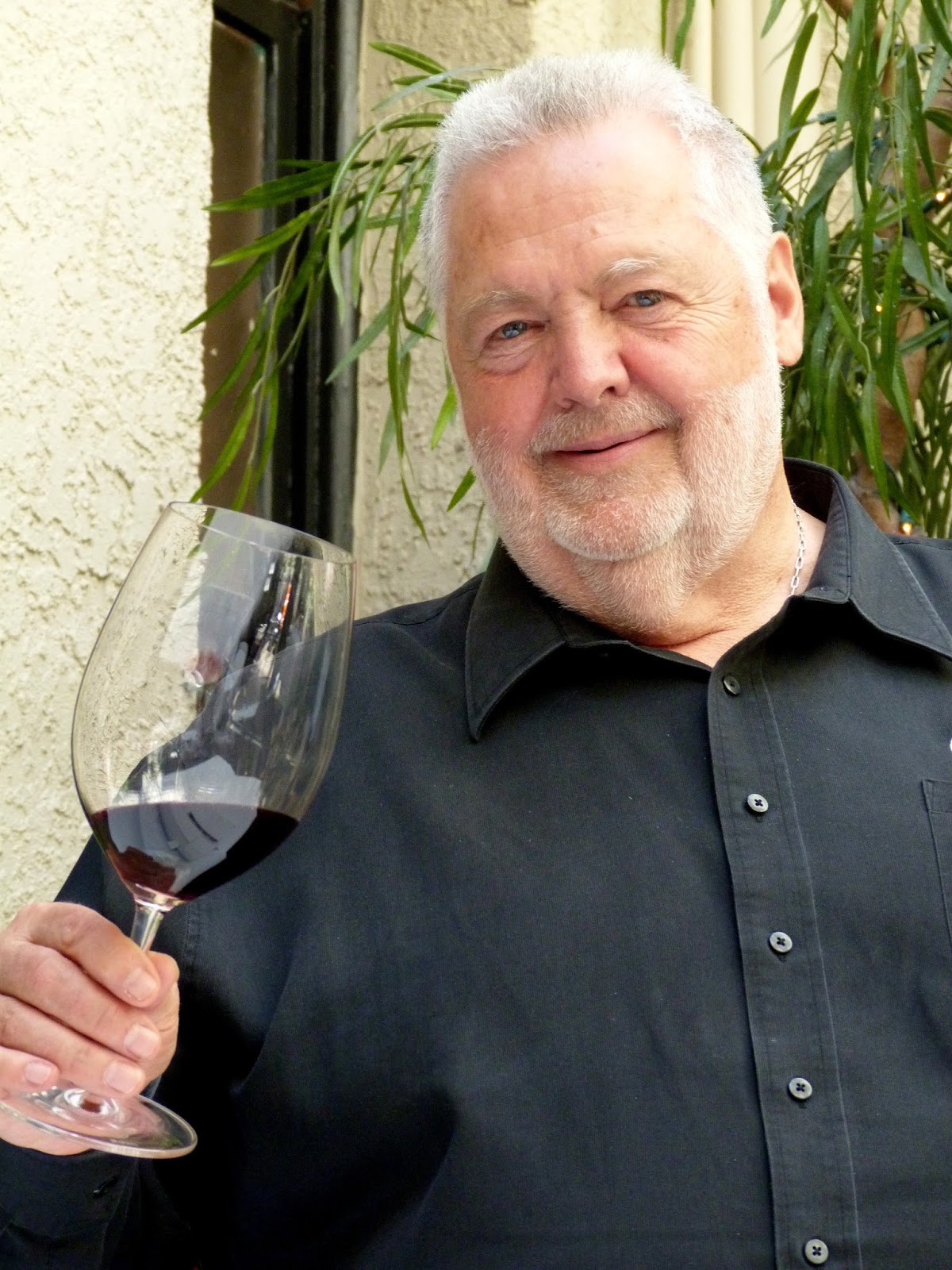
Photo: Winemaker Jean-Marc Enixon

It is a tradition of the Vancouver International Wine Festival that many producers, even though limited to four or five wines in the tasting room, are likely to have an extra wine or two under the table.

The international wineries might be constrained because their wines all come by way of consular privilege. Not every consul will be bothered doing the extra paperwork.

But at the 2017 festival in mid-February, there may be more than the usual number of hidden treats. The theme region is Canada and the Canadian wineries obviously need no consular help to bring an extra wine or two, as long as they navigate the paperwork with the BC Liquor Distribution Branch.

Which brings me to Culmina Family Estate Winery, the Triggs family winery from Oliver, and one of the 60 British Columbia wineries in the festival. The winery will be releasing new vintages, including the 2013 Hypothesis, its flagship Bordeaux red blend. This is just the third vintage of this wine, first made in 2011.

The winery will also show two of the three varietal reds recently added to its portfolio – a Merlot and a Cabernet Franc – plus a few of its excellent whites.

And I am guessing that there might be a few bottles around, unofficially, of the winery’s newest release, the No. 001 Haut-Plateau Riesling 2015. Only 21 cases were made and virtually all was allocated to “Culmina Members” – those who subscribe to the winery’s on-line newsletter.

Culmina, which opened in 2013, began developing its 56-acre vineyard in 2007, with plantings spread over several years. With each year, the vines are maturing and also are more productive. This is enabling the owners, Donald and Elaine Triggs and their daughter Sara, to expand the portfolio at a steady but measured pace.

The winery came to market initially with just Hypothesis, a rosé, and three whites – a Chardonnay, a Riesling and a Grüner Veltliner. In subsequent vintages, Culmina has added two blends: a red and a white under the R&D label. Recently, the winery has begun to release varietals.

(R&D does not mean what you might think; it comes from the initials of Ron and Don Triggs, who happen to be twins. Ron is not in the wine business.)

The Haut-Plateau Riesling is the first of the winery’s so-called numbered series. That series promises to generate exciting wines – the sort of wines that winemakers like to make and that consumers love to taste.

The winery explains the concept this way: “This micro-lot tier showcases specific wines of interest from a given vintage. Intrinsic to the Numbered Series is a lack of continuity vintage to vintage, with each micro-lot assigned its own unique numeral.”

The numbered series are intended to reflect both terroir and innovations in viticulture and in winemaking. “These are wines that we geeked out over in the cellar,” the winery adds.

The grapes for this wine are from “four specially designated rows of Alsatian clone 49 Riesling from Block XI on Margaret’s Bench,” an upper plateau of the Culmina vineyard. The grapes remained on the vines until November 15, 2015, very late in the season. The result is a flavour-packed wine finished with 30 grams of well-balanced residual sugar. The model was an Alsace Grand Cru Riesling.

The opportunity to make wines like this also engages a winemaker’s interest. This wine would have been made by Pascal Madevon, now a winemaking consultant in the Okanagan. When he decided to hang out his shingle early in 2016, Culmina recruited Jean-Marc Enixon who – like Pascal – is French born and trained and who worked (briefly) at Osoyoos Larose Winery.

He was attracted to Culmina by the complexity of the vineyard and the winemaking possibilities flowing from that. “It is one place but with a lot of differences of micro-terroir,” he says. “It is very interesting to have an opportunity in this place, with all these differences.”

He was also attracted by the opportunity to maker white wines, something not done in his previous careers. Osoyoos-Larose also produces just reds and grows no whites in its vineyard.

Jean-Marc was born in 1981 in Charentes, northeast of Bordeaux. “My parents had a chateau on the right bank in Bordeaux, in the Fronsac appellation – Chateau Puy Guilhem.” After he completed his viticultural studies in Toulouse in January, 2005, he took over responsibilities at the château. 

“The estate was 15 hectares,” Jean-Marc says. The vines were primarily Merlot, with modest plantings of Cabernet Sauvignon and Malbec. He ran the château for a decade before selling it in 2014.

“After that, I took some time off with my wife, Audrey, and my son.” Jean-Marc says. He spent a year helping other French winemakers before beginning to look for winemaking opportunities in other countries, including Canada.

“My wife did not want to go to South Africa, or something like that,” Jean-Marc says. “Since she is 15 years old, she has a dream to live in Canada. We were just over 30 years old. We wanted to live in another country; that was a good age to do it.”

Osoyoos Larose was recruiting a new winemaker early in 2016 and that was the opportunity Jean-Marc needed to get to the Okanagan. Six months later, he moved to Culmina. “I came here to make white wine and here I have the opportunity to do it,”  he says.

A recent tasting at the winery gave me a second look at Culmina wines that I have already reviewed (all 90 points or better), along with several newer releases.

The whites include Dilemma (a Chablis-style Chardonnay), Decora (a dry Riesling) and Unicus (the winery’s delicious Grüner Veltliner). Previously-reviewed reds were R&D Red 2014, an accessible blend anchored on Merlot, and Hypothesis 2012, an age-worthy Bordeaux red blend. We also tasted the sold-out rosé, Saignée 2015.

Here are notes on the additions to the portfolio.

R&D White Blend 2015 ($20 for 180 cases). The winery’s first white blend, it is 65% Chardonnay; the remainder of the blend is Riesling, Gewürztraminer, Viognier and a dash of Grüner Veltliner. The result is a dry white with good aromatic aromas and flavours of lychee and apricots. 90.

Culmina Merlot 2013 ($31). The wine begins with aromas of spice and plum. Full-bodied, the wine delivers flavours of black cherry, blueberry and plum. The tannins are ripe but still have grip, suggesting a wine capable to cellaring. 91.

Culmina No. 001 – Haut-Plateau Riesling 2015 ($30 for 21 cases). This is a remarkable wine, beginning with aromas of peach and lychee, leading to rich layers of flavour that include nectarines, apples and lychee. The finish is luscious with a lingering residual sweetness. 95.


Friday, December 23, 2016

Cassini 45 – high calibre reds


 Photo: Adrian Cassini in his barrel cellar


Three red wines released in November by Cassini Cellars showcase the singular house style of this south Okanagan winery: big, ripe and full of bold flavours.

Each of these reds has 15% alcohol. That is at the upper range for Okanagan reds, most of which come in at 13.5% to 14.5% alcohol, if the labels can be believed.

Wineries have a leeway of 0.5% plus or minus. One winemaker who used that leeway to understate a high-alcohol Chardonnay once explained: “Sometimes, when we have to reduce the alcohol, we let the printer do it!”

I am not suggesting that is what Adrian Cassini is doing. If the alcohol levels were higher even than the label states, consumers would notice a bit of heat on the finish. No heat is evident in Adrian’s wines. The wines are so rich and concentrated that they handle the alcohol.

Nor do all of Adrian’s wines pack quite this much power. Other wines on the winery’s website show a range of alcohols between 13.9% (for 2013 Mamma Mia, a white blend) to 14.5% (for a 2013 Cabernet Merlot blend).

It is clear that he set out to deliver the maximum ripe flavours in the three reds that come in at 15%. By low-tonnage production and by hanging the grapes late into the season, he succeeded very well indeed. Production of each wine is limited with Cassini wine club members first in line. The wines are a good argument for joining that club. They can also be ordered directly from the winery.

Adrian’s style recalls the slogan of the Ravenswood Winery of California: “No wimpy wines.” That winery admits to 15.1% alcohol on several of its muscular Zinfandels.

Since Cassini Cellars opened in 2009, Adrian has hosted me to several tastings, including barrel and cellar sampling. I once described his exuberant style as con brio, a musical term loosely defined as “with vigor.” That perfectly describes the three reds reviewed here,  all of which are single vineyard wines.

Here are my notes.

Cassini Cabernet Franc Collector’s Series 2013 ($34 for 295 cases). This wine has five percent Merlot in the blend. The wine begins with aromas of blackberry, black currant and pepper. The aromas are echoed in the flavours, along with black cherry and vanilla. The muscular texture has been polished by aging 24 months in new barrels (80% French, 20% American). 92.

Cassini Nobilus Merlot Collector’s Series 2013 ($40 for 187 cases). The wine, which was aged 24 months in new French oak, begins with appealing aromas of vanilla mingled with black cherry and raspberry jam. On the palate, there are flavours of black cherry, vanilla, cedar and chocolate. The tannins are long and ripe but with grip. This wine will age superbly. 92.   


Cassini The Aristocrat Cabernet Sauvignon 2013 ($40 for 290 cases). This wine was a selection of the best eight barrels of Cabernet Sauvignon in the cellar from a total of 45 barrels. This is a bold, dark-coloured wine, beginning with aromas of cassis, black cherry and vanilla. On the generous palate, there are flavours of figs, dates, black cherry and chocolate framed by spicy oak on the finish. The winery suggests this wine can be cellar to 2025, although it is drinking well already. 93.              

Wednesday, December 21, 2016

The musical wines of Lunessence Winery


Photo: Lunessence winemaker Michal Mosny

Some years ago, I encountered a grand piano in the barrel cellar of a California winery.

The explanation, so I was informed, was that the winemaker liked to play to his wines. I thought my leg was being pulled. But since I have begun visiting Lunessence Winery & Vineyard in Summerland, I think that explanation was true.

Michal Mosny, the general manager and winemaker at Lunessence, plays classical music in the vineyard, in the cellars and in the tasting room. The vines are treated to Bach and Mozart. The red wines get Puccini operas while the whites get Verdi operas.

Michal, who was born in Slovakia in 1982, lives and breathes classical music. “In Slovakia, I had a small garage winery next to a village where Beethoven used to go,” Michal says. “He wrote Für Elise there.”

In 2011, Michal and his wife, Martina, emigrated to the Okanagan. He set up a vineyard management company; that led to him being recruited in 2014 to manage Lunessence and its six-and-a-half-acre vineyard. The property formerly was the Sonoran Estate Winery until it was purchased and rebranded by Zhizhong Si, a China-born environmental consultant who was educated in Canada. He is now based in Vancouver.

Since 2014, the tasting room has been renovated and a new production facility has been built elsewhere on the property. And, of course, speakers have been deployed in some parts of the vineyard.

“There are a lot of studies about how music impacts the plants,” Michal says. “I did a lot of research about it. I think there is something. I can see something in the wines, that they have a different integrity. I think they are happier. With classical music, every single instrument produces some emotions.”

He continues: “When we ferment white wines, usually it is opera we are listening to, to bring some stories into the wines. White wines are usually fermented to Giuseppe Verdi. When the reds come into the cellar, we switch to Puccini. It is fun when you are listening to Puccini and there is some tragedy and you are doing punch downs …”

Michal will concede that it is difficult to prove that wine benefits from good music. But there is no harm in it. Besides, he loves classical music. Those who share his taste will agree that the Lunessence tasting room is one of the most listenable in the Okanagan.

Here are notes on Lunessence wines that I tasted on two different occasions in 2016. Some will now be sold out but the scores suggest the proof of Michal’s theories is in the bottles.

Lunessence Riesling Reserve 2015 ($28 for 100 cases). This wine was fermented to dryness with native yeast. It has aromas and flavours of lemon and lime with a core of minerality, along with racy acidity. This needs to be cellared for several years to reach its peak of aroma and flavour. 91.

Lunessence Chardonnay Reserve 2015 ($28 for 270 cases). Thirty percent of this wine was aged seven months in Slovakian oak, positively impacting the wine’s full texture without taking away from the fruit flavours. The wine is bright and refreshing with flavours of citrus and apple. 90.

Lunessence Sauvignon Blanc Reserve 2015 ($28 for 170 cases). Thirty percent of this wine – which is sold out – was aged in Slovakian oak. The wine begins with spice and tropical fruit aromas, leading to rich flavours of mango and lime. 92.

Lunessence Quartet 2015 ($18 for 800 cases). This is a blend of Riesling, Viognier, Orange Muscat and Gewürztraminer. The wine is an exuberant bowl of fruit, with tropical aromas and flavours and with a finish that won’t quit. 92.

Lunessence Sauvignon Blanc Muscat 2015 ($22 for 330 cases). This wine has aromas and flavours of lime accented by spicy notes from the Muscat. The texture is creamy but the wine has a crisp, dry finish. 91.

Lunessence Pinot Blanc Oraniensteiner 2015 ($20 for 250 cases). This is an unusual but certainly effective blend. Pinot Blanc is a reliable workhorse white while Oraniensteiner is an obscure German white, a 1985 cross of Riesling and Sylvaner, that is grown almost nowhere these days but Canada. The blend here is 70% Oraniensteiner and 30% Pinot Blanc.  The aroma and flavours had me believing the wine was mostly Pinot Blanc. It has aromas of green apples. On the palate the apple flavours are augmented with a dollop of lychee. The delicious finish lingers. 92.

Lunessence Rosé 2015 ($18 for 250 cases). This is 70% Cabernet Franc, 30% Pinot Noir. The wine presents with a pale strawberry hue. It has ar0mas and flavours of strawberry and cherry. This is a juicy rosé with a lingering finish. 90.

Lunessence Merlot 2014 ($28 for 200 cases).  Dark in colour, this wine begins with aromas of black currants, blueberries and cherries. This is echoed on the palate. The wine has long ripe tannins, with a concentrated structure that assures long life in the cellar. Decant this wine for current drinking. 91.

Lunessence Cabernet Sauvignon 2014 ($27 for 330 cases). The wine begins with aromas of cassis and cherry. On the palate, it has ageable firmness of Cabernet, with slight hints of bell pepper mingled with flavours of cassis. There are savoury, spicy notes on the finish. Lay this down for another five years at least. 91.

Lunessence Syrah Late Harvest 2014 ($24 for 150 cases). The wine begins with appealing aromas of black currant jam that seem to promise intense sweetness. Happily, the flavours are moderated by the variety’s hint of pepper on the finish. This turns out to be a very nicely balanced dessert wine with lingering hints of strawberry. If you like a bit of pepper on your few strawberries, this is the wine for you. 92.

Lunessence Pinot Blanc Late Harvest 2014 ($24 for 180 cases). The wine begins with aromas of ripe peach and ripe apple, leading to flavours of pineapple and Mandarin orange. The wine is not overly sweet, retaining the delicious freshness of the variety. 91.

Lunessence Gewürztraminer Icewine 2014 ($58 for 80 cases of 200 ml). The wine presents in the glass with a gold hue and with intense aromas of ripe pineapple mingled with honey and toffee. On the palate, the wine is rich in texture with concentrated flavours of honeyed mango. 90.

Lunessence Riesling Icewine 2014 ($54 for 150 cases of 200 ml). This wine was harvested and pressed at -16C, a figure that translates into a big mouthful of sugar balanced, in this instance, but very bright acidity. The wine has aroma of honey and ripe pineapple, with very rich and intense flavours that mirror the aroma. 92.

Lunessence Merlot Reserve Icewine 2014 ($64 for 80 cases of 200 ml). The wine climbs from the glass with aromas of Ribena. On the palate, it is rich with intense flavours of black currant jam which last and last. 92.


Sunday, December 18, 2016

Blue Mountain wines for your turkey


Holiday meals centering on roast turkey (with mashed potatoes, gravy, cranberry sauce and Brussels sprouts) often challenge wine pairing.

Will it be a white wine because there is a lot of white meat … or a red wine for the dark meat … or a rosé because one size fits all? Although the rosé selection is rather limited at this season.

The latest wines from Blue Mountain Vineyard and Cellars solve the problem. The winery has just released a sophisticated Pinot Gris and a juicy Gamay Noir, both from 2015. The wines are so affordably priced that you and your guests can have a glass (or two) of each.

In our house, we like to explore food and wine pairings. There are so many flavours to deal with in a Christmas or holiday turkey dinner, including the gravy and the stuffing. It calls for wines with bold flavours and good acidity.

For many years, the default varietal on our table at Christmas was Gewürztraminer, ideally from Alsace. These are aromatic dry wines whose spicy flavours stand up to the rich flavours of the holiday table.

When the great Alsace Gewürztraminers priced themselves itself out of this market, a search for a dry Okanagan Goo (as winemakers call the varietal) led us to Arrowleaf Cellars. This Lake Country winery’s very well made Goo sells for just $15.40.

Because a member of my family refused to drink Goo (can you imagine?), we have explored other white varietals, such as Riesling, Chardonnay, Viognier or blends of Rhone varieties. My vote goes to Viognier or Rhone blends because the wines usually are full-flavoured with a hair of tannin for a backbone that helps cut through the gravy.

I would recommend Moon Curser Afraid of the Dark ($21.90), a blend of Viognier, Marsanne and Roussanne; or Lariana Cellars Viognier. Both of these wineries are in Osoyoos, a good terroir for Rhone varieties.

When it comes to reds for the turkey dinner, I don’t think you need the power of, say, Syrah or Meritage. A good Pinot Noir will stand up. Solid Pinots in the $25 range are made by Quails’ Gate Estate Winery and by Meyer Family Vineyards. If you are prepared to shell out the money, both of these producers (and others) have more complex Pinot Noirs in the $45 - $50 range.

I have been digressing. The point of this blog is to direct you to the new releases from Blue Mountain, which should be available in good private wine stores. For example, Everything Wine stocks the Pinot Gris and several other Blue Mountain wines.

The Pinot Gris’s crispness, acidity and flavours seem to me a perfect pairing with white meat of the turkey while the rich and generous flavours of the Gamay Noir can handle the dark meat, the stuffing and the gravy.

Here are notes on the wines.

Blue Mountain Pinot Gris 2015 ($20.90). The winery fermented 60% of this in stainless steel and 40% in barrels. The latter portion remained on the lees for seven months in three-year-old barrels. The two lots were then blended. The barrel portion adds a rich texture to the wine without suppressing the fruit. The wine is crisp with aromas and flavours of pear and citrus. There is a hint of spice and vanilla on the finish. 91.

Blue Mountain Gamay Noir 2015 ($22.90). This wine was fermented with native yeast and was aged 10 months in four-year-old barrels. It begins with aromas of plum and cherry which are echoed on the palate. There are spicy notes on the finish. The wine is remarkable for its seductively silky texture. 90.


Tuesday, December 13, 2016

Evolve bubbles and friends


Photo: Harry McWatters

Perhaps the most famous wine made by Sumac Ridge Estate Winery, which Harry McWatters founded, was Steller’s Jay Brut.

This multiple award-winner was first made in 1987. Over the years, Harry sabered countless bottles of Steller’s Jay. He liked to quip that sparkling wine was what he drank while deciding what wine to have for dinner.

Sumac Ridge eventually was acquired by Constellation Brands.  Harry remained a director for some time until retiring in, memory serves, 2008. Then, his access to Steller’s Jay was limited to wine stores.

Harry did not stay retired all that long, if at all. Now, under a holding company called Encore Vineyards, he manages three brands – Time, McWatters Collection and Evolve Cellars.

This year, Lawrence Buhler, Encore’s winemaker (left), resolved Harry’s need for sparkling wine by making two for the Evolve portfolio.

Sometime next spring, those wines will be required to help celebrate the opening of Harry’s new winery in downtown Penticton.

Initially, Harry had begun to build his new winery on the Sundial Vineyard on Black Sage Road; construction started in 2015 with the pouring of the barrel cellar. As was widely reported earlier this year, Harry accepted an offer for the property and the nascent winery in April, 2016. The new owners will complete the winery this summer, having made 2016 wines for their new label, Phantom Creek Estates. The design is even grander than the one begun by Encore Vineyards.

Ever fleet on his feet, Harry (and the Encore investors) bought a former movie theatre in downtown Penticton last summer. Renovations are ongoing, with plans to open a wine shop in the spring. That’s why Harry needed new sparkling wines (aside from having something to drink before dinner).

I have not been able to find technical specifications for the wines. I am guessing they are fermented in tank, given how long it takes to complete bottle fermenting bubblies. The current vintage of Steller’s Jay is the 2009. This is a wine that, like Champagne, spends four or five years on the lees before being disgorged.

There are other methods of making good sparkling wine, as these two wines demonstrate, that are faster and don’t tie capital as long. By fermenting with encapsulated yeast in the bottle, the winemaker can accelerate the process. There is no need to spend a month or so riddling the bottles. When the yeast has done its work, one simply inverts the bottle to collect the beads of yeast in the neck prior to disgorging.

One can always carbonate a wine but that is done only for the cheapest of sparkling wines. Wines fermented in pressure tanks are much better and the bubbles last longer. Most Prosecco, which has become wildly popular, is made this way. I note that the Evolve wines are priced to compete with Prosecco.

The current releases from the Encore stable include two red Meritage wines and an outstanding Syrah.

Here are notes.

Evolve Pinot Blanc 2015 ($14.99). This wine begins with Granny Smith apple aromas leading to flavours of apples, pears and honeydew melon, with a spine of minerals. The wine has good weight on the palate, with a crisp and dry finish. 88.

Evolve Effervescence NV ($19.99). This is a blend of Pinot Blanc and Chardonnay. The wine has fruity aromas and flavours and presents a display of active bubbles in the glass. The hint of residual sweetness is well balanced, resulting in a refreshing, easy-drinking sparkling wine. 90.

Evolve Pink Effervescence NV ($19.99). This is a blend of Pinot Blanc and Merlot. It is a festive wine in the glass, with a pink blush and with active bubbles. There are toasty and fruity aromas, leading to flavours of strawberry. The bubbles add to the creamy texture. 90.

Time Meritage 2013 ($25.99). This is 39% Merlot, 36% Cabernet Sauvignon and 25% Cabernet Franc, according to the online specification; and 50% Merlot, 30% Cabernet Sauvignon and 20% Cabernet Franc, according to the bottle. It has aromas of black currant, black cherry and cedar, leading to flavours of black currant, plum, fig and espresso. Decanting is recommended if the wine is to be consumed immediately. 92.

McWatter’s Collection Meritage 2013 ($25 for 550 cases). This is 57% Cabernet Sauvignon, 30% Merlot and 13% Cabernet Franc and was aged 15 months in French oak barrels. It begins with aromas of cassis and cedar, leading to layers of flavour – black cherry, plum, fig, espresso and spice – framed by the oak. With Cabernet Sauvignon taking the lead, this is a Meritage for aging. 92.

Time Syrah 2013 ($35 for 200 cases). This is a bold wine and was aged a year in French oak to polish the full-bodied texture. Dark in colour, it begins with aromas that mingle pepper, herbs and deli meats with black cherry. On the palate, there are rich flavours of plum, fig, blackberry, vanilla and spice, punctuated by black pepper. 93.


Monday, December 12, 2016

Nk'Mip: three wines that achieve excellence


Photo: Nk'Mip Cellars


Earlier this year, Nk’Mip Cellars of Osoyoos was named the Canadian Winery of the year at the InterVin International Wine Awards, held this year in St. Catherines.

Winning major awards has become routine for this winery. The first aboriginal-owned winery in North America when it opened in 2002, its is one of the most successful businesses operated by the entrepreneurial Osoyoos Indian Band.

Three recently released reds from the superb 2014 vintage showcase the quality of the wines. The wines – a sold-out Merlot, a Cabernet Sauvignon and a Syrah – are in the winery’s Qwam Qwmt tier. The phrase means “achieving excellence” in the band’s aboriginal language. It was chosen to designate the top tier because the usual term, “reserve,” would not have been meaningful for a winery whose vineyards and operations are literally on the Osoyoos Band’s reserve.

A number of the band’s businesses are, or have been, structured as joint ventures with partners who can bring specialized expertise to the project.

The joint venture partner for Nk’Mip initially was Vincor International, with a 49% interest and an agreement to market the wines. That arrangement is still in place, although the partner today is the Ontario Teachers Pension Fund. This fall, the fund purchased the Canadian wineries originally owned by Vincor and then by Constellation Brands, which had taken over Vincor in 2006.

It appears that Teachers will leave the management, including the marketing staff, in place. When it comes to sales, this is a well-oiled machine that benefits Teachers and, in this instance, the Osoyoos Indian Band.

One of Vincor’s earliest decisions in 2002 was to recruit Randy Picton, (right) a late-blooming winemaker with immense talent.

Born in Yorkton, Saskatchewan, in 1958, he has a business administration diploma from Calgary’s Mount Royal College. After an industry recession derailed his first job in the purchasing department of a lumber company, Randy and his wife, Lynele, ran a Penticton campground and motel. When that business was sold, Randy spent 10 years as a tree planter. “It was extremely physically demanding work,” he recalls. “I decided I should start looking at other options.”

He enrolled in the inaugural winery assistant program at Okanagan University College in 1995. “At the time, what I knew about wine was that it was either white or red.” In April 1996, he joined CedarCreek as a cellar hand. Within five years he was the associate winemaker. On several occasions, he filled in as interim winemaker during staff changes. “We didn’t have anybody else in the cellar,” Randy recalls. “I had to go down and put my boots on and do all that, and then come up and make sure we were getting things done properly in the lab and that the paperwork was being done. It was a good learning experience.”

At CedarCreek, his mentor was winemaker Tom DiBello who handed more and more responsibility to Randy as he gained experience. Randy passed this forward at Nk’Mip by mentoring two aboriginal cellar staff, both of whom started at the bottom, like he did. Both have also flourished.

Osoyoos Indian Band member Justin Hall, now the assistant winemaker, asked Randy for a job after he completed high school. He was soon cleaning barrels and doing the other unromantic work necessary before great wines are made. As he added to his winemaking qualifications – including a diploma in enology and viticulture from Lincoln College in New Zealand - Justin was given more responsibilities in the winery.

Aaron Crey, a member of the Cheam Indian Band in the Fraser Valley, also started cleaning barrels (along with other jobs at the Spirit Ridge Resort). He has since completed the Lincoln University program and is now the cellar supervisor.

Personnel practices are just part of the explanation behind the consistency of the Nk’Mip wines. The winery sources grapes from several premium sites, including the vineyard around the winery and the legendary Inkameep Vineyards near Oliver. The latter is one the oldest, if not the oldest, vinifera planting in the Okanagan.

Combine talented winemaking, good grapes and a well-equipped winery and you should get good wines.

Here are notes on three. All of them have been aged 18 months primarily in French oak barrels.

Nk’Mip Qwam Qwmt Merlot 2014 (Sold out but likely available in restaurants and private wine stores). This begins with aromas of blackberry, black currants and vanilla, leading to bold flavours of black cherry, figs and a touch of vanilla. 92.

Nk’Mip Qwam Qwmt Cabernet Sauvignon 2014 ($30.49 plus tax). The wine begins with aromas of black currants and blueberry with a touch of spice and cedar. On the palate, there are flavours of cassis, black cherry and vanilla. The texture is polished, with long ripe tannins. This is a wine for cellaring until 2024. 91.

Nk’Mip Qwam Qwmt Syrah 2014 ($30.49 plus tax). This wine announces itself with aromas of black pepper and plum that are echoed in the complex, layered flavours of black cherry, leather and deli meat spices. The body is full and generous, with a long finish. 92.


Sunday, December 11, 2016

Painted Rock Cabernet Franc 2014


Since classic Bordeaux varietals were planted in the Okanagan after 1993, Cabernet Franc usually has lived in the shadow of Merlot and Cabernet Sauvignon.

Arguably, its bright brambly flavours have been at the heart of many good Meritage blends.

In recent years, the variety’s profile has been on the rise, and for good reason. In the Okanagan, the variety performs better than Cabernet Sauvignon (unless the latter is grown on an exceptional site).

Painted Rock’s vineyard is one of those top sites. Located on a bench overlooking Skaha Lake, its west-facing slope benefits from the sun from mid-morning to late in the day. All the Bordeaux varieties do well there, as does Chardonnay and Syrah.

This post is limited just to the winery’s Cabernet Franc 2014, a recent release and a wine I would recommend if you want to give a special bottle to a wine-loving friend. Painted Rock wines are available in many private wine stores.

The first thing in its favour is the vintage, the best in the Okanagan since Bordeaux grapes were planted. That is not just my opinion. Anyone who has tasted the 2014 reds knows these are among the most balanced and elegant wines ever made here.

Here is how Painted Rock describes the vintage:

“The 2014 growing year was an exceptional one; the temperatures were hot but consistent, leading to well balanced and beautifully ripe fruit. September cooled nicely to slow the sugar development while the flavours and tannin continued to develop and the bright acidity was retained. This has gone down as a “textbook Okanagan vintage” and the first of which that Painted Rock has seen.

Painted Rock’s first vintage was 2007, not a bad year either. But nothing like 2014.

As an aside, the 2015 and 2016 vintages have also been very good. Leave room in your cellar for some wines from those vintages. But go heavy on the 2014 reds now while they are available.

Here is my note on the wine.

Painted Rock Cabernet Franc 2014 ($44.99 for 438 cases). This wine was aged 18 months in French oak (30% new). It begins with rich, intense aromas of smoky black cherry and vanilla. The oak subtly frames the flavours of plum, black currant, black cherry and coffee. The finish is long, with hints of dark fruit and chocolate. The ripe tannins still have some grip, suggesting the wine will age well for a decade. Decant it is you want to drink it now. 92.