Thursday, May 12, 2016

Class of 2015: Ciao Bella Winery


Photo: The Fiume family (l to r): Antonio, Roberto, Olivia and Sharon

Ciao Bella Winery
3252 Glencoe Road
West Kelowna, BC, V4T 1M2
T: 778.754.3443

The Italian heritage of this winery, which opened last fall, is expressed even in the winery’s “unofficial mascot,” in the phrase of co-proprietor Roberto Fiume (with his wife, Sharon). It is his sports car, a 1977 Alfa Romeo Spider.

The heritage also informs the style of the wines and the labels: Pinot Nero for Pinot Noir and Pinot Grigio for Pinot Gris.

Among Okanagan wineries, Roberto is better known as Robert Fiume, the partner in Kelowna-based Capri Insurance Agencies. There he has developed the insurance coverage that many wineries have taken to protect their assets.

Roberto was born in 1969 in Yellowknife. It is perhaps an improbable locale in which to develop a passion for wine. Roberto inherited the passion from his parents, Luigi and Melina, who immigrated to Canada in 1956 from the Naples region of Italy. Luigi spent the next 25 years working in the Con gold mine, a Yellowknife landmark in production from 1938 to 2003.

“In Yellowknife, the Italians there would get together and get grapes shipped up,” Roberto recalls. “We grew up making wine in Yellowknife. There was this big chunk of bedrock under our house. In one side, my dad dug it out and made his wine cellar.”

When Luigi finished his career at the Con, he and Melina opened Luigi’s Pizzeria and Deli, still remembered fondly by Yellowknife oldtimers. They sold the business in 1956 to move to the Okanagan (the pizzeria is still in business under different ownership, as Bruno’s Pizza).

Luigi and Melina moved their family because, as Roberto puts it, “30 years in the North was enough. It was time to move to warmer climes!” They settled in the Okanagan because it “reminded them so much of their homeland. The fact it was, and still is, a fruit basket greatly appealed to them.”

Roberto completed his education in Kelowna with an Okanagan College diploma in business management that set him on the path to become a partner in the insurance agency in 2001. In parallel with that, he also became a grape grower.

The family settled on property in West Kelowna’s Glencoe district in 1983, buying a property four years later across the road that was the area’s original vineyard. With the help of his family, Roberto pulled out the hybrid vines in 1989. He began replanting in 2000 with Pinot Noir. Currently, he grows five acres of Pinot Noir and he has just added a quarter acre of Pinot Gris.

“I put every post in the vineyard and I dug every hole,” Roberto says proudly.

Until he decided to produce wine under his own label, Roberto sold his grapes to other wineries, notably to Arrowleaf Cellars. The first vintage, just three wines from 2014, are now available in Ciao Bella’s charming tasting room. For those bringing a picnic, the Fiume family has provided comfortable and shaded seating, including a table that doubles as a chess board. It is a game enjoyed by Roberto and his 15-year-old son, Antonio.

Ciao Bella’s wines – the Pinot Grigio is made with purchased grapes - are made by Jim Faulkner, the veteran winemaker at Mt. Boucherie Estate Winery. Jim developed an interest in wine during years he spent managing night clubs. He started his winemaking career in the cellar at CedarCreek Estate Winery, moved to Summerhill and then Church & State before joining Mt. Boucherie in 2009.

The style of the wines emerged from Roberto’s desire to mirror his interpretation of Italian wine. “We tried to keep it true to the Italian style,” he says. “Italian wines keep a bit of their fruit but they can also be dry at the same time. That is what I asked Jim to make.”

Ciao Bella has come out of the gate with award-winning wines. The Pinot Rosé won silver in the BC Wine Awards.

The 2014 Pinot Nero, which was released in February this year after aging 12 ½ months in French oak, now has an impressive award: Best of Varietal Pinot Noir at the Okanagan Spring Wine Festival.

The Ciao Bella labels also do homage to Roberto’s heritage by employing original and very charming photographs of his parents in their youth in Italy just before emigrating.

Here are notes on the wines.

Ciao Bella Pinot Grigio 2014 ($16.95). The wine is clean and fresh with aromas and flavours of pear and apple. There is a buttery note on the finish, without taking anything away from the fruity elegance. 88.

Ciao Bella Rosé 2014 ($17.95). The vibrant hue and the abundance of fruity aromas and flavours come from giving the juice 48 hours contact with the crushed Pinot Noir. There is cherry and strawberry on the nose and on the palate. The finish is crisp and dry. 90.

Ciao Bella Pinot Nero 2014 ($19.95). The comparatively light colour is deceiving. This wine is full on the palate, with silky tannins. It has flavours of strawberry with a surprising hint of chocolate on the finish – probably reflecting the four new oak barrels that the winery used along with first-use French oak. Bottom line: this is a very pretty wine. 90.


Wednesday, May 11, 2016

Maverick releases Ella Brut Rose


Photo: Maverick's Bertus Albertyn 

This spring, Maverick Estate Winery has celebrated the release of its first sparkling wine by inviting consumers and wine club members to brunches at the winery.

What better meal for a sparkling wine than brunch? Unless it is breakfast, lunch, afternoon tea, dinner, midnight snacks or coffee breaks.

Did I tell you I like sparking wine?

The wine is called Ella. It is named for one of the daughters of Bertus Albertyn, the winemaker and co-proprietor of Maverick, along with his father-in-law, Dr. Schalk De Witt, and their wives.

A 1976 medical graduate from Stellenbosch University, Schalk brought his family to Canada in 1990.  As he drove through the southern Okanagan on the way to a locum’s posting in Castlegar, the terrain appealed to him immediately. “Even the natural vegetation – the sagebrush and the antelope brush – reminded me of the drier areas of South Africa,” he says. Toward the end of a long career in general practice in Alberta, he began searching for vineyard property. In 2006 he purchased 19.4 hectares (48 acres) of raw land adjacent to the Osoyoos Larose vineyard near Osoyoos. Three years later, he purchased a former organic farm beside Highway 97.

The fortunate arrival of Bertus into the family, when he married Elzaan, the doctor’s daughter, set the development of this winery in motion.  Bertus has an enology degree from Stellenbosch University, South Africa’s leading wine school. He started at a large wine cooperative before joining family-owned Avondale Winery in 1994 as winemaker.  He came to the Okanagan early in 2009 when his wife, who had also become a doctor, began to practice in Osoyoos.

Bertus was the winemaker at Burrowing Owl from 2010 until mid-2013, when he left to concentrate on Maverick, where he had planted 7 ½ acres of vines in the highway-side vineyard in 2011. Maverick’s attractive wine shop opened in 2014. The larger parcel of land has been prepared for planting over several seasons. “When Bertus came into the picture, obviously, that was the way to go,” Schalk says. “There is more profit in making wine than in selling grapes.”

The winery has developed an amazingly broad portfolio, given that Bertus has just 7 ½ acres growing Pinot Noir, Shiraz, Sauvignon Blanc and a little Chardonnay.

“We have put the diversity of what we can grow in the Okanagan to the test, going from Port to Champagne on the same property!” Bertus says.

Here are notes on the wines.

Maverick Ella Brut Rose 2013 ($35 for 500 cases). The traditional method sparkling wine is 80% Pinot Noir and 20% Chardonnay. The winery says the Pinot Noir brings lingering flavours and a delicate blush hue to the wine while the Chardonnay brings fruit and elegance. This certainly is an elegant wine, with a creamy and fresh texture and just the slightest hint of yeast mingled with the fruity flavours. 91.


Maverick Chardonnay 2014 ($26.50 for 150 cases). The only complaint with this wine is that not enough was made! It begins with refreshing aromas of citrus and lightly toasted oak. The tropical fruit flavours are intense: peach, mango, blood orange coat the palate, very subtly supported by oak. (The wine was fermented in new French oak -Nevers – and aged there six months before being transferred to stainless steel for four months). The hint of oak adds a note of spice on the buttery finish. 92.

Monday, May 9, 2016

Tinhorn Creek adds an impressive reserve Chardonnay


Photo: Tinhorn Creek winery


The spring releases from Tinhorn Creek Vineyards cover the changing of the guard at this 23-year-old winery in the south Okanagan.

Two of the wines were made by long-time winemaker, and now president, Sandra Oldfield. The other four were made by the new winemaker (in the 2014 vintage), Andrew Windsor. Sandra has left the cellar in a blaze of glory while Andrew has arrived in one. This is as smooth a winemaking transition as any winery could wish.

Established in 1993 by a partnership headed by Alberta oilman Bob Shaunessy, Tinhorn Creek now produces about 40,000 cases a year, compared with 1,200 cases in its first vintage (which was 1994).

During its history, Tinhorn Creek has managed to position itself at the front of a number of parades. In 2004, it was one of the first Okanagan wineries to switch from corks to screwcaps. In 2007, it became a carbon neutral winery. In 2014, Tinhorn Creek was one of the wineries leading the drive to create the Golden Mile Bench viticultural area, the Okanagan’s first designated viticultural area.

Dedicated to environmental issues, the winery in 2014 finished replacing its overhead irrigation system with drip irrigation, a move saving about 70% in water use. After the last two seasons, no one can doubt how important that is.

In its notes on the vintage, the winery describes 2015 as “another hot vintage … a record early harvest. … We had bud burst a month earlier than average and that led to a lot of work in the vineyard in the spring to keep up with the rapid of the vines. The vines were enjoying the heat as we cycled through flowering, berry formation and veraison at record pace.”

The commentary continues: “It was a challenging vintage for whites as the grape sugars were accumulating rapidly. We had to pick many blocks either at the same time or within the same week. Typically, we like to stagger picks to get more complexity. But the wines have impeccable balance and freshness.”

I was, in fact, impressed with the freshness of the 2015 Pinot Gris and the 2015 Rosé. The Gewürztraminer, while still up to Tinhorn Creek’s usual standards, had the plumpness and the roundness I would have expected for that variety in a hot year.

Here are my notes.

Tinhorn Creek Pinot Gris 2015 ($17.49 for 7,535 cases). The wine begins with a fresh, floral aroma mingled with hints of citrus and peach. Flavours of pear, honeydew melon and pink grapefruit around a spine of good minerality coat the palate. The finish is crisp and dry. 91.

Tinhorn Creek Gewürztraminer 2015 Golden Mile Bench ($15.99 for 4,321 cases). The wine begins with a medley of tropical fruit aromas including lychee, mango and peach. The palate is juicy, with a touch of residual sweetness to lift all the tropical fruit flavours. 89.

Tinhorn Creek Oldfield Series Chardonnay 2014 Golden Mile Bench ($34.99 for 339 cases). This is the winery's first reserve Chardonnay. This was fermented with indigenous yeast in new French oak barrels. Subsequently, half was aged in oak, half in stainless steel barrels. The wine begins with aromas of lightly toasted oak mingled with buttery citrus. The weight on the palate is generous, with flavours of lemon, orange zest and biscotti. The balance between fruit and oak is close to perfect: the fruit is flattered by the oak, not covered by it. The finish is dry, with a lingering rich flavour of marmalade. 93.

Tinhorn Creek Oldfield Series Rosé 2015 ($19.99 for 810 cases). This wine appeals immediately in the glass with its rose petal hue. The wine is 100% Cabernet Franc. The grapes were picked about 4 am, to arrive cool at the winery, and had about 12 hours skin contact before being pressed. This wine begins with aromas of strawberry, orange and mint. On the palate, there are flavours of watermelon and strawberry, lifted by a very tiny hint of residual sweetness. The lingering finish, however, is balanced to dryness. This is a superb rosé, whether with food or consumed on its own on the patio. 92.


Tinhorn Creek Pinot Noir 2013 ($21.49 for 2,541 cases). Deep in colour for a Pinot, this wine begins with aromas of cherries and savoury herbs. Silky on the palate, the wine delivers flavours of cherry and strawberry with a suggestion of black tea on the finish. The wine delivers a lot of complexity for the price. 90.

Tinhorn Creek Oldfield Series Pinot Noir 2012 ($31.99 for 1,050 cases). Both of the winery’s Pinot Noirs clearly have benefitted from the Burgundian detail that has gone into making them. This wine is dark in color, with a glorious aroma of cherry and toasty oak. The texture is every so silky; and the wine delivers flavours of cherries and red berries modified by a toasty, savoury spice. The wine benefitted greatly from a year in oak and three years in bottle before release. The finish is long. Bottom line: an elegant wine with good aging potential. 93.


Saturday, May 7, 2016

Naramata Bench: 14 kilometers jammed with wineries


Photo: Naramata Bench vineyards

The concentration of wineries along the Naramata Bench is astonishing, given the limited geography.

The distance from Upper Bench Winery at the south end to Bella Wines at the north is a mere 13.9 km. Coolshanagh Wines, which has no wine shop, is a few kilometers further north.

This short but scenic road includes all 27 members of the Naramata Bench Wineries Association as well as 10 or so wineries not in the association.

Oliver used to (and perhaps still does) advertise itself as the wine capital of Canada. But there are more wineries along Naramata Road and tributary streets (divided between two municipalities). It is a magnet for wine tourists.

This has happened in a comparatively short time. Lang Vineyards and Hillside Estate Winery, which opened in 1990, were the first wineries on the Bench. Nichol Vineyard opened in 1993. Kettle Valley Vineyards, which this year celebrates the 25th anniversary of planting vineyards, and Lake Breeze Vineyards both opened in 1996. And so on until the numbers we find today.

And there are more to come! Little Engine Wines has its winery under construction just south of the Red Rooster Winery on Naramata Road. The intent is to open the tasting room by July 1. I will do a separate blog shortly but I have already tasted the wines and the quality is spectacular.

At least once a year, the Naramata Bench member wineries come to the major metropolitan markets to tantalize customers with samples of the wines waiting when they come touring. Here are my notes from the recent Vancouver tasting – at least from the tables I was able to get to before the tasting ended.

Black Widow Winery is marking its 10th year as a winery. It began when Dick and Shona Lancaster, then living in the lower mainland, bought a small Naramata vineyard in 2000 as a “summer place.” Dick already was an accomplished home winemaker. It was only natural that, on retiring as a vice-president of a stucco manufacturer, Dick now became a professional winemaker. The winery produced a total of 2,800 cases in 2015.

Black Widow Pinot Gris 2015 ($21 for 560 cases). In the hot 2015 vintage, these grapes were picked in early September when the flavours had developed but before the acid had dropped too far. Long cool fermentation preserved the freshness of this wine, which is crisp and dry, with flavours of citrus, apple and pear. 90.

Black Widow Gewürztraminer 2015 ($22 for 220 cases). Classically spicy, the wine also has aromas of lychee and grapefruit, leading to a medley of tropical fruit flavours and a dry finish. 90.

Black Widow Oasis 2015 ($22 for 340 cases). A blend of Pinot Gris, Gewürztraminer, and Schönburger, this fruity and spicy wine, with flavours of melons and peaches, is finished slightly off-dry. The winery characterizes it as “ideal for summer patios and lighter meals.” 90.

Black Widow Schönburger 2015 ($27 for 95 cases). This wine has luscious tropical fruit aromas and flavours mingled with Muscat spice on the slightly off-dry finish. 91.

Black Widow Muscat 2015 ($25 for 180 cases). While it seems superfluous to have a Muscat Ottonel in a portfolio that already has Schönburger, Dick has found a good source at a nearby Naramata vineyard. This is Black Widow’s second release. The wine is also lush and tropical, with an appealing floral aroma and irresistible sweet fruit on the palate. 91.

Black Widow Rosé 2015 ($23 for 55 cases). This is 60% Syrah, supported with Merlot, Cabernet Sauvignon and Viognier. It is a juicy-textured wine with cherry and strawberry aromas and flavours. The fruit flavours are sweet on the palate but the finish is crisp and dry. 91.

Black Widow Sparkling Rosé ($24 for 75 cases). The blend is similar to the still rosé. The difference is the carbonation which gives the wine a Prosecco-style frizzante finish. There are aromas and flavours of strawberry and raspberry. The bubbles give this dry wine a lively personality. 90.

Black Widow Phobia 2014 ($27 for 315 cases). This is 50% Syrah and 50% Merlot. It is a bold, ripe wine with 15.2% alcohol but with so much fruit that there is no heat on the finish. The wine has aromas of cloves and plum, with flavours of plum, black cherry and pepper. The texture is generous and the finish goes on and on. 93.

Black Widow Red Back 2014 ($32 for 170 cases). This is 50% Cabernet Sauvignon, 30% Merlot and 20% Syrah, all Naramata Bench fruit. The dark, brooding wine spent 18 months in barrel, mostly French oak, which polished the long, ripe tannins. The wine has flavours of black currant and fig with a hint of dark chocolate on the finish. The texture portends good ageability. 92.

Black Widow Single Vineyard Merlot 2013 ($30 for 120 cases). This unfiltered Merlot is bold and ripe, with aromas of cassis and flavours of black cherry and plum.  The wine was aged 21 months in oak, with the result that there is a hint of toasty oak on the nose. 90.

Black Widow Hourglass 2013 ($42 for 160 cases; some magnums and double magnums are also available). This is the winery’s flagship Bordeaux blend; the wine has developed a following among collectors. This is 70% Merlot, 30% Cabernet Sauvignon. This is a complex wine, aged 21 months in French oak and not fined or filtered. It begins with berry and cassis aromas, leading to flavours of  plum, black cherry and black currant. 91-93.

Black Widow Vintage One 2013 ($23 for 375 ml; production 80 cases of 24 bottles). This Port-style wine is Merlot fortified to 19.2% alcohol and aged 21 months in French oak. Full on the palate, this medium-dry wine has aromas and flavours of spice, plum and fig. 90.

Black Widow Mirage 2014 ($18 for 200 ml; production 88 cases). This is a fortified and barrel-aged Muscat Ottonel, with aromas and flavours of apricot. The finish is medium dry. 92.

Deep Roots Winery opened in 2014. The winery name reflects the deep roots that Bryan Hardman and his family have on the Naramata Bench. Bryan’s grandfather came here in 1919 after four years of military service, working initially with pioneer fruit grower Carl Aikins who once owned about 250 hectares (600 acres). A long-time apple grower, Bryan planted two hectares (five acres) of grapes in 1996 “just to see if I liked it.” He has expanded vineyard acreage considerably since then, especially when his son, Will, decided to become the winemaker at Deep Roots.

Deep Roots Chardonnay 2015 ($22). This unoaked Chardonnay showcases the complex fruitiness this variety can have. The wine has aromas of melon and cantaloupe, with flavours of apple and stone fruit. 89.

Deep Roots Pinot Gris 2014 ($19). This wine’s off-dry palate gives it a rich, mouth-filling texture. There are aromas and flavours of pear, apple and citrus, with spice and pineapple on the finish. 90.

Deep Roots Gamay 2015 ($24). The winery is developing a following for its full-flavoured Gamay. The winemaker macerates the grapes for six days, ferments slowly for 11 days and ages 80% of this wine in French oak for five months. I assume the oak is neutral because the only evidence is in the rich and supple texture of a wine that is redolent with cherry flavours. 90.

Deep Roots Merlot 2014 ($26). This is a full-bodied Merlot with berry aromas and flavours of plum and black cherry and with firm tannins, giving the wine ability to age well. 90.

Deep Roots Malbec 2014 ($28). This is a dense, almost chewy with floral and berry aromas, and with flavours of plum and blackberry. The wine was aged 18 months in French oak. 91.

Deep Roots Syrah 2014 ($34). Bold and full, this wine has aromas and flavours of plum, black cherry and deli spices. There is black pepper on the nose and on the finish. 91.


Kettle Valley Winery’s owners, Bob Ferguson and Tim Watts, have rarely met a grape variety that they did not ferment to produce wines ranging from iconoclastic to superb. The portfolio is remarkably big for a moderately-sized winery. After 25 years, they show no sign of becoming bored with exploring varieties. “We have a small block – a quarter of an acre – of Petit Syrah – from which we will get fruit this year,” Bob told me.
Kettle Valley Pinot Gris 2014 ($24). This Pinot Gris (along with that from Nichol Vineyard) is singular for its deep colour and intense fruity flavours. That results from give the grapes prolonged skin contact (two days) to extract colour and flavour. A portion is fermented in older French oak, adding to the structure. 90.

Kettle Valley Sémillon Sauvignon Blanc 2012 ($24 for 306 cases).  A portion of this was also fermented in older French oak, adding to the wine’s richness and complexity. It begins with grassy and herbal aromas, leading to flavours of lime and grapefruit. 91.

Kettle Valley Chardonnay 2014 ($22 for 495 cases). The grapes for this wine are from a grower in the Similkameen Valley. This is an elegant Chardonnay, with aromas and flavours of citrus and apple against a buttery background from partial ferment in older French barrels. 90

Kettle Valley Riesling 2012 ($26). This is the sort of Riesling you might encounter along the Rhine: nine per cent alcohol, with 25 grams of residual sugar balanced with nine grams of acidity. The flavours of lemon mingle with petrol aromas and flavours. 91.

Kettle Valley Pinot Noir Reserve 2012 ($38 for 215 cases). Robust and ripe – the winery’s style – this wine has intense, almost stewed plum and cherry flavours. The unapologetic oak on the palate reflects 20 months of barrel aging in French oak. 90.

Kettle Valley Malbec 2010 ($38 for 339 cases). This is a wine with intense dark fruit on the nose and the palate around a spine of flinty minerality. 90.

Kettle Valley Great Northern Vineyards Syrah 2012 ($24). Great Northern is the label developed for wines from Kettle Valley’s own vineyard in the Similkameen. This is a big, ripe wine with aromas of plum and prune and flavours of plum and fig. The texture is rich and generous. 90.

Kettle Valley Great Northern Vineyards Zinfandel 2013 ($24). Bright and brambly, this wine has a bold texture and aromas and spicy flavours of very ripe blackberries. 90.


Lake Breeze is releasing several wines this year to mark its 20th anniversary. The winery was founded by a South African businessman who brought along Garron Elmes, a newly graduated winemaker. Lake Breeze has had several ownership changes since but Garron – now the winery’s president as well as winemaker – has kept the ship stable and the wines reliable.

Lake Breeze The Spice Jar 2015 ($18.90). This is a blend of Gewürztraminer (45%), Ehrenfelser (30%), Schönburger (15%), Viognier (10%) that winemaker Garron Elmes created a few years ago to take a step beyond the usual Gewürztraminer common in many portfolios. The wine has the spice and the citrus of the aromatic varietals along with the spine of the Viognier. The wine finishes crisply and cleanly. 90.

Lake Breeze Sauvignon Blanc 2015 ($21.90). This wine begins with aromas of citrus with a hint of spice. On the palate, the flavours are intense, with notes of lime and tropical fruits mingled with delicate herbal notes. The finish is zesty and tangy. 91.

Lake Breeze Pinot Gris 2015 ($19.90). The wine has aromas and flavours of pear, apple and peach, with a satisfying fleshy mid-palate but a good crisp finish. 90.

Lake Breeze Rosé 2014 ($18.90). This wine is 65% Pinot Noir, 35% Merlot. The wine has aromas and rich flavours recalling a delicious red berry jam. The finish, however, is dry. 89.

Lake Breeze Pinot Noir 2012 ($25.90). Dark in colour, the wine has aromas of cherry and strawberry, with flavours of cherry and plum. The texture still is firm, suggesting ability to age for several more years. 90.

Lake Breeze Meritage 2013 ($21.90). All the fruit in this wine is from the Naramata Bench. It is a blend of Merlot (45%), Cabernet Franc (30%), Cabernet Sauvignon (20%), Malbec (5%). The wine has the structure and good tannins recalling a Bordeaux red. It has aromas and flavours of black currants and plum. 90.

Therapy Vineyards opened in 2005 when a group of investors purchased the former Red Rooster winery on Debeck Road after Red Rooster moved to its grandly designed winery on Naramata Road. Subsequently, the owners of Therapy found room on their site to build a grand winery and tasting room as well.

Therapy Fizziotherapy Blanc 2014 ($19.99). This frizzante style is right in the wheelhouse of Prosecco fans, but will different grapes. The blend is 91% Chardonnay, 9% Orange Muscat. The bubbles result from carbonating the wine in tank about three weeks before bottling. The wine is refreshing and crisp, with an appealing touch of spice and flavours of apples and citrus. 88.

Therapy Freudian Sip 2015 ($16.99 for 2,038 cases). This is a blend of 43% Pinot Gris, 30% Riesling, 20% Sauvignon Blanc, 4% Chardonnay and 3% Viognier. The wine is finished with a touch of residual sweetness nicely balanced with bright acidity. The wine has a medley of tropical fruit flavours. 90.

Therapy Sauvignon Blanc 2015 ($18.99). This is a tangy wine with herbal aroma and flavour notes mingled with grassy lime flavours. Think Sancerre. 89.

Therapy Freud’s Ego 2013 ($18.99 for 1,850 cases). This is a blend of 70% Merlot, 25% Cabernet Sauvignon and 5% Cabernet Franc. It has been aged 24 months in French and American oak barrels but still retains a good firm structure. It has aromas and flavours of black currant with toasty oak and dark chocolate on the finish. 89.

Three Sisters Winery is a new Naramata Bench winery. The winery is at the end of a narrow, winding road (Todd Road) in a valley that is hidden from Naramata Road. As a result, there is no tasting room. However, owner John Lawrence has acquired the property of the now-closed Stable Door Winery. When he re-licenses that property, a Three Sisters wine shop will open on Munson Road, just before it becomes Naramata Road.

Three Sisters Bench White 2014 ($17.90). This is a quaffable blend of Pinot Gris, Gewürztraminer and Riesling. It is juicy with flavours of apples, mango and guava. The finish is slightly off-dry. 90.

Three Sisters Riesling 2014 ($17.90). This is a crisp and lean with, with aromas and flavours of lemon and with a spine of minerality. 88.

Three Sisters Chardonnay ($19.90). The 20 months this wine aged in American oak have give a fairly bold oak profile to mingle with the flavours of citrus and apple. 88.

Three Sisters Rosé 2015 ($19.90). Here is a bowl full of cherries – a cheerful, mouth-filling summer wine. 90.

Three Sisters Bench Red 2013 ($19.90). This is a blend of 70% Merlot and 30% Cabernet Franc, aged 18 months in barrel. It has aromas and flavours of black currants and blackberries, with a texture that is firm but rich. 88.

Terravista Vineyards is the Naramata Bench encore by Bob and Senka Tennant, former owners of Black Hills Estate Winery. The Terravista portfolio is dedicated just to white wines, including two Spanish varieties, Albariño and Verdejo, from the estate vineyard, and Rhone whites from the south Okanagan.  

Terravista Fandango 2014 ($24.90). This is the blend of the two Spanish whites. It is a fresh and juicy wine with aromas and flavours of lemon, honeydew melon, peach and apple. The finish is long. 91.

Terravista Figaro 2014 ($23.90). This is a blend of Marsanne, Roussanne and Viognier. It begins with herbal aromatics and delivers stone fruit flavours with a hint of hazelnut. The finish is dry and austerely crisp. 91.

Terravista Viognier 2014 ($18.90). Crisp and firm, this wine has aromas of apricot and flavours of apricot, melon and lime, with a nice spine of minerals. 90.

Van Westen Vineyards was opened near Naramata in 2005 by Robert Van Westen, a member of a family that also grows incredible cherries. The winery is in a former fruit packing house. The tastings here are informal and friendly. All of the wines have names starting with V.

Van Westen Vino Grigio 2014 ($19.90 for 325 cases). This is Rob’s take on Pinot Gris – a crisply refreshing white with aromas and flavours of apple, pear and lemon. 90.

Van Westen Vivacious 2014 ($19.90 for 524 cases). This is Pinot Blanc, usually with a dash of Pinot Gris. It begins with aromas of apples and green melon, delivering flavours of apple, pear and citrus. 90.

Van Westen Viognier 2014 ($24.90 f0r 174 cases). This is a textbook Viognier, beginning with aromas of apricot. On the palate, there are flavours of apricot and orange with a not of spice and ginger on the crisp finish. 91.

Van Westen Vixen 2014 ($19.90 for 73 cases). This is a spectacular late harvest wine (70% Pinot Blanc, 30% Pinot Gris) touched with botrytis. The wine begins with honeyed aromas of fruit mingling with sweet tobacco. On the palate, there are intense flavours of ripe pear and mango. The sweet finish is very well balanced with acidity, creating a finish that lasts and lasts. 92.

Van Westen Vicicle 2014 ($24.90 for 200 ml; 195 cases produced). Lush and tropical, this wine has aromas and flavours of marmalade, along with a medley of flavours that include baked pear and baked apples. 88.

Van Westen/Dibello Pinot Noir 2014 ($39.90 for 134 cases). This wine is a collaboration between Rob and his friend, winemaker Tom DiBello. Tom’s fingerprints are here with the fairly bold oak aromas. They mingle with strawberry and raspberry aromas and flavours. The palate is firm but evolving toward a silky texture. 89.

Van Westen Violeta 2012 ($34.90 for 92 cases). This is a Malbec. Full-bodied, it has aromas of blueberry and vanilla and delivers flavours of blueberry, plum, and blackberry with spice on the finish. 91.

Van Westen Vivre la Vie 2012 ($29.90 for 113 cases). This is Rob’s Merlot – a wine with a concentrated texture that frames the rich flavours of plum, black cherry and black currant. 92.

Van Westen Voluptuous 2012 ($29.90 for 341 cases). One of the winery’s flagship reds, this has always been a field blend of 67% Merlot and 33% Cabernet Franc. It has aromas and flavours of cassis, plum, black olives, dark chocolate and black coffee. On the finish, there is a note of spice and sage. 92.

Van Westen V 2011 ($34.90 for 426 cases). This is 49% Merlot, 24% Malbec, 21% Cabernet Franc, 4% Cabernet Sauvignon and 2% Petit Verdot. The wine is intense and complex, with aromas and flavours of black currant, black olives, dark chocolate and sage. Not yet at its peak, this is a wine that will cellar well for at least 10 years. 93.

Van Westen Vulture 2012 ($39.90 for 76 cases). This is Rob’s Cabernet Franc. It begins with aromas of raspberry, black cherry and plum and delivers flavours of spice, black currant, raspberry and milk chocolate.  92.


Wednesday, May 4, 2016

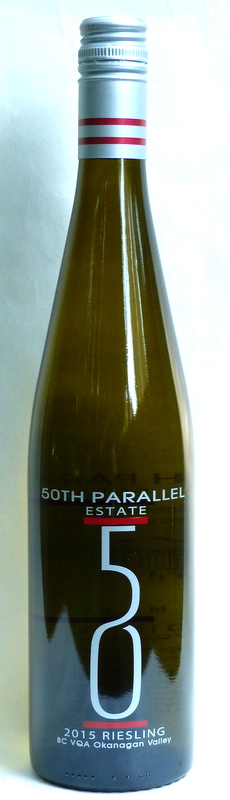
50th Parallel raises profile of Central Okanagan


Photo: 50th Parallel Winemaker Grant Stanley

The challenge to 50th Parallel Estate’s winemakers – Grant Stanley and his assistant, Matthew Fortuna – is to make wines as grand as this destination winery.

The latest releases indicate that they are holding up their end.

The winery is owned primarily by Curtis Krouzel and Sheri-Lee Turner-Krouzel. Grant became a partner when he joined 50th Parallel three years ago.

He works in a gleaming new gravity-fed winery 10,000 square feet in size, backing onto a 61-acre vineyard. An expanded hospitality centre to open next year completes the spectacular architecture on this property. The owners had to built a destination winery because 50th Parallel might strike some wine tourists as being off the beaten path.

In fact, it is not. It is an easy 15 minutes from either Vernon or from Kelowna International Airport. 50th Parallel is one of six wineries in Lake Country – six and counting. A seventh winery, O’Rourke Family Vineyards, is under construction not far from 50th Parallel, with plans to open a tasting room next year.

The 50th Parallel winery was designed primarily with Pinot Noir in mind. The gentle handling that grape requires is quite appropriate for the rest of its portfolio: aromatic whites and Chardonnay.

In 2015, Grant and his team had to deal with the same conditions that faced their peers further south in the Okanagan, but also missed some.

“Further south, the Okanagan Valley experienced long periods of degraded air quality with intense smoke and ash particles heavy in the air from late July to the middle of August,” 50th Parallel said in a comment on the vintage. “The smoke was created by massive forest fires in Washington State and near Oliver and Osoyoos. 50th Parallel vineyards were very fortunate, however, as our Central Okanagan vineyard location is directly north of the fire zone by over 100 kilometres. This distance, combined with favourable wind directions and a later harvest period, saved our fruit from being immersed in the smoke and from any effects of smoke taint.”

As I read that, it occurred to me that was last year. There have been serious forest fires in the North and Central Okanagan in the past. One hopes it will not happen again but the trees in the hills above the vineyards get tinder dry in these unusually hot summers.

The heat also has its benefits. “The long, hot and dry summer [of 2015] created healthy and disease-free growing conditions for the entire season,” the winery’s commentary continues. “The resulting harvest was early … Fruit was disease-free and nearly perfect in appearance from all vineyards and the cluster weights were 15% lower than what was expected.

“The lower yield can be attributed to the drought-like growing conditions that lowered the residual water volume of the actual grapes. This resulted in fabulous and intense ripe flavour concentrations in the berries, and an excellent natural balance of acid and sugars.”

Here are notes on the wines. Two are from 2014, also a solid vintage.

50th Parallel Gewürztraminer 2015 ($19 for 1,814 cases). The style here is off-dry and crowd pleasing. The wine begins with bold spicy aromas. On the palate, there are flavours of pink grapefruit and quince. The 12 grams of residual sugar contributes to a juicy texture and an easy drinkability. 90.

50th Parallel Pinot Gris 2015 ($19 for 3,100 cases). This wine begins with aromas of citrus and peach. On the palate, the wine is rich and presents a medley of fruit, including peaches, pears and fresh figs. 91.

50th Parallel Riesling 2015 ($19 for 498 cases). This wine begins with aromas of lemon and lime, leading to flavours of lemon, lychee and nectarine. A touch of botrytis adds a note of honey and sweet fruit to the palate. The texture is juicy, in part thanks to 10 grams of residual sugar. However, the sweetness has been nicely balanced with bright acidity. 90.

50th Parallel Chardonnay 2014 ($32). This wine begins aromas of with peach and citrus set against toasty oak notes. It presents a medley of tropical flavours with a lingering note of tangerine and butter on the palate. In a word: delicious. 91.

50th Parallel Pinot Noir Rosé 2015 ($19 for 820 cases). Delicate rose petal in hue, this wine has aromas of strawberry and flavours of strawberry and cherry. 88.

50th Parallel Pinot Noir 2014($29 for 3,194 cases; plus 190 magnums). This elegant wine begins with aromas of spiced cherry and strawberry, fruit that is echoed on the silky palate. The flavours are supported by toasty oak. The finish lingers. 92.


Monday, May 2, 2016

JoieFarm's Heidi Noble conquers 2015


Photo: JoieFarm's Heidi Noble

As a rising number of 2015 wines are being released, the vintage is gaining acclaim for having produced big ripe wines full of flavour.

Some might argue that 2014 was an even stronger vintage. The growing season was not quite as hot and the wines perhaps were more naturally balanced. As it happens, there are still plenty of 2014 whites in the market and the superb 2014 reds are just starting to be released. There is plenty of opportunity to taste and compare.

The 2015s just released by JoieFarm Wines – wines from the earliest harvest on record - certainly are as strong as any of the winery’s previous vintages. Proprietor and winemaker Heidi Noble notes that the wines “were made naturally – they were not acidulated, their alcohols are natural, they were not diluted.” That is quite an accomplishment in a year when winemakers had to scramble to pick and ferment the rapidly maturing grapes before acid dropped too much or potential alcohol was too high.

It was a particularly difficult for Heidi. “2015 vintage was the most challenging vintage of my winemaking career,” she writes in her commentary on the season. “It was early, it was hot, it was big.”

Several events combined to make it tough. “I was tired, had separated from my husband and business partner of 14 years, and I had bought our winery (about to produce its twelfth vintage),” she writes.

During that spring, she released the 2014 vintage, restructured JoieFarm and renovated the farm house to create the winery’s first public tasting room. She and her staff dealt with enthusiastic crowds of visitors, drawn by the wines and by the wood-fired pizzas.

Shortly before vintage, both her long-time winemaker and her lead cellar hand left JoieFarm to work at other wineries. Then an early avalanche of grapes began arriving.

“As exhausted as I was while simultaneously full of adrenaline,” Heidi writes, “by a stroke of deeper universal energies that I never knew existed, I threw it into 5th gear for the umpteenth time. Moved by the passion to make wine, and with everything to prove, I put my head down and my five feet of terror went into winemaking ‘beast mode’.”

I happened to drop in at the JoieFarm crush pad on the first day of the 2015 vintage. I can attest that Heidi looked a little tired. However, the remaining staff in the winery and the tasting room rallied around their leader.

“For fifty-right days, we gracefully, as a unified team, took down 230 tons of the ripest, most phenolically mature and tasty grapes I had ever experienced while continuing to welcome guests to the farm well into October,” Heidi writes.

“It was a perfect vintage if you were on your game,” she continues. “We performed multiple picks on the same sites: picking for acid, picking for flavour, picking for complexity. I co-fermented, I blended, I did everything in my power and used every arrow in my winemaking quiver to deal with the potential hazards of a hot, early vintage.”

Anyone who tastes these wine will agree that they are, as Heidi puts it, “the product of one lady and her new team who took on the challenge of a difficult vintage and won.”

Here are my notes on the wines.

JoieFarm A Noble Blend 2015 ($23.90 for 6,000 cases plus 320 kegs and 120 1.5 litre magnums). This aromatic but dry white is a blend of 47% Gewürztraminer, 32% Riesling, 10% Auxerrois, 8% Pinot Blanc, 2% Muscat and 1% Schönburger. While the wine has seven grams of residual sugar, that is nicely balanced with 8.7 grams of acidity. The result is a wine that begins with lifted aromas of fruit and spice. On the palate, there are flavours of citrus, green apple, melon, melon and lychee with a lingering finish of herbs and spice. 91.

JoieFarm Muscat 2015 ($22.90 for 460 cases).  The floral and spicy Muscat aromas jump from the glass. On the palate, the lemon and lime flavours are made more intense by the slight residual sweetness, which is nicely balanced with refreshing acidity. The finish is fresh and juicy and quite persistent. This remarkable wine is the perfect aperitif. Pairing it with food is always an option but I would suggest that these pure flavours are best enjoyed on their own. 92.


JoieFarm Unoaked Chardonnay 2015 ($22.90 for 600 cases). This wine begins with aromas of citrus and pineapple leading to flavours of apple. The wine has good weight with a backbone of minerals. There is an elusive mildly bitter note on the dry finish. 90.


JoieFarm Pinot Blanc 2015 ($22.90 for 560 cases). This fresh, racy wine begins with an appealing aroma of apple and apple peelings mingled with a hint of banana. On the palate, there is a vibrant tension between the fruit and the acidity. The wine has flavours of green apple and grapefruit, with a juicy refreshing crispness on the finish. 92.


JoieFarm Rosé 2015 ($20.90 for 3,200 cases). A blend of 70% Pinot Noir and 30% Gamay, this wine has grown in 10 years to be one of British Columbia’s best-selling rosé wines. For a start, the light strawberry colour is appealing in the glass. The wine has aromas of strawberry and raspberry. Those fruits, along with tangy cherry and cranberry, are reflected on the palate. Crisp and dry, this is a rosé for picnics and lunches all summer long. 90.

Saturday, April 30, 2016

Class of 2016: Kitsch Okanagan Valley Wines


Photo: Trent and Ria Kitsch with the next generation


Kitsch Okanagan Valley Wines
3330 Nied Road
Kelowna BC V1W 4H5
T. 778.821.1955

This winery, which opened its tasting room in late April with some of the best debut wines from a new producer, owes much to an innovative brand of men’s underwear.  

The winery is owned by Trent and Ria Kitsch, members of a family that has been in the Okanagan for almost 100 years, prominent in construction and housing development. The owners, both Kelowna natives, bring a youthful energy to the wine business. Trent was born in 1979; Ria, who went to the same high school, was born three years later.

Tall and athletic, Trent was drafted from high school by the Colorado Rockies baseball team. That enabled him to play minor league ball in the United States while going to college on a scholarship. Deciding he had a better future in business than baseball, he finished his education at the elite Ivey School of Business at the University of Western Ontario.

He considered going into the construction business with his father but first decided to develop an idea that had come to him in 2006 from his experience as a ball player. The design of men’s underwear had been static and the garments were not as comfortable as they could be. So with the help of a clothing designer, he developed what is now known as the SAXX brand.

“I helped him build the business,” says Ria, who has a business degree from the University of British Columbia Okanagan. She topped that up with business studies in Austria (including wine appreciation in Krems). After backpacking in South America, she returned to Kelowna. She met Trent – he had not known her in high school – and was impressed with his entrepreneurial ambition.

“I thought it was ambitious to go after a whole category that hadn’t changed,” Ria says. “With my business background, he suggested we could do that together. That sounded crazy but I had nothing else to do. I was going to go to graduate school but instead, I did a practical graduate school.”

They set out to build SAXX together, sometimes with unconventional marketing. “We hustled hard,” Ria says. “We did things guerilla style – opening a van door on the side of Robson street to tell people about SAXX and trying to sell for cash; kind of ambushing the Vancouver Marathon; different things to get noticed but stay on budget, which was minimal.”

By 2010, the brand had been established and was poised to grow internationally.

“We had an exit strategy,” Ria says. “For us it was essential that if it was going to be big, it get into the hands of people that could make it big, because that wasn’t us. We needed to prove the concept – that men would buy it and rebuy it at the price we valued it at. $25 a pair is expensive for underwear. So we sold [the company] and that allowed us to pursue our Okanagan dream of planting grape vines and starting the winery.”

As interim step, they established a home building company. One of the houses constructed by that venture for a Kitsch family member looks over the 12.7-acre vineyard that was planted in 2013 and 2014. The three-car garage attached to the baronial home has been converted into a winery and tasting room.

The winery and vineyard occupies a plateau in northeast Kelowna, with a panoramic view to the south over the city. Okanagan Lake stretches into the distance almost to Peachland.

“We were lucky in having some great soil to plant and people in the industry helping us to understand what to plant,” Ria says. They reached out for advice to another old Okanagan family, the Stewarts of Quails’ Gate Estate Winery. That winery’s viticulturist offered valuable guidance on planting the four varieties now in the Kitsch vineyard.

The largest planting is Riesling, about five acres in two blocks. The other varieties are Chardonnay, Pinot Gris and Pinot Noir.

For their winemaker in 2015, Trent and Ria recruited Grant Biggs, (right) who had spent the previous two years working at at Tantalus Vineyards. Before that, he had been an assistant winemaker at Mt. Boucherie Vineyards, had done a crush with a large New Zealand winemaker, and had enrolled in the distance learning program from the University of California at Davis.

Grant was born in 1983 in Port Alberni. He honed an early appreciation of wine while working in Victoria restaurants, where he took a professional sommelier course.

“My grandfather, I think, is the reason by I pursued a career in wine,” Grant says, referring to Italian-born Elio Navé. “He used to order grapes from California – Zinfandel and Muscat – and we would make wine in the basement together when I was growing up. I associated the fondest memories with the foods that grandma was cooking and the wine that my grandpa was drinking.” He adds that his grandmother is French.

“Baby Duck was my gateway wine,” Grant laughs. “Coming from a French and Italian family, 19 was a number. It wasn’t the legal drinking age. So on New Year’s Eve, I would get my little thimble of Baby Duck. I think I was 11 when I wanted more.”

His appreciation of wine has grown considerably since then. “I look at wine as a form of art,” he says – in a tasting room where art is prominent on the walls. “I know wine is a blend of science and art, but to me it is a beautiful piece of art.”

 “We have art here that is in our collection,” Ria says. “These are a little more contemporary in nature, a little more like street art. Our music is a little bit more soft electronic. We are just trying to be true to who we are without having any type of gimmick. We are here to fuse things that don’t go together all the time, like youthfulness and sophistication, or refinement but still approachability in our wines. That’s why we think people might be interested. It is pretty authentic. Hand-touched, small-batch, single-vineyard-bottled.”

Grant is remarkably meticulous in making wine. The vineyard’s two blocks of Riesling, planted in 2013, are about 100 metres apart in elevation. The grapes were picked on separate dates and were fermented separately, with differing techniques.

“The juice from one of the blocks was really clean,” Grant says. “I settled it really hard and did not take a lot of the lees into ferment. With the other block, I took a lot of lees and had a really heavy solids ferment. I used five different fermentation vessels [a pair of 2,000-litre stainless steel tanks, a neutral oak barrel and two glass carboys “just for fun”]. I think the barrel ferment adds a little bit to the body. I used VL1, a Chardonnay yeast, for the barrel ferment. I used a couple of nice aromatic yeasts for the two tank ferments.”

The Chardonnay grapes  were the first to be picked last fall in the Kitsch vineyard, on September 3, an early pick necessary to maintain the acidity in a hot vintage. Grant’s model was a wine with the freshness of Chablis, not with the boldness of what he calls a “California fruit bomb.”

“It was fermented in French oak; 40% was second fill and 60% was neutral,” Grant says. “I was hoping to achieve a gateway to Chardonnay. I did not want to mask the youthfulness of the fruit.” The wine had 50 days in barrel, with several lees stirrings and was then racked into stainless steel, with a blast of CO2 to keep the lees in suspension. “I wanted it to be more of a texture driven wine with a good backbone of acid, without going through malolactic fermentation.”

The Pinot Gris and the Pinot Noir were made with fruit from a young vineyard in Lake Country. Grant deliberately sourced grapes from a young vineyard to avoid the contrast in style that would have occurred if he had used mature vines prior to fermenting the first harvest from the young Kitsch vineyard.

The other strategy here is to make single vineyard vines with grapes just from the north Okanagan – north of the Bennett Bridge, Grant says.

“I don’t want to source fruit from the south,” Grant says. “From here on, if there is any fruit to be had, it will all be from the north Okanagan. And that fruit will go into a single vineyard wine as well. I would never take that and put it in with any of our fruit. You need to feel that sense of place from our property.”

In 2015, the first vintage for Kitsch, the winery produced about 1,000 cases of wine, including 250 cases of Pinot Noir still in barrel.

“Very small batch; very special,” Ria says. “Every bottle is hand numbered and initialled by Grant.”

“We only made 12,000 bottles this year,” Grant says. “It was a casual evening job.”

Here are notes on the wines.

Kitsch Pinot Gris 2015 ($19 for 178 cases). Two-thirds of the grapes for this wines had 20 hours of cold soaking on the skins to bolster texture and flavour. The wine begins with aromas of citrus and pears. On the palate there are flavours of pear and ripe apple with a hint of anise on the finish. The texture is full and juicy, but with a clean, refreshing finish. 92.

Kitsch Chardonnay 2015 ($20 for 202 cases). This barrel-fermented wine begins with a lightly gold colour in the glass and with aromas of citrus and apple. On the palate, there is a medley of fruit ranging from melon to apple to pineapple and lemon. There is a very subtle note of oak on the finish. Good acidity gives this wine a bright and lively finish. 92.

Kitsch Riesling 2015 ($22 for 392 cases). This wine begins with aromas of lemon and lime, echoed on the palate. The flavours are surprisingly concentrated for fruit from young vines, with a vibrant tension created by balancing nine grams of acidity with 15.4 grams of residual sugar. This is good Riesling terroir because the young vines also contributed a spine of minerality. 92.

Kitsch Pinot Noir 2015 (barrel sample). While this wine likely will spend several more months in barrel, it already has a silky texture. There are aromas and flavours of cherry with a hint of toasty oak on the finish. This is a pretty Pinot Noir in a style sometimes referred to as “feminine.” 90-91.