Sunday, August 14, 2022

Lakeside Cellars has authentic Provençal rosé

Photo: Lakeside's Ricky Dhaliwal
Many wineries speak of making a Provençal rosé but the rosé just released by Lakeside Cellars in Osoyoos is close to authentic. It is made with Cinsault, a variety that Lakeside’s Ricky Dhaliwal planted after tasting rosé wines made with that variety in Provence. He now has about two and a half acres here.
Lakeside Cellars opened in 2019 on an historic property that Ricky’s parents, orchardists Harbans and Harkesh Dhaliwal, had purchased in 2015. The 14-acre property once was the homestead of Judge J.C. Haynes, the first customs agent and a major rancher in the South Okanagan. The elegant 10-room house he built for his family in 1882 had fallen into disrepair by the time the Dhaliwals began developing the winery. Timbers salvaged from the house have been used in the new wine shop and tasting room. There were Cabernet Sauvignon and Sauvignon Blanc vines, planted in 1998 and 1999, already growing here. Ricky expanded the plantings to include Merlot, Cabernet Franc, Syrah, and Malbec, and, of course, Cinsault and, more recently, Orange Muscat.
Ricky, who was born in 1990, developed his interest in viticulture just after high school, when his parents began converting orchards to vineyards. “Some years ago, I took a winery assistant course in Penticton,” he told me several years ago. “I had just turned 19. I was into grape growing but I wasn’t totally into winemaking yet, so I didn’t finish the course. I started the course in January but when March rolled around and the vineyard work picked up, I stopped going to class. But I came back and did the viticulture course.” Lakeside’s initial vintages, totaling around 4,000 cases a year, were made under the guidance of Jason Parkes, a consulting winemaker from West Kelowna. Because Ricky is ambitious to grow the winery, Lakeside hired a fulltime winemaker last year. She is Paula Cooper, an Okanagan native and previously the winemaker at C.C. Jentsch Cellars until that winery closed in August 2021 (after the death of the owner).
While he enjoys making wine, Ricky has decided to focus on viticulture. Ricky’s objective is to raise Lakeside’s production over the next several years to about 10,000 cases. He has access to grapes from four vineyards, including the estate vineyard, totaling 35 acres. What is called the Desert Valley Vineyard on the Golden Mile grows Merlot and Cabernet Franc. Recently, Ricky added Malbec and Carménère. In another nearby Golden Mile vineyard, he grows Pinot Noir, Pinot Meunier, Syrah and Semillon. Ricky also leases a vineyard on Black Sage Road from which he plans to produce a reserve quality Syrah.
Here are notes on current releases.
Lakeside Cellars Lakeshore Vineyard Bubbles 2021 ($21.65). This is zesty carbonated sparkling wine made with Sauvignon Blanc grapes. There are aromas and flavours of lemon and lime. The finish is crisp and refreshing. 90.
Lakeside Cellars Sauvignon Blanc 2021 ($24). This wine nods more to the New Zealand style, with aromas and flavours of lime and lemon mingled with herbs. The wine is crisp and fresh with a long finish. 91.
Lakeside Cellars Portage White 2021 ($21). This is a blend of 53% Sauvignon Blanc, 31% Chardonnay and 16% Pinot Gris. It begins with aromas of citrus and peach, leading to flavours of peach, apple and apricot. The texture is fleshy but the finish is dry. 91.
Lakeside Cellars Rosé 2021 ($22). This is made with Cinsault grapes. The hue is pale rose petals. There are aromas and flavours of strawberry and raspberry with an herbal note on the nose. 90.
Lakeside Cellars Portage Red 2018 ($23). This is 43% Merlot, 36% Cabernet Franc and 21% Cabernet Sauvignon. The wine aged 24 months in neutral French oak. The wine has a hint of oak on the nose mingled with dark cherry and black currant. The dark berries are echoed on the palate along with a touch of chocolate. The tannins are long and ripe. 90.
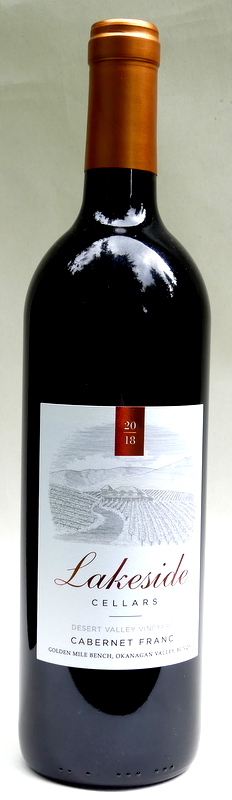
Lakeside Cellars Cabernet Franc 2018 ($29). While this was also aged 24 months in neutral oak, the classic brambleberry aromas of Cabernet Franc jump from the glass. On the palate, there are flavours of cherry and blackberry. 92.

Thursday, August 11, 2022

Culmina leads the Grüner Veltliner parade

Photo: Culmina founder Donald Triggs
Year in and year out, one of the best wines from Culmina Family Estate Winery is a white called Unicus. It is made with Grüner Veltliner grapes. Culmina founder Donald Triggs (who sold the winery to Arterra Wines a few years ago) called the wine Unicus because his winery was the first in the Okanagan to plant that grape. The wine is a star in Culmina's very solid portfolio.
I encountered wines made from the Grüner Veltliner grape during several wine touring visits to Austria in the late 1990s and early 2000s. There, and in neighbouring wine regions in central Europe, it is usually the major white wine varietal. Grapes that would thrive in Austria’s continental vineyards, I reasoned, would also do well in the Okanagan – but no one at that time had planted Grüner Veltliner here. Since more that 100 varietals flourish in the valley, why was Grüner Veltliner a latecomer? When I put that question to the late Lloyd Schmidt when he was still one of Canada’s major vine importers, he replied that he had no source of virus-free Grüner. That surprised me. Austria has a long tradition of viticulture that there surely had to be a source of vines. Fortunately, Grüner vines were brought to California, cleaned up by the University of California at Davis and turned over to several plant nurseries. Culmina and other British Columbia producers have been able to source virus-free wines from California, or from France, where nurseries also now provide virus-free vines. Culmina was the first to plant it in 2011, and released the first vintage in 2013. There are 2.3 acres of Grüner Veltliner on Margaret’s Bench, the highest-elevation vineyard (at 600 meters) on the property.
“We did as much research as we could about the variety,” Donald told me in a 2012 interview. “We talked to Karl Kaiser [the Austrian-born co-founder of Inniskillin Wines in Niagara] about it. They had it at Inniskillin. They ended up taking it out because they needed the space for a parking lot. He said it was very winder hardy. Research from Austria shows that it produces spectacular wines on schisty mountain soils and wine that is not quite as exciting when planted on heavier lowland soils.”
Another enthusiast for Grüner Veltliner was the late Adrian Baker, the founding viticulturalist and winemaker at O’Rourke Family Vineyards in Lake Country. He planted two acres about 2012. The result was so successful that, as he told me later, he increased the Grüner Veltliner plot to 10 acres. So far, the wine has been released under the sister label, O’Rourke Peak Cellars.
Fort Berens Estate Winery in Lillooet is another British Columbia producer of Grüner Veltliner. “Our history with Grüner goes back to 2010, when we saw that our newly planted vineyard suffered some damage through the Thanksgiving frosts of 2009,” recounts Rolf de Bruin of Fort Berens. “We particularly had some issues with the more tender Merlot that was planted in sand. We worked out a plan to do some interplanting in 2011. As many Merlot vineyards suffered damage, this varietal was particularly hard to come by. Looking at alternatives, our eye fell on Grüner Veltliner. Reading up on the variety and its origins, we immediately saw some similarities in terroir.”
He continues: “Grüner does particularly well on the steep north facing slopes along the Donau west of Vienna. While winters can be cold, the heat in the summer on these slopes can be really hot. The mountains lining the Donau also create cooler drafts in the evenings, creating large diurnal temperatures, which is particularly important for Grüner as it tends to lose acidity quickly. With that in mind, we ordered 25 plants in 2011. Later we learned that the availability of Grüner Veltliner was because Don Triggs had ordered a larger number for his Culmina vineyard. We planted the 25 Gruner plants in a Merlot block to fill some holes in the worst and coldest possible spots.”
The varietal thrived in Lillooet, as it had already thrived in the high-elevation location at Culmina’s vineyard on the Golden Mile. “After a few vintages, when we were working on our plans to plant Red Rock vineyard, Grüner Veltiner become the top choice for a small block we created for a small lot wine,” Rolf says. “We opted to plant just under an acre.” Small blocks like that may be more typical that the O’Rourke planting. Mohan Gill of Bordertown Vineyards in Osoyoos planted slightly more than an acre in 2012, sourcing his vines from a French nursery. Winemaker’s Cut’s Michal Mosny has a small block that, he says, originated in his native Slovakia. Bartier Bros. sources fruit for its wine from a vineyard in the North Okanagan.
The varietal seems to react to the terroir differently here than in Austria. There, one of the most typical characters of the wine was an intriguing note of white pepper. That seems not always typical of British Columbia Grüner Veltliners, with the exception of the O’Rourke example. Culmina’s Unicus has always been an elegant serving of tropical fruits. The Fort Berens Grüner, from the estate vineyard in Lillooet, is more herbal but also delivers a lot of fruit. Perhaps the grapes get riper here than in Austria, enabling the wines to be fruitier. Clearly, it is a varietal that does very well here. Culmina’s winemaker, J-M Enixon, makes a superb example – and does very well with the rest of the portfolio.
Here are notes on the wines.
Culmina Unicus 2021 ($30). This is 100% Grüner Veltliner. The aromas are brimming with pineapple, banana and other tropical fruits. On the palate, there is a basket of tropical fruits including pineapple and mango. Mid-palate, there is honeyed texture. 93.
Culmina Decora 2020 ($23). This is a Riesling. It begins with aromas of lemon, echoed on the palate. Bright acidity is well balanced. This is a sophisticated Riesling. 92
Culmina Viognier 2021 ($34). This is a refined wine, beginning with aromas of stone fruits. On the palate, there are flavours of apricot and green apple. The lean texture suggests this wine will benefit from another year of bottle age. 92.
Culmina Dilemma 2018 ($35). This is Chardonnay. It was aged in both oak and stainless steel, with only a third allowed to go through malolactic fermentation. There are complex aromas of apple, green tomato and spice. On the palate, there are flavours of grapefruit peel and apple mingled with stone fruits and oak. 91.
Culmina N◦ 018 Süsser Riesling 2021 ($32). This is a dessert wine. It was fermented in stainless steel, with fermentation stopped when sugar and alcohol were in balance. The wine has 10.2% alcohol and 54.88 grams of residual sugar per litre. It is a honeyed wine with flavours recalling lemon meringue pie. This will be released exclusively at the winery this fall. 91
Culmina Malbec 2019 ($42). This wine, which was aged in French oak (25% new), begins with notes of black cherry, black currant and a whiff of pepper. The palate is generous with dark fruits and the intriguing, if unexpected, note of pepper. 91.
Culmina Cabernet Sauvignon 2018 ($45). This wine begins with an appealing aroma of spicy cherry and black currant. The palate delivers brooding dark fruits mingled with oak (the wine was aged in French oak, 25% new). The texture still has grip, suggesting this is a wine that can be aged several more years. Decant it for current consumption. 92.
Culmina Hypothesis 2017 ($50). This wine is a blend of 43% Cabernet Sauvignon, 21% Merlot, 20% Cabernet Franc, 10% Malbec and 6% Petit Verdot. It has been aged in French oak (31% new, 20% one-year old and 49% neutral). The aromas mingle spice, oak, cassis and cherry. The palate delivers layers of dark fruit. The finish is long and harmonious. 94.

Monday, August 8, 2022

Fort Berens's new winemaker shines in his first Canadian vintage

Fort Berens Winemaker Alex Nel
Founded in 2009 by Dutch immigrants Heleen Pannekoek and Rolf de Bruin, Fort Berens Estate Winery in Lillooet has become one of British Columbia’s most successful wineries. How successful? It was one of more than 250 wineries competing in the 2022 WineAlign National Wine Awards. Fort Berens was judged #3 among Canada’s top 10 small wineries, bringing home one platinum medal, three gold medals and two silver medals. Several of those wines are among the six reviewed here. I scored them all in gold medal territory.
Naturally, the winery owners are beside themselves were pride in what they are accomplishing. In a statement, Rolf said: “This achievement is a result of the hard work, dedication, determination, and passion of an incredible team of winemakers and grape growers. We are so proud of our team.” Rolf continued: “This award is a great encouragement for our winemaking and viticultural team. Alessandro (Alex) Nel joined the Fort Berens team as winemaker and viticulturist in January 2021. He worked on our 2021 vintage from the start of pruning to the last press load of grapes on November 10th.” The winery calls Nel “an accomplished and award-winning winemaker.” He has a degree in Viticulture and Oenology at Elsenburg University. He spent 10 years as winemaker at Cederberg Winery in the Western Cape of South Africa where he produced one of the Top 50 wines in the 2021 Decanter World Wine Awards. Alex has also worked at wineries in California, France, and New Zealand before joining Fort Berens.
The winery statement quotes Alex on his winemaking approach. “When I joined Fort Berens, we tasted through a lot of prior vintages with several standout wines. The wines expressed bright fruit and fresh acidity that naturally develops in this unique area, with big diurnal temperature differences. Being isolated from other vineyards, we have a virus free and minimal disease area, leading to exceptional quality grapes, which is where great wine starts. I believe in each variety being treated with respect to show its true Lillooet terroir. White wines are made with no oxygen exposure and extended lees contact for added mouthfeel, resulting in wines that are aromatic and fresh. Further refining of the extraction process on reds with increased skin maceration and barrel maturation adds finesse and elegance.”
Lillooet is a new and emerging wine region in BC’s growing wine industry. Fort Berens was the first winery in Lillooet and now has close to 40 planted acres of vineyards. Rolf added: “In 2009, when we first pioneered this new wine region and planted our first vines in the ground in Lillooet, we set out with a goal of making world-class wines. After just a few years, our 100% estate grown Fort Berens Riesling 2012 was awarded the Lieutenant Governor’s Award for Excellence in BC Wines. It was a sign of encouragement, and we continued to work incredibly hard to prove that grapes and wine from Lillooet could find a spot in the world of wine. Over the years, we explored uncharted territory and amazed ourselves and others with the capacity and growth of this emerging wine region. This incredible recognition further validates the potential of Lillooet as a grape growing and winemaking region.”
The six wines reviewed here are Alex’s first wines made in Canada. They represent an impressive debut.
Fort Berens Riesling 2021 ($21.99 for 1,735 cases). Fruit for this wine comes from The Rise Vineyard in Vernon and the estate vineyard in Lillooet. The winemaker elected to give 12 hours of skin contact after crushing the grapes, followed by a light pressing and a long, cold ferment in stainless steel. The wine begins with citrus aromas leading to flavours of apple and lemon. Residual sugar is artfully balanced with bright acidity. There is a long, fruity finish. 90.
Fort Berens Pinot Gris 2021 ($21.99 for 1,313 cases). Silver at WineAlign. Half the grapes for this wine were given six hours of skin contact before pressing; the other half were pressed immediately. The objective was to combine fresh fruit flavours with structure and aromatics. The effort was hugely successful. This is a delicious wine with aromas and flavours of citrus and pear and a touch of anise on the crisp finish. 91.
Fort Berens Chardonnay 2021 ($22.99 for 840 cases). This is a crisp, fruit-forward Chardonnay. It was fermented and aged 70% in stainless steel; the remaining 30% was fermented naturally in neutral French oak barrels, aging for six months in barrel before blending with the larger portion. The wine has aromas of apple and pear leading to flavours of apple, citrus and stone fruit. 90.
Fort Berens Small Lot Dry Riesling 2021 ($24.99 for 453 cases). The intensity of the aromas and flavours of this wine reflect both mature vines in the estate vineyard and a very long and cold fermentation. The wine begins with aromas of lemon and lemon zest. On the palate, there are flavours of citrus and apple mingled with minerality. 92.
Fort Berens Small Lot Grüner Veltliner 2021 ($24.99 for 208 cases). Gold at WineAlign. Estate fruit was used for this wine. It had nine hours of skin contact before a light pressing and then a cold ferment with an aromatic yeast strain. The wine begins with aromas of honeydew melon, stone fruits and herbs. There are gobs of fruit on the palate – pear, apple and apricot. The texture is lush. 92.
Fort Berens Rosé 2021 ($21.99 for 1,381 cases). This wine is made with Lillooet fruit. The blend is 79% Pinot Noir, 13% Merlot and 8% Cabernet Franc. The winemaker allowed 12 hours of skin contact, extracting an appealing rose petal hue. The wine has aromas and flavours of strawberry and raspberry. The finish is refreshing. A delicious rosé. 91.

Sunday, August 7, 2022

Stag's Hollow is a rising Pinot Noir producer

Photo: Winemaker Keira LeFranc
Founded in 1995, Stag’s Hollow Winery, which produced 6,600 cases in 2021, is emerging as Pinot Noir specialist in Okanagan Falls, even as the winery also makes excellent wines from Spanish and Italian varietals. Perhaps winemaker Keira LeFranc’s competence with Pinot Noir has not been fully recognized. I reach that conclusion when I see that the winery is only asking $30 a bottle for its two flagship Pinot Noirs. Stag’s Hollow is leaving money on the table.
Three clones of Pinot Noir grow in the winery’s Stag’s Hollow Vineyard, the winery’s original vineyard, now with a total planted acreage of 7.7 acres. The Pinot Noir vines are about 30 years old. The vineyard also has Vidal, Merlot, Tempranillo, Sauvignon Blanc and Muscat Ottonel. In 2011, Stag’s Hollow’s founders Larry Gerelus and Linda Pruegger planted 15 acres in a second Okanagan Falls vineyard, now called the Shuttleworth Creek Vineyard. The plantings include seven clones of Pinot Noir, along with such exotic varietals as Albariño and Dolcetto. They sold the winery in 2019 to Eric Lui but Stag’s Hollow has not changed directions. Both of its vineyards are primarily in the Okanagan Falls sub-appellation, which was declared in 2018. The major varietal in the sub-appellation is Pinot Noir. The leading producers in Okanagan Falls of that varietal include Blue Mountain Vineyard and Cellars and Meyer Family Vineyards. That is good company to be in.
Here are notes on current Stag’s Hollow releases.
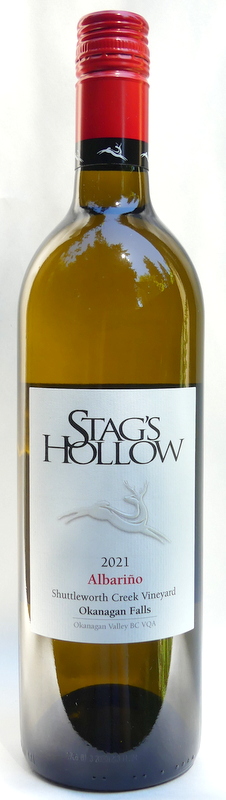
Stag’s Hollow Albariño 2021 ($26 for 365 cases). This is a crisp and focussed white wine. It begins with aromas of citrus and pineapple, carrying through to flavours of peach, mango and lime. The texture is rich but the bright acidity gives the wine a crisp, refreshing finish. 92.
Stag’s Hollow Pinot Gris 2021 ($24 for 590 cases). The winery’s objective is to make a Pinot Gris in the mold of Alsace. To do so, the winery does two picks of this block at harvest: an early pick to capture bright acidity and fruity flavours; and a second a month later when the more mature fruit shows honeyed and raisined notes. This blend is the result. The wine has aromas and flavours of peach, melon and spice. 90.
Stag’s Hollow Dolcetto Rosato 2021 ($25 for 180 cases). The magenta hue of this rosé will get under the skin of the fans of anaemic-looking Provençal-style rosés. Tough. This is what you get when the winemaker stomps the grapes by foot and then indulges in a five-day cold soak. The flavours are equally dramatic: red fruits mingled with herbs and spice. The finish is dry. 90.
Stag’s Hollow Simply Noir 2020 ($23 for 440 cases). This superbly quaffable wine is a blend of 67.7% Pinot Noir, 22.6% Merlot, 5.5% Gamay and 4.2% Dolcetto. The wine is juicy with aromas and flavours of cherry and raspberry. 88.
Stag’s Hollow Pinot Noir 2020 Shuttleworth Creek Vineyard ($30 for 175 cases). This wine is a blend of six Dijon clones (777, 115, 828, 114, 667 and Pommard), all fermented and aged separately for 12 months before the final wine was assembled. The wine begins with floral aromas mingled with spice and red fruit. The silky palate delivers flavours of cherry and strawberry, with a savoury “forest floor” note on the finish. 91.
Stag’s Hollow Pinot Noir 2020 Stag’s Hollow Vineyard ($30 for 195 cases). This wine is a co-ferment of clones 115 and 667 in an estate block of Pinot Noir almost 30 years old. It was aged 12 months in French oak barrels (16% new). The vine age has led to a darker, slightly brooding Pinot Noir, with aromas and flavours of cherry, raspberry, plum and spice. 91.