Writer and wine columnist John Schreiner is Canada's most prolific author of books on wine.
Saturday, June 11, 2022
Therapy produces private label wines for retirement residence
Photo: Therapy's Danica Boyd
About two years ago, Cheryl Tan, the sales and marketing manager for an elegant Vancouver retirement complex, tasted some wines from Therapy Vineyards while vacationing at a west coast resort.
That led to her making a proposal to Mike and Jacqueline Boyd, the owners of Therapy, a Naramata Bench winery. She asked if Therapy would produce private label wines for Opal by Element, for sale in the in-house restaurant and to residents.
Two of those wines, a white blend and a rosé, were unveiled at a recent reception by Danica Boyd, Jacqueline and Michael’s daughter. A third wine, a Pinot Noir, is scheduled to be bottled for Opal this summer.
“I think this may be something they will continue with,” says Jacqueline Boyd.
Private labels wines constitute a new market for Therapy, but perhaps not one the winery will pursue aggressively. “I don’t think we are big enough to go after that market,” Jacqueline says.
Therapy opened in 2005 on the site of the original Red Rooster Winery. Mike Boyd bought it in 2017 after his Alberta-based oilfields products company was taken over. The winery may have started as an early retirement project for the Boyds but they have been too dynamic is business to sit on their hands.
Since taking over Therapy, they have renovated and expanded both the winery and the tasting room. In 2018, they also hired the talented New Zealand-trained winemaker Jacqueline Kemp. She had been the winemaker at Moraine Estate Winery since 2012, where she had designed an entirely new winery. She has also consulted to a number of other producers.
One of her reasons for moving to Therapy was the opportunity to make sparkling wines. Soon after moving to the Naramata Bench, the Boyds began developing a 22-acre vineyard to support sparkling wine. They have planted Pinot Noir, Pinot Meunier and Chardonnay for what they call Silhouette Estate Winery. So far, no tasting room has opened there but the Boyds have opened a satellite Silhouette winery in the District Wine Village just north of Oliver.
Guests at the recent Opal launch were also treated to glasses of the sparkling wine, called Boyd Silhouette Classic Cuvée.
Opal is a $106 million project that opened in 2019, encompassing an entire block on Cambie Street in Vancouver, near the King Edward Station on the Canada line. It has 44 seniors’ residential condominium units, 56 seniors’ rental units and 30 seniors’ complex care units.
The brochure describing Opal says: “Our elegant homes and condos suit a complete continuum of lifestyles, from active independent living to complex care … After all, you’re only retiring from a career, not from life. It’s simply a stage of life you have earned for yourself.”
It is sophisticated locale and the Therapy wines fit the venue well.
For those with no access to Opal, the two private label wines also are in Therapy’s portfolio. The white is a blend Pinot Gris and Gewürztraminer, released by Therapy as Freudian Sip. The rosé, made with Merlot grapes, is released by Therapy as Pink Freud.
Here are notes on the wines.
Opal White 2021. This is a zesty, refreshing white, the kind of wine that invited you to have a second glass. Aromas and flavours of pear mingle with notes of lychee. 91.
Opal Rosé 2021. Made with Merlot grapes, the wine presents in the glass with an appealing rose petal hue. There are bright flavours of strawberry and watermelon with a crisp finish. 91.
Boyd Silhouette Classic Cuvée NV. This wine has toasty, brioche notes in both the aroma and flavour. The active bubbles lead to a creamy impression on the palate. 90.
Friday, June 3, 2022
Sea Star Vineyards: new owner, same great wines
Photo: Sea Star proprietor Traci Warkentin
Fans of Pender Island’s Sea Star Vineyards will be pleased to learn that the winery’s new owner, Traci Warkentin, is increasing the production of these hard-to-get wines.
A word of caution: don’t expect to find the wines on the lists of restaurants that serve so-called “cruelty” foods like foie gras. Traci, who is on leave from an environmental teaching post at York University, brings socially conscious values to running a winery. The winery avoids fois gras and veal because they believe that the practices of producing these cause direct harm to the animals.
“Given my background, given my passion for environmental studies, environmental philosophy, animal ethics, there is such an opportunity here to bring those to the forefront,” she says. “I am purpose driven in all aspects of Sea Star wines. I am privileged that I can do that and make those choices.”
Initially, Sea Star arose from the ashes of Morning Bay Vineyards. After Morning Bay closed, the property was purchased in 2013 by David Goudge, a businessman with a home on Pender Island. The original winery, an attractive building set amidst the forest, was still there. So was the seven-acre vineyard that had been planted in 2002. David resuscitated the property with new equipment, a climate-controlled barrel cellar and an updated wine shop.
Throughout seven vintages, the wines were critically acclaimed. Even though production peaked at 3,500 cases, the wines were snapped up quickly. Needing more grapes, David bought Saturna Island Vineyards, which had become derelict. Then, for personal reasons, David put both Sea Star and Saturna Island on the market in 2019, selling them in separate transactions. (Saturna Island re-opened in 2022 as Sage Hayward Vineyards.)
Traci and her husband, Bob Mann, a Toronto financial consultant, had a family home on Pender Island and were already familiar with Sea Star’s wines. Buying the winery has given Traci the opportunity to extend a long-standing interest in wine.
“My background in biology and environmental sciences got me interested in the vineyard and in growing,” she says. “A casual interest was already there when the opportunity came up to purchase Sea Star. I saw it as a real opportunity to learn first hand. I am an experiential learner. That is the strength of my university teaching … hands-on learning. If I was going to learn how you grow grapes and make wine, then owning a vineyard and a winery was the best way to do that.”
She was born and grew up in North Vancouver. “In my mid-20s, I moved away to do a master’s degree in environmental philosophy,” she says. “I went to the UK to do that. From there, I did my PhD at York University in environmental studies. After I did my doctorate, I stayed on and did contract teaching for a while. Then I was hired tenure track in New York. I was at City University of New York in Manhattan for three years. Then I moved back to Toronto and got a tenure track position in my home faculty at York. I am still a professor at York University but I have taken unpaid leave to come and run the winery. I have been the general manager, running the winery for a full year now. I have stepped back from my academic career right now.”
Her background in environmental sciences, she says, “is what drives my passion to have that be the heart and centre of Sea Star.”
Those values are expressed throughout the decisions made for the business. For example, to reduce the winery’s carbon footprint, Sea Star changed from a bottle supplier in China to one closer to home, in California. The winery also ordered lighter bottles and label stock made with recycled paper.
“It has the lowest footprint of any label stock on the market today,” Traci says. “It is manufactured with 100% renewable electricity. It is chlorine free and carbon neutral.”
Another example: some larger volume wines are allocated for sales in licensees in recyclable kegs, not bottles, to further reduce the winery’s carbon footprint.
Sea Star’s vineyards are dry-farmed and, if herbicide is required, it is organic.
The winery allocates revenues from some of its wine sales to the Raincoast Conservation Foundation on two local campaigns – conservation of the Southern Resident Killer Whale and purchase of 45 acres for forest protection.
“We had always been really impressed with David Goudge’s commitment to community participation and with the arts on Pender,” Tracy says. “He was already leaning toward environmentally conscious goals. We have picked up the torch and we want to take it as far as we can. What is important for me is for Sea Star to be a purpose-driven business. Having really progressive labour practices; having a very forward-looking environmental policy; making sustainable choices wherever we can.”
The 2020 Sea Star vintage was the first under Traci’s control. Her winemaker is Dean Canadzich. Born in Western Australia in 1966, Dean was drawn to wine by working in vineyards after getting a diploma in horticulture. He moved to the Okanagan in 2007 to join La Frenz Winery, moving three years later to Cherry Point Vineyards near Duncan. He has made wine or consulted on island viticulture ever since. He has proved to be as able as Sea Star’s previous winemaker.
Limited by its access to fruit, Sea Star made just 1,500 cases in 2020. The winery more than doubled production in 2021 and hopes to produce 4,000 cases in 2022.
“We have taken over Clam Bay Farms,” Traci says, referring to another Pender Island property from which David Goudge had begun sourcing fruit. “It is now really our vineyard and we lease the land. We are getting our Ortega, Siegerrebe and Pinot Noir grapes from Clam Bay Farms. We have the estate vineyard here at the winery. The rest of the grapes we are sourcing from the Cowichan Valley. We have some nice relationships we are building with growers in the Cowichan.”
Sea Star also resumed buying some varietals in the south Okanagan in order to make Encore, a big Bordeaux red from grapes that would not succeed on Vancouver Island.
Here are notes on current releases.
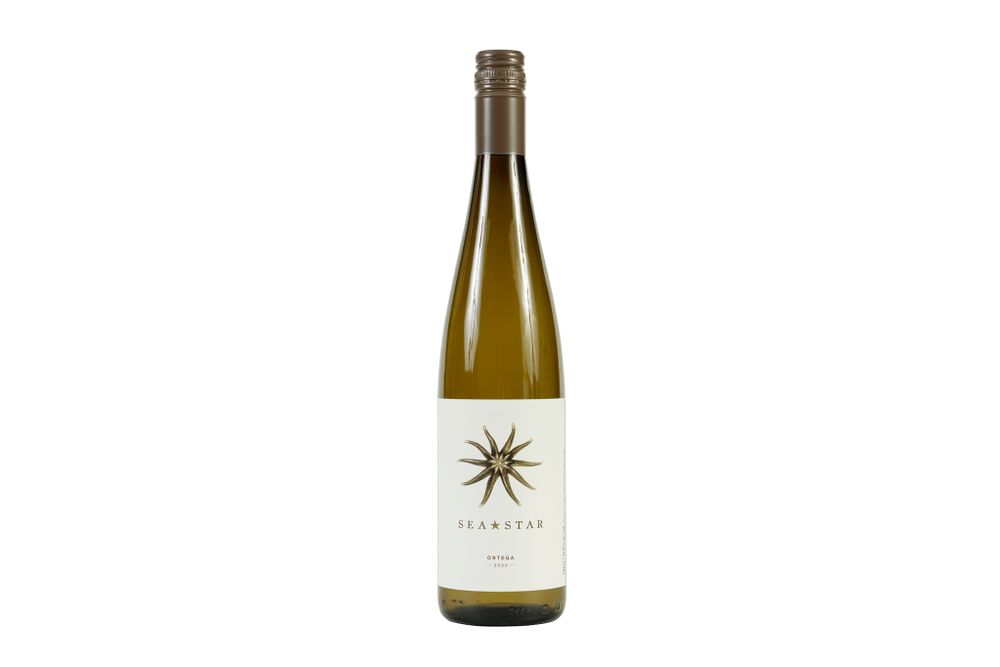
Sea Star Ortega 2021 ($23.29). This is a crisp and zesty white, with aromas and flavours of spice, citrus and herbs. 92.
Sea Star Salish Sea 2021 ($23.29). This is a blend of Ortega and Siegerrebe. The wine is also crisp and zesty, with the Siegerrebe enhancing the fruitiness. There is pear, quince and grapefruit on the palate. 92.
Sea Star Stella Maris 2021 ($21.65). This is a blend of Gewürztraminer, Pinot Gris, Schönburger and Ortega. The wine begins with appealing aromas of spicy fruit, leading to flavours of pears and fresh apples. The finish is very long. 93.
Sea Star Intertidal 2021 ($21.65). This is a rosé made primarily with Bacchus and Pinot Gris. The hue is appealing in the glass. There are aromas and flavours of strawberry, cherry and plum. The finish is persistent. 92.
Saturday, May 28, 2022
Gray Monk is still at the head of the Pinot Gris parade
Photo: Winemaker Jen Oishi (Credit Mackenzie Dempsey)
Credit Gray Monk Estate Winery for the fact that Pinot Gris has become the most widely planted white varietal in the Okanagan. In 1976, Gray Monk founder George Heiss was the first to plant the grape in the valley.
George and Trudy, his wife, had been hair stylists in Edmonton when they decided to change careers. They began developing a vineyard in 1972 in what is now Lake Country. The impetus had come from Hugo Peter, Trudy’s father, who has started a vineyard there four years earlier.
At the time, George was a novice at viticulture. “I knew how to get the content in a bottle out of the bottle and into myself,” he once told me. “We were so bloody ignorant. We had not even figured out at that time the positive influence of the lake on our vineyard. That was way beyond us. One thing we did figure out right off the bat: if cherries, apricots and peaches survived here, grapes would definitely survive.”
He was given has initial planting advice from an industry almost as green as he was. Initially, George planted two hybrid varietals, Maréchal Foch and Seibel 1000. He soon discovered that these would produce mediocre wines.
“I don’t think they were imported from France,” George said later. “I think they were deported from France.”
Fortunately, for George, his father-on-law, who went to Europe on vacation in 1975, agreed to source premium varietals. He had the Colmar research station in Alsace ship modest amounts of vine stock of four varietals: Pinot Auxerrois, Gewürztraminer, Kerner and Pinot Gris.
While Auxerrois and Kerner remain bit players in British Columbia vineyards, Gewürztraminer became the third most widely planted white and, as I wrote above, Pinot Gris is number one, ahead of Chardonnay in second place.
There was serendipity that Pinot Gris should emerge as a signature wine both for British Columbia and for Gray Monk. George Heiss was born in Vienna. In Austria, one of the names for Pinot Gris is Grauer Mönch, German for Gray Monk. It is believed this was what inspired the winery name when the Heisses launched their winery in 1982.
When they retired in 2017, the winery was purchased by Andrew Peller Ltd. Under the new owners, winemaker Jen Oishi has continued to craft an award-winning portfolio that includes Pinot Gris and rosé.
The winery’s autobiography says: “Jen Oishi was born and raised in the Okanagan, immersed in the Okanagan way of life. Growing up surrounded by orchards and vineyards piqued her interest in the wine industry. After completing her degree in Microbiology from the University of British Columbia, Jen joined the Gray Monk team in 2011. It was here that she was able to pair her love of science with the artistic side of winemaking. Jen worked closely with long time winemaker, Roger Wong. Under his mentorship she learned many aspects of winemaking from the vineyard to the glass, becoming assistant winemaker in 2015 and winemaker in 2020.”
Here are notes on the wines.
Gray Monk Pinot Gris 2021 ($19.99). This wine is a staple for Pinot Gris lovers: it is listed in all 197 stores of the B.C. Liquor Distribution Branch. In making this wine, Jen usually gives 12 hours of contact of the juice on the skins, extracting more flavour and a hint of colour. The wine begins with aromas of pear and citrus, leading to flavours of peach and pear. The finish is slightly off-dry. 90.
Gray Monk Rosé 2021 ($19.99). This wine will be in liquor stores by July. It is a blend of 46% Merlot, 14% Cabernet Franc, 8.5% Syrah, 8.5% Gamay Noir, 8.5% Rotberger, 8% Pinot Noir and 6.5% Malbec. The varietal in that lineup that may be unfamiliar is Rotberger, a cross of Riesling and Trollinger developed at the Geisenheim research station in 1928. Gray Monk also was the first (in 1978) to plant the vine and for many years released it as a single varietal rosé. In this blend, Jen has created a more complex and fruitier rosé, employing a cool 21-day ferment in stainless steel to preserve the fruitiness. There are aromas and flavours of cherry, strawberry and watermelon with hints of pink grapefruit on the refreshing finish. 91.
T
Tuesday, May 24, 2022
Pentâge grows nineteen varietals
Photo: Paul Gardner and Julie Rennie
In their two Penticton area vineyards, Pentâge Winery owners Julie Rennie and Paul Gardner grow 19 different varietals in 35 acres.
It would be difficult to find another Okanagan producer with as many varietals, perhaps with the exception of Moon Curser Vineyards of Osoyoos.
Having that many varietals speaks to the viticultural curiosity of the winery owners. It also says something of the Okanagan’s versatility as a grape-growing area. It would be hard to find a wine region in the world with more varietals – likely more than 100 – in such a small area.
That frustrates some wine critics who think the Okanagan needs to settle on a signature varietal. But it pleases consumers who prefer novelty to same-old. As great as their Sauvignon Blancs are, New Zealand wine consumers surely must get a bit bored.
Paul Gardner, who is also the winemaker at Pentâge, gets to work with varietals that usually are found in different countries in the Old World. His Hiatus Red blend makes the point. The grapes in the blend are more often found in Spain (Tempranillo), the Rhône (Mourvedre, Petite Sirah), Bordeaux (Cabernet Sauvignon, Merlot and Petit Verdot). Paul grows these in his two vineyards near the winery.
The winery’s recent releases touch on other Old World sources: Pinot Gris is found in Alsace; Sauvignon Blanc in the Loire; and Roussanne and Marsanne grow in the Rhône. There is nothing boring about the wine offerings from Pentâge.
The winery itself is an experience to visit. Paul spent 10 years digging a 5,000-square-foot cave into the natural rock of the mountain side. Even if a tour is not always available, there is a great view of the cellar through glass of the massive northern-facing doors. The winery’s tasting and sales room is in a separate building.
Here are notes on the wines.
Pentâge Sauvignon Blanc 2020 ($20). Both the aromas and the flavours of this wine have a sit-up and take notice intensity. There is lime and grapefruit on the nose, leading to flavours of lime and passionfruit. Bright acidity gives the wine a zesty, refreshing finish. 91.
Pentâge Pinot Gris 2019 ($19.13). Four different fermentations in stainless steel enable Paul to craft a complex Pinot Gris. This wine begins with aromas of and spice. Richly textured, it has flavours of ripe pear, apple and guava. 91.
Pentâge Roussanne/Marsanne 2016 ($30.44). This is 70% Roussanne and 30% Marsanne. Fermentation began in stainless steel, with 50% of the wine then transferred to French oak (second and third fill). The latter portion also went through malolactic fermentation. The wine is rich and complex, beginning with aromas of ripe pineapple. On the palate, there are flavours of stone fruits, pineapple and citrus. 91.
Pentâge Hiatus Red 2016 ($23.48). This is a blend of 36% Petite Sirah, 32% Tempranillo, 10% Petit Verdot, 8% Cabernet Sauvignon, 7% Mourvedre and 7% Merlot. The winemaking for this was incredibly complex. Each varietal was fermented and barrel-aged separately for 18 months in new and neutral American and French oak before the final blend was assembled. The wine begins with aromas of cassis, cherries and raspberries. On the palate, there is a medley of fruits including cherry, black currant, plum. The finish is marked with spice and chocolate. 91.
Friday, May 20, 2022
Township 7 champions Chardonnay
Photo: Winemaker Mary McDermott
Consumers appear to have gotten over the “anything but Chardonnay” phobia that began in the 1990s in apparent reaction to over-oaked Chardonnays.
I have no independent market data to back up my assertion. I am basing it simply on the quality of Chardonnays being made by British Columbia wineries. No one would invest so much in viticulture and winemaking as most producers do if consumers were not buying the wines.
Township 7 Vineyards & Winery is one of those producers that has made an effort to produce great Chardonnays. The case in point is the winery’s 2020 Reserve Chardonnay.
Mary McDermott, the winemaker, began by combining fruit from three vineyards – the estate vineyard just outside of Penticton and two south of Oliver, the winery’s Hidden Terrace Vineyard and the Becker Vineyard, which is farmed by Phantom Creek Estates. The point of combining fruit, Mary explains, was to achieve “layers of complexity” in the wine.
After the fruit was crushed, the juice went into French oak barrels (15% new), where fermentation was done with indigenous yeast. The wine in the barrels was hand-stirred for eight weeks, increasing lees contact and adding flesh to the texture.
“The battonage process, as well as the partial malolactic fermentation, softened any harsh acids [and produced] a rich and textured mouthfeel,” Mary writes.
This is a lot of work for a wine that retails for $31.97 (and is available only the Township 7 wine club). The quality is on a par with the superb Chardonnays from CheckMate Artisanal Winery – which sell for three times as much. I wonder if Township 7’s club members realize how lucky they are.
Those who have not joined the club can sample Mary’s skill with Chardonnay by buying the winery’s Provenance Series Chardonnay 2019 at $22.97. It is available at either of Township 7’s wineries, at the winery’s online store and at select private wine stores.
The two Chardonnays, which were released this spring, total about 1,000 cases. I bet both are sold out by this summer now that Chardonnay is back in fashion.
Here are notes on those wines and two other releases.
Township 7 Benchmark Series Gewürztraminer 2019 ($26.97 for 348 cases). A portion of the fruit for this wine was fermented spontaneously in neutral French oak barrels while another portion was fermented over four weeks at about 12◦C in stainless steel. The object is to craft a wine in the style of Alsace. This wine begins with aromas of honey mingled with orange peel, spice and lychee. On the palate, there are hints of ginger and orange. The finish is dry with a touch of bitterness. 89.
Township 7 Provenance Series Chardonnay 2019 ($22.97 for 598 cases). This wine was fermented 50% in French oak barriques and 50% in stainless steel. Only the former was allowed malolactic fermentation. The result is a crisp wine with bright acidity and just a hint of butteriness. The wine begins with aromas of apple and citrus which are echoed on the palate. 90.
Township 7 Benchmark Series Reserve Chardonnay 2020 ($31.97 for 326 cases). This is an exceptional Chardonnay from an exceptional vintage. The wine was fermented with indigenous yeast in French oak barrels (15% new). The wine was stirred on the lees in barrel for eight weeks and allowed partial malolactic fermentation. The texture is rich and creamy. The wine has aromas of butter, apple and ripe apricots. On the palate, stone fruit flavours mingle with guava, mango, pineapple and vanilla. The finish simply does not quit. 94.
Township 7 Provenance Merlot 2019 ($26.97 for 798 cases). This is a bold red, benefitting from two to three weeks of maceration on the skins. The wine was aged 18 months in American and French oak barrels. It begins with aromas of cassis, cherry and plum, all of which is echoed in the layers of fruit on the palate. Decanting brings out additional complexity. 91.
Monday, May 16, 2022
Hester Creek's ample cooperage yields great white wines
Photo: Hester Creek's winery on the Golden Mile
Over the years, Hester Creek Estate Winery has invested in a lot of stainless steel cooperage. Those tanks certainly paid off in the 2021 vintage, judging from all of the wines just released which are brimming with clean, fresh fruit flavours.
The 2021 season was one of the hottest in the past 20 years, with the vines actually pausing the development of fruit during the intense heat dome in early July. That had two consequences, one good, one not quite so.
The negative was the low yield. Nearly every grower has reported a reduction in the quantity of fruit produced in the vineyards. On average, the crop was down 25%-30%, and the berries were small.
The positive is that the small crop and the small berries has resulted in vivid flavours. The 2021 grapes, aside from the few that suffered smoke taint, invariably show intense aromas and flavours. Hester Creek grows fruit on some of the oldest vines in the Okanagan, which adds to the intensity of flavours.
And that brings me to the stainless steel tanks. The wines reviewed here all were fermented in stainless steel at cold temperatures (often 10◦ C) for about a month. That technique preserves fresh aromas and flavours. It also ties up a lot of cooperage. Happily, Hester Creek has a lot.
These are among the most delicious wines from any Okanagan winery this spring.
Here are my notes.
Hester Creek Character White 2021 ($16.99). This is a blend of 66% Pinot Gris and 34% Gewürztraminer. The wine has aromas and flavours of pear, apple and spice, leaving the impression of tropical fruits on the palate. The texture is juicy but the finish is dry. 90.
Hester Creek Pinot Gris 2021 ($17.99). A long, cool fermentation in stainless steel captured the varietal’s bright fruit. The wine begins with aromas of quince, pear and apple, leading to flavours of pear, apple and citrus with a lovely hint of anise on the finish. 92.
Hester Creek Old Vine Pinot Blanc 2021 ($17.99). The wine shows the intensity of aroma and flavour that old vines can deliver. The grapes were fermented cool for 27 days in stainless steel. The wine begins with aromas of honeydew melon and apple, leading to flavours of apple, melon and stone fruits wrapped around a spine of minerality. The finish is crisp. 92.
Hester Creek Cabernet Franc Rosé 2021 ($18.99). This wine presents in the glass with a vibrant hue, the result of giving the whole grapes four days of cold soaking before pressing. A long (22-day) fermentation at a cool temperature preserved the fresh flavours and aromas – there are aromas of cherry, red plum and strawberry, leading to flavours of strawberry, raspberry and tart cherries. 92.
Hester Creek Pinot Gris Viognier 2021 ($19.99). This wine is available in selected Save-On Food stores. The blend is 67% Pinot Gris and 33% Viognier. The grapes were fermented cold for 29 days in stainless steel. The wine is brimming with aromas of apples and citrus fruits. On the palate, there are flavours of apple, pear and lime. The finish is crisp. 91.
Hester Creek Old Vine Trebbiano 2021 ($23.99). This wine, made with the Italian varietal first planted in the vineyard in 1968, is always the white that steals the scene in Hester Creek’s spring release. This wine is intensely fruity, in part because the juice was fermented cold for 32 days. The wine begins with aromas of pear, nectarine and grapefruit. The palate is a fruit bowl laden with flavours of grapefruit, apple and peach. The texture is generous and the finish lingers. 93.
Subscribe to:
Posts (Atom)