Writer and wine columnist John Schreiner is Canada's most prolific author of books on wine.
Sunday, April 11, 2021
Bartier Bros. opens for the season
Photo: Michael Bartier (credit Shari Saysomsack)
It says something about the popularity of rosé wines that a small producer like Bartier Bros. made almost 3,000 cases in the 2020 vintage.
Located just off Black Sage Road between Oliver and Osoyoos, the winery is operated by brothers Michael and Don Bartier. Michael began making wine for the label in 2009. In 2015, after buying grapes for several years from the Cerqueira Vineyard, the brothers were able this vineyard and build a winery there.
Michael believes that the terroir of the vineyard – an ancient gravel bar – gives a special minerality to the wines. “Every vintage, the wines are fresh, fruity and minerally,” Michael says. “That limestone ends up in every glass of our wine.”
The Bartier Bros. tasting room opened daily, starting the Easter weekend. This year, the winery offers visitors three choices: a 90-minute tour and tasting, including either a selection of chocolate or charcuterie for $30 a person; a 45-minute seated tasting on the winery’s outdoor patio for $15; or a selection of four wines at the tasting bar for $10 a person (waived with the purchase of $30 worth of wine).
In all cases, reservations are recommended.
Here are notes on four current releases.
Bartier Bros. Rosé 2020 ($17.99 for 2,981 cases). The blend is 52% Chardonnay, 42% Gewürztraminer and just 6% Merlot. This is just enough Merlot to have the wine its fashionably pale hue. This is delightfully refreshing wine, with aromas of citrus. On the palate, there are flavours of wild strawberry. 91.
Bartier Bros. Merlot 2019 ($22.90 for 390 cases). By aging this wine 14 months in neutral French oak, the winery achieved the best of both worlds: the benefit of barrel aging to soften the tannins but without obscuring the bright fruit. The wine has aromas and flavours of cherry, blueberry and cassis, with hints of plum on the lingering finish. 91.
Bartier Bros. Grenache Syrah Mourvèdre 2019 ($41.99 for 275 cases). This wine was aged 14 months in neutral French oak after fermentation and maceration averaging 22 days. The result is a complex and brooding red, with aromas and flavours of pepper, blackberry and cherry with an earthy finish. 92.
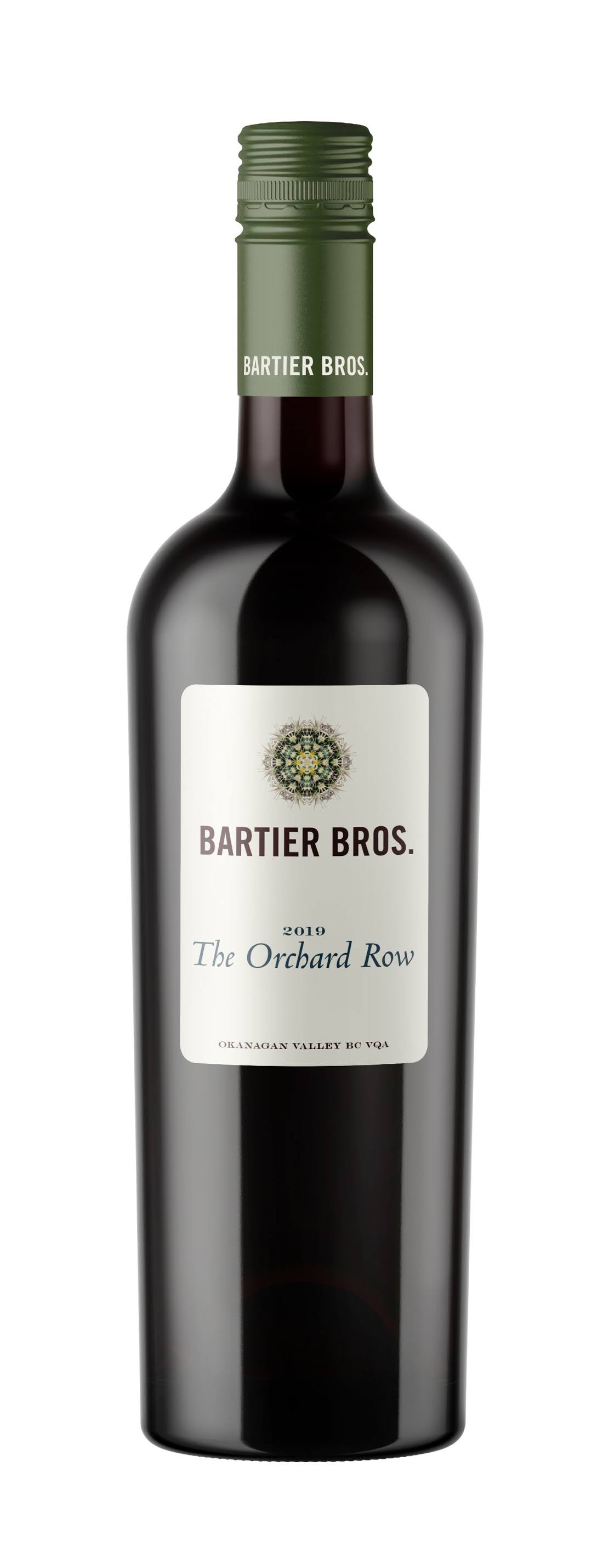
Bartier Bros. The Orchard Row 2019 ($36.99 for 209 cases). The blend is 47% Cabernet Franc, 24% Gamay Noir, 24% Pinot Noir and 5% Syrah. After fermenting in one-ton open-top fermenters, the wine was aged 14 months in neutral French oak. The wine begins with bright floral aromas of raspberry and blackberry. On the palate, it delivers rich flavours of plum and cherry. 92.
Wednesday, April 7, 2021
Remembering Chris Jentsch
Photo: Chris Jentsch
The sudden death on April 2 of Okanagan winery owner Chris Jentsch at age 58 has shocked and saddened the wine community.
If anyone was larger than life, it was Chris. Amber Jones, the first on-site winemaker at C.C. Jentsch Cellars, once told me in an interview that Chris was “a very gung-ho person, for sure. It is nice to work with someone who is so hands-on. He gets his hands dirty and he gets right in there. That makes you feel like you have a team mate.”
A self-described entrepreneur, Chris was born in Kelowna in 1963, a third-generation Okanagan fruit grower. He became an independent apple grower in the 1980s. He built his first packing house in 1989 and rebuilt it after fire destroyed it in 1991. When apple prices collapsed in the mid-1990s, he converted his orchards to cherries. “We were in a golden time for cherry exports, with a 63-cent Canadian dollar,” Chris told me when I first interviewed him in 2013. “Cherries were getting airfreighted to Taiwan.”
In 1999, Chris planted his first vineyard, 19 acres on the Golden Mile, just south of the Tinhorn Creek winery. He sold it five years later to pursue a much larger project—replacing his cherry trees with vines after overplanting led to a cherry surplus. “That was hard because we were ripping out highly productive cherry blocks that were picture perfect,” Chris told me.
In his gung-ho style, Chris jumped in with both feet. Between 2005 and 2008, he planted 65,246 vines on a superb 19.4-hectare (48-acre) plateau on the Golden Mile. Once the vines produced, he sold grapes to several wineries, including Andrew Peller Ltd. He operated this vineyard for his own winery and his clients until 2018, when he sold it to the Phantom Creek Estates winery. He continued to farm three smaller vineyards in the South Okanagan.
Peller had been his major grape client. Their decision to reduce their grape purchases triggered Chris’s decision to develop his own winery in 2012. The first vintage was made off-site while his fruit packinghouse, located on the Golden Mile, was converted to winemaking.
“Winemaking in its basic form is not rocket science,” Chris told me in 2013. “Then there is the marketing. What I don’t like is pretentious people. This is what I don’t want to be part of. I don’t want to open a wine shop. I want trucks backed up. But that part of it is part of it.”
It was his luck that the packinghouse had survived the massive Testalinden Creek mudslide on a Sunday afternoon in June 2010. It destroyed Chris and Betty Jentsch’s home and sent Betty and her daughter running for their lives. Chris, who was not home, was understandably outraged.
The slide resulted from the failure of an old dam at the top of the hillside. The property around the dam was leased by lawyer and rancher Ace Elkink who blamed wrongly for the sad state of repair of the dam. Shortly after, however, Chris encountered the rancher at the Penticton airport where a physical confrontation ensued. Matters ended up before a provincial court judge who dismissed the assault charge but put Chris on probation for a year.
As Amber said, Chris was a “gung-ho guy.”
The wines at C.C. Jentsch Cellars have been very good. At the first Judgement of B.C. tasting in 2015, the top Syrah was a Syrah from C.C. Jentsch. Then two years old, the little-known Okanagan winery achieved instant recognition.
The flagship Meritage red at Jentsch is called The Chase. Several years ago, Dennis O’Rourke, who was developing two wineries in Lake Country, decided to call his smaller winery Chase. This time, Chris hired a good trademark lawyer to defend his brand. Eventually, O’Rourke renamed the winery Peak Cellars.
Chris Jentsch was a force to be reckoned with. He will be missed by his peers, even those he tangled with during his eventful life.
Tuesday, April 6, 2021
Frind releases its Premier wines
Photo: Markus Frind
With the first release of red wines, West Kelowna’s Frind Estate Winery has immediately established itself as one of the Okanagan’s premier producers.
The line will strike some as an insider joke: the winery brands its top reds as “Premier” wines. There appear to be two reasons for that. Premier is a word often designating top-quality, as these wines most certainly are. Secondly, the winery has been built on a lakefront property once owned by the late Bill Bennett, a former Premier of British Columbia.
Here is an excerpt from my 2020 book (with Luke Whittall), Okanagan Wine Tour Guide.
The experience here begins with arrow-straight tree-lined driveway leading to the rambling taste room beside Okanagan Lake. This is a property with history. For more than 50 years, it belonged to the Bennett family: both W.A.C Bennett and his son, Bill, served as premiers of British Columbia. In the fall of 2017, when Markus Frind began planning a major winery, he purchased the 5.5-hectare (13.5-acre) Bennett property because it is strategically on the Westside Wine Trail which is travelled by thousands of wine lovers each year. For several years, Markus expects to sell the Frind wines primarily from this wine shop.
This property is the tip of the iceberg of one of the Okanagan’s most ambitious wineries. Markus also owns about 400 hectares (1,000 acres) of vineyard land that is being developed so that it can be farmed, in large measure, with self-driving machinery. If this succeeds, it will represent a breakthrough of precision agriculture amid Okanagan vineyards – by a winery owner whose initial success was in technology, with a dating web site called Plenty of Fish.
Born in Germany in 1978, Markus was just four when his parents, descended from generations of farmers, moved to a 485-hectare (1,200-acre) farm at Hudson’s Hope in northeastern British Columbia. After high school, Markus studied business and computer science at the British Columbia Institute of Technology. Then he had a series of technology jobs until, early in 2003, he created Plenty of Fish on his home computer. The web site’s success was explosive: by the second year, it was generating monthly revenues of $200,000 a month. Markus sold the site at its peak in 2015 for $575 million.
By then, he already had a summer place near the Westside Wine Trail and was a patron of the wineries. After reviewing wineries that might be for sale, he decided he had to start his own to achieve the scale of a major producer. Just before buying the Bennett property, he purchased 121 hectares (300 acres) of raw land on a hillside northeast of Kelowna. Advised that just 10% was suitable for vines, he deployed heavy equipment to fill in a gulley and sculpt the slopes so that 80% can be planted. He also owns twice as much undeveloped land near Vernon, along with small vineyards in the south and central Okanagan. And the driveway to the tasting room sweeps by a 2.4-hectare (six-acre) block of Maréchal Foch.
The major varieties Frind is planting are Pinot Noir, Chardonnay, Riesling, Pinot Meunier – and Regent, a cool-climate German red hybrid new to the Okanagan. Typical of Markus, he is making a bold statement by planting 30 hectares. Eric von Krosigk, Frind’s veteran winemaker, suggests that Regent produces wines recalling full-bodied Italian reds.
Here are notes on the wines. The symbol of a pinecone used to separate the text appears on most bottles.
<i>Frind Big White 2019> ($20.99). The blend is 30% Gewürztraminer, 27% Kerner, 16% Sauvignon Blanc, 8% Chardonnay, 7% each of Pinot Blanc and Viognier and 5% Schönburger. The wine was fermented in stainless steel. The wine begins with aromas of peach, pineapple and tropical flowers. On the palate, there are flavours of melon, apple and peach. The bright acidity leaves a crisp, refreshing finish that is persistent. 90.
Frind Brut N.V. ($24.99). This is a traditional method sparkling wine, a blend of 76% Riesling and 24% Chardonnay that was 15 months on the lees before being disgorged. This is a delicious bottle of bubbly – fruity on the nose and on the palate, with flavours of pear and citrus. It is creamy on the palate, with moderate acidity, but just enough to give the wine a refreshing and crisp finish. 90.
Frind Premier Merlot 2019 ($32.99). The fruit is from the Frind-owned Rock Pile vineyard near Oliver. The wine was aged 10 months in a combination of new and neutral French oak cigars. Dark in colour, the wine begins with aromas of black cherry and blueberry mingled with a slight toasty oak note. Those elements are echoed in the generous flavours of black cherry mingled with cassis and framed by silky tannins. 92.
Frind Premier Cabernet Sauvignon 2019 ($37.99). The fruit is primarily from the Rock Pile Vineyard. The wine begins with lovely aromas of cassis leading to flavours of black currant and cherry. There is a hint of leather and licorice on the finish. The tannins are firm but supple. The oak is imperceptible in this appealing, fruit-driven wine. 92.
Frind Premier Cabernet Franc 2019 ($34.99). The fruit is primarily from the Rock Pile Vineyard. The wine was aged 10 months mostly in neutral oak; a small portion was aged in new French oak cigars. The aromas deliver notes of blackberry, cherry, red currant and even a suggestion of red licorice. The brambly flavours are bright and expressive, mingling red currant and cherry, with a hint of spice on the finish. 90.
Frind The Premier 2019 ($39.99). The blend is 52% Merlot, 22% Cabernet Franc, 19% Cabernet Sauvignon, 4.5% Syrah and 1.5% Regent. The wine was aged 12 months in French and American oak. This is a dark and brooding wine, beginning with aromas of plum, fig and earth that are echoed on the palate. The wine will age well for several more years but should be decanted for current consumption. 92.
Wednesday, March 31, 2021
Painted Rock's 2018 Red Icon and friends
Photo: Painted Rock's John Skinner
The wines from Painted Rock Estate Winery have never disappointed this reviewer, nor – I suspect – any of Painted Rock’s customers.
This was one of the producers included in my 2017 book, Icon: Flagship Wines from British Columbia’s Best Wineries. The text focussed specifically on the winery’s flagship wine, called Red Icon. The text provides insights in why that wine, and all of the others, are among the Okanagan’s best.
Here is an excerpt from the book:
Few Okanagan wineries are as greatly influenced by Bordeaux consultant Alain Sutre as John and Trish Skinner’s Painted Rock Estate Winery. Alain’s advice to them covers the full scope of winemaking, from viticulture and barrel selection to blending the winery’s flagship Red Icon.
“I will tell you how Alain found me,” says John. “Alain heard about me from the nursery in Bordeaux. I had contacted the nursery directly because I wanted to get very specific clones. A year later, Alain showed up at the vineyard one day when we had just planted. He introduced himself and said, ‘I love what you have planted here, but no one in the Okanagan knows how to blend these clones.’ That was the beginning of the journey.”
John needed such expertise to fully realize his wine-growing ambitions. Born in 1958, he had been a successful Vancouver investment adviser. His growing passion for wine triggered a decision to retire from the investment business at 50 and take up wine-growing. In 2004, after a careful study of potential vineyard sites, he bought a 24-hectare (60-acre) former apricot orchard near the Skaha climbing bluffs. The site was shaped to produce an ideal southwestern vineyard exposure that he began planting in 2005.
He had a clear vision for his wines. “This journey is not about making a Bordeaux blend,” he told Alain. “This is about making an Okanagan wine with clones I sourced from Bordeaux.” Alain, he discovered, was on the same page. The consultant has had a hand in making Okanagan wines at other distinguished producers including Osoyoos Larose and, latterly, Culmina Family Estate Winery.
To date, Alain has blended every vintage of Red Icon. The blending decisions reflect the strengths of the Painted Rock vineyard in any given vintage. “Our 2012 Red Icon is kind of an inverted Bordeaux blend because it leads with 31% Malbec,” John says. “It’s Okanagan.”
The blends vary from year to year and are somewhat unorthodox, with higher percentages of both Malbec and Petit Verdot. In most Okanagan red Meritages, Petit Verdot is a minor portion of the blend, bringing a touch of spice. Not so at Painted Rock. “I have never tasted a Petit Verdot like this,” Alain once said, advocating that the variety play a significant role in the blend.
The varietals all have roles to play. The Cabernets provide structure; Merlot fleshes out the mid-palate; Malbec brings bright flavour notes. “Petit Verdot,” John says, “is the attack and the finish.” While the components move around from vintage to vintage, Red Icon is united in style year after year by its harmony, as John discovered when tasting a vertical of the first five vintages. “Those five wines, all different blends, were all quite similar because they were complete wines,” he explains.
Here are notes on current releases.
Painted Rock Merlot 2017 ($34.99). This wine, which was aged 18 months in French oak (30% new), is age-worthy but is already drinking well. It begins with aromas of black cherry, plum and mocha. On the palate, it delivers flavours of dark cherries, plums, black currants and spice. The finish is long. 92.
Painted Rock Syrah 2018 ($39.99). This is a rich, bold wine with aromas of fig, dark plum and black pepper. Those are echoed on the palate, mingled with dark fruit flavours, cracked black pepper and a hint of earthiness. 93.
Painted Rock Red Icon 2018 ($59.99). The blend is 56% Merlot, 14% Cabernet Franc, 11% Cabernet Sauvignon, 11% Malbec and 8% Petit Merlot. The wine was aged 18 months in French oak (30% new). 94.
Thursday, March 25, 2021
Burrowing Owl unmasked
Photo: Author wearing Burrowing Owl's mask
Burrowing Owl Estate Winery’s sampler pack of its red wine releases for spring came with an attractive mask. I donned it for the selfie that accompanies this item.
The winery originally ordered the masks for use by its staff. Such was the response that it is now sold in the Burrowing Owl wine shop for $9.95. It is also included free of charge with every case of wine ordered from Burrowing Owl.
I am not aware of other wineries with branded masks. It would be surprising if others have not picked up on the idea. Since mask wearing is going to be with us for some time, it makes sense to have a winery’s customers walking around with the winery’s brand on display. Especially if the mask is a little more chic than the ubiquitous “surgical” masks that, when not covering faces, are littering streets.
There is no reason why we should not make statements with our masks. Last summer, because I am a fan of Formula 1 racing, I purchased a mask from McLaren, one of my favourite teams. It is the same colour – orange – as the cars. I think it looks dashing. However, I paid a ridiculous price for the high tech mask (it has an anti-viral filter), which came from a factory in the Netherlands. Such is the cost of fandom.
The Burrowing Owl mask, which appears to have been made in China, is low tech … but comfortable and smart.
Here are notes on the wines, as written by Rhys Pender MW for the winery’s website. The points scores are mine but I will defer to his palate and vocabulary on the wines. While I have never found burlap in a wine (and I grew up on a farm!), I generally agree with his comments.
Burrowing Owl Merlot 2018 ($32). A bright, fresh, silky and complex Merlot with lots of black plum, baking spice, ripe raspberry, mixed brambly berries with violet and lavender floral notes, cocoa, marzipan and vanilla and some Earl Grey tea, burlap and cedar. The palate is full-bodied with firm ripe tannins, refreshing acidity, a velvety texture and flavours of plum pudding, black cherry, hazelnut, chilli spiced dark chocolate, paprika, dried sage with some graphite notes on the long finish. Has the structure to age and develop for over a decade. 90.
Burrowing Owl Syrah 2018 ($35). A deep, brooding Syrah with an intense nose of blackberry, black cherry and black plum fruit along with some pastry crust, vanilla and clove and complex notes of burlap, leather, espresso, violet, graphite, black sage and bacon. Dry, full-bodied and rich on the palate with intense black pepper, black fruit, ripe tannins, paprika, roasted red peppers, dark chocolate and grilled rosemary with a long finish and plenty of potential to age. 91.
Monday, March 22, 2021
Pentâge releases wines with maturity
Photo: Paul Gardner and Julie Rennie
A California winery, Paul Masson, once had this advertising slogan: “No wine before its time.”
If it were not trademarked, Paul Gardner and Julie Rennie could apply it to the wines they produce at Pentâge Winery in Penticton. When their peers have begun releasing 2019 and even 2020 wines, some of the current releases from Pentâge are from the 2016 vintage, which is almost sold out elsewhere.
In my view, the fans of Pentâge are in luck. While most other wineries expect you to cellar their wines until they are ready, Pentâge does the cellaring for you. The wines are ready to drink when you get them, although they will certainly cellar well.
Other producers would like to hold back wines the way Paul and Julie do (and some in fact do that). The down side of holding back wine is that a winery’s cellar becomes jammed with case goods; and those cases of wine are not generating cash flow. Another California producer gently pointed this out by mocking the Paul Masson slogan. “No wine before its time – but when the banker calls, it is time!”
Pentâge, which opened in 2003 and now produces about 5,000 cases a year, clearly has cash flow and storage issues under control. A former marine engineer, Paul Gardner spent about 10 years carving a 5,000-square-foot cellar in the natural rock caping the Pentâge property. With stable year-round temperature, it is an ideal place for maturing wines in bottle.
The current sample pack from Pentâge was limited to just four wines to represent the winery’s extensive portfolio. It is two mountain-side vineyards above Penticton, the winery has 19 grape varieties. Not many winemakers have as many options as Paul has.
Here are notes on the wines.
Pentâge Pinot Gris 2018 ($17.39). This is a strikingly complex wine, no doubt because of how it was put together. The winery drew fruit from three different vineyards and did six different fermentations in stainless steel. The final blend is rich on the palate, with aromas and flavours of pears, stone fruit and citrus. 90.
Pentâge Viognier 2016 ($20). The wine was inoculated in stainless steel, with 30% then transferred to second-fill oak barrels to finish fermentation, including partial malolactic. Both portions were on lees that were stirred weekly. The wine begins with aromas of pear and stone fruit. On the palate, flavours of apricot and ripe apple mingle with notes of oak. The texture is fleshy, with a touch of tannin to give it backbone. The finish is dry. 90.
Pentâge Cabernet Franc 2016 ($26.70). This wine was matured 18 months in oak barrels (75% French, 25% American – and 25% new). It has also been bottled aged two years before release. The wine has developed lovely aromas of cassis and cherry. It shows bright and spicy flavours of raspberry and cherry, with a lingering finish. 91.
Pentâge GSM 2016 ($30.43). The blend is 35% Grenache, 35% Mourvedre and 30% Syrah. The three varieties were matured separately for 16 months in neutral French and American oak barrels. The wine begins with aromas of cherry and plum accented with cracked black pepper. Those fruits and the pepper are echoed on the rich palate. There is a delicious underlying sweetness to the fruit as the wine opens up in the glass. 92.
Subscribe to:
Posts (Atom)