Tuesday, March 19, 2024

Il Molino di Grace: a Tuscan jewel at the Wine Festival

Photo: Daniel Grace, the Tuscan vintner from California
Among the 71 Italian wineries at the recent Vancouver International Wine Festival, perhaps the most unexpected discovery was a producer from Tuscany called Il Molino di Grace. Daniel Grace and his family, who launched the winery venture in 1995, originally came from California. Frank Grace, Daniel’s father, formerly operated a shipping business based in Britain. Wine lovers and wine collectors, the Grace family were intimately familiar with the Chianti region in Tuscany. When the opportunity arose to buy a 350-year-old 20-hectare Tuscan vineyard, “we leaped at it,” Daniel told me in an interview.
The state-of-the-art winery, which was built in 1997, is named after a 19th century historic windmill on the property. Molino is Italian for windmill. One of the first moves by the Grace family was to pull out the Cabernet Sauvignon vines and replacing them with indigenous Tuscan varietals such as Canaiolo and Colorino. The Grace family was at the forefront of the movement away from blending French varietals into so-called Super Tuscan wines. While the Super Tuscan wines were delicious, many Tuscan (and other Italian) producers have rediscovered the purity of wines made with the native Italian varietals. There are at least 600 indigenous Italian varietals. Many were on the cusp of extinction in the 1980s before Italy recognized that the world did not need another Chardonnay or Merlot.
“When we first set foot on the property,” Daniel says, “there was a sense of, oh my God, here come Californians. We will Napa-fi Tuscany. I think Napa is sort of Disneyland. If anything, we fell in love with this majestic purity [in Tuscany]. All of our Chianti has always been 100% Sangiovese. Our Super Tuscan is all made with indigenous fruit. We made significant changes to the vineyards. When we first arrived, we ripped out all the Cabernet, so we would not be tempted to scratch that itch. We went into it acutely aware of tradition and authenticity. I think it has been our compass.”
The rise in the quality of Chianti in recent decades has been dramatic. “The Chianti Classico region hasn’t had such a sexy swagger since the days of the Medicis,” Daniel says. “Ten, 15 years ago, I would walk into a room and say, sheepishly, let me change your mind about what you think about Chianti Classico wines. Now, I see it in people’s eyebrows --- that eyebrow-raising expectation one glass at a time. It is such a pleasure to see the response in the market place.” He gives a lot of credit to the Gran Selezione designation established in the Chianti Classico region a decade or so ago. It is the tide that “lifts all ships,” he says. “With the inaugural crop of the Gran Seleziones in the 2010 vintage, we were one of 19 producers,” Daniel continues. “And ours was the only 100% Sangiovese.”
The Chianti Riserva region encompasses the premium terroir of the larger Chianti producing area in Tuscany. The wines from the Riserva producers are divided into several quality classifications, starting with Chianti Classico, followed by Chianti Classico Riserva and then by Chianti Classico Riserva Gran Selezione. Regulations define the production methods that influence the quality of each wine designation.
The requirements for Gran Selezione became official in 2014. They specify that the grapes must be from the producer’s estate; that the wines must be a minimum of 80% Sangiovese; and that the wines must be aged a minimum of 30 months (compared with 24 months for Riserva and about a year for Classico). “The requirement is 90% Sangiovese but I love to push it to 100% Sangiovese for Gran Seleziones,” Daniel says. (The current requirement is 80% Sangiovese, rising to 90% with the 2027 vintage.)
The winery has been certified organic since 2010. “Since its inception, Il Molino di Grace has made every effort to be a sustainable, bio-dynamic winery,” the website says. “We plow each vineyard only once every three years to the most shallow depths between the rows (maximum of 45 cm.) We use the cuttings from the vines to fuel the heating and air conditioning in the winery, thus eliminating the use of gas. All of the fertilizer used in the vineyards is organic, the yeast is indigenous, and the grapes are harvested and picked by hand only. Farming sustainably is a critical part of everything we do.”
Here are the four Chianti wines that Daniel Grace poured at the Wine Festival. His Vancouver agent, Patagonia Imports, has the wines in the Vancouver market.
Gratius Toscano IGT 2018 ($97.99). This is a powerful Super Tuscan incorporating only indigenous varietals (Sangiovese, Canaiolo, Colorino), proving that one need not have French varietals in the blend to make a great wine. This wine will age very well. 95.
Il Margone Chianti Classico Gran Selezione 2018 ($57.99). This wine is made entirely with estate-grown Sangiovese. The wine is full-bodied with aromas and flavours of cherry, blackberry, black currant and spice, with a spine of minerality and long ripe tannins. 93.
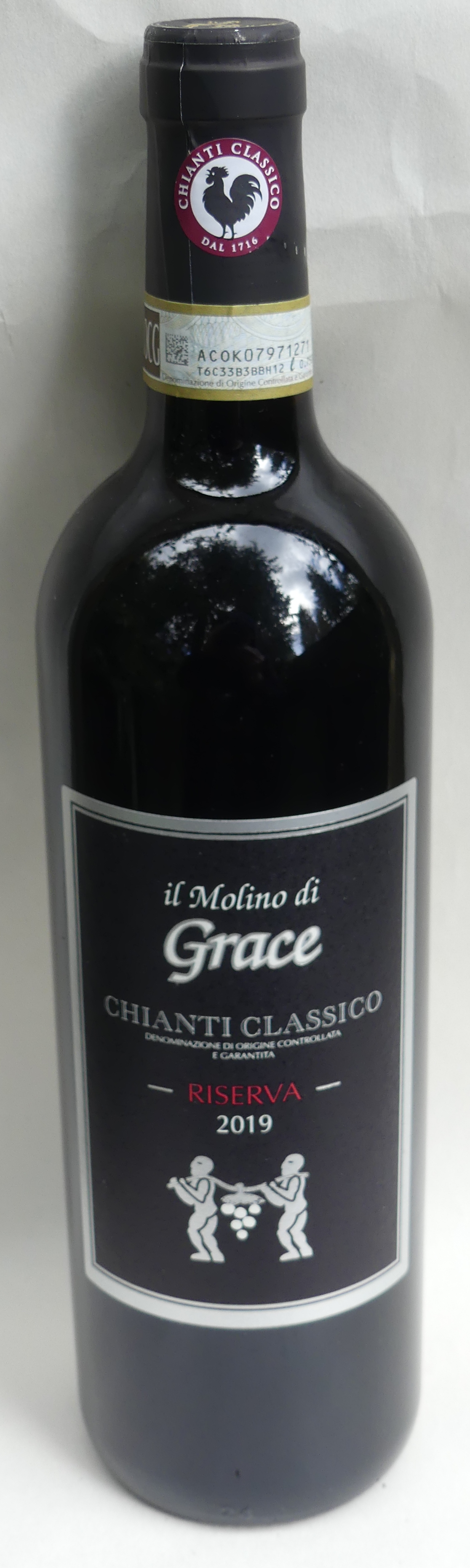
Chianti Classico Riserva 2020 ($51.99). This wine has a lovely core of fruit, an almost unexpected richness for a Sangiovese wine. That is complimented by notes of cherry and spice, with a long finish. 92.
Chianti Classico 2020 ($38.99). The style of this wine, which is 100% Sangiovese, is brighter and leaner, with flavours of red fruit and with firm tannins. 90.

Friday, March 15, 2024

Staying in business: optimism at Pentâge Winery

Photo: Paul Gardner and Julie Rennie
The past two winters undoubtedly have been the most challenging that Paul Gardner and Julie Rennie have experienced since 1996, when they bought a derelict orchard at the south edge of Penticton for a vineyard. They have been selling the products of Pentâge Winery since 2003 although the tasting room opened only in 2011, initially in the massive 500 square-metre (5,500 square foot) cave that Paul dug from the crown of hard rock commanding this winery’s million-dollar view of Skaha Lake.
Paul farms the winery’s two Skaha Bench vineyards, which total 6.5 hectares (16 acres), growing so many varieties – including even Zinfandel - that one vineyard is called the Dirty Dozen. “I would still rather make small lots of interesting wine than big tanks full of wine,” he says. The winery has been producing about 5,000 cases of wine in most years and has developed a strong following. But the last two hard winters will have an impact on the winery’s production that will test the dedication of Pentâge’s patrons. Judging from a recent winery newsletter, Paul and Julie are up to the challenge.
They write: We trust this newsletter finds you in good health. Like many of you, we are eagerly awaiting the arrival of spring.
We wanted to take a moment to provide you with an update on the recent challenges our vineyards have faced due to the severe winter weather in the past two years. Temperatures as low as -27°C were recorded in our area early this past January, serving as a reminder of Mother Nature’s firm hand and our primary role as farmers. Over the past couple of years, we have certainly felt the impact, experiencing some top loss last year, and this year we are observing some bud damage. Contrary to some media reports, we are not currently seeing as much potential damage during pruning. However, the true extent of this year’s damage remains unknown until the vines begin to grow around May or June.
Encouragingly, last year the vines were able to make headway to recovery from the cold snap in 2023. With the benefit of an early 2023 harvest and a fall fertilization program, we're keeping our fingers crossed that the vines have weathered this recent cold event. As we navigate these challenges, we want to assure you that we remain optimistic. Currently, we are in the midst of vineyard pruning, carefully tending to the vines in anticipation of the upcoming growing season, hopeful for a positive outcome.
Do we have wine? Absolutely. Thanks to our practice of bottle aging most of our wines at the winery, the potential worst-case impact of these two cold winters will not be noticeable for several years for the reds and our Rhone white blend. Unfortunately, our fruit-forward whites may experience some impact, resulting in limited quantities. Currently, some of the 2023 wines are in tanks waiting to be bottled. Despite a 50% reduction in yield in 2023, the small and highly concentrated berries have us extremely excited about this vintage.

Monday, March 11, 2024

Blue Mountain releases 2022 Gamay Noir

Photo: Blue Mountain's Matt Mavety
When Blue Mountain Vineyard & Winery released its 2022 Gamay Noir, the release was only to its wine club. Consumers of British Columbia wines should expect to see that limitation often during the next few years. Due to winter damage to the Okanagan’s vineyards, wine production in the 2023 vintage was about half the expected quantity. And the severe freeze in January this year is expected to result in even less wine being made in the 2024 vintage. The result: wineries have begun to ration their limited wine inventories. And that will continue for several years because it will take the vines several years to get back to normal production, assuming some several normal winters.
Many British Columbia wineries are expected to continue making wine if they are allowed to import grapes. There seems to be a surplus of grapes in Washington. However, Blue Mountain is highly unlikely to resort to imported grapes. The winery has earned a high reputation with its estate-grown wines and will do what is necessary to protect that reputation. Blue Mountain also should have a good inventory of wines, including sparkling wines, from previous vintages. But if you want to be assured of drinking some, now is the time to join the wine club – if you are not already a member.
The Gamay Noir is, I believe, the first Blue Mountain red to be released from the excellent (and bounteous) 2022 vintage. The varietal is generally regarded as a little brother to Pinot Noir. The book Wine Grapes by Jancis Robinson and colleagues suggests the varietal is a “Burgundian refresher making wines generally but not always for early consumption.” Blue Mountain aims for more complexity, recommending its Gamay Noir can be aged for four to six years. Winemaker Matt Mavety has grown and made a wine reminiscent of a Beaujolais Cru, perhaps Morgon or Moulin-á-Vent.
This is a varietal that several dukes of Burgundy sought to banish. Duc Philippe le Hardi sought to outlaw it in 1395. The Robinson book quotes this decree, in which he calls the varietal a “very bad and disloyal” grape “from which come abundant quantities of wine. And this wine of Gaamez is of such a kind that it is very harmful to human creatures, so much so that many people who had it in the past were infested by serious diseases, as we have heard; because said wine from said plant of said nature is full of significant and horrible bitterness.” Growers were given five months to pull out their Gamay vines. There were subsequent orders to pull out the varietal in 1567, 1725 and 1731. Fortunately, none of these were obeyed fully. It is the seventh most planted red in France. Today, some of the best red wines in Burgundy are the ten Cru Beaujolais, made with well-grown Gamay Noir on very good sites. The Blue Mountain wine, as I have said, echoes Cru quality.
Here is a note on the wine.
Blue Mountain Gamay Noir 2022 ($30). The hand-harvested fruit went into open-top fermenters, macerating 18 days on the skins with daily pump-overs. The wine was fermented in barrel with natural yeast. It was then drained off the skins and aged a year in neutral oak barrels. The wine begins with aromas of cherry mingled with spice. On the palate, it is rich, even bold, with flavours of cherry and plum and with a silken finish. The ripe tannins support the age-worthiness of the wine. 92.

Thursday, March 7, 2024

River Stone's strategy to stay in business.

Photo: River Stone's Ted Kane
After the devastating vineyard damage of the two recent winters, some Okanagan and Similkameen wineries have begun to disclose to their wine clubs strategies for staying in business. At River Stone Estate Winery, Ted Kane – the owner, viticulturist and winemaker – expects limited production from his vineyard. He plans to make white and rosé wines in the 2024 vintage while relying on his inventory of red wines from previous vintages to keep his consumers supplied. River Stone was opened in 2011 by Ted and his wife, Lorraine, who is a doctor in the South Okanagan. The winery is on a seven-acre vineyard northeast of Oliver. It was developed by Ted primarily with Bordeaux red varietals. He has produced some outstanding wines and will continue to do so when weather patterns return to normal.
Here is what Ted wrote this week to River Stone’s customers:
Many of you are probably aware of recent media attention directed toward BC wineries and grape growers related to the widespread vineyard damage resulting from the cold weather event this January. The reality is the wine industry has taken another significant hit with the exceptional, and untimely cold weather snap occurring between January 11th and 14th. You probably have heard me say, as I firmly believe, “Mother Nature Runs the Show”. And we must adjust our practices as best we can to compensate and continue to produce the highest possible quality wines.
This extreme cold (as low as -30) in the valley followed the previous year’s cold snap, where vines had already been significantly damaged. Bud dissection in and around our area of the valley indicate significant primary and secondary bud damage: probably in the range of 60-100% bud loss depending on varietal. We really won’t know for certain until early to mid May as the vines will declare themselves and show the results. We are hoping for the best (as farmers always do) but planning for the worst. At this time we are pruning our vineyards in such a way to allow close to 100% more buds than usual while we wait for spring bud break.
Since our arrival in the valley in 2001 (initiating the planning, preparing, and planting our vineyards) we have had over 20 years of consistent vine health and production. This gives me hope that the future of our industry will be bright. Two bad years back-to-back is difficult to take and with climate change, the reality is that changes must be made from the ground up for long-term industry sustainability. Following last season’s harvest, we had decided to concentrate our wine production from the limited fruit available, on white and rosé wines, and not make reds from the vintage (as we have ample reds under development in barrel and in the cellar and library to carry us along for a while). Depending on what happens in our vineyards this season (and the vineyards of BC as a whole) will guide us in our future wine production.
At River Stone, we believe our terroir encompasses the physical characteristics of our vineyard sites, vineyard canopy management practices in harmony with Mother Nature, winemaking philosophy, and our skilled team from the vineyards and winery, to operations and tasting room. Whatever the future holds, we are confident we will navigate the challenges ahead, supported by our strong foundations.

Sunday, March 3, 2024

Lakeboat is a star of Kaleden wine country

Photo: Kaleden Hotel Recently, I heard a rumour that Kaleden’s iconic landmark, the skeleton of the old Kaleden Hotel, might need to be demolished in the interest of public safety. I hope that is not so. Just last year, the Regional District of Okanagan-Similkameen was reported to have engaged engineers to prepare plans for structural upgrades.
The old building, along with Linden Gardens, long have attracted visitors to this sleepy village just 15 minutes south of Penticton. The village has come to life in recent years with five wineries now operating amid the vineyards. When I went to search the history of the hotel, Copilot, the artificial intelligence tool now added to Microsoft, churned out a brief history:
“In 1911, the Kaleden Hotel was constructed with four stories of hand-mixed concrete. The visionary behind this endeavor was Jim Ritchie, an enthusiastic entrepreneur. He saw Kaleden as a potential service center for the mines along the forty-ninth parallel. Both the hotel and the store across the street reflected this concept.
“The hotel boasted modern amenities for its time, including electric light, running water, private sleeping porches, and exclusive dining rooms. It even had its own power plant, powered by a water-driven generator. Despite its impressive features, the Kaleden Hotel faced financial challenges. It failed to become financially profitable, although its service quality compared favorably with other valley buildings.
“The outbreak of World War I (1914–1918) may have contributed to the hotel’s closure. Additionally, improved roads and faster transportation diminished the need for a stopover point in the small community. Over the years, the hotel served various purposes, including housing the Kaleden Irrigation District office and providing change rooms for young swimmers during summers.
“The hotel’s shell endured, a testament to its once-grand presence. However, it remained closed for an extended period. In the late 1930s, the hotel was sold and stripped of a significant portion of its construction materials and furnishings. While the hotel’s physical structure has changed over time, its legacy lives on, echoing the stories of travelers, residents, and the vibrant community that once thrived within its walls.”
One of those five wineries is Lakeboat Vineyard & Winery, which opened in 2022. It is owned by Tara Mathison (above), a former Calgary lawyer who got involved in Kaleden when she decided in 2016 to buy and restore a heritage house. It happened that the house was beside the failing Topshelf Winery. Tara bought it in 2017 and has since restored both the winery and neglected vineyard.
As her winemaker, she engaged Mireille Sauvé (above), a former sommelier who also makes wines under her own label, The Wine Umbrella. Small batch wines, they generate funds to help an organization called Les Dames d’Escoffier which supports and educates women in the wine business. Both wine labels are sold at Lakeboat’s elegant tasting room in Kaleden.
Perhaps the village of Kaleden might ask Tara if she has any ideas for renovating the old hotel. Here are notes on current wines;
Lakeboat Pinot Gris 2022 ($21.95). This is a bright, refreshing take on the Okanagan’s most widely planted varietal. It begins with aromas of citrus and peach, leading to flavours of peach and apple. Good acidity gives the wine a crisp and vibrant finish. 91.
Lakeboat Chardonnay 2021 ($26.95). The wine is lightly oaked, giving the wine a creamy texture with a note of vanilla in the aroma. On the palate, it delivers flavours of apple, pineapple and apricot. The finish lingers. 91.
Lakeboat Rosé 2022 ($18.95). Slightly off-dry, this Pinot Noir rosé presents with an appealing hue. It has aromas and flavours of strawberry. 88.
Lakeboat Pinot Noir 2021 ($29.95). This wine has aromas and flavours of strawberry and raspberry. Light-bodied on first pouring, it develops with breathing to display notes of dark cherry with a hint of forest floor on the finish. 90.
The Wine Umbrella Chardonnay 2022 ($33.45). This wine was fermented in American oak barrels. The wine has aromas and flavours of pineapple mingled with apple and citrus. The oak adds a subtle spice supporting the fruit-driven flavours. The finish persists. 92.
The Wine Umbrella Co-Syrah 2020 ($39.95). This Syrah wine is so named because the fruit was co-fermented with Viognier. The wine was aged a year in French oak barrels. It is a delicious wine, beginning with aromas of dark fruits that lead to flavours of plum and fig. A touch of black pepper wraps up the wine, whose flavours linger on the palate. 92.