Thursday, June 23, 2022

Nota Bene 2020 may be the best one yet

Photo: Ross Wise MW
Ross Wise MW has brought fresh ideas to making the wines at Black Hills Estate Winery since joining the winery three years ago. The recently-released Nota Bene 2020 is a case in point. This is arguably the most delicious Nota Bene ever made since this iconic red debuted in the 1999 vintage. For the first time in its history, the leading red varietal in the blend is Cabernet Franc. Over the previous 20 vintages, Nota Bene has been anchored by Cabernet Sauvignon, with a few exceptions when Merlot took the lead. Cabernet Sauvignon also anchored the original plantings at the Black Hills vineyard in 1996. When the winery released one fine Nota Bene after another, there likely did not seem a reason for changing the recipe. My guess is that the initially modest Cabernet Franc block has been increased in recent years as more and more producers awakened to the potential of the varietal.
In 2017 Andrew Peller Ltd., Canada’s largest publicly traded wine company, acquired Black Hills and its portfolio of exceptional and interesting wines. Peller recruited New Zealand–born Ross Wise as the winemaker. He came to Canada to join Flat Rock Cellars in Ontario in 2009. He left there in 2012 and, for the next four years, consulted with a number of Ontario wineries. He came to the Okanagan in 2016 to join Phantom Creek for three vintages before moving to Black Hills early in 2019. Ross has his winemaking degree from Charles Sturt University in Australia and completed his Master of Wine studies in 2020. Nota Bene 2020 is, one might say, a masterly wine. Ross has a sure hand in the cellar, as the winery’s other current releases show.
Here are notes.
Black Hills Rosé 2021 ($29.99). The beautifully-packaged rosé is a blend of 70% Syrah, 16% Grenache and 14% Mourvedre. Pale salmon in hue, it begins with aromas of raspberry. On the palate, delicate raspberry and strawberry flavours mingle with notes of herbs and a suggestion of pepper. The wine is dry, with a backbone of minerals. 90.
Black Hills Alibi 2020 ($27.79). This white blend has been the partner to Nota Bene almost from the start. The current vintage is 78% Sauvignon Blanc, 22% Sémillon. Aromas and flavours of lime and herbs mingle with guava on the palate. 90.
Black Hills Chardonnay 2019 ($29.90). Barrel-fermented in French oak, the wine has aromas and flavours of butter, marmalade, apple and stone fruit. Bright acidity keeps the wine fresh and lively. The finish lingers. 91.
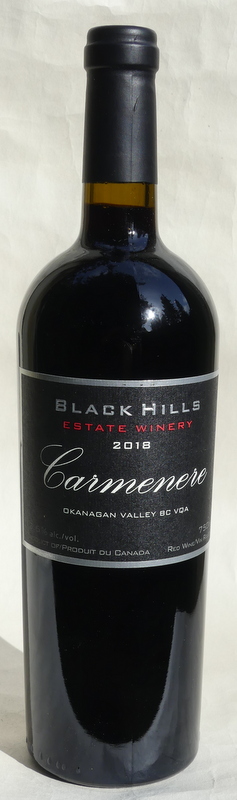
Black Hills Carménère 2018 ($68.90). This varietal, planted first in the Okanagan by Black Hills, has developed a remarkable cult following of its own – and is available just to wine club members. The wine begins with aromas of pepper. On the palate, the pepper mingles with leather and fig. The wine is rustic, but in an interesting way. It is a long-lived red. 92.
Black Hills Syrah 2018 ($39.90). This is a fine example of South Okanagan Syrah. It begins with aromas of cherry, plum, boysenberry and pepper. It delivers rich dark fruit flavours to the generously textured palate. 93.
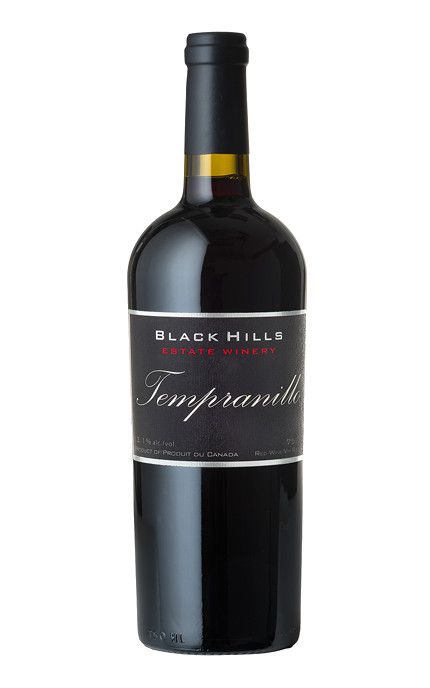
Black Hills Tempranillo 2018 ($59.90). Black Hills is also one of the wineries to give this Spanish red variety a home in the South Okanagan. This is a lean, bright and fresh red with aromas and flavours of huckleberries, cherry and spice. 92.
Black Hills Ipso Facto 2019 ($49.90). This is a fine alternative wine for those who miss out on Nota Bene releases. It is a blend of 53% Syrah and 47% Cabernet Sauvignon. The wine begins with aromas of cassis and cherry mingled with black olive and chocolate. It is full-bodied with flavours of black currant and dark fruits. The finish lingers. 93.
Black Hills Nota Bene 2020 ($69.99). The blend is 42% Cabernet Franc, 33% Cabernet Sauvignon, 24% Merlot and 1% Petit Verdot. This wine is from the best vintage in a decade, when the season delivered balanced and elegant wines. This wine begins with aromas of black currant, black cherry and spice. The flavours are intense, with dark fruits mingled with plum, blueberry, mint and chocolate. Generous in texture, the wine has long, ripe tannins. The finish persists. The 2020 Nota Bene delivers immediate pleasure but has the structure to deliver even more complexity as it is cellared over the next decade. 95.

Tuesday, June 21, 2022

Kamloops, Similkameen and Creston: major vineyard planting in new area

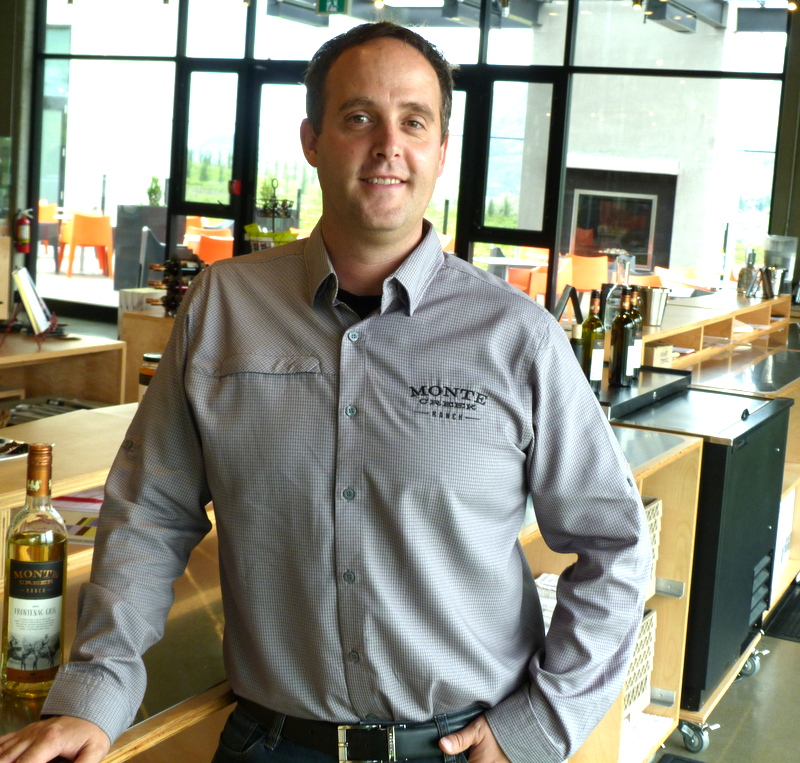
Photo: Monte Creek general manager Erik Fisher
Two recent wine industry announcements are confirming the rising importance of the Thompson River Valley to the British Columbia wine industry. It is also part of a trend that sees major producers try to expand the footprint of winemaking with purchases in the Similkameen Valley and even near Creston.
In mid-June, Monte Creek Winery General manager Erik Fisher announced that his company has invested $10 million in its Kamloops area facility. That announcement wrapped up information that, for the most part, had been disclosed in pieces previously. The final number is an impressive vote of faith in the Thompson River Valley. Monte Creek’s owners originally bought a large piece of property east of Kamloops in 2007, intending to grow blueberries. When it was discovered that blueberries would not thrive there, the backup plan was grapes, given that there already were a couple of small vineyards established in in the Thompson River Valley. Now, Monte Creek is all in with 75 acres of vineyard (along with another 40 acres in the Similkameen Valley). The original winery, completed in 2015, has been augmented significantly with a gravity-flow production facility and, most recently, a 5,000-square-foot greenhouse.
A few weeks earlier, Andrew Peller Ltd. announced a memorandum of understanding to explore the viticultural potential of the Tranquille farmland near Kamloops. Peller’s initial steps are cautious (as one might expect from a publicly-traded company). However, since Peller is one of Canada’s oldest wine companies, it is hugely significant that it has put its toe into an emerging wine region. Peller’s MOU was signed with Ignition Tranquille Developments Ltd., which controls the land being assessed for vineyard potential. Over the next two years, Peller will collect microclimate data and do soil analysis. The wine company needs to know how many frost-free days the site has; what are the growing degree days; and, most important, how cold it gets in winter. “Once these questions are answered, based on robust two-year-data collection, Andrew Peller Ltd. will make recommendations to Ignition and move forward with 5-acre parcels of agreed-to varietals, with an expected planting date of spring 2025,” Peller’s news release said. Whether there is a smooth road ahead is in question. An environmental coalition called Transition Kamloops Network began marshalling objections last year to developing the Tranquille site.
Currently, there are four wineries in the Thompson River Valley. Sagewood Winery, has a 3 ½ vineyard begun in 2005, opened in 2014. Harper’s Trail Estate Winery opened in 2012, based on a vineyard which was begun in 2008 and has grown to 27 acres in size. Privato Vineyard and Winery also opened in 2012 on a three-acre vineyard begun in 2010.
Monte Creek(above), whose owner Gurjit Sidhu is a major blueberry grower and nurseryman in the Fraser Valley, has emerged as the largest winery in the Kamloops region. Its 75-acres of vines are spread across two vineyards. The one on a south-facing slope on the north side of the Thompson River is planted mostly to vinifera varietals. The one on the plateau on which the winery and tasting room are located grows both vinifera and Minnesota hybrids. The Minnesota hybrids were developed in Wisconsin and Minnesota to be exceptionally winter hardy. For that reason, these varietals are grown in most Quebec vineyards, where the growers replaced the number identification of the varieties with names appropriate to wine labels. Consequently, Monte Creek grows Frontenac Gris, Frontenac Blanc, La Crescent and Marquette, among others.
Photo: Frontenac Gris grapes I expect Andrew Peller will want to assess the Minnesota hybrids, depending on the Tranquille Farms site, which is moderated by the nearby Thompson River and Kamloops Lake. It sounds like a site with potential, according to Dan Fritz, the president of Ignition Tranquille Developments Ltd. Here is his assessment from the news release issued by Peller and Ignition: “One of the things that attracted me to the Tranquille property was its agricultural history and the potential to establish quality vineyards on the property’s southerly sloping, mineral rich but gravelly soil. Only time will tell …”
While the Thompson River Valley has been getting all the recent attention, Anthony von Mandl’s Mark Anthony Group has remained out of the limelight while investing in vineyard land in the Similkameen Valley and, more surprisingly, in Creston. Ian Galbraith, Mark Anthony’s vice-president of corporate affairs, confirmed some of the details about the Similkameen in an email exchange in February. “Recently, we have made a few select investments in key parcels of land in the Similkameen Valley to help increase our knowledge and understanding of the unique climate and soils of this region,” he told me. “This particular parcel of land is currently a mixed fruit orchard that has been grown organically for the past 16 years. We see this as an amazing learning opportunity for our viticulture and winemaking teams to gain first-hand insights into the potential to grow high-quality, organic fruit in the Similkameen Valley.”
Through Evan Saunders, the winemaker at Blasted Church Vineyards (left), I confirmed a report that Mark Anthony Group in the summer of 2021 purchased the Mariposa Vineyard at the south end of the Similkameen. Blasted Church had been buying some of the fruit. There had been about 25 acres of vines in plantings begun in 2011 by a trio of partners including Karnail Singh Sidhu, owner of Kalala Organic Estate Winery. The partners once planned a winery but the project never came to completion. “It is an amazing vineyard with an incredible amount of potential,” Evan told me in February. “I would imagine they [Mark Anthony] will look to replant large pieces of the property. It isn’t in the greatest of health, but the stamp of the terroir is unlike any other vineyard I have worked with. We will certainly miss the fruit. It only produced tiny amounts, but it was a lot of fun and exciting to work with every vintage.” The Mark Anthony investment in Creston was confirmed to me by David Mutch, the co-owner of William Tell Family Estate Winery in Creston. He was a vineyard technician with Mission Hill from 2001 to 2005 before buying land for his small winery.
David says his former employer appears to have purchased property near two established Creston wineries, Baillie-Grohman Estate Winery and Skimmerhorn Winery and Vineyard. David also believes other properties have been purchased as well by Mark Anthony. “It makes me feel not as crazy now for buying in 2006,” David laughs.

Wednesday, June 15, 2022

Play Winery: what you want in the box at the theatre

Photo: Winemaker Stephanie Bryers
Tasting the sparkling wine from Play Estate Winery in Penticton somehow made me think of Johann Straus operettas and Vienna. No doubt, the founders of Play will think they have hit a home run, because the winery’s is themed entirely on references to the theatre. It worked for me. For some background, here is an except from my 2020 book, Okanagan Wine Tour Guide:
Everything about Play Estate Winery is theatrical, from its perch on a hillside overlooking Skaha Lake to wines with names such as Improv and Ad Lib. The winery is owned by Calgary hotelier Stagewest Hospitality which includes dinner theatres in many of its hotels. The company is managed by Jason and David Pechet, third generation members of a family that got into the business by building hotels along the Alaska Highway. Both are graduates of Cornell University’s renowned hotel management school. Both are also wine lovers. The winery was conceived Jason and Mohamed Awad, a former hotelier and winery manager in the Okanagan. On land leased from the Penticton Indian Band, they arranged to plant a 4.8-hectare (12-acre) vineyard and build the winery on a slope surrounded by an elegant residential development and close to Penticton’s airport. The winery, which opened with wines from the 2014 vintage, now produces about 5,000 cases a year, with triple that capacity. The winery also includes a year-round bistro, in line with the Stagewest philosophy of including multiple attractions in its properties. The estate vineyard is planted to Merlot, Cabernet Franc, Cabernet Sauvignon, Viognier, Sauvignon Blanc, Sémillon, Orange Muscat and Muscat Ottonel. Play also leases a three-hectare (eight-acre) vineyard in Kaleden which has Merlot, Cabernet Franc, Cabernet Sauvignon, Viognier and White Muscat.
The current releases are wines made by Stephanie Bryers, who joined Play in 2019 and has just moved on. Stephanie formerly was the assistant winemaker at Culmina Family Estate Winery. Born in Ontario in 1988, she acquired a passion for wines while working in a wine shop and taking sommelier training. A 2015 graduate of Niagara College, she made wine in New Zealand, Portugal and Ontario before coming to the Okanagan. Her successor at Play is Rebecca Ruggeri, who spent the previous four years as assistant winemaker at Hester Creek Estate Winery. Her first university degree was in criminology in 2008 but three years later, she switched to winemaking and viticulture, also at Niagara College.
Here are notes on the wines.
Play Teatro Moscato Frizzante 2021 ($28.99 for 298 cases). The appealing aromatics – citrus and spice – suggest that the wine may be off-dry. The wine is so well-balanced that, with the air of the bubbles, it has a crisp finish. In between the aroma and the finish, there is a delicious mouthful of fruit flavours. Indeed, this is the wine I would drink in a box at the Weiner Staatsoper while watching a Johann Straus operetta. 92.
Play Saignée 2021 ($30.99 for 90 cases). This is 41% Merlot, 22% Syrah, 18% Malbec, 11% Cabernet Franc and 8% Cabernet Sauvignon. This is a Provence-style rosé in an attractive bottle. The wine has aromas and flavours of cherry, strawberry and watermelon. The hint of residual sugar lifts the flavours and the texture. 90.
Play Sauvignon Blanc Sémillon 2021 ($29.99 for 143 cases). This is 66% Sauvignon Blanc and 34% Sémillon. The wine was matured in stainless steel (56%) and French oak (44%). There are aromas and flavours of herbs, lime and apple with a spine of minerality. 91.
Play Merlot 2020 ($37.99 for 200 cases). This wine was aged 16 months in French oak. It is concentrated in texture, with dark fruits and spice in the aroma and on the palate. Decanting is recommended; or cellar the wine for several years to let it develop all the complexity of a fine vintage. 91.
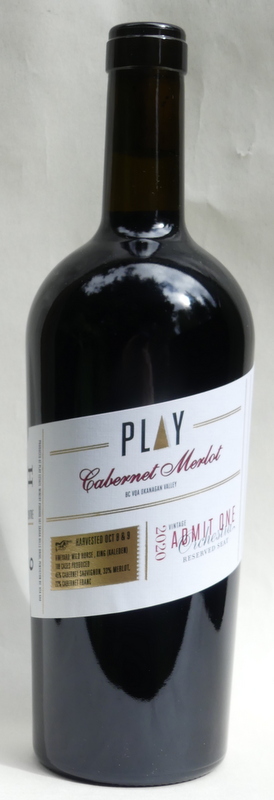
Play Cabernet Merlot 2020 ($38.99 for 108 cases). This is 45% Cabernet Sauvignon, 33% Merlot and 22% Cabernet Franc. It was aged 16 months in French oak. The wine is concentrated and full-bodied, with aromas of black currant and spice. On the palate, there are rich flavours of black cherry, fig, dark chocolate and coffee. The ripe tannins give the wine a long finish. This is definitely a wine for cellaring. 92.
Play Spotlight Malbec 2020 ($29.99). This wine, which was aged 16 months in French oak, is a bright, savoury expression of the varietal. It begins with aromas of spice and the classic perfumed notes of Malbec. On the palate, there are flavours of cherry, blueberry and plum. 91.

Saturday, June 11, 2022

Therapy produces private label wines for retirement residence

Photo: Therapy's Danica Boyd
About two years ago, Cheryl Tan, the sales and marketing manager for an elegant Vancouver retirement complex, tasted some wines from Therapy Vineyards while vacationing at a west coast resort. That led to her making a proposal to Mike and Jacqueline Boyd, the owners of Therapy, a Naramata Bench winery. She asked if Therapy would produce private label wines for Opal by Element, for sale in the in-house restaurant and to residents. Two of those wines, a white blend and a rosé, were unveiled at a recent reception by Danica Boyd, Jacqueline and Michael’s daughter. A third wine, a Pinot Noir, is scheduled to be bottled for Opal this summer. “I think this may be something they will continue with,” says Jacqueline Boyd.
Private labels wines constitute a new market for Therapy, but perhaps not one the winery will pursue aggressively. “I don’t think we are big enough to go after that market,” Jacqueline says. Therapy opened in 2005 on the site of the original Red Rooster Winery. Mike Boyd bought it in 2017 after his Alberta-based oilfields products company was taken over. The winery may have started as an early retirement project for the Boyds but they have been too dynamic is business to sit on their hands. Since taking over Therapy, they have renovated and expanded both the winery and the tasting room. In 2018, they also hired the talented New Zealand-trained winemaker Jacqueline Kemp. She had been the winemaker at Moraine Estate Winery since 2012, where she had designed an entirely new winery. She has also consulted to a number of other producers.
One of her reasons for moving to Therapy was the opportunity to make sparkling wines. Soon after moving to the Naramata Bench, the Boyds began developing a 22-acre vineyard to support sparkling wine. They have planted Pinot Noir, Pinot Meunier and Chardonnay for what they call Silhouette Estate Winery. So far, no tasting room has opened there but the Boyds have opened a satellite Silhouette winery in the District Wine Village just north of Oliver.
Guests at the recent Opal launch were also treated to glasses of the sparkling wine, called Boyd Silhouette Classic Cuvée. Opal is a $106 million project that opened in 2019, encompassing an entire block on Cambie Street in Vancouver, near the King Edward Station on the Canada line. It has 44 seniors’ residential condominium units, 56 seniors’ rental units and 30 seniors’ complex care units. The brochure describing Opal says: “Our elegant homes and condos suit a complete continuum of lifestyles, from active independent living to complex care … After all, you’re only retiring from a career, not from life. It’s simply a stage of life you have earned for yourself.” It is sophisticated locale and the Therapy wines fit the venue well.
For those with no access to Opal, the two private label wines also are in Therapy’s portfolio. The white is a blend Pinot Gris and Gewürztraminer, released by Therapy as Freudian Sip. The rosé, made with Merlot grapes, is released by Therapy as Pink Freud. Here are notes on the wines.
Opal White 2021. This is a zesty, refreshing white, the kind of wine that invited you to have a second glass. Aromas and flavours of pear mingle with notes of lychee. 91.
Opal Rosé 2021. Made with Merlot grapes, the wine presents in the glass with an appealing rose petal hue. There are bright flavours of strawberry and watermelon with a crisp finish. 91.
Boyd Silhouette Classic Cuvée NV. This wine has toasty, brioche notes in both the aroma and flavour. The active bubbles lead to a creamy impression on the palate. 90.

Friday, June 3, 2022

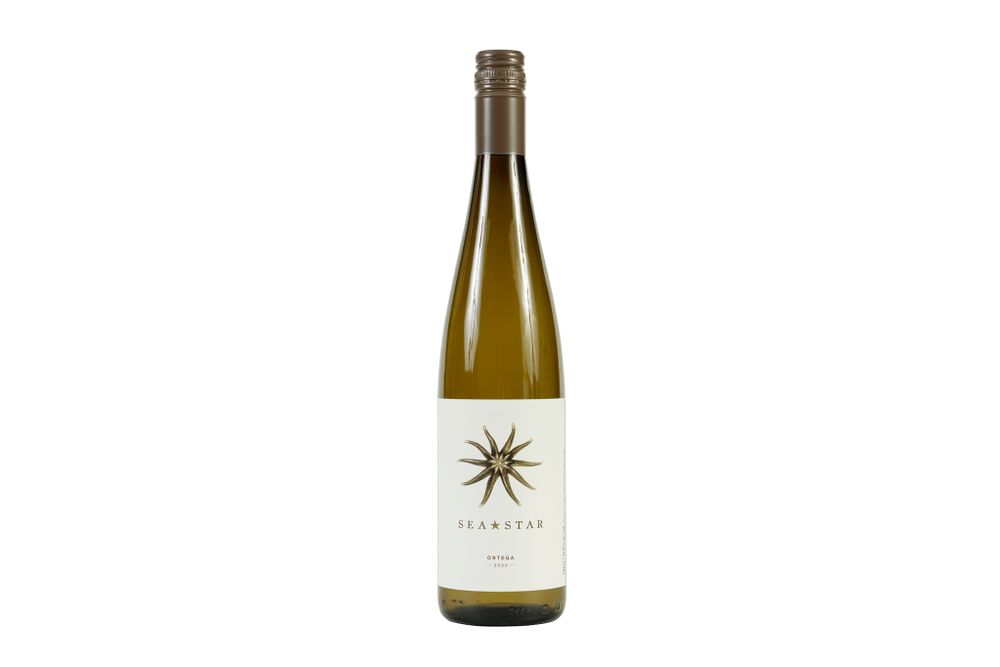
Sea Star Vineyards: new owner, same great wines

Photo: Sea Star proprietor Traci Warkentin
Fans of Pender Island’s Sea Star Vineyards will be pleased to learn that the winery’s new owner, Traci Warkentin, is increasing the production of these hard-to-get wines. A word of caution: don’t expect to find the wines on the lists of restaurants that serve so-called “cruelty” foods like foie gras. Traci, who is on leave from an environmental teaching post at York University, brings socially conscious values to running a winery. The winery avoids fois gras and veal because they believe that the practices of producing these cause direct harm to the animals. “Given my background, given my passion for environmental studies, environmental philosophy, animal ethics, there is such an opportunity here to bring those to the forefront,” she says. “I am purpose driven in all aspects of Sea Star wines. I am privileged that I can do that and make those choices.”
Initially, Sea Star arose from the ashes of Morning Bay Vineyards. After Morning Bay closed, the property was purchased in 2013 by David Goudge, a businessman with a home on Pender Island. The original winery, an attractive building set amidst the forest, was still there. So was the seven-acre vineyard that had been planted in 2002. David resuscitated the property with new equipment, a climate-controlled barrel cellar and an updated wine shop. Throughout seven vintages, the wines were critically acclaimed. Even though production peaked at 3,500 cases, the wines were snapped up quickly. Needing more grapes, David bought Saturna Island Vineyards, which had become derelict. Then, for personal reasons, David put both Sea Star and Saturna Island on the market in 2019, selling them in separate transactions. (Saturna Island re-opened in 2022 as Sage Hayward Vineyards.)
Traci and her husband, Bob Mann, a Toronto financial consultant, had a family home on Pender Island and were already familiar with Sea Star’s wines. Buying the winery has given Traci the opportunity to extend a long-standing interest in wine. “My background in biology and environmental sciences got me interested in the vineyard and in growing,” she says. “A casual interest was already there when the opportunity came up to purchase Sea Star. I saw it as a real opportunity to learn first hand. I am an experiential learner. That is the strength of my university teaching … hands-on learning. If I was going to learn how you grow grapes and make wine, then owning a vineyard and a winery was the best way to do that.”
She was born and grew up in North Vancouver. “In my mid-20s, I moved away to do a master’s degree in environmental philosophy,” she says. “I went to the UK to do that. From there, I did my PhD at York University in environmental studies. After I did my doctorate, I stayed on and did contract teaching for a while. Then I was hired tenure track in New York. I was at City University of New York in Manhattan for three years. Then I moved back to Toronto and got a tenure track position in my home faculty at York. I am still a professor at York University but I have taken unpaid leave to come and run the winery. I have been the general manager, running the winery for a full year now. I have stepped back from my academic career right now.”
Her background in environmental sciences, she says, “is what drives my passion to have that be the heart and centre of Sea Star.” Those values are expressed throughout the decisions made for the business. For example, to reduce the winery’s carbon footprint, Sea Star changed from a bottle supplier in China to one closer to home, in California. The winery also ordered lighter bottles and label stock made with recycled paper. “It has the lowest footprint of any label stock on the market today,” Traci says. “It is manufactured with 100% renewable electricity. It is chlorine free and carbon neutral.” Another example: some larger volume wines are allocated for sales in licensees in recyclable kegs, not bottles, to further reduce the winery’s carbon footprint. Sea Star’s vineyards are dry-farmed and, if herbicide is required, it is organic. The winery allocates revenues from some of its wine sales to the Raincoast Conservation Foundation on two local campaigns – conservation of the Southern Resident Killer Whale and purchase of 45 acres for forest protection.
“We had always been really impressed with David Goudge’s commitment to community participation and with the arts on Pender,” Tracy says. “He was already leaning toward environmentally conscious goals. We have picked up the torch and we want to take it as far as we can. What is important for me is for Sea Star to be a purpose-driven business. Having really progressive labour practices; having a very forward-looking environmental policy; making sustainable choices wherever we can.” The 2020 Sea Star vintage was the first under Traci’s control. Her winemaker is Dean Canadzich. Born in Western Australia in 1966, Dean was drawn to wine by working in vineyards after getting a diploma in horticulture. He moved to the Okanagan in 2007 to join La Frenz Winery, moving three years later to Cherry Point Vineyards near Duncan. He has made wine or consulted on island viticulture ever since. He has proved to be as able as Sea Star’s previous winemaker.
Limited by its access to fruit, Sea Star made just 1,500 cases in 2020. The winery more than doubled production in 2021 and hopes to produce 4,000 cases in 2022. “We have taken over Clam Bay Farms,” Traci says, referring to another Pender Island property from which David Goudge had begun sourcing fruit. “It is now really our vineyard and we lease the land. We are getting our Ortega, Siegerrebe and Pinot Noir grapes from Clam Bay Farms. We have the estate vineyard here at the winery. The rest of the grapes we are sourcing from the Cowichan Valley. We have some nice relationships we are building with growers in the Cowichan.” Sea Star also resumed buying some varietals in the south Okanagan in order to make Encore, a big Bordeaux red from grapes that would not succeed on Vancouver Island.
Here are notes on current releases.
Sea Star Ortega 2021 ($23.29). This is a crisp and zesty white, with aromas and flavours of spice, citrus and herbs. 92.
Sea Star Salish Sea 2021 ($23.29). This is a blend of Ortega and Siegerrebe. The wine is also crisp and zesty, with the Siegerrebe enhancing the fruitiness. There is pear, quince and grapefruit on the palate. 92.
Sea Star Stella Maris 2021 ($21.65). This is a blend of Gewürztraminer, Pinot Gris, Schönburger and Ortega. The wine begins with appealing aromas of spicy fruit, leading to flavours of pears and fresh apples. The finish is very long. 93.
Sea Star Intertidal 2021 ($21.65). This is a rosé made primarily with Bacchus and Pinot Gris. The hue is appealing in the glass. There are aromas and flavours of strawberry, cherry and plum. The finish is persistent. 92.