Saturday, September 15, 2018

Summerhill releases first biodynamic wines


Photo: Summerhill's Ezra Cipes

In a landmark release, Summerhill Pyramid Winery has sent its first two Demeter certified biodynamic wines to market.

The history and explanation was penned by winery president Ezra Cipes. Here it is, reproduced from the winery’s website.

My brother Gabe moved back to the family farm in 2004, and I followed in 2005. At that time our vineyard had been managed organically for 17 years. We noticed that the leaves were a little yellowish green and the crop was smaller than it should be. One of our mentors Gabriel Howearth described to us that no matter how you do it, farming is always mining. Crops mine nutrients from the soil, and we are hard on the land when we drive a tractor over it. Conventional farmers can add nitrogen fertilizer, but organically it is not so easy. We had to build up the soil so that nitrogen and other nutrients could be available to the vines, and so we set upon the Biodynamic path.

Biodynamics views the farm as an ecosystem, connected to the greater systems of the earth, solar system, and universe. It’s a wonderful feeling for the farmer to be a part of something greater than oneself, and the biodynamic program of composting and making special plant and manure preparations is demonstrably good for the farm. 

By 2012 my brother Gabe had been practicing Biodynamics for long enough that the leaves on the vines were green again and the crop level was back to a balanced, sustainable level. At that time we sought Biodynamic certification through Demeter Canada. Also at that time, we started to experiment with making wine biodynamically.

The biodynamic wine standard is quite beautiful. It describes “…the human being in the role of an artist to develop soil, fertility and plant in such a way that fruits of vital quality become available,” and then a production method so that “Nothing shall conceal the true nature of the factual properties of the produce.” Therefore when we make wine biodynamically we add no yeast or nutrient and no fermentation or processing aids of any kind. We create the right environment for the juice to turn naturally to wine, and we monitor the process. At the end we clarify the white wine with bentonite and add a little sulfur as a preservative. That’s it; that’s all.

The first year we made wine this way was 2013 with our Summerhill Vineyard Riesling. Winemaker Eric von Krosigk says the process gave him new gray hairs. The fermentation was slow and the wine developed H2S, which does not smell at all pleasant. Apparently this chemical reaction occurred because there was not enough nutrient in the juice for the yeast to do a tidy job. Eric ended up pumping that wine through the air into a new vessel so that the atmospheric oxygen could act as a nutrient for the yeast. The smell and taste of H2S receded and the wine ended up being beautiful for all its imperfection. We learned a lot about the health of our vineyard through that early trial, and have made wine in the same method from our estate grown fruit ever since. Now when we make wine biodynamically it is proof of the vitality of our vineyard.

This year we decided to see about certifying our wine as biodynamic through Demeter Canada. From the 2017 vintage we vinified Riesling and Gruner Veltliner as single estate varietal wines. Summerhill Vineyard is now healthy and vital to a point where the fermentation happened beautifully. Assistant Winemaker Michael Alexander says that the process is still stressful for the winemaking team, as the transformation of sugar to alcohol does not happen as quickly as when we add organic yeast to the crushed fruit, but after a few slow days it happens naturally and efficiently enough to show the true nature of the fruit and of the farm, and creates wine with an individualism that is the essence of the aesthetic pleasure a bottle can provide.

The wines are outstanding achievements. Here are my notes, along with notes on several organic wines released earlier in summer.

Summerhill Summerhill Vineyard Riesling 2017 Biodynamic ($32.20).  This wine great purity of fruit. It begins with citrus aromas. On the palate, there is a lovely dance between the residual sugar and the bright acidity. There are tangy flavours of lemon and lime. The moderate alcohol, 11.5%, contributes to the refreshing finish. 92.

Summerhill Summerhill Vineyard Grüner Veltliner 2017 Biodynamic ($32.20). Lightly golden in hue, the wine begins with aromas of melon and pepper. Pepper is often a characteristic of this varietal. Here, it also appears on the palate along with flavours of apple, melon and grapefruit. This complex wine has good weight on the palate, with a dry finish. Summerhill planted this varietal in 2013. 92.

Summerhill Alive Organic White 2017 ($21.28 for 3,200 cases). This is a blend of 37% Kerner, 27% Pinot Gris, 26% Gewürztraminer, 8% Chardonnay and 2% Riesling. The wine begins with herbal aromas mingled with pear and apple. On the palate, there are flavours of apple and citrus. The finish is crisp and dry. 88.

Summerhill Alive Organic Rosé 2017 ($20.70 for 600 cases). Made with Pinot Noir, the wine has a delicate pink hue. Fruity on the nose, it has flavours of wild strawberry. The finish is crisp and dry. 87.

Summerhill Alive Organic Red 2016 ($26.44 for 2,300 cases). This wine is 41% Syrah, 40.5% Merlot and 18.5% Cabernet Franc. It was partially fermented and aged for six months in 10,000 litre oak vats and then aged in neutral barriques for 12 months. The wine begins with aromas of spice cake and cherry. It is firm on the palate, with flavours of black currant mingled with cedar. 88.

Summerhill Organic Riesling 2017 ($25.29). The winery suggests this wine is “classically” balanced with 39 grams of residual sugar and 7.5 grams of acid. Reminiscent of a German Riesling, the wine has aromas and flavours of lemon and nectarine. The off-dry finish lingers. 89.

Summerhill Organic Syrah Malbec Rosé 2017 ($ Sold out). This is 72% Syrah, 28% Malbec – made by the saignée method. The colour is vibrant, the result of 24 hours skin contact. It begins with aromas of cherry and plum, leading to flavours of plum with an earthy hint. It is an assertive wine, with a hint of sweetness and lightly tannic spine. 90.

Cipes Blanc de Blanc 2012 ($46). Made with Chardonnay, this elegant sparkling wine has been on the lees at least four years. It has developed fine bubbles and hints of brioche in the aroma. On the palate, there are hints of green apple and citrus. The finish is crisp and dry. 92.

Thursday, September 13, 2018

Corcelettes Winery: Swiss flavour in the Similkameen


 Photo: Jesce and Charlie Baessler of Corcelettes

From its start in 2013 on a postage-stamp vineyard new Cawston, Corcelettes Estate Winery now is solidly established on 21 acres north of Keremeos in the Similkameen Valley.


The original Corcelettes winery was opened in 2013 on a three-acre vineyard near Cawston by Urs and Barbara Baessler and their winemaker son, Charlie. His wife, Jesce, has now joined the business to look after marketing and to manage the tasting room.

The original vineyard, which was sold last year, was planted just to white varieties, including Chasselas, the Swiss white varietal.

The opportunity to grow quickly came in 2015 when the Baessler family was able to buy the former Herder winery. That winery had operated from 2004 until it closed in 2013. The late Lawrence Herder had planted at least eight acres of vines, among them Syrah and Bordeaux reds, which grow so well here.


Charlie’s career in wine began at the Herder property in 2008. Born in 1985, he had just completed a science degree in 2007. While he was deciding what to do next, he began working for Herder, first in the vineyard and then in the cellar. When he finished the 2008 crush, he moved to Burrowing Owl Vineyards. He stayed there until his family began developing Corcelettes.

During the early years at Corcelettes, Charlie also worked at the Clos du Soleil winery, which was being planted just down the slope from Herder. “I have always had my eye on this place since I worked here,” Charlie says of the Herder property.

Charlie’s parents are from Switzerland, where the family farm on Lake Neuchatel was called Domaine de Corcelettes. Urs and Barbara emigrated to Canada, buying a grain farm near Brandon in 1978.

Urs and Barbara moved to British Columbia in 2007, attracted by mountains reminding them of Switzerland. They bought an organic garlic farm near Cawston and converted it to vines in 2010. This was the original vineyard, sold after Corcelettes moved to the larger property.

Being Swiss, the Baesslers included Chasselas, Switzerland’s most widely planted white, among the varietals in the original vineyard. That grape was one of three anchoring a white blend called Trivium. Now that Chasselas from the original vineyard is longer were available, the Baesslers have begun buying the grapes from St. Hubertus Estate Winery – the other British Columbia winery with Swiss owners.

At Corcelettes, Charlie recently released a single variety Chasselas wine. “We are looking to plant Chasselas at a vineyard in Cawston that is a little bit cooler,” Jesce says. “This site here is too hot in the summer and too cold in the winter. In Switzerland, Chasselas is all grown near Lake Geneva – not too cold in the winter and not too hot in summer.”

The Herder property taken over and extended by the Baesslers grows excellent big reds. “Cabernet Franc is one of our rock star varietals in this vineyard,” says Jesce. “Merlot, Cabernet Franc and Syrah are our three cheer leaders.

The winery’s original tasting room was part of the baronial house which Lawrence Herder had turned into a winery. Charlie and Jesce took over the top two floors of the house after the birth of their twins. The tasting room was moved down to the winery level, which is now crammed as production increased at Corcelettes to 3,000 cases a year.

The new tasting room, which opened in late August, 2017, allows Corcelettes to greet winery visitors away from the production area. The view from the tasting and its deck offers a panorama over the Similkameen Valley.

The vineyard, now more than 15 acres, has given Charlie access to red varieties and to Chardonnay. The winery also purchases grapes from several other Similkameen vineyards, allowing it to offer a full portfolio.

A note on names. The elder Baesslers they had a farm  in Switzerland named Corcelettes. Menhir, the winery’s excellent Cabernet Syrah blend, takes its name from stone monoliths found in Europe. 

Here are notes on the wines.

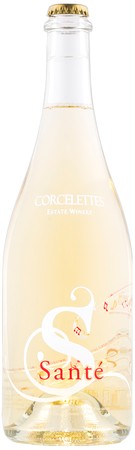
Corcelettes Santé 2017 ($19.04 plus tax). This is the winery’s first sparkling wine, a carbonated response to the rising demand for sparkling wines. It is a blend of 60% Pinot Gris and 40% Chardonnay. It begins with fruity aromas. It has flavours of citrus and pear, with a crisp, refreshing finish. 90.

Corcelettes Trivium 2016 ($19.90). This is a blend of 40% Chasselas, 35% Pinot Gris and 25% Chardonnay. The wine begins with aromas of apple, with a note of wet stone minerality. On the palate, there are flavours apple, pear and lychee. This is the final vintage of Trivium because the grapes in the blend are directed now to sparkling wine and to varietal Chasselas, which has just been released. 90.

Corcelettes Chasselas 2017 ($21.65 for 92 cases). This refreshing white just screamed for a cheese fondue, the classic Swiss pairing. The wine begins with aromas of peach and citrus. On the palate there are layers of lemon, pineapple and quince flavours. The wine is available only at the winery. 92.

Corcelettes Gewürztraminer 2017 ($17.90 for 175 cases). The wine begins with floral and spicy aromas leading to flavours of grapefruit and pineapple with a spicy finish. 90.

Corcelettes Oråcle 2017 ($19.90 for 190 cases). This is made with Zweigelt, a variety that Charlie has been getting for several vintages from LadyHawke Vineyard near Keremeos. It only took four hours of skin contact with half the grapes to achieve a festive pink hue. The wine has aromas and flavours of wild strawberry and strawberry on the refreshing and dry finish. 90.

Corcelettes Pinot Noir 2017 ($24.90 for 575 cases).  Deep red in colour, the wine has aromas and flavours of cherry and strawberry. It is juicy on the palate, with a developing silky texture. 90.

Corcelettes Merlot 2015 ($26.90). This wine was released last October. The aromas are powerful, beginning with notes of blueberry and black currant jam. The texture is rich and concentrated, with flavours of black currant, black cherry and plum. 92.

Corcelettes Merlot 2016 ($26.90 for 490 cases). The release of this wine is imminent. It begins with aromas of black cherry and blueberry leading to flavours of black currant, black cherry, vanilla and cedar. The tannins are firm but ripe. The wine will cellar well. 91.

Corcelettes Menhir 2015 ($31.90). This is a blend of 60% Cabernet Sauvignon and 40% Syrah, fermented and aged 16 months in oak puncheons. It is a round and generous wine, with sweet fruit aromas and flavours of black cherry, cassis and mocha. 93.

Corcelettes Meritage 2015 ($34.90). This is 60% Merlot, 25% Cabernet Franc, 10% Cabernet Sauvignon, 3% Malbec and 2% Petit Verdot. The wine was aged 16 months in a combination of French and American barrels and vats. It begins with aromas of cassis and vanilla, leading to flavours of black currant, black cherry, tobacco and dark chocolate, with a spicy note to the lingering finish. 92.

Corcelettes Meritage 2016 ($34.90 for 325 cases). The release of this wine is imminent. The blend is 46% Merlot, 34% Cabernet Franc, 4% Malbec and 2% Petit Verdot. This is an elegant and polished red, with aromas of black cherry, cassis and vanilla. On the palate, there are flavours of black cherry and black currant mingles with notes of dark chocolate and cedar. Once again, there is a lingering, spicy finish. 92.

Monday, September 10, 2018

Blue Mountain: wines you can count on


Photo: Blue Mountain winemaker Matt Mavety


Few wineries in the Okanagan have been as consistent as Blue Mountain Vineyard and Cellars.

The quality begins with the meticulous viticulture in this Okanagan Falls vineyard which was established in 1971 by Ian and Jane Mavety.

Since the mid-1980s, when the Mavety family decided to establish a winery, the vineyard has been given over to the premium wine varietals of Burgundy, Alsace and Champagne – varietals best suited to this terroir.

When they began making commercial wine in 1991, they employed an excellent consultant from California. Meanwhile, they sent their son, Matt, to New Zealand to become a winemaker. He has been Blue Mountain’s winemaker since 1997.

The same well-trained winemaker working only with estate-grown grapes and with a constant focus on a disciplined portfolio adds up to consistent quality.

The releases this summer exemplify that. Here are my notes.

Blue Mountain Sauvignon Blanc 2017 ($18.90). This wine was fermented and aged five months in a combination of stainless steel, neutral oak and foudres, building texture while keeping the fruit bright. It begins with aromas of grapefruit and herbs. On the palate, the are flavours of lemon and grapefruit. Caution: do not overchill this white. The flavours and aromas open as the wine warms a bit in the glass. 91.

Blue Mountain Pinot Blanc 2017 ($17.90). The wine is crisp and focussed, with aromas and flavours of green apple and melon. There is a hint of lees on the nose as well. The wine has good weight on the palate but a tangy finish. 91.

Blue Mountain Pinot Gris 2017 ($20.90). The grapes (from 31-year-old vines) were whole cluster pressed. The fermentation was 39% in stainless steel; the remainder was fermented in a combination of oak (foudres, barrels and casks) and aged six months on the lees. The wine begins with aromas of pear and herbs. The wine has a rich texture on the palate, with flavours of pear and cantaloupe and a hint of anise on the lingering finish. 92.

Blue Mountain Brut NV ($27.90). This bottle-fermented sparkling wine is made with Pinot Noir, Chardonnay and a little Pinot Blanc. The wine was aged 14 months on the lees before being disgorged. It is crisp and dry, with aromas of citrus and brioche. On the palate, there are flavours of apple, citrus and brioche. The lively mousse gives the wine a creamy texture on the palate. 92.

Blue Mountain Pinot Noir 2016 ($29.90). The winery used six different clones from vines ranging 10 to 32 years of age. The grapes were destemmed and fermented in open top fermenters, with 16 to 20 days of maceration and with light pump-overs. The wine was aged about 17 months on French oak barrels. The wine has a fine rich hue, leading to aromas of lightly toasted oak mingled with black cherry and plum, echoed on the palate. The wine had a velvet texture. On the finish, there is a pleasantly earthy note. 92.

Sunday, September 9, 2018

Howling Bluff pursuit of excellence


Photo: Howling Bluff proprietor Luke Smith 


At Howling Bluff Estate Wines, proprietor Luke Smith’s pursuit of excellence never ends.

Although he is the winner of several Lieutenant Governor’s Awards of Excellence, he engaged consultant Pascal Madevon this spring for advice on viticulture and on practices in the winery.

“He is not going to change our style,” Luke says. “He is going to make us better at what we do. In this industry, if you stand still, everybody is going to pass you. It does not matter how good we have been in the past, I need to get better.”

I profiled Luke in my 2017 book, Icon: Flagship Wines from British Columbia’s Best Wineries. The wine featured was the Summa Quies Pinot Noir, now renamed Century Block Pinot Noir because Summa Quies did not resonate with consumers. I could have featured all of the winery’s Pinots.

Here is an excerpt from the book:

This Naramata Bench vineyard has evolved dramatically since proprietor Luke Smith planted primarily Bordeaux varietals in 2004. Today, Pinot Noir has taken over as the lead varietal, with three blocks totalling 2.6 hectares (6.5 acres).

Luke, whose mother, Lynda Smith, was secretary of the International Wine and Food Society’s Vancouver chapter, became a stockbroker after getting a degree in economics. Success in business enabled him to collect wines and visit favourite wine regions. He bought this Okanagan property in 2003, intending to produce great Bordeaux-style wines. He planted a small block of Pinot Noir because he had been told it was a difficult variety; that appealed because he likes being challenged. “There was never meant to be a Pinot here,” he says. To his surprise, Howling Bluff’s first major award was earned by his 2006 Pinot Noir. “Mother Nature is telling me that my vineyard makes a good Pinot Noir,” he admits.

As painfully expensive as it was to replant much of what he named the Summa Quies Vineyard, Luke believed he had to do it to produce superior wines. “I have come to the conclusion that one out of four years on the Naramata Bench, you have the possibility of making a world-class Bordeaux blend with just Bench grapes,” he says. “But three out of four years, you have a chance of making a world-class Burgundy, or Pinot Noir, on the Bench because of the weather. So why would I fight that?”

The experience turned him into a Pinot Noir champion. “Pinot Noir is one of the best wine [grapes] in the world,” he says with a convert’s conviction. “The most memorable wines I have ever had have been Pinot. What an incredible grape! You can make Champagne, table wine, and rosé. There is the magic and the versatility of the heartbreak grape.”

Luke still makes a small-lot Bordeaux blend called Sin Cera, as well as a Sauvignon Blanc and a blend of that grapes and Sémillon.  In the 2018 vintage, he also will make a Pinot Gris from a three-year-old planting in the vineyard.

Here are notes on some of the current releases.

Howling Bluff Sauvignon Blanc 2017 Three Mile Creek Reserve ($20). This is a Graves style white. Sixty percent was fermented and aged four months in a new French oak puncheon; the remainder was in stainless steel. This is an intense wine with aromas of grapefruit and herbs mingled with subtle oak. On the palate, bright acidity and minerality frame grapefruit and gooseberry flavours. 91.

Howling Bluff Sauvignon Blanc Sémillon 2017 ($20 for 850 cases). Aromas of lime, grapefruit and herbs precede layers of tropical fruit flavours. The finish is crisp. 91.

Howling Bluff Rosé 2017 Three Mile Creek ($35 for 275 cases). Made with Pinot Noir grapes, this wine is packed with aromas and flavours. It presents in the glass with a vibrant colour. Dramatic aromas of cherry, strawberry and rhubarb bound from the glass and are echoed on the palate. The wine is juicy and refreshing with a lingering finish. 91.

Howling Bluff Pinot Noir 2015 Three Mile Creek ($35). This richly satisfying Pinot Noir is made with equal parts clone 777 and clone 667. It begins with aromas of cherry, cranberry and toasted oak. On the palate, there are layers of cherry and strawberry mingled with toasty oak notes. The texture is classically silken. 92.

Howling Bluff Pinot Noir 2015 Acta Vineyard ($N/A for 73 cases). This dark and robust Pinot Noir begins with aromas of cherry and strawberry compote. On the palate, there are flavours of plum and cherry mingled with toasted oak. The texture has a mouth-filling concentration of fruit. The finish lingers. 92.

 Howling Bluff Pinot Noir 2015 Century Block ($N/A). This deep-hued wine begins with alluring aromas of strawberry and cherry mingled with toasty oak. On the palate, the wine is rich with layers of fruit - cherry and strawberry subtly framed with toasty oak. The texture is silky and the finish is persistent and elegant. 93.

Thursday, September 6, 2018

Bordertown's aggressive growth new includes cider


 Photo: Bordertown's Mohan Gill


Mohan Gill, the proprietor of Bordertown Vineyards at Osoyoos, was ecstatic at how Bordertown’s wine fared at the recent Canadian Wine Align Awards.

“You could have knocked us over with a feather,” he declared on the winery website.
The winery came away with four gold medals and one silver medal. The winners:

Bordertown 2015 Cabernet Franc Reserve: Gold
Bordertown 2015 Living Desert Red: Gold
Bordertown 2015 Cabernet Sauvignon: Gold
Bordertown 2015 Merlot: Gold
Bordertown 2015 Merlot Reserve: Silver

I have had the opportunity to taste these and other Bordertown wines recently. My reviews follow.

Since opening in 2015, Bordertown has been on an aggressive growth strategy. Its first commercial vintage, some 3,000 cases, was in 2013. Last year, the winery produced 13,500 cases of wine. The target, according to Mohan, is 40,000 cases.

Mohan started planting grapes in 2005. Today, he (and a brother) have 65 acres of vineyard near Osoyoos and another 45 acres at Peachland. These produce a broad range of varietals, even including Grüner Veltliner.

Born in India in 1976, Mohan came to the Okanagan with his parents in 1993. “I went to Oliver Secondary School,” he summarizes his biography. “Then I started working.”

Clearly, he continues to work hard. Currently, the winery is more than doubling its production and storage facilities.

One reason is that Bordertown is expanding into apple cider production. “We have a farm in Peachland where we grow mostly apples, grapes and cherries,” Mohan says. “Because we have our own packing line for apples, we always have extra apples – some that are a smaller size or low in colour. We can use those for cider apples.”

While Daniel Bontorin is Bordertown’s consulting winemaker, Mohan has retained Mark Simpson of BC Wine Studio to make the cider, reasoning that Mark’s extensive experience as a beer maker should translate to cider production.

Here are notes on the current releases from Bordertown.


Bordertown Pinot Gris 2017 ($17.86). This wine begins with aromas of pear. On the palate, there is an appealing medley of fruit flavours including citrus and pear. The finish lingers. 91.

Bordertown Chardonnay 2016 ($24.11). This wine went through malolactic fermentation and was aged eight months in French oak. In the glass, the wine has a light golden hue and rich aromas, mingling orange and butterscotch.  On the palate, the fruit is exuberant, with mingled marmalade flavours. Good acidity keeps the wine refreshing. The finish is dry with just a subtle hint of oak framing the fruit. 90.

Bordertown Grüner Veltliner 2016 ($19.64). The wine begins with aromas of herbs and fresh hay. On the palate, there are flavours of quince and melon. The wine is crisp and dry on the finish. 89.

Bordertown Cabernet Franc Rosé 2017 ($20.54). If colour matters in a rosé, the winery has nailed it. The presentation in the glass sets up the expectation of lots of flavour. It has a lovely shade of pink, not the washed-out pink that has become fashionable. It has aromas of watermelon and strawberry, leading to flavours of strawberry and pink grapefruit. The finish is crisp and dry. The imperceptible residual sugar helps lift the refreshing fruitiness. 91.

Bordertown Merlot 2015 ($20.54). This wine begins with aromas of cassis and cherry. On the palate, there are flavours of black currant and black cherry with a hint of mint. For a big wine (14.9% alcohol) from the 2015 vintage, the flavours and texture are remarkably bright and subtle, showing the Okanagan’s ability to retain acidity even in a warm year. 90.

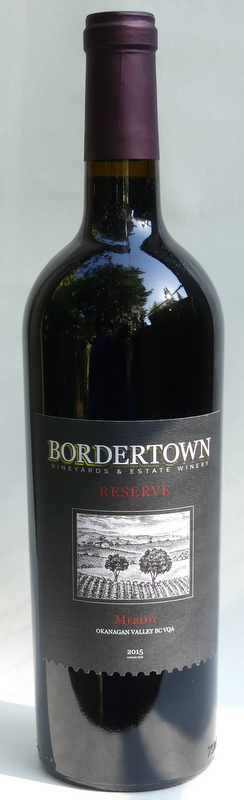
Bordertown Reserve Merlot 2015 ($N/A). This dark wine begins with aromas of cassis and sandalwood. The fruit on the palate – plum and black cherry mingled with                  spice – is intense and concentrated. This is a ripe, swaggering and generous Merlot. 93.

Bordertown Cabernet Franc 2016 ($21.43). This deeply coloured red has aromas of blackberries and black cherries subtly mingled with spice. On the palate, the richly textured wine has flavours of black cherry, tobacco, dark chocolate and herbs. The long ripe tannins give the wine drinkability now but also the ability to cellar well for at least five years. 91.

Bordertown Cabernet Franc Reserve 2016 ($N/A). This bold, brambly red begins with powerful aromas of blackberry and spice, leading to dark berry flavours with a hint of mint. The finish is long and satisfying. 92.

Bordertown Cabernet Sauvignon 2015 ($31.25). This dark wine begins with a dramatic aroma of cassis, black cherry and vanilla and spice. The flavours are bold and ripe, showing spicy cherry and currants. The sweet fruit is framed superbly with oak. Long ripe tannins gave the wine the appeal of early drinkability but the wine will age well for at least five years. 92.

Bordertown Living Desert Red 2015 ($22.32). This is a blend of 61% Cabernet Franc, 25% Cabernet Sauvignon and 14% Merlot. Each varietal was aged separately in French oak prior to blending. Aromas of sweet berries – blueberries, blackberries and black cherries mingled with cassis – jump from the glass. Those fruits are echoed on the palate, subtly framed by oak. The flavours are profound and the finish is persistent. 93.


Sunday, September 2, 2018

Roger Wong's "Intriguing" success


 Photo: Winemaker Roger Wong in the new Intrigue cellar

Prior to opening Intrigue Wines in 2009, Roger Wong made 400 cases from the 2008 vintage.

In this fall’s vintage, he plans to make about 15,500 cases. And he hopes to sell most of it from Intrigue’s busy wine shop in Lake Country.

Few Okanagan wineries have such meteor growth in just a decade – and a decade in which many other new wineries opened and in which the quality of almost everyone’s wine was better each year. I don’t know what magic dust Roger has on his shoes but, if I owned a winery, I would like some too.

Roger, who was born in Vancouver in 1965 and has a geography degree, worked n a federal government job until he was 30. Having been a home winemaker since he was 17, Roger then followed his passion. He volunteered at Tinhorn Creek for the 1995 crush. They hired him and encouraged him to take winemaking courses. He became winemaker for Pinot Reach Cellars in 1998 and, following an ownership change there, moved to Gray Monk in 2005 as a winemaker (a position he still retains).

He first tried to launch his independent Riesling label, Focus, while at Pinot Reach, suffering a setback in 2003 when forest fires drenched the grapes in East Kelowna vineyard with smoke.

He rebounded five years later by launching Intrigue with his wife, Jillian, and partners Geri and Ross Davis. Both the Wongs and the Davises planted Lake Country vineyards. Conveniently, Geri and Ross live in a rambling house, half of which was soon turned into a winery.

The winery is just up the hill from the Intrigue wine shop which is strategically located beside Okanagan Centre Road, one of Lake Country’s most-travelled streets. The Chase Winery, which has a restaurant, opened last year just across the street from Intrigue. And there are five other wineries in the neighbourhood. These attract a number of wine tourists. “If we can bring more traffic to Lake Country, we all win,” Roger believes.
  
Last year, Intrigue added a barrel cellar that is accessible to visitors. Somewhere down the road, Intrigue’s rising production will require the partners to move winemaking from the Davis house to a dedicated winery. The first step was taken last year when Intrigue, which has been crushing at Gray Monk, equipped its own crush pad. Currently, the Davis house is given over to wine storage. Almost all of the tanks are outside, including two 30,000-litre tanks on order for this fall.

“We know we need to put in a winery building,” Roger says. “Down here [beside the wine shop] would be the reasonable spot. There is three-phase power down here. It is a big jump … a couple of million dollars to do it.”

Here are notes on the current releases from Intrigue.

Intrigue I Do Sparkling Wine 2016 ($19.90 for 2,000 cases). This is a very quaffable sparking wine with a delicately pink in hue and with a good mousse. There are aromas and flavours of raspberry and cranberry. The finish is crisp. 90.

Intrigue Pinot Gris 2017 ($16.90 for 1,430 cases). The wine begins with aromas of pear and apple. On the palate, there is a medley of fruit flavours – apple, nectarine, ripe pear – lifted by a touch of residual sugar. The finish lingers. 90.

Intrigue Gewürztraminer 2017 ($16.90 for 980 cases). The wine begins with classic aromas of spice, with flavours of lychee and ginger. By arresting fermentation, the winery has retained just enough residual sugar to lift the flavours and flesh out the texture. There is a lingering finish of tropical fruit flavours. The balance, however, seems dry. 90.

Normal"> Intrigue Chardonnay 2017 ($16.90 for 405 cases). Some 12% of this wine was fermented in new French oak barrels. That added complexity, with a toasty note mingled with the citrus aromas and flavours. The finish is fresh. 90.

Intrigue Social White 2017 ($14.90 for 3,050 cases). This is a blend of 68.3% Riesling, 28.4% Gewurztraminer, 3.3% Muscat Canelli. The wine is an uncomplicated, easy-drinking blend. It has aromas and flavours of lemon, pear and apple, with a juicy texture and a hint of residual sweetness. 90.


Intrigue Riesling 2017 ($16.90 for 950 cases). This dry Riesling, with just 10.9% alcohol, mingles aromas and flavours of citrus and petrol around a fine mineral spine. 90.

Intrigue Focus Riesling 2017 ($N/A for 205 cases). This elegant Riesling begins with aromas of citrus and a hint of petrol. At this stage of its youth, the wine is still tight. There is no rush to open a wine with such intense fruit flavours. The finish is very long, with a lovely spice lingering on the palate. 92.

Intrigue Frosted Vines 2016 ($18.90 for 468 cases). This wine is a blend of 47% Kerner, 30% Riesling, and 23% Ehrenfelser. The grapes were picked after the first frost. As in the production of Icewine, the object is to concentrate aromas and flavours. This wine is balanced to finish almost dry, even with 40 grams of residual sugar. It has citrus aromas and flavours. The texture is full and luscious. The sweetness kicks in on the long, long finish. 90.

Intrigue Social Blush 2017 ($16.90 for 2,010 cases). This is 63.3% Riesling, 16.3% Gewürztraminer, 8.5% Merlot, 7.5% Rotberger and 4.4% Kerner. It begins with aromas of wild strawberries; that is echoed in the flavour, along with cherry. The texture is juicy. 89.


Intrigue Social Red 2016 ($18.90 for 1,000 cases). This is 92% Cabernet Franc, with dramatic aromas of blackberry and cherry. The flavours are intense, with smoky, cherry notes. The tannins are ripe. 91.
This wine is sold out but the 2017 release is imminent.

Intrigue Damitz Good Red Blend ($24.90). The wine is a tribute Bordeaux blend, with a portion of the proceeds going to different community projects each year. There is a hint of vanilla and black currant on the nose; this is echoed on the palate. The wine is firm, with an age-worthy texture. 90.

Intrigue Merlot 2015 ($21.90 for 600 cases). This wine was aged in oak for 12 months. It begins with aromas of cassis and back cherry, leading to spicy flavours of black currant, black coffee and chocolate. The palate is generous and the finish lingers. 91.


-