Monday, June 20, 2016

BC wineries storm the All-Canadian Wine Championship


In a show of either self-confidence or aggressive marketing, British Columbia wineries entered two-thirds of the wines at the recent All-Canadian Wine Championships.

A total of 1,322 wines were entered in the ACWC, the oldest of the national wine competitions. British Columbia wineries accounted for 807 of the wines entered. Ontario wineries entered only 368 wines.

And British Columbia wineries took two of competition’s five trophies for best wines in their categories.

The wine judged to be the best white in the competition was Arrowleaf Cellars Dry Riesling 2015. This wine from a Lake Country vineyard is a tremendous value, at $16 a bottle, for a wine of this quality.

The best red wine in the competition was judged to be Deep Roots Winery Syrah 2014, a $34 wine from a Naramata winery that has begun to earn a reputation for Syrah.

The top sparkling wine in the competition was judged to be Archangel Chardonnay Sparkling 2011 from Angels Gate Winery in Ontario.

The top Icewine was judged to be a 2014 Cabernet France Icewine from Magnotta Winery, also based in Ontario.

The top fruit wine was an iced apple wine from a Quebec producer, Cidrerie du Minot.

Following is the list British Columbia producers winning best of show awards – in effect, double gold medals.

The complete results are at allcanadianwinechampionships.com.

The ACWC is now in its 36th year. The wines were adjudicated over three days by 17 judges from across the country, including five from British Columbia.

Congratulations to all the winning producers.

Bench 1775 Winery Whistler Riesling Icewine 2014

Bench 1775 Winery Bliss Icewine 2014

Bench 1775 Winery Viognier 2015

Black Widow Winery Cabernet Sauvignon 2014

Black Widow Winery Hourglass 2014

Blue Grouse Estate Winery Quill Red 2014

Cassini Cellars Nobilus Merlot 2013

CC Jentsch Cellars Small Lots Malbec 2014

CedarCreek Estate Winery Estate Merlot 2014

CedarCreek Estate Winery Meritage 2013

Deep Roots Winery Chardonnay Unoaked 2015

Forbidden Fruit Winery Caught Apricot Mistelle 2014

Forbidden Fruit Winery Flaunt Sparkling Plum 2015

La Frenz Winery Liqueur Muscat NV

Moraine Estate Winery Gewürztraminer 2015

Quails' Gate Estate Winery Stewart Family Reserve Chardonnay 2014

Robin Ridge Winery Cabernet Franc 2013

Rocky Creek Winery Wild Blackberry NV

Ruby Blues Winery Commune Pinot Gris 2015.

Silverside Farm & Winery Tayberry Wine 2015

SpierHead Winery Pinot Noir Cuvée 2013

Stag's Hollow Winery & Vineyard Syrah 2013

Stoneboat Vineyards Pinot Noir 2013

SummerGate Winery Riesling 2015

Wild Goose Vineyards & Winery Mystic River Pinot Blanc 2015


Friday, June 17, 2016

Ancient Hill champions Baco Noir


Photo: Ancient Hill owners Richard and Jitske Kamphuys

When Richard Kamphuys and his wife, Jitske, opened this winery in 2011, they were wise enough to ignore a piece of free advice I offered them.

The winery is on a cool hillside east of Kelowna International Airport. Richard made appropriate choices for his 15-acre site in 2005 when he replaced an orchard with grape vines.

The single largest block is a winter hardy red French hybrid called Baco Noir. My advice: give it a proprietary name because “you will never get more than $18 a bottle if you release it as Baco Noir.”

Ancient Hill’s Baco Noir sells for $25 a bottle and is the most popular wine in the tasting room. It was easy to confound my prediction: Ancient Hill arguably makes the best Baco Noir in British Columbia. To be sure, there are not many other producers – but is an excellent wine and worth every penny.

To fill in the back story, here is what I wrote about the winery in my most recent edition of John Schreiner’s Okanagan Wine Tour Guide. The proprietary name I suggested to Richard was The Rittich. The except tells why that name resonated with me, if not with Richard.

This splendid Robert Mackenzie-designed winery overlooking Kelowna International Airport returns viticulture to where it began in the north Okanagan when the Rittich brothers planted grapes near here in 1930. Natives of Hungary, Eugene and Virgil Rittich concluded that vinifera grapes could succeed and wrote a book (British Columba’s first wine book) on how to grow grapes and make wine. Severe winters that occurred periodically doomed those pioneering trials in the Ellison district, as it was known.

The modern-day pioneers are Richard and Jitske Kamphuys (rhymes with compass) who came from Holland in 1992 and bought an apple orchard. Richard, who was born in 1963, completed an advanced economics degree at the historic Erasmus University in Amsterdam before deciding he wanted a rural lifestyle for himself and his family.

He considered growing grapes as soon as he and Jitske, a former doctor’s assistant, bought the orchard but was put off by general pessimism at that time about the future of British Columbia’s wineries. The previous owners, encouraged by the Rittich trials, planted grapes on the hillside in 1944, abandoning the vineyard when the hard 1949-1950 winter killed many of the vines and even some apple trees. About 40 of those ancient vines, probably Okanagan Riesling, still survive.

Richard and Jitske replaced the orchard in 2005 with 27,000 vines over about six hectares (15 acres). They have chosen mid-season ripening varieties: Pinot Gris, Gewürztraminer, Lemberger, Zweigelt and Pinot Noir. The biggest block, more than a quarter of the vineyard, is Baco Noir, a winter-hardy red French hybrid. “I should have had more Baco Noir and less Zweigelt,” Richard says. He has begun to plant Baco Noir among the Zweigelt vines, easing into a vineyard transition.

“That hybrid seems suited to this area,” he believes. “It came through in a lesser year as well as in a good year.” To make the point, he pours a glass of Baco Noir from 2010, a cool year. The wine is full-bodied with rich flavours of plum and chocolate. The visitors to Ancient Hills’s baronial tasting room almost always favour Baco Noir.

Ironically, Richard did come up with a proprietary name for a blend of two reds, Zweigelt and Lemberger. The wine is called Lazerus. I don’t know how that name is working for him – but he is now planning to make individual red varietals as well from those two.

He can afford to expand is focussed portfolio a bit but he will never have a list as long as some of his peers. Ancient Hill produces a total of 2,500 cases of wine. “I have no desire to get to 10,000 cases,” Richard says.

Here are notes on current releases. Prices do not include tax.

Ancient Hill Pinot Gris 2014 ($15.65). This wine is crisply fresh, with aromas and flavours of pear. The wine, which finishes dry, has good weight on the palate. 90.

Ancient Hill Gewürztraminer 2013 ($16.52). The wine begins with aromas of spice and lychee. Rich and full-textured, it has flavours of lychee and grapefruit. It is balanced to dryness. 90.

Ancient Hill Rosé 2014 ($14.78). This is a blend of 74% Zweigelt, 12% Gewürztraminer, and 7% each of Baco Noir and Pinot Noir. The ruby-hued wine has appealing aromas of red berries with a hint of red licorice. A touch of spice lifts the flavours of currants and cranberries. The finish is dry. 90.

Ancient Hill Lazerus 2011 ($14.78). This is a lean, spicy red with aromas and flavours of cherry and red berries. There is a hint of chocolate on the finish. 88.

Ancient Hill Pinot Noir 2012 ($17.39). The aromas of raspberry and cherry are echoed in the flavours of this medium-bodied wine. This is a touch of spice on the finish. 89.

Ancient Hill Baco Noir 2012 ($21.79). Almost black in colour, this wine is robust and rich, with aromas of plum and flavours of plum, black cherry and chocolate. The soft, ripe tannins give the wine a rich velvet finish. 91.


Wednesday, June 15, 2016

Class of 2016: Pipe' Dreams Estate Winery


Photo: The vineyard at Pipe' Dreams


Pipe' Dreams Vineyard and Estate Winery
168 Sportsman Bowl Road
Oliver, British Columbia

The name of this winery comes from a question that John Ness, the owner, asked himself when launching the project: is it a big dream, or just a pipe dream?

The quality of the wines answers the question. When the tasting room opens (soon), the offerings include one of the best Grüner Veltliner wines made in BC.

The list of Grüner Veltliner producers still is short. The first in the Okanagan to make  wine from the leading Austrian white grape was Culmina Family Estate Winery three vintages ago. Culmina set the bar high with its wine, called Unicus, and Pipe' Dreams has risen successfully to the challenge.

Pipe' Dreams, which offers four other wines, is a short drive north of Oliver and west from Highway 97. There is a sign on the highway but, when I visited recently, no sign yet at the winery. However, Sportsman Bowl is a road that dead ends at a shooting range. Turn around and look for a flat vineyard on the north side of the road.

A big man with a friendly personality, John (left) was born in 1947 in Winnipegosis and grew up in Vancouver. His family usually vacationed in the Okanagan every summer with friends who lived there.

“I would spend a week cliff diving with the other kids,” he remembers. “I always loved it here. I always thought we should move here but we never did.”

When he finished Grade Twelve, his main interests were skiing and surveying. “Around 1968, I was offered a job at Jasper on a professional ski patrol,” he says. “I was in the Canadian National Ski Patrol, going every weekend.” 

In the summer, he took a surveying course. “I was offered a job and I really loved surveying out in the bush. So I gave up my ski patrol career.”

“I surveyed from 1968 to 1975,” John continues. “Then I started with Nova Corp., surveying pipelines. About 1980 I went into construction management in the pipeline area. That’s what I have been doing every since: construction management, looking after quality specifications, inspection staff, that kind of business.” He is currently involved with one of the proposed liquefied natural gas projects.

Throughout his career, he has been based either in Edmonton or Calgary, where he still has a residence. But the lure of the Okanagan never went away.  

“We would come here skiing,” he says.  “And I had a motorcycle back then. I would come  here in the summer and ride through and then go back to work. I loved the place. I always thought this is where I should be.”

He began looking for property about seven years ago. As he became more serious, he engaged consulting winemaker Mark Wendenburg to help him screen properties. He bought the winery property late in 2009.

Nothing was being cultivated there at the time. “I thought I will do some grapes,” John says. He planted the available 3.4 acres in 2011.

Deliberately, he chose varieties outside the mainstream of Okanagan plantings: Grüner Veltliner, Kerner, Gamay Noir and Zweigelt. “I did not want to have the same kind of grapes as everybody else,” John says. “I didn’t want to do Merlot because everyone does Merlot.” As it happens, he now leases a one-acre block of Merlot from a neighbour.

He continues to keep Mark Wendenburg to advise him on viticulture and winemaking, recognizing that the consultant’s experience is invaluable to the success of Pipe Dreams. John’s only winemaking experience involved making kit wine – and his last 200-bottle batch froze in poor storage.

Mark, who established his own wine consulting company since 2010, is an Okanagan veteran. He dates his introduction to the wine industry from 1980, when he and his late father, Chris, planted the five-acre family vineyard near Penticton.

He is best known for his 18 years as winemaker at Sumac Ridge Estate Winery. He left that winery in the spring of 2010 to consult, with Blasted Church Vineyards his first major winery client.

Mark (right) was born in Penticton in 1961, shortly after his parents arrived in Canada. They had owned agricultural land in Germany’s Harz Mountains until the East German government relieved them of their property.

After helping plant the family vineyard near Penticton, Mark went to Germany in 1982, apprenticing with wineries in three regions, and earning a winemaking diploma at the Bavarian State Institute for Viticulture and Enology in Franconia.

On returning in 1987, he started working at the T.G. Bright & Co. winery near Oliver. (now Jackson-Triggs). In winter of 1988, Mark did a crush at the Nobilo winery in New Zealand; the following winter, he did the crush at S. Smith & Sons in Australia (better known as Yalumba).

In between those assignments, he resumed working at Brights. He also became involved in a sparkling wine project that had been launched in the Okanagan by California’s Schramsberg Cellars with Inkameep Vineyards and what is now Blue Mountain Vineyard & Cellars. One of his bosses at Brights told him to choose between Brights and the sparkling wine project. Mark chose the sparkling wine project.

After that project wound up in 1991, Mark joined Sumac Ridge which was just getting its Steller’s Jay Brut sparkling wine launched. Sumac Ridge had begun handcrafting the wine in 1987 but production was insignificant until Mark came on board. Steller’s Jay is now one of Canada’s best traditional method sparkling wines.

A walk through the Pipe' Dreams winery reveals Mark has a modern facility well-equipped to make sound aromatic whites and solid reds. The first vintage from this vineyard was made in 2014 – only 500 cases. Production tripled last year, reflecting the vineyard’s rising production.

The Grüner Veltliner is one of the most interesting wines here, if only because there still are few examples in BC. Currently, the other wineries with this varietal, in addition to Culmina, include Bordertown Winery and Vineyard in Osoyoos and de Vine Vineyards in Saanich. Soon to join this elite group is Fort Berens Estate Winery in Lillooet which made trial lot in 2014 from its 25 Grüner Veltliner vines. The wine is so promising that more vines will be planted.

Mark made the first Pipe' Dreams Grüner Veltliner quite simply, without skin contact or oak aging. “Especially at the beginning, I just wanted to see how the varietal shows itself in British Columbia,” he says. “I have visited the Wachau in Austria. The Grüners there can be very acidic, very aggressive wines. I did not think that is what they would be like here, just because of the climate.”
It turns out he was right. Here are notes on the wines.

Pipe' Dreams Grüner Veltliner 2014 ($29). This is a crisp and fresh wine with aromas and flavours of peaches, nectarines and melon. It has good weight in the palate and has a slightly tangy finish. 91.

Pipe' Dreams Kerner 2014 ($29). This is a bold, even full-bodied, white with 14.7% alcohol but with such fruit intensity that the alcohol is not evident on the juicy palate. The wine begins with aromas of nectarine and peach and delivers flavours of peach and apple. There is just a hint of sweetness on the finish. 90.

Pipe' Dreams Gamay 2014 ($29). The wine begins with aromas of cherries. On the palate, there is a generous medley of bright red berry flavours with a hint of pepper. 90.

Pipe' Dreams Zweigelt 2014 ($32). The dark colour heralds a bold red, with red berry aromas and spicy plum and cherry on the palate. The spice continues on the finish. 91.

Pipe' Dreams Merlot 2014 ($29). Lean and medium-bodied, the wine has aromas of black currants. On the palate, there are bright, fruity flavours of lingonberry, blueberry and black currant. 90.

Pipe' Dreams Merlot Reserve 2014 (not released). This is a bold, concentrated Merlot, with aromas of vanilla and black currant and flavours of plum, black currant and spice. 92.


Saturday, June 11, 2016

Sperling's new labels celebrate the 2015 vintage


Photo: Winemaker Ann Sperling


The fans of Sperling Vineyards will notice a difference when they see the 2015 wines: eye-catching labels have replaced the previous classically elegant, if sedate, labels.

What is inside the bottles is as good as ever. The 2015 wines represent the eighth vintage since Ann Sperling and her family launched this Kelowna winery with grapes from a vineyard planted in the 1920s. The strategy behind the label change is simply making sure that the wines are not lost in the crowd, as a plethora of BC labels now occupies store shelves.

The little blocks of colour on the label are inspires by features on a log barn, still in use, on the family’s property. (The barn was also on the original labels, but less stylized.) There is a suggestion of clasped hands in the subtle Bauhaus-inspired design. As well, the family’s motto now is on the labels: “Love and labour since 1925.”

Ann’s forebears, the Casorso family, were pioneering Okanagan grape growers and vintners. The Casorso family came to the valley when Italian immigrant Giovanni Casorso arrived in 1883 to work for the Oblate Mission’s farm. Soon he had his own homestead near the mission. When tobacco was grown in the Okanagan, he was one of the largest tobacco growers.

The family first got into the wine business when Rosa, Giovanni’s wife, and Pete, one of their sons, invested in the consortium that in 1931 launched what became Calona Wines. When the Capozzi family gradually bought control of the winery in the 1950s, Pete (his full name was Napoleon Peter) refused for years to sell his shares. “His pastime for many years was to go to their board meetings and raise hell,” Ann says.

A family history credits Charles Casorso with planting the first Kelowna vineyard near Rutland. His brothers Pete and Louis ordered vines and planted grapes on Pioneer Ranch, as the family property was known. It appears, however, the major crops grown here were apples until Pete retired in 1960, turning the farm over to his daughter Velma and her husband, Bert Sperling, Ann’s parents.

Bert converted the entire property to grapes. Initially he grew hybrid and labrusca varieties before switching to Riesling, along with four hectares of Sovereign Coronation table grapes. Over the years he sold wine grapes to Calona, then to Growers in Victoria, and, in recent years, to Mission Hill.

The decision to open a winery was made in family conference about the future of the vineyard. The family recognized it had the talent in house. Ann has been making wine across Canada and in Argentina since 1987. “It has always been in the back of my mind that I wanted to make wine here because I am so familiar with every foot and every slope and every grape on the property,” she says.

Her father was able to see the brilliant launch of the family winery before his death in 2012, at the age of 84.

Ann believes that the terroir of the Pioneer Ranch enables her to make wines that are distinctive. “Our wines definitely put on weight in bottle,” she said during a tasting of the youthful 2015s. “It is partly the coolness of the site; minerality tends to dominate. I would not call the wines fruit driven. I would call them much more mineral driven. We get some herbal qualities and floral notes, but fruitiness is not really a descriptor that dominates our vineyard.”

She continues: “My winemaking is turning more towards the grapes. Terroir is important, even in a wine we are going to be selling for $17 a bottle. I still want it to be our vineyard and our place. Why would I put American oak chips in when I have these lovely stems that can give it structure? Conventional winemaking did not teach me that. All of the years of focussing in on the site led me to it. I am really happy with the results I am getting in the vineyards that I work with.”

Here are notes on the wines:

Sperling Brut Rosé 2013 ($42). This sparkling pink wine made with Pinot Noir was on the lees for 18 months. It has been balanced to finish dry, Ann’s preferred style. “I can’t finish a sparkling with any sort of sweetness or softness,” she says. “It is just not in me to do it that way. I love the acidity and I love the brightness to be all the way through on the palate for a sparkling wine like this.” The wine begins with hints of bready lees on the nose and it delivers delicate wild strawberry flavours with a creamy texture but a crisp finish. 90.
Sperling Pinot Gris 2015 ($19). This wine has a fresh aroma with notes of herbs and citrus. On the palate, there are flavours of white peaches and apples. The lively acidity gives the wine a refreshing, dry finish. 91.


Sperling Pinot Noir Rosé 2015 ($19). Perhaps the light strawberry hue is suggestive, but the wine had aromas and flavours of strawberries. It is balanced to finish dry, with the tiniest degree of residual sugar to lift aromas and flavours. “These wines can live in the bottle for three or four years and still be really enjoyable,” Ann says, “but I love the freshness of rosé.  I want people to enjoy it when it is in the first season.” 91.

Sperling Market White 2015 ($17). This is a blend of Pinot Blanc and Bacchus with a touch of Pinot Gris and Riesling. The fruity aromas are still developing in bottle. The flavours of peach, apple and spice promise refreshing summertime drinking. 90 – 91.

Sperling Market Red 2015 ($18). This is a new addition to the Sperling portfolio, an easy-drinking summertime barbecue red in a style slightly reminiscent of Beaujolais Nouveau. It is a blend of Maréchal Foch with Pinot Noir. The wine is soft and fruity, with cherries on the nose and palate. The finish has an appealing note of spice. 88.

Sperling Sper…itz 2015 ($22). This light Frizzante wine with 8% alcohol is inspired by Italy’s Moscato wines. The blend is Perle of Csaba (a Muscat flavoured variety) and Bacchus. The wine is utterly charming with refreshing floral and spicy aromatics. The off-dry fruity flavours coat the palate. 90.

Sperling Late Harvest Riesling 2015 ($N/A). The grapes for this wine were picked at -6C. (two degrees shy of the minimum for Icewine). The result is a wine that is sweet but not overly so, with a core of juicy flavours of citrus and tropical fruit. The balance is exquisite. 91.

Sperling Pinot Blanc Icewine 2015 ($50 for 375 ml). This extraordinary wine won double gold and best Pinot Blanc in competition last year at the Mondial des Pinots in Switzerland. This pristine and luscious wine has aromas and flavours of tangerine and ripe apricot, with a lingering finish. Once again, the balance is exquisite. 98.


Thursday, June 9, 2016

Monte Creek Ranch shows the potential of Minnesota hybrids


Photo: Monte Creek Ranch Estate Winery

Discrimination against certain grape varieties: it is a startling concept that had not occurred to me until a recent conversation with Erik Fisher, the general manager of Kamloops-based Monte Creek Ranch Estate Winery.

The varieties grown in Monte Creek’s two vineyards (totaling 61 acres on both sides of the Thompson River) include five Minnesota hybrids: Frontenac Blanc, Frontenac Gris, Frontenac Noir, Le Crescent and Marquette.

None is on the approved list of varieties permitted in VQA wines. Erik is trying to have the regulators change that. Not having VQA on all of its wines puts Monte Creek at the significant disadvantage because some of its wines cannot be sold in VQA stores and in VQA-only grocery outlets. And the winery cannot pour these at VQA tastings.

The list of approved varieties is embedded in law in British Columbia. It is not a static list but neither is it easy to change.

When the VQA rules were first established in British Columbia, about 1990, approved varieties were limited to vinifera (or premium European) wine grapes. The object was to severely discourage the continued growing of the French hybrid varieties and labrusca crosses that had been pulled out in the great 1988 vine removal.

The regulators would have been better to let consumers decide who gets voted off the island and who stays. It is unlikely that Chelois would have given Pinot Noir much competition.

Over the years, grapes originally banned have been added to the VQA list, including such varieties as Maréchal Foch and Cayuga. (Vigneti Zanata on the Vancouver Island, the only producer with Cayuga, actually resigned from VQA rather than stop making is signature Cayuga bubble, Glenora Fantasia.) The current list of approved varieties even includes the profoundly mediocre (with just a few exceptions) Blattner hybrids.

Somehow, the Minnesota hybrids were overlooked.  The significant history of these varieties begins with Elmer Swenson, an American plant breeder who died in 2004. He began breeding winter-hardy wine grapes in 1943 at his farm in Osceola, Wisconsin. Later he moved to the University of Minnesota which took over his work. These winter hardy  varieties have been planted in those northern states and extensively in Quebec, where many of the varieties were christened with French names.

Monte Creek planted these varieties precisely to survive the occasionally hard winters near Kamloops. European wine grapes seldom survive -25ºC but these varieties can survive as hard a freeze as -35ºC.

Monte Creek also grows Foch, which is winter hardy, and rolled the dice a bit by planting the hardier vinifera, including Riesling, Chardonnay and Pinot Noir.

Erik (below) argues that the Minnesota hybrids need to be on the VQA list not just for Monte Creek’s sake but for the benefit of future wineries.

“The Canadian industry produces seven per cent of the wine that is consumed in Canada,” he says. “If we want to move that number forward, we need to look at emerging regions such as ours; plant the right vines and make high quality juice. That’s one way we will be able to grow. These wines are still 100% BC produced. We are not importing fruit from other countries to blend and bottle here. We hope that the industry backs us in this endeavor.”

There is certainly nothing wrong with the quality of the wines, as the reviews at the end of this blog will attest.

The winery, which made its first vintage in 2013, is owned by Gurjit Sidhu, operator of a major plant nursery in the Fraser Valley. He has also grown blueberries since 2001. In 2007, when Fraser Valley farmland was getting too expensive, he bought the historic Monte Creek Ranch east of Kamloops, near the junction of the TransCanada and Highway 97. Shortly thereafter, he bought the Lion’s Head Ranch on the north side of the Thompson River. He now owns a total of 1,200 acres.

When he discovered that blueberries do not thrive in the hot, dry summers near Kamloops, he switching to grapes. The business has been developed aggressively.   Monte Creek produced 13,ooo cases in 2015, tripling its production in three years to become the largest of the four Kamloops wineries.

It is not just a winery. It is a full-blown agricultural business. Monte Creek produces its own honey. It makes jam from a plot of haskap berries and beef jerky from it herd of grass-fed Black Angus. It also sells beef to one Kamloops butcher shop and to Thompson Rivers University. 

A striking new winery was opened last year, complete with a bell tower and a restaurant. It is set dramatically on a height of land with views of the river valley and the vineyards. Development is continuing. The winery would like to create an amphitheater for concerts, complementing the picnic and yoga sessions already held among the vines.

The winery, with about $1 million of ultra-modern winemaking equipment, has enabled Monte Creek to take full control of production initially done in an Okanagan winery with a consulting winery.

Late in 2014, Erik recruited a seasoned winemaker whose hand shows in the appreciable jump in wine quality in the 2015 vintage. Galen Barnhardt is a North Shuswap native with a science degree from Thompson Rivers University. He acquired a keen knowledge of wine while working in the restaurant industry.

Erik met him there when Erik was selling wine and Galen was a buyer. “I used to taste wine with him,” Erik says. “I thought he had a tremendous palate.”

In 2009, Galen (right) went to Brock University for a degree in winemaking. After a vintage in Niagara, he joined CedarCreek Estate Winery and was an assistant winemaker by the time he left in 2014 to work in Australia and then in Oregon. Erik had been following his career and was able to bring him back to the Thompson River Valley to finish off Monte Creek’s 2014 wines and make the 2015s and subsequent vintages.

Here are notes on those wines.

Monte Creek Ranch Riesling 2015 ($16.99). Crisp and fresh, this wine just sings with aromas and flavours of lemon and lime. There is exquisite balance between the bright acidity and the residual sweetness. 91.


Monte Creek Ranch Hands Up White 2015 ($14.49). This is a blend of 61% Frontenac Blanc, 25% Le Crescent and 14% Viognier. This wine has remarkable aromas and flavours of ripe apricot and peaches. A touch of residual sweetness lifts the aromas and adds weight to the texture. The fruity finish is persistent. 90.


Monte Creek Ranch Frontenac Gris 2015 ($14.49). This wine begins with aromas of crisp, fresh apples. On the palate, there are honeyed flavours suggesting ripe pineapple leaning to marmalade. The wine is off-dry but with enough lively acidity to give it a long fruity finish. 91.


Monte Creek Ranch Rosé 2015 ($16.99). This is made with juice of Marquette grapes. Deep in colour, it is a plump, juicy wine redolent with aromas and flavours of strawberry, with a touch of sweetness on the finish. 90.


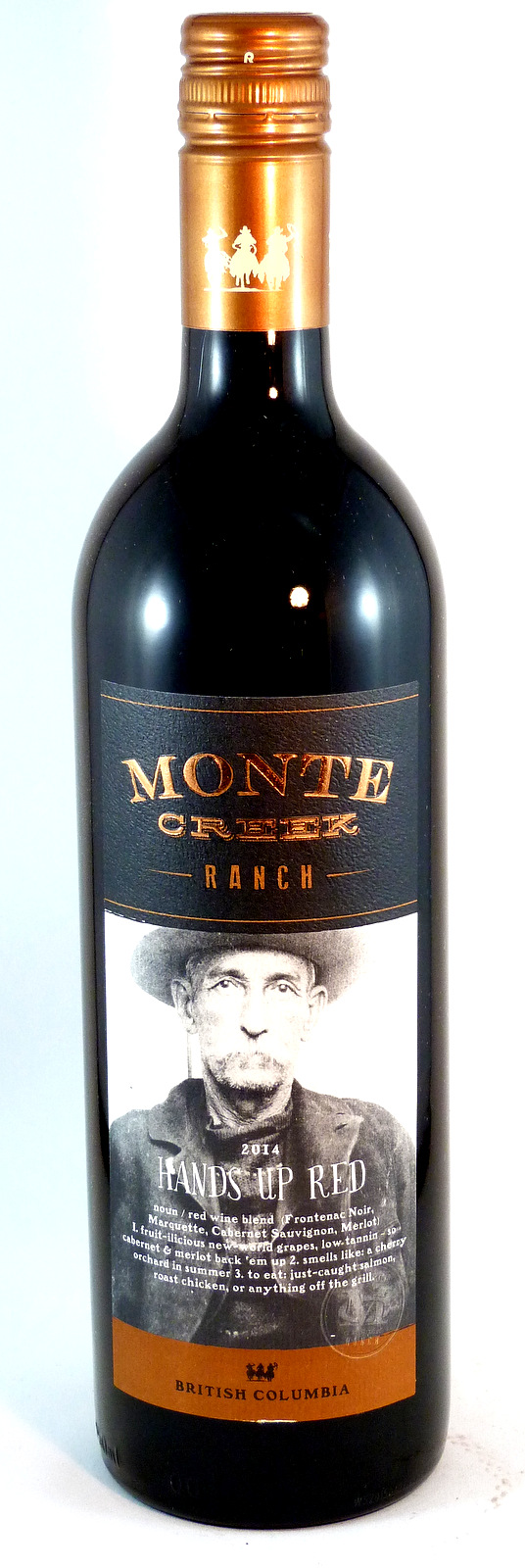
Monte Creek Ranch Hands Up Red 2014 ($15.50). This dry red is a blend of 59% Marquette, 23% Frontenac Noir, 10% Cabernet Sauvignon and 8% Merlot. This is an easy-drinking red, with aromas and flavours of cherry and red currant. 88.


Monte Creek Ranch Cabernet Merlot 2014 ($18.49). The winery buys about 35%  of its grapes - varieties not suitable to the Kamloops region - from the South Okanagan. This Bordeaux blend has a firm enough texture that it benefits from decanting to release the aromas and flavours of black currant and blackberry. 89


Monte Creek Ranch Hand Red 2014 ($29.99). This shows what happens when the winemaker decides to make a blend from the best barrels in the cellar. This is 48% Marquette, 32% Merlot, 16% Frontenac Noir and 4% Cabernet Sauvignon. It is a bold rich red, with aromas and flavours of plum and black cherry. 91.


Monday, June 6, 2016

Blue Mountain turns 25


Photo: (l to r)  Ian, Christie, Matt and Jane Mavety. Credit Andrea Johnson


The 25th anniversary this year of Blue Mountain Vineyards & Cellars is an important milestone in Okanagan wine growing. The 2013 reserve wines just released by the winery should be part of that celebration.

Blue Mountain made its first vintage in 1991. The winery was established near Okanagan Falls by veteran grower Ian Mavety and his wife, Jane. Since then, it has consistently produced some of the Okanagan's most sophisticated table wines and sparkling wines.

Born in Vancouver in 1948, Ian Mavety prepared to be a farmer with a university degree in agriculture. In 1971, in partnership with a friend, he bought a rundown fruit farm 10 minutes south of Okanagan Falls, gradually converting the hay meadows and derelict cherry orchards to the hybrid grape varieties then planted widely in the Okanagan. They were not ideal wine varieties, but the grape growers of the day prospered. “Maréchal Foch financed this property,” Ian once quipped.

 The Mavety family began converting the vineyard to quality vinifera grapes in the mid-1980s, with a winery in mind. They recognized that they had to open their own winery. “We just had to control the product from beginning to end and have some control over our own destiny,” Ian says. (His friend left the partnership at that time.)

“Jane and I actually packed our bags and went to Europe,” Ian once told me. There they discovered a taste for dry wines. They were out of step with their peers back home who were planting German white varieties and making sweet wines. Ian and Jane preferred the wines of Burgundy and, figuring their terroir was Burgundian, imported the appropriate Burgundy varieties from France.

They went to California for a consulting winemaker, hiring Rafael Brisbois, a French-trained specialist in sparkling wine. Later, their son, Matt, studied winemaking in New Zealand and took over the cellar. However, they continued to tap Rafael for his advice until he died a few years ago.

Blue Mountain’s vineyard, about 31.5 hectares (78 acres) in size, was developed with a tight focus around Pinot Noir and its relatives. “Pinot Gris, Pinot Blanc, and Pinot Noir all come from the very same parent,” Ian noted. “Chardonnay comes from a different parent but basically requires the same conditions.” Gamay, also a grape of Burgundy, was planted to give the winery a second red. Sauvignon Blanc, which thrives next to Burgundy in Sancerre, was added in the 2007 vineyard extension.

The anchor in the vineyard has always been Pinot Noir, with six different clones grown for table wine and two more for sparkling wine. “I planted it because I was told I couldn’t grow it,” Ian, whose stubborn independence is legendary, once told me. “I’m serious. I was told by a German winemaker that I couldn’t grow it. But I knew that I liked the wine and that I couldn’t afford it, so it was going to have to be made.” Clonal diversity in the vineyard gives Ian and Matt more options when blending in the cellar.

The winemaking style is as focussed as the viticulture. “The key,” Matt says, “is making wines that are suitable for food, that can be consumed without being heavy, because there is balance between the acid and the fruit — and the flavours are there.” The reserve wines, which are the best cellar selections and get the longest barrel and bottle aging.

It is worth noting that, since daughter Christie Mavety joined the winery, Blue Mountain has been able to open its tasting room throughout the wine touring season. It is no longer necessary to make an appointment (except out of season).

Here are notes on the wines.

Blue Mountain Reserve Chardonnay 2013 ($30). Half of this wine was fermented and aged in stainless steel. The other half was fermented and aged 10 months in French oak barrels (from new to three years old).  The result is an wine with appealing aromas and flavours of citrus and apple, set delicately against hints of oak. The supple texture gives the wine great elegance. 92.

Blue Mountain Reserve Pinot Gris 2013 ($28). This was fermented and aged 70% in stainless steel and 30% in French oak for six months. The style recalls a slightly austere Alsace Pinot Gris. The wine begins with aromas of citrus, anise and toasty lees. The texture is concentrated with a spine of minerality (the grapes are from 26-year-old vines). The wine benefits from decanting to unlock the fruit. 90.


Blue Mountain Reserve Pinot Noir 2013 ($40). The wine combines five clones of Pinot Noir from vines ranging in age from seven to 29 years. It was fermented entirely with wild yeast. The wine begins with appealing aromas of cherry mingled with toasty oak; these are echoed on the complex palate and on the spicy finish. The texture is elegantly silky. 93.


Friday, June 3, 2016

Privato releases Grande Reserve Pinot Noir


Privato's Debbie and John Woodward

One of the most remarkable vineyards in the North Okanagan is The Rise, on a ridge just west of Vernon, with a sunbathed southern exposure.

The original seven acres were planted in 2005 with Pinot Noir and Riesling. More acreage may have been planted since then.

The intention at the time was to develop a 35,000-case winery with dramatic underground cellars. It was meant to be part of a luxury housing development. The 2008 recession stalled the development and the winery never proceeded.

The vineyard, however, continues to produce superb grapes which have been purchased by several producers of premium wines. Ex Nihilo Vineyards in Lake Country currently has taken a hand in managing the viticulture here and, after making wines from the grapes, has been in talks to buy part or all of the property.

One of the other wineries that has purchased fruit from The Rise is Privato Vineyard & Winery of Kamloops, operated by John and Debbie Woodward. Pinot Noir from the 2012 vintage at The Rise has produced Privato’s first “Grande Réserve” which is just being released.

In his notes on this wine, John recounts that the 2012 vintage produced “exceptional” grapes. “After fermentation, they were gently pressed and transferred to French oak barriques to age for 18 long and patient months,” he writes. “At the very end of 18 months there is no doubt that the grapes sourced from The Rise Vineyard … were exceptional and worthy of a Grand Reserve wine. Eight of the best barriques were earmarked and reserved for additional aging. True to European standards a Reserve Wine must age three full years.”

The wine is now being released, with a total of 42 months in barrel and bottle. It is one of the most powerful Pinot Noirs to date in British Columbia. Only 200 cases have been made.
John, who was born in Kamloops in 1954, is professional forester; Debbie is a certified general accountant. Since 1987, they have operated a tree nursery on an 80-acre farm on the banks of the North Thompson river.

A casual interest in wine – John had been a home winemaker - was transformed some years ago by a vacation in Italy during crush.

In 2010, they planted three acres of vines – Pinot Noir, Chardonnay and one row of Maréchal Foch. John reacquainted himself with winemaking by making two barrels of wine in 2010 with consultant Gustav Allander of Foxtrot Vineyards.

Privato’s first commercial vintage in 2011 comprised about 600 cases of Pinot Noir and, Chardonnay.  In 2013, when Gustav stopped consulting, the Woodwards turned to New Zealand-trained Jacqueline Kemp (winemaker at Moraine Vineyards) for guidance on sourcing Okanagan grapes and making wine. John, however, signs off as the winemaker of record.

After releasing their wines through a web site and to restaurants, the Woodwards opened a wine shop at Privato in 2013. They had resisted the idea initially, thinking their farm and vineyard are too far off the beaten path. In fact, now that four wineries have opened in the vicinity of Kamloops, with an association promoting them, a surprising amount of wine tourism has developed.

The result is that several of Privato’s wine are already sold out.

Here are notes on most current releases.

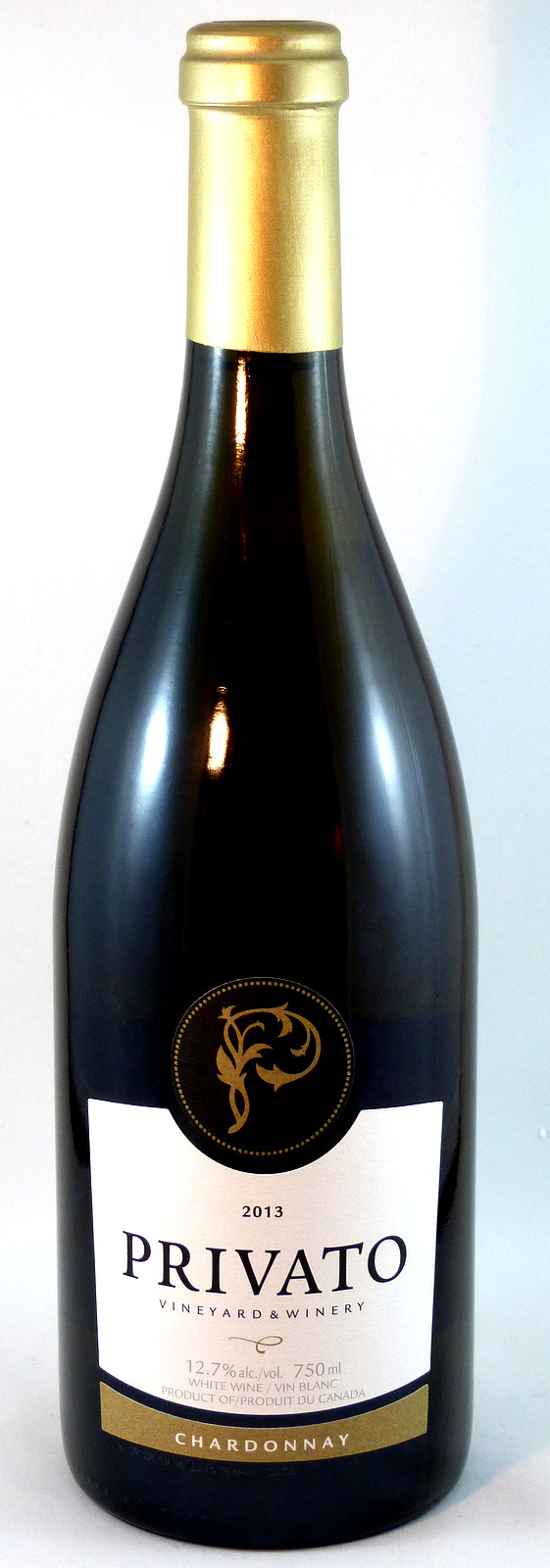
Privato Woodward Collection Chardonnay 2013 ($25.99). Lightly and subtly oaked, this is an elegant wine. It begins with buttery and citrus aromas. On the palate, there are bright citrus flavours. The finish is persistent. 91.

Privato Rosé 2015 ($18.99 ). This is a crisp and refreshing wine with aromas and flavours of raspberry and cranberry and with a dry finish. 89.

Privato Pinot Noir Privato Collection 2013 ($23.99). This is a silky Pinot Noir in a style sometimes referred to as feminine. It begins with aromas of strawberries lightly accented with oak. On the palate, cherry and strawberry flavours mingle with lightly toasted oak. The wine is a delicious charmer. 90.

Privato Pinot Noir Woodward Collection 2012 ($32.99). This presumably the barrels that were not selected for the reserve, since the wine is not quite as big. It begins with aromas of strawberries, delivering spice, cherry and chocolate on the palate. 91.

Privato Grande Réserve Pinot Noir 2012 ($42.99 for 200 cases). Deep in colour, this is a full-bodied wine that, in spite of its silky texture, has an intriguing tension on the palate between the intense dark fruit – plum and cherry – and the toast and vanilla of the oak. The wine is built to cellar another seven to 10 years. For immediate consumption, decanting is advised. 92-94.