Saturday, June 14, 2014

Road 13's new wines and new faces


Photo: Road 13's new general manager, Joe Luckhurst


New faces are now representing Road 13 Vineyards at public functions: Joe Luckhurst, who was named general manager in January, and his wife, Laura.

Joe is the son of Mick and Pam Luckhurst who have been in the wine business since late 2003 when they bought what was then called Golden Mile Cellars.

Mick, who is 64 and still farming the vineyards, and Pam have decided to shift some of the load to the next generation after a turbocharged decade driving production from 1,000 cases to well over 20,000 cases.

Their hard-charging habit came from previous business careers that included a running a building supply in Vancouver Island to a building development firm in Edmonton. The couple semi-retired to Osoyoos in 2003. After a summer of taking visitors on Okanagan winery tours, they decided to buy a winery of their own.

Golden Mile Cellars was then five years old. Peter Serwo, one of the founders, was 71. He and his wife, Helga, had expected that one of their children would take over. When that did not happen, they decided to sell the winery. The Luckhursts operated the winery under that name for four or five years before rebranding (very successfully) as Road 13.

It seems that succession planning has worked better for the Luckhursts, with one of their two sons joining them in the business.

Joe and Laura – her whimsical title is director of first impressions – have recently been introducing Road 13’s current releases to the trade. Here are my notes on the wines.

Road 13 Stemwinder 2012 ($17.99). This is a blend of Marsanne and Roussanne with Chardonnay. In recent vintages, the Stemwinder formula has been changed twice. With this blend, Joe Luckhurst maintains: “I think we hit the nail on the head.” Consumers will agree. This is a wine with guava, peach and apricot flavours that coat the palate with lush tropical fruit. The wine is well-balanced to finish dry. 90.
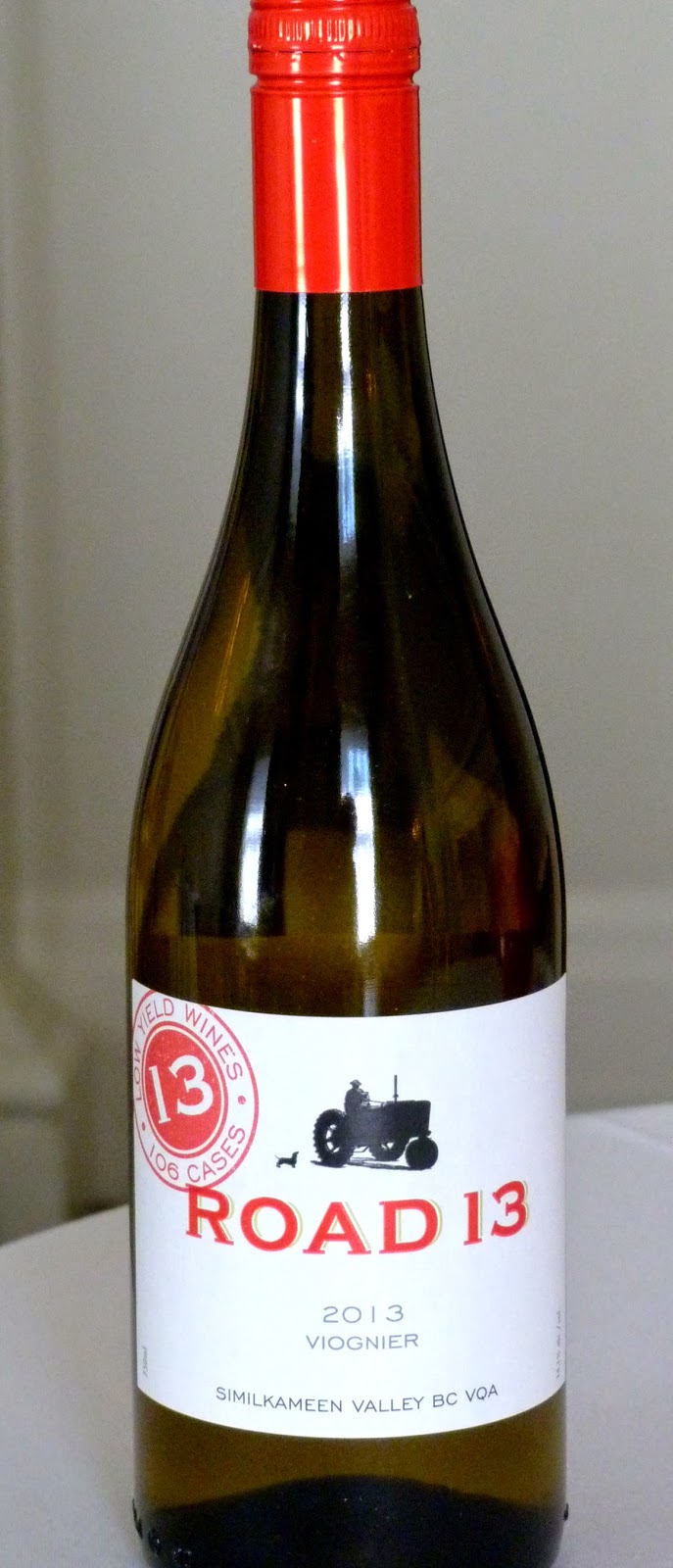
Road 13 Viognier 2013 ($21.99). The grapes for this wine were handled gently with the use of a basket press. That shows in the fresh and delicate aromas and flavours of peach, apricot and apple. 90.

Road 13 Merlot 2012 ($24.99 for 374 cases). Here is a big, ripe red with alcohol of 14.9% but with such rich fruit and texture that the alcohol is not obtrusive. There are aromas of black currant, black cherry and vanilla. There is a lovely core of cassis, plum and mulberry flavours on the generous palate. The finish lingers. 91.
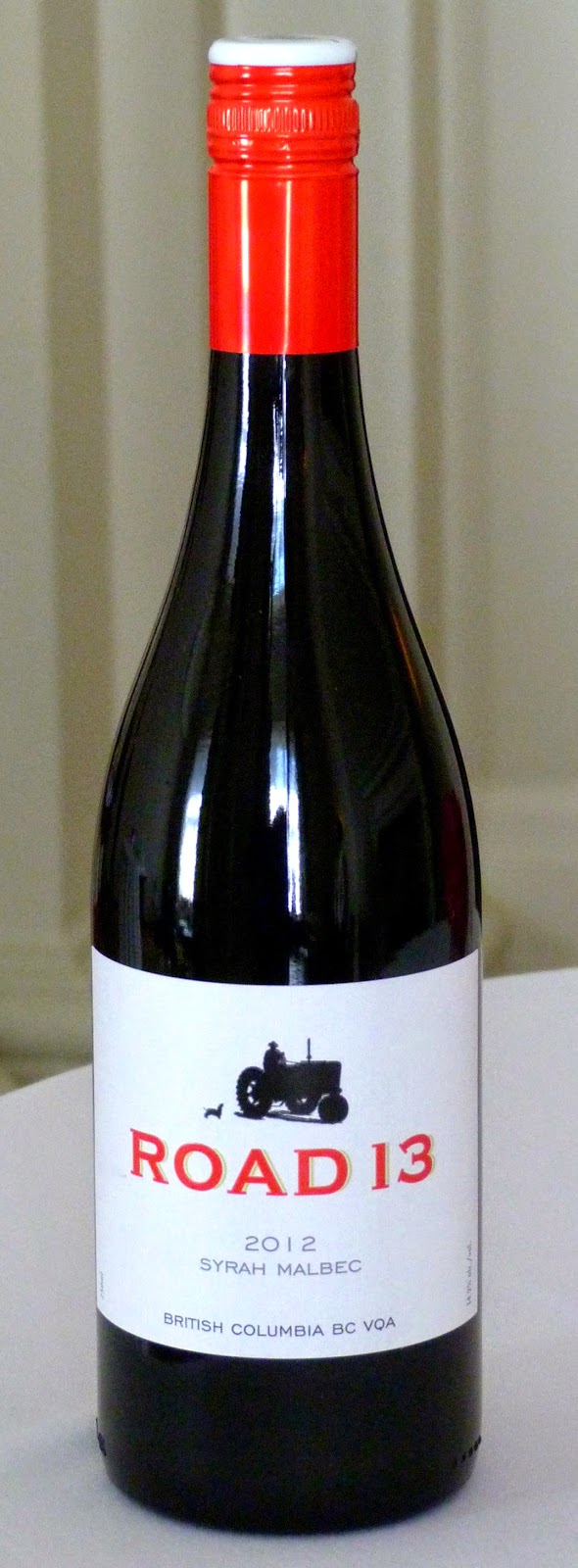
Road 13 Syrah Malbec 2012 ($25 for 362 cases). This is 66% Syrah and that varietal brings pepper and spice to the aroma and to the gamey flavours. There are also blackberry and cassis flavours. (The winery’s website gives the price to be $32 while the brochure at the tasting reads $25.) 91.

Road 13 Cabernet Sauvignon 2012 ($27.99 for 30 cases). The varietal characters of Cabernet jump out of the glass – mint and black currant in both the aroma and the flavour. This is a wine that really should be aged three or four more years, allowing bottle development to convert the youthful green notes to mature flavours. 89-91.


Road 13 Fifth Element 2011 ($49.99). There are now six varieties – five Bordeaux reds and a Syrah – in Road 13’s flagship wine. The wine begins with aromas of black olives, blackberry and blueberry. Ripe and rich on the palate and benefitting from 16 months in French oak, the wine has savoury flavours of dark plum, black currant and blackberries. 92.

Thursday, June 12, 2014

Tasting on The Scenic Sip


 Photo: 50th Parallel wine shop (courtesy 50th Parallel)


The six wineries in Lake Country (which is between Kelowna Airport and Vernon) have organized themselves into what is called The Scenic Sip.

The object is to lure wine tourists to the bucolic back country now that there are enough wineries for a solid day of touring, including lunch at Gray Monk, the original winery in this region. For those wanting less than a full meal, most of the other wineries offer picnic areas.

It really is a scenic area (but where in the Okanagan is it not scenic?). A tour, assuming you drive north from Kelowna, begins with the baronial tasting room at Ancient Hill Estate Winery, just east of Kelowna’s airport. The crowd favourite here (and mine) is the winery’s bold Baco Noir.

From there, one proceeds north on Highway 97 into what locals still know as Winfield. There are road signs directing travellers to Arrowleaf Cellars, Ex Nihilo Vineyards and Gray Monk Estate Winery. These three are clustered close to each other. There is not a wine anywhere that is not outstanding. Ex Nihilo has a sophisticated Riesling. Arrowleaf does wonders with Gewürztraminer and Gray Monk has lovely sparkling wines.

At Gray Monk, ask for directions before heading further north on roads paralleling Okanagan Lake. Intrigue Wines and 50th Parallel Estate are the northernmost wineries on The Scenic Sip.

Both offer excellent wines in friendly tasting rooms but that is where the similarities end. Intrigue is owned by two couples with day jobs: for example, Roger Wong, the winemaker, also is a key member of Gray Monk’s winemaking team. Intrigue is a comparatively modest winery, although the wine shop is well appointed and there is a good picnic area.

The flagship wines here are the Rieslings. Roger has an affinity for the variety he considers one of the best for the Okanagan.

50th Parallel Estate, near Carr’s Landing, is turning itself into a grand destination winery. Construction is underway this year to build a showpiece winery. The current tasting room is already elegant, with a lovely curved tasting bar crafted from recovered beams that used to hold up another building on the site.

50th Parallel also is setting out to specialize in Pinot Noir and aromatic whites. Last year Grant Stanley, the former winemaker at Quails’ Gate, became a partner at 50th Parallel. His decision to buy into the winery was driven by his passion for Pinot Noir. He once told me he spends 80% of his time thinking about Pinot Noirs. It is obvious that he reserves quality time for his other wines as well.

Here are notes on current releases from two of The Scenic Sip’s wineries.

Intrigue Gewurztraminer 2013 ($16.90 for 365 cases). This is comparatively delicate Gewürztraminer with a hint of sweetness on the finish. There are aromas and flavours of lychee and orange blossom with a lightly spicy finish. I think the wine needs a few more months of bottle development to express its potential. 88.

Intrigue Riesling 2013 ($16.90 for 460 cases). It begins with appealing aromas of lemon and apricot, leading to flavours of lime and green apples. The texture is generous and juicy and the finish is crisp and fresh. The balance is exquisite: the wine’s 23.9 grams of residual sugar are offset by racy acidity. It has a moderate 12.7% alcohol. The wine was awarded “best of varietal” at the spring wine festival – a good judging call. 92.

Intrigue Pinot Gris 2013 ($16.90 for 385 cases). The heavy Burgundy bottle and the slightly pink blush signal that Roger Wong has raised the complexity of the wine in this vintage. The wine begins with aromas of pear and grapefruit. On the palate, the texture is rich, with flavours of ripe peach and pear. There is a delicate note of spice on the finish. 90.

Intrique Social 2013 ($14.90 for 385 cases). This wine is the successor to a series of blended whites that were named for the vintage year, beginning with 8 (in 2008). Lest any consumer be superstitious, the wine that would have been 13 is now called Social – and it comes in a wild and funny bottle. The blend is 74% Riesling, 20% Gewürztraminer and 6% Muscat Canelli. Flavours of grapefruit and honeydew melon dance on the palate. The touch of residual sweetness fleshes out the texture and the delicately spicy finish. The fun personality of the wine fits the bottle. 90.

Intrigue “I Do” 2013 Sparkling Wine ($19.90 for 550 cases). This wine is Riesling with a touch of Merlot and Rotberger to give it an appealing pink hue. The winery describes it as “lightly sparkling,” implying that this is made in the popular style of Proseco, not Champagne. The minimalist packaging – a clear bottle with minimal etching – showcases the lovely colour. There are delicate flavours of raspberry and strawberry. The bubbles give the wine a creamy mid-palate but the balance gives it a crisp and refreshing finish. 89.

50th Parallel Riesling 2013 ($18). This crisp and refreshing wine delivers aromas and flavours of lime and green apples around a classic spine of minerals. A hint of the developing petrol signals that the wine will age to satisfying complexity. 91.

50th Parallel Gewürztraminer 2013 ($18).  There is an echo of Alsace in this wine, with its 14% alcohol and its big ripe flavours. It begins with aromas of spice and lychee, going on to flavours of lychee, peach and honeydew melon. With bottle age, the full texture will develop an Alsace-like richness. The intensity of the fruit is surprising, considering the wine is from fairly young vines. 90.

50th Parallel Pinot Gris 2013 ($19). This winery seems to be carving out a distinctive style with this varietal. The wine is packed with tropical aromas and flavours, including pink grapefruit, nectarine, peach and orange. The texture is juicy but the finish is crisp. 90.


50th Parallel Pinot Noir Rosé 2013 ($18). This pretty wine begins with aromas of strawberries and red peaches. Rich on the palate, it delivers flavours of plum and strawberry. There seems to be a touch of residual sweetness but the wine is balanced to finish dry. 90.

Tuesday, June 10, 2014

River Stone winery's releases for 2014


Photo: River Stone's Ted Kane

On the winery’s website, Ted Kane, who owns River Stone Estate Winery with his wife, Lorraine, recounts his one-time concern that all the best vineyard sites in the Okanagan would be gone by the time they could buy one.

They were then living in Alberta. Ted was a respiratory therapist with a passion to become a winemaker. Lorraine, now a family doctor in Osoyoos, was still completing four years of medical studies.

As it turned out, when they were ready to move to the Okanagan in 2001, the best sites had not all been picked over. They found 9.5 acres of raw land northeast of Oliver and beside the Okanagan River. The next door neighbour was Wild Goose’s Mystic River Vineyard which, even then, was producing award winning wines.

This little pocket of Okanagan vineyards is good dirt. Ted’s vineyard has superb sunbathed slopes with southern exposures. In warm vintages like 2012 and 2013, it produces big ripe wines. Even in cool years like 2010 and 2011, hands-on viticulture can compensate for nature.

The current releases span three vintages and show what Ted can achieve, whether the years are good or challenging. Here are my notes.

River Stone Splash 2013 ($19). This is a blend of Viognier, Pinot Gris and Gewürztraminer. The wine begins with spice and citrus aromas and delivers flavours of pear and apple. The wine is crisp and balanced to finish dry. 90

River Stone Pinot Gris 2013 ($20). This vibrant and focussed wine begins with aromas of citrus, apples and honeysuckle blossoms. It is packed with fruit, including McIntosh apples, pear and apricot, crisply arrayed around a delicately mineral spine. The bright acidity leaves the palate refreshed. 92.

River Stone Malbec Rosé 2013 ($20). This is one of the few, if not the only, Malbec rosé wines from the Okanagan. The variety makes a rosé memorable as a basket of fruit flavours, including cherry, strawberry and raspberry, with spice on the finish. The dark hue has been falling out of fashion with conformist rosé drinkers. Here, it adds to the visual appeal of a very satisfying rosé. Conformists who measure the world in Provence terms will at least be happy that the finish is dry. This wine is delicious. 91.

River Stone Cabernet Franc 2012 ($26). This wine is made with grapes from 11-year-old vines that grow very well in this vineyard. Dark, concentrated and powerful with 14.7% alcohol, the wine begins with aromas of blackberry, black cherry and vanilla. It delivers those flavours along with a hint of pepper on the finish. While the wine is drinking well now, cellaring it several more years will bring out its full potential. 90-91.

River Stone Stone’s Throw 2012 ($24). Here is a new wine in the River Stone portfolio. It is a blend of Merlot, Malbec and Cabernet Sauvignon. It begins with aromas of cassis and vanilla. The wine reflects a good vintage, with 14.3% alcohol. On the palate, the rich and concentrated wine delivers flavours of black currant, black cherry and vanilla. The bright and vibrant fruit flavours undoubtedly reflect the contribution of the Malbec. 91.

River Stone Cornerstone 2011 ($28.60). This remains the winery’s flagship red – a blend of 53% Merlot, 20% Cabernet Franc, 16% Cabernet Sauvignon and 11% Malbec. The wine had 20 months in French oak and additional bottle aging before release. This is a wine that reflects a cool vintage. The structure is lean, with 12.1% alcohol. It begins with aromas of blackberries and, with decanting, delivers flavours of black currant, with coffee and a hint of chocolate on the finish. 88.


Tightrope’s new releases in 2014


A winery that sells its wine under another producer’s license is almost guaranteed to have a low profile.

I am not surprised when I meet consumers who have not yet heard of Tightrope Winery on the Naramata Bench even though it was one of the best new wineries to begin selling in 2013. Tightrope did not have a tasting room because it had not built its own winery. It sells under the license of Ruby Blues Winery where Lyndsay O’Rourke has been the winemaker. She owns Tightrope with husband Graham, who also has his own viticulture consultancy.

The arrangement with Ruby Blues will change later this year. The O’Rourkes are building a 5,000 square-foot winery beside their seven-acre vineyard. Lyndsay expects it will be complete in time for the 2014 crush. If everything goes to plan, they might also be able to open their own wine shop by the fall wine festival. It is at 1050 Fleet Road, just off Three Mile Road, an easy location to incorporate into the wine touring routes.

Lyndsay also begins to unwind her winemaking relationship with Ruby Blues but will stay on as a consultant to the new winemaker there, Blair Gillingham.

She and Graham, who are both graduates of Lincoln University in New Zealand, are concentrating on building Tightrope over several years, with a target annual production of between 4,500 cases and 5,000 cases of wine. That will include grapes purchased from other growers, ideally growers on Naramata Bench.

The winery is just releasing its white and rosé wines from 2013. The Pinot Noir is still in barrel, with no firm decision on when it will be bottled and released.

Also maturing in barrels are Barbera, Cabernet Franc and Merlot from the Tightrope vineyard. The tentative plan is to assemble these varietals into a single blend.

Barbera is an Italian varietal seldom grown in the Okanagan. Sandhill Wines formerly released Barbera, a wine that Lyndsay admired. They also draw some inspiration from their time in New Zealand.

“We were on the north island in New Zealand as part of a school wine tour,” Graham recalls. “We went to a winery – I think it was Vin Alto – and they had a Merlot Barbera blend that was outstanding. So we thought we could do the same thing here, recreate that same blend. And the Barbera makes an excellent rosé.”

In fact, since their Barbera vines began producing in 2010, they have sold the grapes to wineries for rosé. In 2013, a very warm vintage, they kept the grapes for their own wines.

Here are notes on the new releases.

Tightrope Riesling 2013 ($22 for 260 cases). The almost imperceptible residual sugar in this wine contributes to a juicy texture; but the wine is well-balanced and the finish is dry. The wine has aromas and flavours of lime and lemon. The wine is still integrating in the bottle but will develop well by the end of summer and then will reward cellaring. 90 +

Tightrope Pinot Gris 2013 ($19 for 180 cases). The grapes were whole cluster pressed and fermented in stainless steel, accentuating the fruit. The wine is rich on the palate with flavours of citrus and ripe pear. The finish is crisp and fresh. 90.

Tightrope Viognier 2013 ($27 for 185 cases). Half of the wine was fermented in barrel in 2013, up from 20% in 2012 (one new barrel, one second fill barrel and two neutral). The wine also benefitted from more lees stirring. That is perceptible in a rich palate weight. More complex than the 2012 wine, this wine begins with aromas of orange blossom and pineapple. On the palate, there are flavours of apricot and pineapple around a spine of minerality. 91.


Tightrope Rosé 2013 ($19 for 100 cases). This is 85% Pinot Noir, 15% Barbera. The wine has a lovely vibrant hue, with aromas and flavours of strawberry and cherry and a spicy Barbera note on the finish. The texture is silky. The wine is dry, but with just enough sweet fruit to give the wine a satisfying and juicy finish. 90

Sunday, June 8, 2014

Class of 2014: Daydreamer Wines


 Photo: Winemaker Marcus Ansems of Daydreamer Wines


Australian-born Marcus Ansems has returned to Okanagan winemaking with the release of a Pinot Gris and a rosé under a new label, Daydreamer Wines.

The project is owned by Marcus and his wife, Rachel. It is entering the market with about 1,000 cases of wine (including reds to be released this fall). The couple have found a way to get into this capital intensive business without immediately sinking a fortune into it. To keep the costs in check, they lease a quarter of a five-hectare (12-acre) and they lease space in a new custom crush winery, Wine4You. Marcus also has contracts with growers elsewhere in the Okanagan, including growers of Syrah.

“I like cool climate Syrah,” Marcus says. “I am not sure that it should not be a bigger focus [for the Okanagan], particularly in that more elegant, peppery style and avoiding the Australian over the top alcoholic, jammy style.” Future signature wines from Daydreamer will include Syrah.

The variety practically runs in the veins of winemaker. Marcus’s family in Australia once owned a share of Mount Langi Ghiran, the legendary Shiraz producer in the state of Victoria, and his uncle, Trevor Mast, was a winemaker there.

“One of my favourite wines in the world was made at my family winery,” Marcus says. “It is just unique to that site … an atypical Shiraz. That wine was what inspired me to want to get involved with the industry.” Born in 1974, he graduated in enology in 1996 from Adelaide University. He went abroad to gain experience, first with Simonsig in South Africa and then in Tuscany and the Rhône. He picked up his career in Australia briefly before a Canadian wine entrepreneur, Peter Jensen, recruited him in 1999 to run wineries in Ontario and Nova Scotia. In Niagara, before he returned to Australia in 2002 as a consulting winemaker, he met Rachel, an accountant with a talent in design and photography.

They moved to British Columbia in 2004 where Marcus became the winemaker first for Blasted Church Vineyards and, a year later, for Therapy Vineyards. Since late 2008, he has been the buyer for Hemispheres Wine Guild, a Canadian club for wine collectors. He is also working on studies to become a Master of Wine and is considering doing his thesis on – what else? – Okanagan Syrah.

Daydreamer is the culmination of a family winery dream that Rachel and Marcus share. The winery’s Merlot-based blend is named Amelia, for their daughter. In addition to the two wines just released, Daydreamer later this year will release a Chardonnay and the two Syrahs, one co-fermented with Viognier.

They intend to remain a boutique winery, producing perhaps 2,000 cases a year. “I have worked for other people and I have had other partners and lots of shareholders,” Marcus says. “This is just my wife and I. We can do as little or as much as we want. It is a dream.”

Here are notes on the initial releases.

Daydreamer Pinot Gris 2013 ($22). Made with organic grapes, this wine also has 12% Viognier in the blend. It was fermented in new French oak for a month and then matured in stainless steel for five months before bottling. The wine begins with both floral and fruity aromas. The intense flavours include green apple, lime and pink grapefruit. That bit of exposure to oak has added a subtle toasty note. The wine has a tangy and refreshing finish. 90.

Daydreamer Rosé 2013 ($20). Also made with organic grapes, this is 80% Merlot and 20% Viognier. While the juice had 18 hours of skin contact, the wine has the delicate rose petal hue of a Province rosé – probably because Marcus used only free run juice and did not press the skins. The wine was fermented in new French oak for a month and then matured five months in stainless steel. The wine has aromas of raspberries and cherries. The texture is surprisingly rich, considering the colour, with flavours of cherry and cranberry. The finish is crisp and totally dry. 90.


Daydreamer Wines
1493 Todd Road
Penticton BC V2A 8T6
T  778.514.0026
When to visit: by appointment


Monday, June 2, 2014

Olive oil joins wine at LaStella


Photo: Olive oil and balsamic vinegar at LaStella

Visitors to sister wineries LaStella and Le Vieux Pin this year are in for a treat – and it is not just the wines.

Enotecca Winery and Resorts, the Vancouver company that owns both of these Okanagan wineries, has found some exceptional olive oils from Italy and France and is selling them in the wineries. Only a handful of bottles are available. I don’t expect these oils to be around too long, even if they are premium-priced (around $30 for 17 ounce bottles).

The Italian olive oils, available only at LaStella, are from a producer called Casa Gusto, a producer of organic extra virgin oils from heritage olives. The oil called Delicato is made from the rare Raggia variety of olives, grown on 150 year-old trees in a grove on the east coast of Italy. The other oil is called Intensivo. Both are remarkably rich and buttery.

The French extra virgin olive oil, available at Le Vieux Pin, is from Huilerie Confiserie  Cooperative in the town of Clermont-L’Hérault. It is also rich on the palate but more fruity in flavour.
  
LaStella also will be selling a small volume of balsamic vinegar.

Why olive oil and balsamic vinegar? These hand-crafted artisanal products complement the wines hand-crafted here by French-trained winemaker Severine Pinte.

The wineries also are just releasing wines from the 2012 and 2013 vintages. These were excellent Okanagan vintages, at least for those producers that were on top of their vineyards. There was, for example, rain in September (followed by a fine warm autumn) which caused bunch rot with tight-clustered varieties like Pinot Gris and Pinot Noir.

Many producers had to hand-sort grapes before crushing to ensure no unsound grapes ended up in the press. Rasoul Salehi, the winery’s director of marketing, says that the “2013 vintage is one where consumers need to be super-cautious.”

There is a longer comment on the LaStella website: “2013 is a tale of two vintages in the same year. Dry and warm autumn is almost a sure thing in our region. 2013 was a rare exception. We had an unusual string of rainy days in the middle of harvest in mid September. The characteristic of the wines is as such dependent on if the grapes were picked before or after the rainy period. Wines made from grapes harvested before the rain virtually needed no sorting as they showed clean and robust flavours of a dry growing season with plenty of very hot days.

“The rain was a double edge sword though and a blessing in disguise if you will. On one hand it provided an opportunity for the vines to continue pushing forward for better sugar/acid balance and greater phenolic maturity but on the other hand it meant the arrival of rot (need for extensive sorting) and flavour dilution in less than ideal sites (not to worry we have no mediocre parcels). Sorting was the key word along with when the fruit was harvested and in which site it was grown. Buyers of Okanagan wines in general are best to shop by producer and well-known sites for their quick draining soil make up. Taste before you buy is our recommendation in general but in particular for 2013.”

I tasted no disappointments among the latest six releases from these two wineries. Here are my notes.

LaStella Vivace Pinot Grigio 2013 ($25 for 568 cases).  This is how a Pinot Grigio should taste – light and elegant with a footprint that does a balletic dance on the palate. The wine has aromas of pear, herbs and citrus, with flavours of citrus, apples and peaches. The finish is crisp, with lingering fruit flavours. 90.

LaStella Lastellina Rosato 2013 ($21 for 250 cases). This is a rosé with Merlot and Cabernet Franc from three and four-year-old vines in the winery’s Sedona vineyard near Osoyoos Lake. The wine’s appeal begins with a lovely rose petal hue in the glass. There are hints of strawberry, raspberry and cherry on the nose which carry through to the palate. The texture is juicy with just a touch of residual sweetness. 90.

LaStella Leggiero Unoaked Chardonnay 2013 ($25 for 336 cases). This is a Chardonnay that delivers refreshing purity of fruit. The wine was fermented and matured in stainless steel with, happily, no lees stirring, which would have created flavours masking the fruit. There are crisp citrus aromas, with flavours of green apple, lime and white peach around a spine of minerals. The finish is crisp and refreshing. 90.

Le Vieux Pin 2013 Sauvignon Blanc 2013 ($35 for 343 cases). This is a complex wine; half was aged in neutral oak which clearly benefitted the full texture. It begins with aromas of lime, with herbal, almost salty notes on the palate, along with flavours of lime and gooseberry. The wine is vibrant on the palate with a crisp and tangy finish. 91.

Le Vieux Pin Petit Rouge 2012 ($20 for 441 cases). This wine is primarily a blend of Merlot and Syrah with a splash of Gamay Noir and Pinot Noir. The juicy and drinkable palate results from aging the wine 14 months in neutral oak and stainless steel. The wine has aromas of black cherry and blackberry with black cherry and black currant on the palate. The value here is excellent. 90.


Le Vieux Pin Syrah Cuvée Violette 2012 ($29 for 616 cases).  This elegant wine is being released later this year. Dark in colour, it has classic notes of white pepper in the aroma and on the palate, along with a concentrated core of raspberry and blackberry flavours, all of it in an earthy frame on the finish. 91.


Sunday, June 1, 2014

Culmina releases the Okanagan’s first Grüner Veltliner


French-trained winemaker Pascal Madevon, who is now at Culmina Family Estate and formerly managed Osoyoos Larose, had not made any white wine in 20 years prior to the 2013 vintage.

He was handed a neat challenge last fall when he had to make the first Grüner Veltliner in the Okanagan. For good measure, he also made his first Riesling and his first rosé in two decades.

Culmina, the winery launched by Don and Elaine Triggs (right) and their daughter, Sara, is just releasing those 2013 wines. Pascal rose brilliantly to the challenge.

There are just 60 cases of Grüner Veltliner. The winery has released it under a proprietary name, Unicus. Don explains that bit of Latin translates as unique or one of a kind.

Perhaps it should be called Almost Unicus. The first Grüner Veltliner was planted in British Columbia in 2008 on the Saanich Peninsula by De Vine Vineyards. The winery released its first Grüner from the 2012 vintage, also under a proprietary name, Grü V. It was well reviewed but I never tasted it because De Vine only sells its wines on Vancouver Island.

I have tasted Unicus and I am impressed. The wine, which sells for $27 a bottle (compared with $19 for Grü V), can be purchased from Culmina’s winery. Culmina offers free shipping in British Columbia on six-pack or case-lot orders for any of its wines.

Grüner Veltliner was planted in 2011 in Culmina’s highest and coolest vineyard. Of course, there is cool and there is cool. The grapes for Unicus were ripe enough to yield a wine with 14% alcohol. The grapes on Saanich yielded a wine with 10.5% alcohol.

That suggests that Grüner Veltliner is a versatile grape for British Columbia’s vineyards. Some growers have been interested for quite some time in planting Austria’s most widely grown white varietal. Until recently (and perhaps still), no Austrian nursery had the Canadian government’s approval to ship vines to Canada for fear of introducing viruses. I think it is improbable that there are no virus-free sources in Austria but plant regulators are very cautious.

The vines for Culmina (and probably for De Vine) came from a virus-free block at the University of California in Davis which, in turn, got them from a certified French nursery.

The varietal has become popular with North American restaurants, which is why plantings have been increasing in Oregon, California and Washington.

“We were looking for a cool climate white, and some diversity,” Don Triggs says, explaining why Culmina has planted about two acres. “You know the three standard varietals for cool climate are Chardonnay, Riesling and Sauvignon Blanc. We were looking for a variety that was winter hardy. And we were looking for a variety where there might be some consumer interest. We did see some interest in this in California wine bars; and in people planting it around the world.”

He gave some thought to Torrontes, the Argentine white, but was not sure how well it handles hard winters. Grüner Veltliner has a good history of surviving continental climates in central Europe. And there was some anecdotal evidence from Ontario where Karl Kaiser, the Austrian-born founder of Inniskillin, planted a small block in the 1970s.

“It was a suitcase clone,” Don thinks. “They had one of those bad Ontario freezes and Karl’s Grüner Veltliner and Seyval Blanc were the two varietals that survived the best. So I knew it was winter hardy. The sad part of that story is that when Inniskillin expanded, they pulled it out to increase the parking lot.”

Making the Culmina Grüner Veltliner was “very, very easy,” Pascal (left) says. The grapes were crushed carefully in a basket press and fermented in stainless steel between 17°C and 19°C. The wine was removed from the lees in two weeks, cold stabilized and bottled within a few months. In 2014, when he will have twice as much fruit, he is debating whether to age some in neutral oak, as some Austrian producers do.

Pascal used the same minimalist approach to making the Culmina Riesling, which is being released under the name, Decora, and the rosé. The latter is called Saignée because it made bleeding some juice from each fermenter of red wine. The French call this technique “saignée.” The method not only makes good rosé but it also concentrates the remaining red wine.  

Culmina makes just two other wines. The Chardonnay is currently called Dilemma because the winery was uncertain whether to continue making it from an old block that Don inherited when he bought the property; or whether from a new planting in the same vineyard as the Grüner Veltliner. The 2011 and 2012 Dilemma are from the old vines, which have now been removed, and the 2013 is from the young block. Don thinks it is a better wine.

The red icon is called Hypothesis. The 2011 was released last fall and the 2012 is scheduled for release this fall. The first vintages include the three main Bordeaux reds. Going forward, it will become a Merlot-anchored blend with all five Bordeaux varietals.

Here are notes on the three releases from the 2013 vintage. The 2011 wines have been reviewed in earlier blogs.

Culmina Unicus 2013 ($27 for 60 cases). This expresses the classical varietal fingerprint of the Grüner Veltliner – the touch of white pepper in the aroma and the palate. There is also tropical fruit in the aroma, leading to flavours of citrus and melon. The texture is rich; and the wine has a lingering dry finish. 92.

Culmina Decora 2013 ($23 for 160 cases). This wine, with 12.5% alcohol, has a fine spine of minerality with citrus aromas that emerge on the palate as lime and grapefruit flavours. The wine has the potential to become complex with another six to 12 months in bottle. 88-90.

Culmina Saignée 2013 ($22 for 178 cases). The blend here was four barrels of Merlot juice, two barrels of Cabernet Franc and one of Cabernet Sauvignon. The light rose petal hue is the hue that is increasingly popular with rosé drinkers. The wine begins with aromas of cherry and cranberry, going on to flavours of cherry and strawberry. The finish is crisp and dry, like a fine Provence rosé. 90.