Wednesday, September 16, 2015

Corcelettes begins to increase its portfolio


Photo: winemaker Charlie Baessler


One of the rarest white grape varieties in British Columbia is Chasselas, which happens to be the major white in Switzerland.

Quails’ Gate Estate Winery has an old planting by chance. The nursery supplying vines when the vineyard was planted originally in the 1960s mixed up the order and sent Chasselas instead of a white hybrid. The error was fortunate. Today, those grapes are blended with Pinot Gris and Pinot Blanc to produce the winery’s most popular wine.

There was another small planting of Chasselas in a vineyard near Duncan on Vancouver Island. The owners planted Chasselas because they had lived in Switzerland before coming to Canada. They opened a winery called Echo Valley but sold the property five or six years ago and returned to Europe. I have no information on what became of those vines.

St. Hubertus Estate Winery, whose owners are Swiss, has been a consistent exponent of Chasselas, as you might expect.

The fourth modest planting is in the Similkameen near Cawston. This vineyard was the original location of Corcelettes Estate Winery, which opened 2013. Urs and Barbara Baessler, who established the vineyard, are also Swiss. The winery carries the name of their family farm in Switzerland.

Charlie Baessler, their winemaker son, blends Chasselas with Pinot Gris and Gewürztraminer to produce an excellent wine called Trivium. In 2014, he also made a small batch of single variety Chasselas. It is an excellent white but not enough was made for a general release. Friends and family get to enjoy it.

The Baesslers came to Canada in 1978 to grow wheat, not to make wine. For many years, they ran a grain farm in Manitoba as well as a buffalo farm in Wyoming. When they had had enough of Prairie winters, they moved to an organic garlic farm in the Similkameen Valley in 2007.

In the meantime, Charlie was completing a science degree at the University of Lethbridge. On graduating, he accepted a job in 2008 with Lawrence Herder, then the owner of Herder Vineyards. The next year, he took a job in the vineyards and cellar at Burrowing Owl Estate Winery where he developed his skills as a viticulturist and winemaker.

Once they recognized they had a winegrower in the family, the Baesslers in 2010 planted one hectare (2.5 acres) of grapes on their farm. These vines, along with fruit from purchased grapes, enabled them to begin making wines in 2011. Syrah and Cabernet Sauvignon subsequently were planted at a nearby vineyard. The initial intent was to produce between 1,000 and 1,500 cases of wine.

That changed in 2015 when Corcelettes took over the larger Herder winery and moved the production there. Herder had 2.6 planted hectares (6.5 acres) with another hectare to be planted in 2016. The varieties grown here (Malbec, Petit Verdot, Syrah, Cabernet Franc, Viognier, Chardonnay, Merlot and Pinot Noir)
significant expand Charlie’s repertoire and the future production volume.  

Charlie is even thinking of reviving Josephine, formerly the flagship red at Herder.

“It’s still in the cards,” he said recently, responding to questions I sent him. “I’m excited to have Petit Verdot and Malbec on the farm now. Working towards the greatest Bordeaux blend you have ever put in your glass is my goal. My strongest skill set is the vineyard and the result of these efforts will determine what Sku's and blends we focus on.”

Here are notes on the current releases.

Corcelettes Trivium 2014 ($18 for 370 cases). This is a blend of 50% Chasselas and 25% each of Gewürztraminer and Pinot Gris. The blend came about because the original Corcelettes vineyard near Cawston grows those three varieties in those proportions. I have no information on whether the three are co-fermented. The blend is effective, beginning with aromas of spice and herbs with a touch of citrus. On the palate, there are flavours of green apple and white peach. The finish is crisp and refreshing. 90.

Corcelettes Gewürztraminer 2014 ($18 for 221 cases). This wine is one of what the winery calls its “Vineyard Accolade Edition,” meaning the grower gets credit on the back label. These grapes are from the Second Chance Vineyard near Cawston. The wine has superb varietal definition, with aromas and flavours of spice, lychee and pineapples. The tropical fruit flavours are luscious on the palate, leading to a long, dry finish. 90.

Corcelettes Oracle 2014 ($24 for 150 cases). Made with Zweigelt grapes from the LadyHawke Vineyard at Keremeos, this wine presents itself with a vibrant pink hue. It has aromas of cherry and cranberry leading to flavours of cherry, strawberry and gooseberry. The finish is crisp and dry. 90.

Corcelettes Syrah 2013 ($27 for 220 cases). This is the first release of Syrah from the winery’s Middle Bench Vineyard near Keremeos. The wine begins with aromas of black pepper, black cherry and plum. The pepper carries through to the palate, giving a lift to the earthy and meaty flavours. There is a lingering finish of peppery black cherry. The tannins are long and ripe. 91.
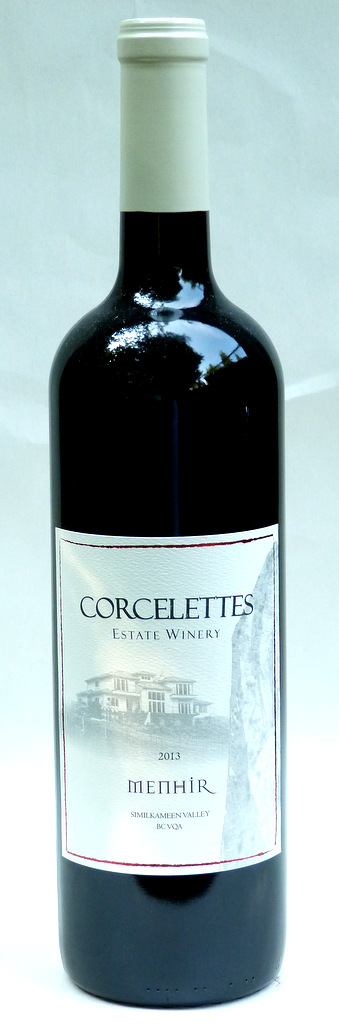
Corcelettes Menhir 2013 ($32 for 205 cases). This is the winery’s flagship red, a blend of 60% Cabernet Sauvignon, 40% Syrah. The wine begins with aromas of herbs and black cherry. There are generous red fruit flavours on the palate – black cherry, plum – with notes of mocha, tobacco and, ever so slightly, bell pepper. The texture is rich and ripe. 92.


Tuesday, September 15, 2015

Class of 2015: vinPerdu Cellars


 Photo: Catherine Coulombe and father Ray Coulombe


vinPerdu Cellars
5381 Highway 97,
Oliver, BC, V0H 1T0
T  250.498.2234
When to visit: 11 am – 6 pm daily

Despite its name, this new family-operated winery is hiding in plain sight behind its large highway-side sign.

If the branding is a little unusual, you should know that the owners, Ray and Wendy Coulombe, previously had successful careers in marketing and advertising.

With the help of two daughters, they are now pursuing a retirement career with their own winery for a reason similar to many peers: the lifestyle.

“It is for wine but it is mostly for the lifestyle,” Ray says. “At my age, I am not interested in making money. I am interested in making a successful and respected little winery, which I will leave to my children. And I will have a lifestyle to go with that dream.”

Ray was born in Edmonton in 1945, the member of a pioneering family. His grandparents, Delphis and Marie-Claire, moved from Quebec in 1901 to a homestead near Edmonton. Ray’s father, Frank, after operating a barbershop and pool hall, moved his family to Vancouver when Ray was 10.

“We always drank wine,” Ray remembers. “When I was a kid, it was always homemade stuff – a white and a red. The white was dandelion wine and the red was made with saskatoons. But there was always wine at the table.” The wines improved in Vancouver because the family had moved to a house with both fruit trees and grape vines in the back yard.

Ray’s ability as a writer and artist earned him a scholarship to an arts college in California. When he approached an advertising agency in Vancouver, he was advised to go to Toronto, with its greater opportunities. There he joined Maclaren Advertising in 1968; he was soon transferred to Montreal - much to his delight.

“I couldn’t believe what I saw in Montreal,” he recalls. “Compared to Toronto, Montreal was full of colour. There were people on the streets at every hour. There were sidewalk cafes and people talking. Always next to them was a bottle of wine.”

He spent the rest of his business career there, first as creative director at Maclaren (Wendy joined as art director) and then with his own agency. That business was closed in 2001. Now drawn back to the West, Ray and his wife looked for a community in which to retire and found a house with a five-acre vineyard just south of Oliver in 2009.

The vineyard needed a lot of work before it could produce quality fruit. “We were the perfect victims to take this on because my wife and I were looking for a hobby,” Ray laughs. “We persevered and eventually we got grapes that were producing nice flavours.”

The next step soon suggested itself. “We were in that house, looking onto that vineyard below, and I thought there should be a winery at the highway,” Ray says. “If my grapes taste good, that’s what we will do.”

He arranged to have wine made from his grapes in 2013. The winery was built in 2014. The area occupied by the winery and tasting room replaced a struggling Merlot block that had been planted in a frost pocket.

The vineyard now has Chardonnay, Pinot Gris, Cabernet Sauvignon and Gamay Noir. The style of the debut wines is deliberately fruit-forward with supple and easy-drinking tannins. The winery’s Gamay is a good example.

“I couldn’t wait to start this winery for the reason of the Gamay alone,” Ray says. “I saw it very much to be in the Beaujolais style – not a heavy red, not sitting in the barrel forever. Since we are talking fruit forward, this would be lightly touched in oak. It is all fruit and should be chilled a bit for summer drinking.  Instead of having a white wine on the back porch, you can have nice ‘Beaujolais’ from the valley here that isn’t heavy.” 

Ray and Wendy’s two daughters (and their partners) also have become involved in vinPerdu. Catherine, who formerly had a catering business in Montreal, now manages vinPerdu’s wine lounge and is mentoring with a winemaking consultant. Nathalie, who has become a vineyardist, is an artist and displays her excellent work in the tasting room. One of the strong appeals of this winery is the warmth of the Coulombe family, one or other of which usually is on hand to greet visitors.

Here are notes on the wines.

vinPerdu Pinot Gris 2014 ($20.90). This is a crisp and refreshing white with aromas and flavours of citrus, honeydew melon and apples. 90.

vinPerdu Chardonnay 2013 ($27.90 for 89 cases). This is the peaches and cream style. The 12 months on lees in French oak have given the wine an appealing texture. The wine has citrus aromas and tropical flavours with a hint of butterscotch and very subtle oak. 90.

vinPerdu Gamay Noir 2014 ($27.90 for 101 cases). This is a juicy, refreshing wine with aromas and flavours of strawberries and cherries. The silky texture adds to the charm. 90.

vinPerdu Cabernet Franc 2013 ($28.90 for 108 cases). Light ruby in hue, this wine again has silky tannins that underline the drinkability style of all the wines. There are aromas and flavours of raspberry and blackberry with a touch of oak from the 12 months the wine spent in barrel. 89.

vinPerdu Compass 2013 ($29.90 for 67 cases). This is a blend of 66% Cabernet Sauvignon and 33% Merlot. It has aromas and flavours of black currant, cherry and blueberry. The juicy texture and the savoury fruit flavours underline the house style: wines that are accessible. 90.


Saturday, September 12, 2015

CedarCreek's Icewine and friends


The 2014 white wines from CedarCreek Estate Winery are among Darryl Brooker’s final vintage at CedarCreek.

As has been reported before, he has now become the senior winemaker at Mission Hill Family Estate following the 2014 purchase of CedarCreek by Mission Hill proprietor Anthony von Mandl.

Darryl made five vintages at CedarCreek. He demonstrated astonishing versatility, making topnotch Pinot Noir and Chardonnay and excellent Bordeaux reds that included a Cabernet Sauvignon fermented in an amphora. His Pinot Noir Block 2 2012 was judged the best Canadian red wine in this spring’s Decanter Wine Awards.

With the current releases, he goes out on a high that even includes an Icewine, a dessert wine that CedarCreek has produced from time to time but not regularly.

Darryl is being succeeded at CedarCreek by Alexis Moore, a Nova Scotia native with an impressive résumé covering 16 vintages. She sent the last 10 years with a New Zealand winery, specializing in Pinot Noir.

Here are notes on the wines:


CedarCreek Gewürztraminer 2014 ($15.99 for 2,500 cases). The wine begins with aromas of orange marmalade, pineapple and ginger. On the palate, there are flavours of orange rind. The wine, with good weight on the palate, is balanced to finish dry. There is a hint of warmth from the alcohol on the finish. 89.

CedarCreek Pinot Gris 2014 ($17.79 for 7,220 cases). This is a textbook Pinot Gris. Its complexity benefits from the winemaker’s decision to barrel ferment 13% of the blend in new French oak (the rest is fermented in stainless steel). The barrel-fermented portion adds good mid-palate weight. The wine begins with citrus aromas, leading to flavours of citrus, green apple, pear and melon. The finish is crisp. A fine skein of minerality weaves through the wine. 91.

CedarCreek Platinum Block 3 Riesling 2014 ($22.90 for 460 cases). The winery has Riesling vines in its vineyard that now are 25 years old. In recent vintages, pains have been taken with that block to produce exceptional Riesling. The winery’s notes suggest that the aroma of this wine recalls lilies. It is a starting idea but I will agree with someone’s nose on that. When you dig beyond the blossoms, there are also notes of lemon; a year or two of bottle age will release classic notes of petrol. On the palate, there are flavours of lime mingled with minerality. The lively acidity is balanced exquisitely with residual sugar, with the result that the wine has a crisp and dry finish. By all means, cellar this wine for a few years. 92.

CedarCreek Platinum Viognier 2014 ($27.49 for 630 cases). The winery pulled out all the stops to make this wine. The ripe fruit (alcohol is 14.6%) was fermented for 35 days in three separate lots. One-third was fermented in a concrete egg, one-third in a foudre (large oak cask) and one third in neutral oak barrels. The consequence was three flavour components, all with good weight and texture, to blend into the final wine. The wine begins with aromas of honeysuckles, wild honey and apricot. On the palate, there are flavours of apricot that persist on the lingering finish. The wine has the almost imperceptible spine of tannin so typical of Viognier. That’s why the variety sometimes is called the white wine for red wine drinkers. 92.

CedarCreek Platinum Riesling Icewine ($52.99 for 220 cases of 500 ml bottles). The grapes for this wine were picked at -12C on the night of November 29, 2014. It took the winery three days of gentle pressure in a new basket press to extract the intensely sweet juice, which was then fermented in neutral French oak. Unusual for Icewine, it was also aged five months in neutral oak. The finished wine has 242 grams of sugar per litre balanced with a bracing acidity of 12.9 grams. (Some perspective: the Riesling has 8.2 grams of residual sugar and nine grams of acidity.)

The wine is packaged in a squat bottle with a reseal-able glass stopper. That is a good feature with an Icewine. You are unlikely to consume a bottle at a sitting. You can, in fact, have a glass and then leave the bottle in the fridge, dipping into it from time to time over the next few weeks or months. Icewine remains fresh for a long time.


This wine, lightly gold in colour, begins with intense aromas of honeyed, ripe pineapple. On the palate, there are rich flavours of ripe peaches and ripe pineapples. The bracing acidity keeps the wine bright, with a clean tang on a finish that persists forever. 95. 

Thursday, September 10, 2015

Township 7 joins Muscat producers


Only a handful of producers offer wines made from the Muscat family of grapes.

The current price list for one VQA wine store lists just three. Hillside Muscat Ottonel likely has been produced since that winery opened in 1990. Joiefarm Winery and Summergate Winery have had Muscats in their portfolio since they opened. LaFrenz winery has a marvelousMuscat.
fortified liqueur

Now Township 7 Vineyards & Winery has released its first Muscat, a superb dry white from the Rock Pocket Vineyard on Tuc-El-Nuit Road, northeast of Oliver.

There certainly are several other Muscats that do not show up on a VQA wine store list. LaStella’s Moscato D’Osoyoos, like the Township 7 offering, is available just to wine club members and tasting room visitors.

The 2014 vineyard census of British Columbia found only 89.5 acres of Muscat varieties. There is almost 10 times as much Gewürztraminer planted; this variety dwarfs all of the aromatic whites grown here. Its dominance and its popularity likely explain the comparatively modest acreages of Muscat, Siegerrebe, Bacchus, Schönburger, Ehrenfelser and Sovereign Opal.

Gewürztraminer is the wine of choice for most consumers looking for a spicy white.  Yet an excellent Muscat is always a good alternative when you have had you fill of Gewürztraminer.

Township 7 winemaker Mary McDermott has crafted a fine dry Muscat. The Rock Pocket Vineyard is a warm site which, according to the winery’s notes, produced “characteristics common of warmer traditional European locales such as France and Italy where the grape is widely grown.”

The grapes were fermented for three weeks in stainless steel at a cool 14C. Cool fermentation preserves the fresh fruit flavours and the aromas. The result is a light, elegant wine with just 12.5% alcohol and with an almost imperceptible around of residual sugar.

It is a welcome addition to the Okanagan’s family of Muscat wines.

Here are notes on Township 7’s current offerings.


Township 7 7 Blanc 2014 ($17.38 plus tax for 398 cases). This is a blend of 50% Pinot Gris, 45% Gewürztraminer and 5% Muscat. It begins with aromas of herbs, citrus and white peach. It tastes of white peach and pear with delicate spiciness on the finish. A slight touch of residual sweetness broadens the weight on the palate and the generous length. 90.

Township 7 Muscat 2014 ($17.38 plus tax for 108 cases). This wine is exclusive to Township 7’s wine club; what an incentive to join! The aroma soars from the glass with notes of ginger and orange, leading to dramatic flavours of spice, orange rind and ripe cantaloupe. The wine just dances on the tongue and then finishes refreshingly dry. The delicate intensity of the finish lasts for several minutes. Lucky wine club members. 93.

Township 7 Pinot Gris 2014 ($17.38 plus tax for 398 cases). This is also a wine club exclusive. This wine was fermented in stainless steel for three weeks at 14C in order to preserve the fresh fruity notes. It begins with aromas of pears and apricots. Generous on the palate, the wine has flavours of apples and lime. The wine is crisply dry with a persistent finish. 90.


Township 7 Cabernet Sauvignon 2012 ($23.47 plus tax for 498 cases). The grapes for this wine come from the Blue Terrace Vineyard on Tuc-El-Nuit Road just northeast of Oliver. This is a long-time supplier of fruit to Township 7. The 2012 vintage was an excellent one for ripening Cabernet Sauvignon: the grapes were picked October 20 at 24.5 Brix. The wine is dark with aromas of plum, black currant and vanilla that are echoed on the palate, along with notes of mint and tobacco. The polished texture of the wine results from aging it 22 months in American oak. 91.

Wednesday, September 9, 2015

Desert Hills carves out a style with big reds


Photo: Twins Jessie and Randy Toor

On every occasion that I taste the wines of Desert Hills Estate Winery, I am surprised at how extensive the portfolio is.

Of course, there is no need to be surprised. The Toor brothers – twins Randy and Jessie and younger brother Dave – farm 70 acres of grapes in the south Okanagan. They have access to numerous varieties and that has led to a large wine portfolio.

The winery occupies a former apple orchard on Black Sage Road which the Toor family acquired in 1988. The following year, with the support of Langley’s Chaberton winery, they began replacing the apples with grape vines.

Chaberton needed red varieties which, after 1988’s vine pull-out in the Okanagan, were in very short supply. The Toor brothers planted the leading red varieties, including one of the first blocks of Syrah in the Okanagan.

Once the vines started producing in 1996, the Toors not only supplied Chaberton but laid plans for their own winery. Desert Hills opened in 2003.

While the portfolio includes excellent white wines, it is reds that predominate at Desert Hills. Gamay Noir, an under-appreciated variety, was an early star here and remains consistently good. The Syrah invariably is bold. The Zinfandel would compare well with good California Zinfandels.

The Toors have paid special attention to the Bordeaux red varieties. The winery produced its first Meritage in 2000, built with Cabernet Sauvignon, Merlot and Cabernet Franc. Randy Toor recently opened one of the few remaining bottles of that wine. To his delight, the wine is still drinking well.

After several vintages of Meritage, Desert Hills decided to raise the bar by blending all five Bordeaux varieties. Randy has been impressed with the taste of Malbec wines from Argentina and the brothers were already growing the variety.

To get a supply of Petit Verdot, they grafted one and one-half acres of that variety onto the trunks of 12-year-old Cabernet Sauvignon vines.  “We had quite a bit of Cabernet Sauvignon,” Randy says. “I think we had about 80% success with grafting.”

In 2004, Desert Hills was able to make one of the Okanagan’s first blends with all five Bordeaux blends. (Randy has given some thought to planting the sixth, Carmenère.)

When that wine was released, it was called Mirage. “Everybody had a Meritage,” Randy says. “We wanted to get away from that name. We thought that Desert Hills is a winery in the only desert pocket. What do you see in a desert? A mirage.”

The current releases from Desert Hills include the winery’s first release of Petit Verdot on its on. It was an opportunistic release because, after the Mirage blend was done, there were several barrels of Petit Verdot left offer. A notoriously dark and concentrated wine, it fits right in with the Desert Hills style of big, bold reds.

Here are notes on the wines.


Desert Hills Gewurztraminer 2014 ($22.90 for 1,300 cases).  This wine has strong varietal definition, with aromas of ginger and orange marmalade. On the palate, the fruit flavours are intense, with spice and lychee. The texture is lush and the finish is quite persistent. The wine is balanced to finish dry. 90.

Desert Hills Viognier 2014 ($24.90 for 650 cases). The wine begins with appealing aromas of apricot and cantaloupe. The palate has intense fruit flavours that include honeydew melons, citrus and apples. The finish is crisp and refreshing. Fermenting this wine cool, at 15C, preserved the fruitiness. 90.

Desert Hills Unoaked Chardonnay 2014 ($17.90 for 630 cases). As soon as you put your nose in the glass, you know that a well-made Chardonnay does not need oak. There is good varietal expression in the aromas of and flavours of citrus, ripe apple and peach. The wine has good weight on the palate, with a lingering, refreshing finish. 90.

Desert Hills Helena 2014 ($19.90 for 300 cases). This rosé is named after a beauty in one of Homer’s poems – a touch of sentimentality reflecting the Greek heritage of the Desert Hills winemaking team. The wine begins with an appealing salmon pink hue. It has aromas and flavours of strawberry and cherry, with a juicy weight and a savoury finish. The grape varieties are not identified. 89.

Desert Hills Cabernet Franc 2011 ($26.90). The slightly lean texture of the wine reflects a cool vintage. However, the wine appeals with aromas and flavours of raspberry and blackberry. 89.

Desert Hills Cabernet Sauvignon 2012 ($29.90 for 518 cases). Dark in colour, the wine begins with aromas of cassis, cherry and vanilla. On the palate, there are flavours of black currant with hints of leather and tobacco. The wine, which was aged 14 months in French oak, has disciplined age-worthy tannins. Decant this for current drinking. 90.

Desert Hills Gamay 2014 ($19.90 for 2,600 cases). Few wineries in the Okanagan have such a major commitment to Gamay Noir. Usually regarded as the junior partner to Pinot Noir, it produces some very drinkable wines. This is a bold, juicy red with aromas of black cherries. On the palate, there are ripe, spicy flavours of cherry and mocha. The finish lingers. 91.


Desert Hills Malbec 2012 ($34.90). This is a bold red, with jammy aromas of plum and mulberry that are echoed on the palate, along with lingonberry and exotic spice. The texture is almost fleshy. The wine is generous and immensely satisfying. 91.

Desert Hills Merlot 2011 ($24.90 for 1,200 cases). Four years of age have enabled this wine to develop complex aromas (cassis, blueberry, vanilla and spice). On the palate, there are flavours of black currant, blackberry and vanilla with hints of tobacco and mocha on the finish. It is an excellent Merlot from a cool vintage. 89.
Desert Hills Petit Verdot 2012 ($39.90 for 100 cases). The label says 15% alcohol but the wine is so concentrated and dense that one does not notice the alcohol.  Almost black in colour, the wine has spicy perfumed aromas of red fruit. On the palate, the flavours of plum, black currant and tobacco are framed by a graphite minerality. Drinking this spectacular and age-worthy wine before its seventh birthday would be infanticide. 92.

Desert Hills Syrah 2010 ($36.90 for 500 cases). This is a bold expression of the variety, with aromas and flavours of black pepper, black cherry, dark chocolate and espresso. There are appealingly rustic gamy and earthy flavours on the finish – the classic delicatessen spices and flavours of South Okanagan Syrah. Aging this wine 20 months in French oak polished the tannins and the texture. 91.

Desert Hills Zinfandel 2011 ($39.90 for 75 cases).  It may have been a cool vintage but, with good grape growing, the winery got this variety abundantly ripe. The alcohol is 14.7%. The wine has classic brambly Zin flavours of blackberry, blueberry, lingonberry and plum. The rich, ripe fruit give this wine a generous palate. There is some spice on the finish. 91.


Desert Hills Mirage 2010 ($36.90 for 300 cases). This is the winery’s flagship red. The blend is 40% Cabernet Sauvignon, 30% Merlot, 15% Malbec, 10% Cabernet Franc and 5% Petit Verdot. The component wines are aged about 18 months in French oak prior to making the blend. This is an elegant wine with silky tannins. It has aromas of black currant and black cherry. Those are echoed in the flavour, along with plum and dark chocolate. 93.

Tuesday, September 8, 2015

Great Northern's challenge to Amador County


 Photo: Zinfandel in the boiler


Move over, Amador County. Kettle Valley’s Great Northern Vineyard in the Similkameen has arrived.

Amador County is the viticultural area in north central California renowned for its powerful Zinfandel wines.

The 2013 Great Northern Zinfandel just released by Kettle Valley is strikingly reminiscent of a premium Zinfandel from one of Amador County’s wineries.

This is the third vintage of Great Northern Zinfandel. The 2013 vintage took that wine to another level, reflecting perhaps the increasing maturity of the vines. The first vintage was 2011, all of 46 cases. My review of that wine indicated it already had power.

I wrote: “Think California ripeness! The wine has 15.6% alcohol. It is a big, almost porty wine with vanilla and black cherry aromas; spicy brambly flavours; and – as you would expect – a touch of heat on the finish.”

In 2012, 191 cases of Great Northern Zinfandel were produced. I liked it as well: “This wine begins with earthy aromas of plum and leather, leading to robust flavours of plum, black cherry and blackberry. The wine presents a huge dollop of ripe sweet berry flavours to the palate.” The alcohol was 15.5%.

In 2013, 239 cases were produced. As indicated, I think this is the best one yet. The review follows.

The vineyard, which grows Syrah and Viognier as well as Zinfandel, is on a hilltop east of Keremeos, just beside Highway 3 en route to Osoyoos.  It is owned by sisters Colleen Ferguson and Janet Watts. With their husbands, Bob Ferguson and Tim Watts, they own Kettle Valley, which opened in 1996. The vineyard is managed by Andrew Watts, Tim and Janet’s son and an enology graduate of Lincoln University in New Zealand.

The robust performance of Zinfandel speaks well for the sun-drenched terroir of the Similkameen Valley. Zinfandel can be problematic in British Columbia. Because the variety ripens late and unevenly, it needs a lot of hang-time. It seems to be getting it in the Great Northern Vineyard.

The vineyard is named for the railroad that formerly operated through the Similkameen. This proved to be convenient for Kettle Valley. The winery now puts the image on a locomotive on the labels of both brands, neatly telegraphing the family relationship.

Here are notes of current releases from both labels.

Kettle Valley Riesling 2014 ($26 for 189 cases). This wine is made with Naramata Bench grapes. The winery says the wine is “slightly off-dry with significantly less residual sugar than prior vintages.” I don’t recall those vintages; but it seems to me Kettle Valley nailed it with the 2014. The tiny bit of sweetness shows only in the depth and honeyed richness of what is essentially a dry wine. Lightly golden in hue, the wine has aromas of lime and lemon. On the palate, there are flavours of herbs and lime. The wine has good weight and a long finish. 90.

Kettle Valley Barber Cabernet Sauvignon 2011 ($38 for 45 cases). The leanness of this wine reflects a cool vintage that did not ripen the Cabernet Sauvignon as much as one would have liked. The wine has aromas and flavours of black currant and spice. By aging it 20 months in French oak, the winery achieved elegant tannins. 88.

Kettle Valley Pinot Noir 2012 ($26 for 688 cases). This robust and fleshy wine is made with grapes from four different vineyards, presumably giving the winery a good selection of clones to work with. The wine was aged in French oak barrels for 20 months. It has aromas and flavours of cherry and vanilla. 90.

Great Northern Viognier 2014 ($21 for 317 cases). Here is a rich, ripe Viognier, with a honeyed texture and aromas and flavours of apricot. It is a delicious wine with a long finish. 90.

Great Northern Syrah 2012 ($24 for 239 cases). The vineyard was farmed at just over one ton an acre in a quest for concentrated flavours. The wine, which aged 22 months in French oak, has a rich and plummy aroma, with almost jammy flavours – a meaty melange of plum, black cherry and blueberry. 90.


 Great Northern Zinfandel 2013 ($24 for 263 cases). This has 16% alcohol but the wine is so rich that it does not come across as hot. It has appealing aromas of blackberry and black cherry, echoed in the rich and ripe flavours and the long spicy finish. This is a big, swaggering red wine. One of my table companions took a mouthful and, quite spontaneously, said “yum.” She made the point. 93.

Saturday, September 5, 2015

River Stone triggers a closure discussion


Photo: River Stone Estate Winery (courtesy of winery)


As if the wine business is not tough enough, there are still times when the cork supplier lets a producer down.

When I received this year’s samples from River Stone Estate Winery, the Malbec rosé was the first wine I opened. That wine had become a favourite around our house.

The wine was corked! I set aside the other samples until I could get to the Okanagan to pick up a fresh rosé.

Then I thought there was a cork issue with another wine, which made for another trip to the Okanagan to taste the entire range at the winery. I usually do not take so long to get reviews posted but I did not want to take any chances. The wines at River Stone have always been very well made.

I was also somewhat concerned that I had something to do creating the apparent cork issue. Several years ago, owner and winemaker Ted Kane released his wines with what I would call economy corks. I thought they created the wrong image for a winery releasing premium wines and I said so.

Subsequent releases have come with premium corks. They look much better, even if one or two were not doing the job this year.

Winery owners must spend hours agonizing over closures, especially when it comes to changing the closure.

Let me quote a recent conversation I had with Hagen and Roland Kruger, who handle winemaking and marketing at Wild Goose Vineyards. The winery uses only screw caps, having begun to switch very cautiously in 2006.

“I wanted to move to screw cap and Hagen was very reluctant,” Roland said. “He wasn’t against it but we started very carefully, using it for 300 cases of The Stony Slope Riesling. All the rest were under cork. The following year we did a couple of thousand cases and we slowly switched over.”

“I would encourage all winemakers to just go to screw caps,” Hagen says now. “There is always reluctance to change, but I went out and got this book, Taming The Screw, and it tells you everything you need to know about screw caps. Yes, it is a different process but it is not something we should be afraid to do.”

The screw cap for wine bottles has been around for a couple of decades. It was a response to the unacceptable amount of cork taint that wineries had begun to experience. Badly corked wines smell and taste like a musty root cellar; mildly corked wines are dull enough to discourage repeat purchases.

The cork producers, after losing market share to screw caps (and even synthetic corks), have responded with major quality improvements. Corked wines are very much rarer than they once were.

A good case can be made for continuing to use cork for wines meant to be aged. I would expect there will always be a role for natural cork at River Stone, although the rosé and perhaps the whites might migrate to screw cap.

Here are notes on the current releases.

River Stone Gewürztraminer 2014 ($18). Here is a Gewurz with lots of personality. It begins with aromas of spice and lychee, leading to flavours of lime and grapefruit. The finish is crisp and dry. 91.

River Stone Pinot Gris 2014 ($19.90). This wine begins with aromas of citrus and peach, leading to flavours of apple, pear, melon and nectarine. The wine is generous on the palate, with a lingering medley of fruit on the dry finish. 90.

River Stone Sauvignon Blanc 2014 ($18). This wine has an appealing aroma of lime and lemon. Those are echoed on the palate, along with hints of herbs and minerals. The lively acidity leaves the wine crisp and refreshing. 91.

River Stone Malbec Rosé 2014 ($19.90). This rosé has a strikingly dark hue. The aromas of strawberry and cherry are echoed by similar and intense flavours. Fruity and generous, this is not a wimpy rosé. Dry on the finish, this is built for food. 90.

River Stone Cabernet Franc 2013 (Sold out). The wine begins with classic spice brambleberry aromas. On the palate, there are flavours of blackberry, black cherry and black currant. The wine comes off as boldly rustic. 90.

River Stone Merlot 2012 ($19.90). This wine has aromas and flavours of cassis, black cherry and blackberry. The tannins are firm but silky and the wine has good concentration. 91.

River Stone Stones Throw 2013 ($23.90). This is 78% Merlot, 11% Cabernet Sauvignon, 7% Petit Verdot and 4% Malbec. Dark in colour, it has aromas of blueberry and plum, leading to flavours of plum, black cherry and cassis. The texture is rich and juicy and the finish is long. 91.