Monday, August 11, 2014

The Godfather and other Cassini treats


Photo: Adrian Cassini

The summer releases from Cassini Cellars comprise a strong line-up, capped by the first release of The Godfather. This $70 red is built to become the winery’s icon wine.

Adrian Cassini, who opened this winery in 2009, has a notebook in which he regularly jots down ideas for wine names. When the winery’s first icon wine was getting close to bottling, he thumbed through his book and found “Godfather.” It was clearly the right name for a wine which makes a statement. “It’s big,” he says. “I want a full-bodied wine. I want a steel fist in a velvet glove.”

The Godfather was launched by putting his best wines in French oak barrel for 23 months and then selecting the six best barrels. The prolonged barrel aging (Maximus gets only 14 months) makes The Godfather even bigger. About 10% of the volume is lost to evaporation. This is what winemakers call the angel’s share.

The four varietals in the 2010 The Godfather all play a role in the blend. “The Cabernet Sauvignon creates the pillar,” Adrian says. “The Merlot and the Cabernet Franc are the mid-palate and Syrah is the glue of the whole blend.” Adrian stress that the wine is not made to a recipe. “I want people to look forward to what I come up with the next year,” he says. “It is always going to be good. We are dancing a little bit with the varietals.”

Here are notes on the wines.

Cassini Cellars The Godfather 2010 ($70 for 120 cases). This is a blend of             33% Cabernet Sauvignon, 33% Merlot, 17% Cabernet Franc and 17% Syrah. For this bold and elegant wine, I defer to the winery’s notes: “Nice integration of oak and dark fruit flavours like cherry, black currant and plums gives this wine a rich and complex taste with silky tannins to round out the wine to enjoy now or put down for years to come. Drink now to 2020.” My score: 92-94.

Cassini Cellars  Nobilus 2011 Grand Reserve ($39 for 125 cases). This is a Merlot. Dark in colour, it begins with aromas of black cherry, vanilla and black currant which are echoed in the flavours. There is appealing spice on the finish. The texture is firm, suggesting that this wine will age superbly for another five to seven years. 88-90.

Cassini Cellars Cabernet Sauvignon 2011 ($40 for 125 cases). The winery  also calls this an “iron fist in a velvet glove,” meaning that the long ripe tannins enclose a wine with a lot of power. The aroma appeals with notes of cassis, black cherry, vanilla and spice. The generous palate delivers flavours of black currant, black cherry and vanilla, finishing with hints of spice and mint. For a Cabernet from a cooler vintage, there is not a trace of green flavours in this ripe and totally delicious wine. 92.

Cassini Cellars Cabernet Franc 2011 Collector’s Series ($29 for 400 cases). This is a surprisingly ripe wine (13.1% alcohol) for a cool year. Dark in colour, it begins with aromas of blackberry, with a touch of raspberry and cherry. On the palate, there are vibrant flavours of blackberry, black currant and cola, with a spicy finish. The wine has long ripe tannins. 90.

Cassini Cellars Syrah 2011 Grand Reserve ($N/A). The unfiltered Syrah begins with aromas of white pepper, plum and black cherry. The complex and brooding flavours include plum, prune, espresso coffee and black chocolate, with a touch of pepper and earthiness on the finish. 90.

Cassini Cellars Chardonnay Reserve 2012 ($25 for 225 cases). This is a rich and ripe Chardonnay (14.6% alcohol). It begins with aromas of mandarin and subtle oak. On the palate, there are honeyed flavours of mandarin, ripe mango and butterscotch. Even with a full-bore barrel and malolactic treatment, enough acidity remains to leave a tangy note on the long finish. 90.

Cassini Cellars Viognier Marsanne Roussanne 2012. ($25 for 225 cases). A few years ago, the winery bought a nearby vineyard from Inniskillin Okanagan for growing Rhone varietals. Judging from this wine, it was a brilliant idea. Here is a wine with aromas of honey, tangerine and ripe apricot. Rich and even unctuous on the palate, the wine delivers a glorious basket of tropical flavours, including tangerine, guava, papaya and apricot. 91.

Cassini Cellars Unoaked Chardonnay 2012 ($19). This wine is an excellent example of a typical Cassini wine: it is packed with fruit, beginning with aromas of pear and apple and tasting of apples, peaches and passion fruit. The wine has good length and a long, crisp finish. 90.


Friday, August 8, 2014

Val Tait and friends on Naramata Road


Photo: Bench 1775 general manager Val Tait

The readers of USA Today recently chose the Okanagan as one of the world’s best wine-touring regions.

I have no doubt that some, if not all, of those who voted have spent time on the Naramata Bench. There they would have found a concentration of wineries offering very good wines, often excellent food, and always great views. Several wineries even offer bed and breakfast accommodation.

The tasting notes below were collecting during several recent visits to the bench. Before the summer is out, there will be another collection of reviews. Will I get around to them all? Not likely. I estimate there are about 500 wines to taste from Penticton to the Chute Lake turnoff. I would be surprised if there were a poor one.

Here are the latest notes. They cover tastings at Bench 1771, Hillside, Lake Breeze, Perseus, Red Rooster and Ruby Blues.

Bench 1775 Winery Chill 2013 ($16.90 for 1,130 cases). This  crisp and refreshing white is Pinot Gris 46%, Chardonnay 25%, Sauvignon Blanc 11%, Viognier 6%, Semillon 6% and Gewurztraminer 6%. It has citrus aromas with flavours of lemon, lime and apples. There is an herbal spice on the dry finish. 90.

Bench 1775 Winery Pinot Gris 2013 ($17.90 for 600 cases). This wine appeals with its aromas of pear and quince and flavours of tropical fruit, including lychee on the mid-palate. The finish is crisp and tangy, making for a refreshing wine. 91.

Bench 1775 Winery Gewürztraminer 2013 ($19.90 for 280 cases). This is a classic, with an aroma of spice and lychees and flavours of lychee and grapefruit. The finish is crisply dry. 90.

Bench 1775 Winery Sauvignon Blanc 2013 ($17.90 for 465 cases). This is a tangy, zesty Sauvignon Blanc recalling its New Zealand cousins. There are aromas of lime and grapefruit that are repeating on the palate. 90.

Bench 1775 Winery Chardonnay 2012 ($18.90 for 900 cases).  This is a refreshing unoaked Chardonnay, with aromas and flavours of apples, peaches and limes. The good texture reflects the impact of lees stirring while the wine was in tank. The bright acidity gives it a Chablis-like crispness. 88.

Bench 1775 Winery Glow 2013 ($19.90 for 367 cases). This is one of the Okanagan’s best dry rosé wines from the 2013 vintage. It is 48%Malbec, 26% Merlot, 14% Syrah and 11% Cabernet Sauvignon. The grapes were picked and kept cool under dry ice and were pressed within an hour of being picked. The hue does indeed have an orange glow. The wine has delicate strawberry aromas with flavours of strawberry and grapefruit. There is an herbal note to dry finish. 92.

Bench 1775 Winery Groove 2012 ($17.90 for 1,250 cases). This is 65% Cabernet Sauvignon, 23% Merlot, 7% Malbec and 5% Syrah. Eighty percent of this wine was matured in stainless steel, only 20% in barrel. The result is a bright, juicy and quaffable red, with aromas and flavours of cherries and other red fruit and with spice on the finish. 89.


Hillside Winery Pinot Gris Reserve 2012 ($23.99 for 364 cases). Winemaker Kathy Malone builds complexity into the reserve Pinot Gris by fermenting almost half in Hungarian oak. The wine is left on the lees for five months and the lees are stirred regularly. As a result, the wine has a luscious, creamy texture with aromas and flavours of pears and apples. 91.

Hillside Winery Unoaked Pinot Gris 2013 ($19.99 for 877 cases). For those who prefer a less cerebral Pinot Gris, this is a delicious wine with a slightly pink hue. The texture is juicy with favours of citrus and fresh apples. 90.

Hillside Winery Pinot Noir 2011 ($21.73 for 233 cases). Here is a bold Pinot Noir from Naramata Bench fruit, delivering aromas and flavours of spicy cherries. The texture is juicy. 90.

Hillside Winery Mosaic 2009 ($40 for 499 cases). This is Hillside’s flagship Bordeaux blend – 55% Merlot, 22% Cabernet Sauvignon, 9% each of Cabernet Franc and Malbec and 5% of Petit Verdot. It is a point of pride that every vintage of Mosaic since 2006 has been made entirely of Naramata Bench fruit. The wines arguably are more vibrant and brighter that Bordeaux blends from the south Okanagan. This is a firm, age-worthy red with flavours of black currant, coffee, chocolate and liquorice.  93.


Lake Breeze Pinot Blanc 2013 ($19). Made with fruit from old vines, this is the wine that defines British Columbia Pinot Blanc. It begins with appealing aromas of apples and honeydew melons. On the palate, there are flavours of apples and citrus, with a spine of fresh acidity and minerals. 91.

Lake Breeze Pinot Gris 2013 ($19). This is a juicy wine with mouth-filling flavours of pear and peach. This is a hint of spice on the tangy finish. 90.

Lake Breeze Ehrenfelser 2013 ($19). This off-dry white begins with floral and citrus aromas. On the palate, it is a bowl of tropical fruit – peach, apricot, mango, lychee. 88.

Lake Breeze Sémillon 2013 ($19). This delicious white begins with aromas of lime and herbs. The herbal and lime flavours are intense, giving good weight to the palate. The finish is crisp. 90.

Lake Breeze Winemaker Series Windfall 2013 ($19). This is a complex blend of four white varietals. It begins with aromas of peach, apricot and tangerine. It delivers flavours of tangerine, papaya and guava with the impression of caramel even though this is a dry wine. 90.

Lake Breeze Seven Poplars Sauvignon Blanc 2013 ($22). This vibrant, zesty wine has aromas of lime and lemons which are repeated on the tangy palate. A fine skein of minerality gives it a backbone that supports the long finish. 90.


Perseus Pinot Blanc 2013 ($16). Crisp and refreshing, the wine has aromas and flavours of tangy green apples, with a note of citrus. 88.

Perseus Pinot Gris 2013 ($16.90). This is a juicy wine with tropical fruit aromas and with flavours of pears and apples. 89.

Perseus Viognier 2013 ($17.90). Made from Osoyoos grapes, this a ripe Viognier with a fleshy texture, with aromas and flavours of apricots and with a spine of minerality. Even with the texture, the wine finishes dry. 88.

Perseus Viognier Special Lots 2013 ($25). This unctuous Viognier, made with grapes from vineyards on Black Sage Road and the Similkameen, has fresh, fruity flavours of peaches and apricots. This satisfying wine has a lingering finish. 90.

Perseus Chardonnay 2012 Special Lots ($25). Most of the grapes in this wine are from the exceptional Anarchist Mountain vineyard at Osoyoos. The wine, unapologetically oaked, has aromas and flavours of tangerine and is rich on the palate. 89.

Perseus Syrah 2012 ($19.90). Made with grapes from a Skaha Lake bench vineyard, this wine has aromas and flavours of plum and black cherry, with notes of black pepper. 89.

Perseus Merlot 2012 ($19.90). The grapes for this big, ripe Merlot comes from the Blind Creek vineyard in the Similkameen. The wine begins with aromas of blueberry and cassis, leading to juicy flavours of black currants and cherry. 90.

Perseus Cabernet Shiraz 2012 ($19.90). The blend is 48% Shiraz, 42% Cabernet Sauvignon and 10% Cabernet Franc. The wine is still firm and benefits from decanting if you don’t have the patience to cellar it. There are aromas and flavours of black currant and plum, with a touch of pepper and with notes of cedar on the finish. 89.

Perseus Invictus 2011 Select Lots ($32.99 for 300 cases). This is the winery’s flagship Bordeaux blend. It is 40% Merlot, 21% Malbec, 18% Petit Verdot, 11% Cabernet Sauvignon and 10% Cabernet Franc.  There is an appealing  new oak in both the aroma and the palate, along a whiff of violets and with flavours of black currant and black cherry. There is also a touch of graphite on the finish. This clearly is a wine meant for cellaring. 91.

Perseus Cabernet Sauvignon 2011 Select Lots ($50).  The grapes here are from the most famous Cabernet Sauvignon block in the Okanagan – the U2 block at Inkameep Vineyards. This is a wine with a long life ahead of it, allowing the black currant and raspberry flavours to meld with the vanilla, cloves and leather notes here. 91.


Red Rooster Riesling Classic 2012 ($16.99). A portion of this wine was fermented in one of three recently-acquired 600-litre concrete eggs, enhancing its texture, before being blend with the remainder, which was fermented in stainless steel. The wine has developed a touch of petrol. While it is dry, the texture leaves the impression of honeyed flavours of grapefruit. 90.

Red Rooster Bantam 2012 ($14.99). This is winemaker Karen Gillis’s favourite wine to make, likely because the blend is so complex: 27% Pinot Auxerrois, 22% Pinot Gris, 17% Chardonnay, 17% Riesling, 10% Viognier and 7% Sauvignon Blanc. The wine impresses with tropical fruit aromas and flavours, along with juicy peaches and crisp apples. 89.

Red Rooster Viognier Reserve 2013 ($21.99 for 317 cases). This wine is available only at the winery. It is well worth the stop. The wine begins with floral and fruity aromas of apricot, pear and peach. On the rich palate, there are flavours of apricot and peach, with a lingering finish of tangerine and strawberry. 91.

Red Rooster Rosé Reserve 2013 ($21.99 for 480 cases). Here is another complex blend - 35% Malbec, 27% Cabernet Franc, 15% Syrah, 8% Mourvedre, 7% Petit Verdot, 3% Pinot Noir and 3% Grenache. It was made by bleeding juice from tanks of pressed red varietals. The wine delivers aromas and flavours of strawberry and cherry, with the dry finish of a Provence rosé. 89.

Red Rooster Merlot Classic 2011 ($18.99). Here is a Merlot designed for easy drinking, having been aged around 12 months in older barrels, mostly American. There are aromas and flavours of black currant and blueberry. The texture is still firm and the winery recommends decanting it for immediate drinking.  88.

Red Rooster Merlot Reserve 2010 ($29.99 for 494 cases). This wine has had 14 to 16 months in oak barrels. It begins with aromas of cassis and cherry. On the palate, the bright fruit flavours display notes of cherry and lingonberry, with a spicy finish. Available only at the winery. 90.

Red Rooster Pinot Noir Reserve 2011 ($24.99 for 478 cases). The nine months this spent in newer French oak comes through with the toasty aromas, along with strawberry and spice. On the palate, the bright fruit flavours include cherry, strawberry and red currant. The silky tannins add to the appeal of this pretty wine. 90.

Red Rooster Syrah Reserve 2011 ($29.99 for 476 cases). Available only at the winery, this bold red is made mostly with Similkameen grapes. The wine has spent 14 months in barrel, developing typically gamey aromas recalling bacon fat and delicatessen spices. The wine has big meaty flavours, along with plums, black cherry and spice, along with a hint of white pepper. 90.

Red Rooster Golden Egg 2011 ($49.99). Always made in a limited quantity – three barrels in this vintage – this is Grenache/Syrah/Mourvedre blend. The wine shows a lovely core of brambly fruit – blackberries, blueberries, black and red currants, with appealing aromas of violets and red fruit. The firm texture indicates the wine has the ability to age. 93.


Ruby Blues Commune Series Pinot Gris 2013 ($20). The bus on the label signifies that the grapes came from several neighbouring vineyards. The winery is calling these “commune series” wines. Clearly, these are good growers. The wine has juicy, mouthfilling flavours of pear and peach. 90.

Ruby Blues  Commune Series Viognier 2013 ($25). This wine won a Lieutenant Governor’s Award. It is fresh and vibrant, with aromas and flavours of peaches, pineapples and apricots. 92.

Ruby Blues  Commune Series Gewurztraminer 2013 ($20). Intense and expressive, this wine announces itself with a spicy aroma, leading to flavours of grapefruit and lychee. 90.

Ruby Blues  White Stiletto 2013 ($20). This is a blend of  Chardonnay, Pinot Blanc, Pinot Gris and Gewürztraminer. An appealing aromatic white, it has flavours of apples, guava, mango and pear. 90.

Ruby Blues  Strawberry Heels Rosé 2013 ($25). This was made entirely with Pinot Noir that was allowed a long cold soak. The hue is vibrant. There are aromas and flavours of strawberry and cherry, with a crisp, dry finish. 90.

Ruby Blues  Red Stiletto N.V. ($25). This unusual blend is anchored on Syrah, with Pinot Meunier, Pinot Noir, Cabernet Sauvignon and Merlot. The wine is eminently soft and drinkable, with black cherry flavours and black pepper on the finish. 90.

Ruby Blues  Merlot Cabernet 2009 ($30).  There are not too many of the splendid 2009 reds left in the market. This is a typically big, ripe red with good concentration. There are aromas of black currants and blueberries, leading to flavours of black cherry and black currants. 90-91.


Wednesday, August 6, 2014

Six wines to show off Mt. Boucherie's vineyards


Photo: Kal and Nirmal Gidda of Mt. Boucherie

From time to time, some wineries talk about reducing the number of wines they produce.

It does not seem that is much of a conversation at Mt. Boucherie Family Estate Winery where winemaker Jim Faulkner and his team get to make at last 21 different wines.

In fact, there are more “SKU’s” than that because the winery releases some of its wines in three litre boxes. That package does not qualify for the VQA designation but these are VQA quality wines at a very good price. The box of unoaked Chardonnay, at $38.50, works out to $9.63 a bottle.

Each year Mt. Boucherie produces around 25,000 cases of wine, all of it estate-grown. Kal and Nirmal Gidda, who own the winery with their families, have 300 acres of vineyard in three regions: West Kelowna, Okanagan Falls and the Similkameen Valley. This gives the winemaker many options for making varietals and blends.

Six examples from the winery’s current releases show the depth of the portfolio and the skill of the growers and the winemaker.

Here are notes on the wines.

Mt. Boucherie Riesling 2012 ($16 for 560 cases). The wine begins with aromas of grapefruit and tangerine with just a faint whiff of petrol (a good thing in Riesling).  On the palate, there are flavours of lemon and green apple with a touch of slate on the finish. The balance is exquisite: the residual sugar, which lifts the flavours, is offset by crisp acidity, give the wine a dry finish. 88.

Mt. Boucherie Sémillon 2011 ($15.50 for 112 cases). This wine, from grapes grown near Okanagan Falls, reminds me of a Hunter Valley Sémillon. I think it would a worthwhile idea (especially at this price) to set some of this wine aside for five or 10 years, allowing the nascent complexity to develop in bottle, as it does in the Hunter. The wine begins with aromas of lemon and lemon oil, leading to flavours of citrus, honeydew and apple with a silky spine. The finish is dry. 90.

Mt. Boucherie Family Reserve Gamay Noir 2012 ($20 for 1,338 cases). The wine begins with aromas of cherry and vanilla. On the palate, there are flavours of cherries and red currants with a good shake of black pepper. This might be a candidate for decanting; as it breathes, the texture become fleshy. 88.

Mt. Boucherie Pinot Noir 2011 ($21 for 1,356 cases). The fruit for this wine is from the Gidda family’s vineyards near Cawston. The wine begins with aromas of cherries, leading to flavours of cherry and strawberry with a hint of spice (the winery’s notes say fennel) on the finish. The silky tannins add to the appeal of a very drinkable wine at bargain price for Pinot Noir. It is a versatile wine: served chilled on a hot day, it was quite refreshing. 88.

Mt. Boucherie Summit Reserve Syrah 2009 ($25 for 350 cases). The wine begins with heady aromas of black cherry, plum and vanilla. It is generous on the palate, with meaty flavours, mingling plum, prune, liquorice and salami. There is a touch of black pepper on the lingering finish. The wine shows all the ripeness (alcohol of 14.5%) of a great vintage. The wine needs to be decanted because it has begun to throw sediment, as most good reds will. 91.


Mt. Boucherie Family Reserve Zinfandel 2010 ($35 for 250 cases). The bold, rustic personality of this wine should appeal to all Zinfandel fans. It begins with peppery aromas of raspberry and blackberry. On the palate, there are flavours of blackberry over an earthy undertone. When this wine is decanted – as it should be – a rich texture emerges with hints of chocolate and liquorice on the finish. 91.

Monday, August 4, 2014

Toasting Tinhorn Creek at 20


Photo: Tinhorn Creek's Robert Shaunessy


Pinch yourself: the B.C. wine industry has emerged from its teen years.

A case in point is Tinhorn Creek Vineyards, which celebrates its 20th anniversary this year.

When I look back at my first edition of The Wineries of British Columbia, which was published in 1994, I am struck by how many wineries today are 20 years old or older.

That book included 40 profiles, among such familiar names now as Blue Mountain, Poplar Grove, Mission Hill and Quails’ Gate.

Two of the 40 never opened. One was a figment of the ambition of a romantic with no money. The other was a Black Sage Road vineyard developed by a businessman, who changed his mind. That was the first of many vineyards purchased in 1996 by Mission Hill.

 The final chapter of the book was entitled “They Keep Coming.”

“The vitality of British Columbia wineries is truly astonishing,” I wrote. “Throughout the eighteen months in which this book was being researched and written, new winery projects emerged … almost every month.”

As Yogi Berra said, it still is déjà-vu all over again. In the 20 years since that was written, new winery launches have never stopped and surprising few have fallen by the wayside. Only two of the wineries in the 1994 book are closed totally: Peachland’s A&H Vineyards and Vernon’s Bella Vista Vineyards. And even the latter may yet re-emerge because the vineyard is still growing grapes.

Today, there are about 240 producers in British Columbia, including cideries, fruit wineries, meaderies and sake makers. And they still keep coming.

I suspect that whenever consumers become bewildered at the available choices, they fall back on the brands they have become comfortable with.

Tinhorn Creek is certainly one such brand. It was established primarily by Robert Shaunessy, a successful Calgary oilman. He was going into the wine business for the right reason: if run well, it is a successful business.

He began buying and planting vineyard property in 1993 in spite of the abiding pessimism about Okanagan winegrowing. Two thirds of the vineyards had been pulled out in 1988 as the industry rid itself of mediocre grapes unlikely to compete in the new free trade environment.

“There’s money to be made in this business – in a new revitalized wine business,” Robert told me in 1994. “Anytime there’s a massive change in a business, there’s an opportunity for someone who is relatively quick and can capitalize on the changes.”

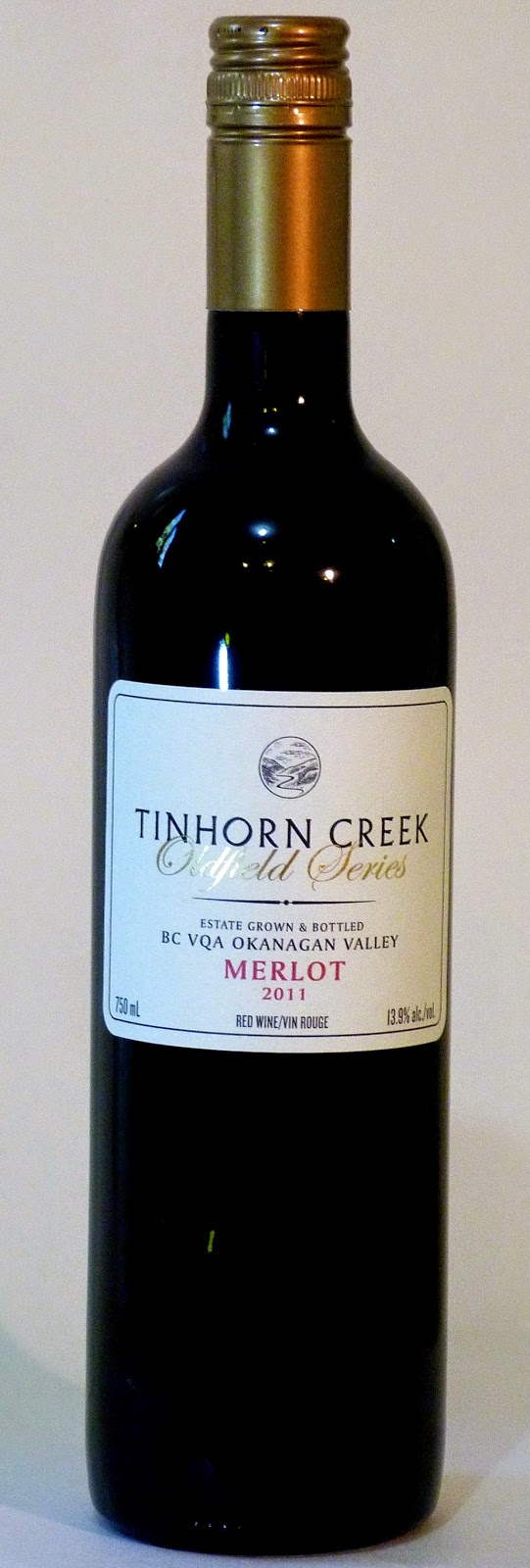
I am toasting the success of his contrarian thinking by tasting the Oldfield Series (or reserve) Merlot that the winery will be releasing this fall.

The winery has long been regarded a strong Merlot producer. When its vines became mature, it began releasing a reserve as well as a regular Merlot. The reserve originally was called Oldfield’s Selection, from winery manager Kenn Oldfield and winemaker (and now winery president) Sandra Oldfield.

The 2001 Oldfield’s Selection Merlot was used to make a point when the winery wanted to switch the screw cap. A portion was bottled under screw cap and a portion under cork. The winery sold two-bottle packs (one of each) so that consumers could judge for themselves which closure is best for aging the wine.

When the consensus backed screw cap, the winery switched its entire production to that closure.

I still had a bottle with a screw cap and decided I would taste it next to the 2011 reserve. The 2001 reserve is also an impressive wine.

Tinhon Creek Oldfield’s Collection Merlot 2001. The rules allow a wine to be released as a named varietal with up to 15% of other varietals in the blend. It is a good rule that enables the winemaker to build in a little more complexity. This wine is 86% Merlot, 13% Cabernet Franc and 1% Syrah. A decade in bottle has integrated these flavours into superb harmony. The first surprise about this wine is how vibrant the colour is; there is barely a trace of the browning that often comes with age. The aroma includes cassis – almost black currant jam. On the palate, it has flavours of blackberry and currants with a delicious hint of cherry, mocha and spice on the finish. There is still enough firmness to the tannins to carry this another year or two even if it is drinking very well now. The 14.8% alcohol is part of the robust ripeness of the wine. 91-92.


Tinhorn Creek Oldfield Series Merlot 2011 ($29.99 for fall release). This wine is 89% Merlot, 9% Cabernet Franc and 2% Syrah. The junior partners being something to the party, as always – a touch of spice in the aroma is almost certainly the Cabernet Franc while the Syrah adds a hint of leather on the finish. The flavours are all about Merlot – black currant, blueberry, blackberry. The full texture in the mouth reflects the Merlot and the silky tannins developed in barrel and in bottle aging. The hint of sage on the finish is quintessential South Okanagan. Alcohol is 13.8%. This is an elegant red with the ability to develop another 10 years in the cellar. 92-93. 

Friday, August 1, 2014

New edition of John Schreiner's Okanagan Wine Tour Guide


The new edition – the fifth – of John Schreiner’s Okanagan Wine Tour Guide has just been released and is appearing in bookstores, in Okanagan wineries and in VQA stores this weekend.

The retail price is still $20. As well, an E-book version is available on Apple’s ibookstore while a Kobo version is in preparation.

The paperback book is still in the pocket-sized format of earlier editions, except that you need a bigger pocket. This 5th edition runs to 430 pages and profiles 196 wineries – 42 of which are new just in the two years since the previous guide was published.

I wrote the first guide in 2006 because I thought that wine tourists needed a succinct reference book. Each winery profile runs to about 400 words – just long enough to provide the essential background on the people behind each winery. These are the fascinating personal details that you will not get from the tasting room staff: details such as what the winery owners did before they opened a winery; and what drew them to wine. These often colourful details enrich visits to wineries.

The wine industry has almost doubled since 2006. The first edition was 248 pages long and profiled 100 wineries, including a handful that were not open and, for one reason or another, never did open. For example, Stone Mountain Vineyard in Okanagan Falls developed a vineyard and produced several vintages but never actually sold any wine under its own label. The promoter was an Arizona housing developer whose finances collapsed in the 2008 recession. The bankrupt project was purchased that year and has since opened as Meyer Family Vineyards.

There have been other winery bankruptcies and closures since then but these are the exception to the optimism that buoys the B.C. wine industry. In 2010, for example, seven wineries in the Holman Lang group all went bankrupt. Quite remarkably, five of those wineries have opened under new names and new ownership.

As up-to-date as my fifth Tour Guide is, at least five more producers have opened, or are about to, since the manuscript went to bed this spring. Two that I will blog about later this summer are Stable Door Cellars and Coolshanagh Winery. Both are on the Naramata Bench, that compact strip of real estate on which about 40 wineries are now packed.

Of the new wineries in the fifth edition, let me highlight the tasting rooms that wine tourists should not miss.

  • Corcelettes Estate Winery at Cawston. The Swiss family who own this are especially proud of their white blend that incorporates Chasselas, the signature Swiss white.
  • Lariana Cellars in Osoyoos. Visits are by appointment. Make the effort and taste perhaps the best Viognier in the Okanagan.
  • C.C. Jentsch Cellars, located in a renovated packing house beside Highway 97, midway between Osoyoos and Oliver. The winery has a very good Syrah and a $20 Meritage blend called The Chase that overdelivers for the price.
  • Culmina Family Estate Winery. Tastings are by appointment, but only so that visitors are well hosted. This is the Triggs’s family winery with, among other wines, the Okanagan’s first Grüner Veltliner. The wine is released under a proprietary name, Unicus.
  • Tightrope Winery, just off Naramata Road, with a tasting room due to open this fall. The focussed portfolio includes a fine Viognier and a very good Pinot Noir.
  • Upper Bench Estate Winery near Penticton. This fine winery emerged from one of the Holman-Lang bankruptcies. The new owners make excellent wine, including the Okanagan’s best Zweigelt, and excellent cheese.
  • Moraine Vineyards on Naramata Road emerged from another bankrupt Holman-Lang winery. It is now owned by wine-loving immigrants from Russia and their winemaker is one of the best consultants in the Okanagan.
  • Deep Roots Vineyard near Naramata. It is owned by the Hardman family who have four generations of agriculture on the Naramata Bench. It shows in the tasting room’s salt of the earth character.
  • Sage Hills Estate Vineyard at Summerland. The organic wines here are excellent and the view from the vineyard is exceptional.
  • BX Press Cidery and Farm in Vernon and Left Field Cider in Ashcroft are two of the newest cider producers in the interior.
  • Sandhill Wines. This is not a new winery; in fact, it has never had its own winery but exists within the sprawling Calona winery. But for the first time, Sandhill has its own tasting room nearby.

You can see from that list why you need to get my book before you go wine touring.   


Wednesday, July 30, 2014

Tyler Harlton and friends


Photo: Tyler Harlton of TH Wines

Before he became a winemaker, Summerland-based Tyler Harlton played eight seasons of professional hockey and seldom had more than 60 penalty minutes a season.

Everyone who meets this laid-back artisan is surprised his penalty minutes were even that high. He is as gentle a personality as you will find in the Okanagan wine industry.

And he hangs out with other artisanal winemakers. In June, TH Wines, as he calls his winery, joined five other small wineries for an informal tasting in Vancouver.  They should consider keeping this league together. Their personalities and winemaking styles are quite complimentary.

TH Wines is one of the smaller of these producers, making just 1,100 cases in 2013. The winery was established three years ago in quarters that Tyler rented in an industrial park in Summerland. His business model calls for spending money on buying grapes and getting the brand established before tying up capital in a vineyard or in a fancy building. He opened a modest tasting room this year for the first time.

He may be operating on a shoestring but that is not reflected in to quality of the wines. These are notes on the wines.

TH Wines By Hand White 2013 ($19.99 for 468 cases). The name of this wine is inspired by the new labels – the image of two hands on a wine barrel. They are Tyler’s hands and the image underlines the artisanal approach here. This wine is 84% Chardonnay, 16% Sauvignon Blanc. It is a richly textured wine with flavours of pear and apple mingled with herbs. The finish lingers. 90.

Th Wines Viognier 2013 ($N/A). This is a classic Viognier, with a creamy texture and with apricot and peach aromas and flavours. The finish lasts and lasts. 90.

TH Wines Rosé 2013 ($21.99 for 119 cases). This is made with Merlot with a splash of Malbec and Chardonnay. It has aromas and flavours of apples and strawberries. The texture is generous and the finish is dry. 89.

TH Wines Pinot Noir 2012 ($29.99 for 270 cases). This is an utterly seductive Pinot Noir. The silky texture and the pretty aromas and flavours of strawberry and cherry make this a charming wine with a finish that lingers. 91.

TH Wines Cabernet Merlot 2012  ($34.99 for 306 cases.) The blend here is two-thirds Cabernet Franc, a varietal that Tyler favours. The other third is Merlot and Malbec. The wine has brambly flavours of blackberry and cherry on a foundation of earthy notes and long ripe tannins. 90.

Tyler’s friends include Little Farm Winery, the Cawston boutique operated by wine educator Rhys Pender MW and his winemaker wife, Alishan Driediger (left). They moved to this property in 2008, planting a four-acre vineyard of Chardonnay and Riesling.

Little Farm may well be the smallest licensed winery (or close to it) in the Similkameen and Okanagan. Production in 2013 totalled 353 cases, with the target at full production being 800 cases.

Little Farm Chardonnay 2013 ($29.90 for 68 cases). Crisp and refreshing and reminiscent of Chablis, this wine has delicate citrus aromas and flavours of grapefruit and green apple. 88.

Little Farm Riesling 2013 ($29.90 for 115 cases). In the style of German Riesling, this wine spent some time in neutral oak barrels, gaining texture and softening the bracing acidity. The wine has citrus aromas and tangy citrus flavours wrapped around a nice spine of minerals. The finish is dry. 90.

Little Farm Rosé 2013 ($24.90 for 170 cases). This is made with Cabernet Franc and it displays the vivacity of the varietal. There are aromas and flavours of strawberry and raspberry, with notes of herbs and pepper on the dry finish. 90.

Also in Tyler’s circle is Orofino Vineyards, also of Cawston. John and Virginia Weber (right) moved from Saskatchewan in 2001 to take over a six-acre vineyard and, within a few years, become accomplished wine growers. Earlier in July, they hosted vertical tastings of their wines, reaching as far back as a 2003 Pinot Noir and a 2003 Cabernet-Merlot.

They have not chosen to stay small even if there is great artisanal style in the winemaking. Orofino now is making about 4,500 cases a year.

Orofino Hendsbee Vineyard Riesling 2013 ($22 for 600 cases). Here is a polished and refined Riesling, with aromas and flavours of lime around a spine of minerals. The wine is crisply tangy and dry with good potential to age. 91.

Orofino Home Vineyard Old Vines Riesling 2013 ($29 for 100 cases). Most of this was fermented in old barrels; two barrels were fermented with wild yeast for additional complexity. The racy acidity is nicely balanced with residual sugar. There are aromas and flavours of lime and grapefruit around a mineral core. The finish is tangy. 90.

 Orofino Scout Vineyard Riesling 2013 ($22 for 350 cases). A touch more residual sugar brings out aromas and flavours of lime, apple and peach. The texture is juicy. 90.

 Orofino Celentano Vineyard Gamay 2013 ($23 for 120 cases). This could be a light Beaujolais Cru wine. The aromas and flavours of spicy cherry and raspberry dance on the palate. A note of pepper on the finish wraps up this lively wine very nicely.  90

Orofino Home Vineyard Pinot Noir 2012 ($32). The wine begins with aromas of cherries mingling with the toasty notes from the barrels. On the palate, there are flavours of cherry and strawberry with a touch of mocha on the finish. 90.

Orofino Red Bridge Merlot 2011 ($25). This is the only wine in Orofino’s portfolio not made with Similkameen fruit. The Merlot grapes come from the Oak Knoll Vineyard in Kaleden. This is a very quaffable Merlot (a gold medal winner at the All Canadian Wine Awards) with aromas and flavours of black currant and blueberry. 88.

Orofino Beleza 2011 ($34). This is the winery’s flagship Bordeaux blend, comprising 50% Merlot, 30% Cabernet Sauvignon, 10% Petit Verdot and 10% Cabernet Franc. Dark in colour, the wine has a ripe, concentrated texture. There are aromas and flavours of black currant, black cherry and mulberry nicely framed with oak from the 20 months aging in French and American oak barrels. It is a sophisticated wine with the potential to age easily for another five to seven years. 93.

Terravista Vineyards is a 1,700-case boutique making just white wine. There is a delicious irony in that. The owners are Paul and Senka Tennant, one of the couples that founded the Black Hills winery where the star was a red wine called Nota Bene. When the Tennants established a new winery in 2008 on the Naramata Bench, Senka (left) decided she did not want to go on making red wine.

They really differentiated Terravista by planting Albariño and Verdejo, two Spanish whites new to Okanagan vineyards. The blend from these is called Fandango. A blend of Rhone varieties, made with purchased grapes, is called Figaro.

The winery’s tasting room high on the Naramata Bench offers one of the best views over the entire region.

Terravista Fandango 2013 ($24.90). The wine is 70% Albariño and 30% Verdejo. Crisp and fresh, the wine has aromas and flavours of melons and green apples. This is a wine worth aging for a year or two. The 2012 Fandango has developed hints of hazelnut to enhance the complexity. 90.

Terravista Figaro 2012 ($23.90). This is a blend of Roussanne, Viognier, and Marsanne. Glorious tropical fruit aromas charge from the glass. The wine is full on the palate, with flavours of apricot and peach. 90.

Terravista Viognier 2013 ($17.90). This is new to the portfolio, probably because the winery ended up with more Viognier than it needed for blending. The wine is crisp and fresh, with aromas and flavours of citrus and peach. 89.

Bill Eggert (right), the owner of Fairview Cellars, has been a fixture in Okanagan winegrowing longer than most of the other six. He opened the winery, based on a six-acre vineyard, in 2000. His focus has been Bordeaux varietals although he planted a small Pinot Noir vineyard a few years ago.

I sometimes wonder whether Bill is best described as salt of the earth, or just plain salty. However, the wines are as forthright as the winemaker.

Fairview Cellars Sauvignon Blanc 2013 ($19.90). This vibrant and tangy white has aromas and flavours of lime and grapefruit, with herbal notes on the dry finish. 90.

Fairview Cellars Pinot Noir 2012 ($24.90). This is another charmer, with aromas and flavours of strawberries and red cherries, supported subtly by hints of oak. The texture is silky. 90.

Fairview Cellars Madcap Red 2011 ($24.90 for 300 cases). This blend is based on Merlot, with 25% Cabernet Sauvignon and 10% Cabernet Franc. It begins with aromas of mint and cassis. On the palate, there are flavours of black currant. The tannins are ripe. 90.

Fairview Cellars Cabernet Franc 2012 ($29.95). The winery has made a name for itself with Cabernet Franc and this is an exuberant example. It brims with aromas and flavours of blackberry, black currant and blueberry. 90-91.

Fairview Cellars The Bear 2011 ($34.90 for 300 cases). This is a Meritage with all five of the major Bordeaux reds. The Cabernet Sauvignon in the blend seems to have contributed slight notes of mint to the aroma and the flavour, turbo charging the spicy cherry and black currant flavours. 91.

Fairview Cellars Cabernet Sauvignon Premier Series 2011 ($39). Fourteen months barrel-aging has given this wine a not of vanilla in the aroma, complementing the black cherry. The wine has a rich palate weight, with flavours of black currant, black cherry and dark chocolate. 91.

Fairview Cellars Iconoclast 2009 ($119.90). This wine is also 100% Cabernet Sauvignon but it spent 27 months in barrel (new and used). The wine is rich on the palate, with depth and complexity. There is vanilla and cassis on the nose, leading to flavours of black currant, prune, cola and coffee. 93.


 Robert Van Westen (left), who runs Van Westen Vineyards near Naramata, comes by his salt of the earth personality naturally. His family has been growing fruit, mostly cherries, on the Naramata Bench since his parents immigrated from Holland in 1951.

The winery has taken over a former fruit packing house. Robert runs the tasting room, when it is open, with a warm informality. He also delivers his wine personally to many of his customers. When he can’t do it, he has a sister in Vancouver who will also deliver.

Van Westen Viognier 2012 ($N/A). This is voluptuous in texture, with aromas and flavours of citrus and apricot, with subtle spice on the finish. 90.

Van Westen Vino Grigio 2012 ($19.90 for 530 cases). This is a refreshing, crisp Pinot Gris with aromas of citrus and flavours of citrus, pear and apple. 90.

Van Westen Vivacious 2013 ($19.90). This is a crisp Pinot Blanc, with aromas and flavours of apples, with a hint of citrus. 90.

Van Westen/DiBello Pinot Noir 2012 ($34.90 for 125 cases). The VD on the label reflects that this is a joint venture wine made by Rob and by Tom DiBello. It begins with aromas of toasty red fruit, leading to flavours of cherry. The firm texture suggests this is a Pinot Noir that should be aged a few more years. 89.

Van Westen Vivre La Vie 2010 ($29.90). This is a Merlot with a concentrated texture. It has aromas and flavours of blueberry, mulberry and blackberry with a peppery note on the finish. 90.

Van Westen Voluptuous 2010 ($29.90 for 218 cases). This is 66% Merlot, 33% Cabernet Franc. The texture has grip, as it should have in a wine designed to develop in bottle for at least six more years. At this tasting, Rob also allowed guests to sample three previous vintages, including a 2006 which is drinking very well. The 2010 has aromas of cassis and sage, with a medley of flavour including black currant, black cherry, herbs and chocolate. 91


Sunday, July 27, 2014

Blue Grouse is getting a new winery


Blue Grouse winemaker Bailey Williamson

Now under new ownership, the Cowichan Valley’s 21-year-old Blue Grouse Estate Winery is expanding with the construction of a new winery.

The added capacity will enable this winery to increase its production above the boutique volumes made by founder Hans Kiltz.

On retiring in 2012, Hans sold the winery to Paul Brunner (right), a Canadian mining executive who still splits his time between the winery and an office in Lima, Peru (his wife has family in Peru). He was drawn to buy a winery on Vancouver Island in part because he has a brother in Nanaimo.

“We had been looking for a vineyard or a “lifestyle” type of thing for a long time, six or seven years any way,” Paul told me in 2012. “My wife actually found this winery.”

This is a property with a colourful history. The first vines were planted here in 1983 by John Harper (left), a legend in British Columbia viticulture who died in 2001. He had selected arguably one of the best sites in the Cowichan Valley. His work was derailed by a group of promoters whose proposal for a winery and an associated research program flopped.

The property was acquired in 1990 by Hans Kiltz (right), a German-born veterinarian. He had spent many years working in Africa. He moved to Vancouver Island to give his children access to good schools. He intended to transfer his skills to fishing farming but, when that industry went into recession, he switched to winemaking.

He extended the Harper vineyard ultimately to eight and a half acres. “I knew about the vineyard,” says Bailey who once worked in Victoria restaurants. “I always thought that the varieties that Hans was growing were inspired. He wasn’t trying to push the rock up hill.”

Hans produced only estate-grown wines. The first vintage was 1989 and the winery opened in 1993. Blue Grouse is well-regarded for its wines, especially Pinot Gris, Ortega and Pinot Gris. The wines were sold almost entirely on Vancouver Island.

Paul Brunner and Bailey Williamson, his winemaker, are setting out to expand production and raise the profile of Blue Grouse.

In June, the winery announced: “Construction is now underway on a new modernized winery and tasting room, with architectural design inspired by the winery’s namesake bird.  The roofline echoes the curve of a grouse’s head and neck, and finishing touches reflect the palette of the bird’s feathers.” The architect is Joe Chauncey of Boxwood Architects in Seattle.

Meanwhile, the winery has begun assessing the potential for expanding its vineyard. “Once it is all down, we should have roughly 20 acres under vine here,” Bailey says. “We will maintain that for the estate label.”

Bailey also has developed a second label, Quill, for wines that will use purchased grapes. “We need to have a saleable production of around 5,000 cases before it becomes a real business,” Bailey says. “It is a whole different model.”

The winery’s 2013 production was 2,700 cases. The rate at which that expands to the target will be governed by sales. That’s why a new label has been created and why Blue Grouses’ modest winery is being transformed into a destination winery. There will be a large new tasting room as well as an industrial kitchen for catering special events.

“The phone rings off the hook about having weddings here,” Bailey says.

The son of an accountant, Bailey grew up in a family that often had wine on the table. His interest in wine was confirmed in his previous food industry career. “I worked as a chef for 20 years before I got into this line,” he says.

“I landed on the island in 1993 and worked around the kitchens in Victoria. In 2000, I was looking for a change.” He went to the Okanagan, working several vintages at Sumac Ridge and taking winemaking course at Okanagan College.

“Then I went down to McLaren Vale and did a six-month stint there with Hardy’s,” he says. “I had a great time in Australia and was profoundly changed by the experience. “I came back to the Okanagan and worked around at a number of places. Then I was back here on the island for two years and got a job at Merridale making cider, which I found very fascinating and interesting. I left Merridale and was toying with the idea of going to learn to make cheese.”

Then he met Michael Bartier, who has just become the winemaker at Road 13 Vineyards. Bailey confided he would like to keep making wine, but in a stable job, not just working vintages. He was offered a job at Road 13, returned to the Okanagan, and settled down under Michael’s tutelage.  “That was a seminal opportunity for me, to spend enough time in the cellar to learn and understand what was going on,” Bailey says. 

That wealth of experience stands him in good stead at Blue Grouse, which he joined in 2012. As well, his Okanagan contacts have been useful in contracting the premium Okanagan grapes he needs to expand the Quill brand.

Here are notes on the current wines at Blue Grouse.

Blue Grouse Siegerrebe 2012 ($18 for 120 cases). This is a refreshing, juicy white with aromas and flavours of grapefruit and lime. An herbal note and spice on the nose and on the finish add to the wine’s easy appeal. 88.

Blue Grouse Ortega 2012 ($19 for 250 cases). This fruity wine has tropical aromas and flavours, including lychee and ripe peach. 88.

Blue Grouse Pinot Gris 2013 ($18.50). Bailey fermented a small portion in barrel while giving lees contact to the tank-fermented portion. The object was to give the wine a fleshier texture and he succeeded. The wine has citrus aromas and flavours of citrus, pear and herbs. 90.

Blue Grouse Pinot Noir 2009 ($23 for 253 cases). Five years maturity has given this softened the wine’s robust tannins. Bottle aging has developed a good Burgundian complexity, with an earthy note to the cherry aromas. It has flavours of black cherry, with a spicy finish. This was a gold medal winner at the All Canadian Wine Awards this spring. 90.

Quill White Wine 2012 (17.00 for 650 cases). This is 52% Pinot Blanc, 34% Ortega, 14% Riesling. There are aromas and flavours of apple, pear and lime. The wine has a dry finish, with flavours that linger. 88.

Quill Rosé 2012 ($16 for 150 cases). This is 47% Pinot Gris, 40% Pinot Noir, 12% Gamay Noir, 1% Black Muscat. An appealing dry rosé, it aromas of cranberry and cherry, leading to flavours of strawberry, raspberry and cherry. 89.

Quill Red Wine 2012 ($19 for 205 cases). This is 47% Cabernet Foch, 21% Maréchal Foch, 21% Merlot and 11% Cabernet Libre. This wine won gold at the All Canadians this spring in the red hybrids class. The two Cabernet varieties are Blattner hybrids and they contribute smoky notes to the aroma. On the palate, there are flavours of cherry, currant and blackberry. There are cedar notes on the dry finish. 88.