Monday, July 7, 2014

Class of 2014: Lusitano Estate Winery


Photo: Fernanda and Fred Ganhao (courtesy Lusitano)

This recently-opened winery is the newest addition to the burgeoning group of Okanagan Falls wineries.

This is the profile appearing in the new edition of John Schreiner’s Okanagan Wine Tour Guide. The book will be available in late July.

To name their winery, Fred and Fernanda Ganhao simply dipped into their Portuguese heritage. Lusitano derives from Lusitiania, the name applied by the Romans to indigenous peoples in central Portugal. While they are only a small percentage of Portugal’s modern population, the name occasionally is applied to expatriate Portuguese. It is better known today as the name of Lusitano horses, a breed of beautiful show horses.

Fred and Fernanda both were born in central Portugal. He came to Canada in 1966, when he was eleven, when his parents joined relatives who already lived in Osoyoos. Fernanda immigrated in 1978 to marry Fred. In the same year, they bought an orchard near Vaseux Lake, north of Oliver, and operated it for 25 years before selling it. Several times during that period, Fred suggested switching to growing grapes but his cautious wife talked him out of it.

“We sold the orchard in 2003 and we were semi-retired for three years,” Fernanda says. However, retirement was not appealing after a life full of activity and they looked for ways to re-engage with agriculture. In 2006 they bought a rural Okanagan Falls property that enchanted them. “When you come up the driveway, it feels like you are closer to the sky,” she says. “You have a beautiful view of the valley.”

The property included a meadow where the previous owner kept horses. Most of it was covered by pine trees. Fred proposed replacing the trees with vines and this time Fernanda agreed. In the spring of 2007, they planted close to 25,000 vines in a 5.5-hectare (13.5-acre) vineyard. The major varieties here are Pinot Gris, Merlot and Pinot Noir, with smaller blocks on Chardonnay, Sauvignon Blanc and – on a sunbathed south-facing slope – Cabernet Sauvignon.

After several years of selling their grapes, they retained consulting winemaker Philip Soo to make their debut 1,200 cases in the 2013 vintage. They continue to sell about half of their crop while easing their wines into the market. “We did not want to go too far ahead of ourselves,” says Fernanda, who has not lost all her caution.

She looks forward to selling wines from the Lusitano tasting room. “When we had the farm, we had a fruit stand,” she says. “I enjoyed being out there, meeting new people every day. When you have good products, you can see the smile on peoples’ faces.”

A recent visit to the tasting room confirmed that Fernanda runs a welcoming wineshop and that visitors have reason to smile.

Here are notes on the wines.

Lusitano Chic 2013 ($18). This is the name given to the winery’s Sauvignon Blanc. The wine begins with herbal and citrus aromas, delivering flavours of limes and tropical fruits. The finish is crisp and tangy. 88.

Lusitano Rolling Hills Chardonnay 2013 ($17). This is an unoaked Chardonnay, in part because Fernanda is not a great fan of oaked white wines. This wine has citrus aromas and flavours of citrus, apple and white peach. It is crisp and refreshing. 88.

Lusitano Luscious Rosé 2013 ($17). Made from Pinot Noir, this juicy rosé has aromas and flavours of strawberry. A charming wine with a slight touch of residual sweetness, it has a silky finish. 88.

Lusitano Marco’s Pinot Noir 2013 ($19). This is great value – a full and silky textured Pinot Noir with aromas and flavours of cherry and strawberry and an intriguing note of cloves on the finish. 89-90.

Lusitano Prestigious Cabernet Sauvignon 2013 ($18). This wine is a blend of 86% Cabernet Sauvignon and 14% Merlot. It has had seven months in oak but it would have benefitted from more time in barrel and bottle. The wine is too young to rate but will be satisfying with at least six more months of bottle age.


Lusitano Estate Winery
2318 Rolling Hills Road
Okanagan Falls BC V0H 1R2
T  250.497.7055
Open daily 9:30 am – 6 pm May to October


CedarCreek tweaks its winemaking to achieve complexity


 Photo: CedarCreek's Darryl Brooker


Earlier this year, the Fitzpatrick family sold CedarCreek Estate Winery to Anthony von Mandl, the owner of Mission Hill Family Estate.

The recent releases from CedarCreek show that the undisclosed purchase price bought a solid portfolio of wines. Darryl Brooker, CedarCreek’s Australian-born winemaker, remains in charge of the cellar. In fact, Anthony like what he tasted well enough that, shortly after the takeover, Darryl was sent to Germany for a few weeks to add to his fine touch with Riesling in the cellars of top German Riesling producers.

Darryl joined the winery in 2010. Soon after getting there, he began making vineyard-designated wines. CedarCreek has several excellent blocks of mature vines at the winery’s so-called Home Vineyard. Darryl has identified these to produce wines of such quality that they have been released under the winery’s Platinum tier, as its reserve wines are called.

Comparing the winery notes on these wines with earlier vintages reveals that Darryl has tweaked his winemaking practices to raise the complexity of the wines across the board.

One: fermentation times are long, which means the whites are fermented cool and, in some cases, with slow-working native yeast.

Two: a portion of most of the whites is now fermented in oak. Tom DiBello, his predecessor, also liked some oak fermentation with Pinot Gris but his Ehrenfelser and Rieslings in 2009 – as an example, - were fermented in stainless steel.

Both Tom and Darryl are very good winemakers but with somewhat different styles. I liked Tom’s wines (he is now doing good work at Burrowing Owl). I am intrigued at where Darryl is taking CedarCreek. I’ll bet Anthony von Mandl is as well.

Here are notes on some of the current releases.

CedarCreek 2012 “Block 5” Platinum Chardonnay ($29.95 for 526 cases). A wine with the vivacity of very good Chablis, this Chardonnay celebrates the fruit flavours that this block of vines delivers. The wine was fermented 60 days in 500-litre oak puncheons with wild yeast, and aged another 10 months on lees in those puncheons.  There is negligible oak flavour but there is a superb texture to help soften bright acidity. The winemaker allowed no malolactic fermentation, not wishing to take anything away from the bright aromas and flavours of lime and pineapple. This is an outstanding Chardonnay. 93.

CedarCreek 2013 Platinum Viognier ($24.95 for 765 cases). One-third of this was fermented in a 660-litre concrete “egg”, one-third in a large oak cask and the remaining third in neutral oak. The concrete egg is crucial to developing the almost creamy texture of this wine. It begins with honeyed aromas of apricot and pineapple and delivers rich apricot flavours to the palate. The wine has a good backbone and a ripe 13.9% alcohol, with a long rich finish. 92.

CedarCreek 2013 “Block 3” Platinum Riesling ($24.95 for 550 cases). I imagine Darryl took a bottle to Germany, showing the producers a very good Okanagan version of a racy Mosel Riesling. It has aromas and flavours of lime. It has a bracing tangy finish, the result of having 12.3 grams of acid per litre. But that is nicely balanced with 14.5 grams of residual sugar. The wine has a Mosel-like alcohol of only 8.8%. As tasty as the wine is now, I would suggest aging it for two or three years, totally developing its potential. 92.

CedarCreek 2013 Riesling ($17.95 for 2,010 cases). This Riesling also has a comparatively low alcohol (9.9%), with a little less acid and residual sugar. In the glass, there are alluring aromas of Sultana raisins, leading to flavours of lime and lemon. While the aroma suggests the wine will be sweet, it is in fact balanced to be crisply dry, with a good backbone of minerals. 90.

CedarCreek 2013 Ehrenfelser ($18.95 for 2,800 cases). Most of the grapes for this wine come from a Westbank vineyard that was planted in 1977. CedarCreek unlocked the exuberant fruity aromas and flavours in 2002 by removing some of the canopy and exposing the grapes to more sunlight. The wine subsequently acquired a cult following. The wine begins with appealing aromas of  fruits … perhaps a touch of lychee and white peach. It delivers a fruit bowl to the palate, everything from apples and lime to white peaches. About 10% was fermented in French oak (the rest in stainless steel) and that seems to have added a complexity that was missing in earlier vintages, when the wine was simply a fruit bomb. It is balanced to finish dry. 90.

CedarCreek 2013 Gewürztraminer ($17.95 for 2,200 cases). Here again, 10% was fermented in French oak. The wine begins with characteristic aromas of spice (the winery says nutmeg) and delivers rich flavours, almost nutty, with a hint of ginger on the finish. There is just a touch of residual sugar but the spiciness gives the wine a dry finish. 90.

CedarCreek 2013 Pinot Gris ($17.95 for 6,470 cases). Fermenting a portion in French oak – 15% in this wine – seems to be one way in which Darryl raises the complexity of his whites. The texture of this elegant wine is rich. It begins with a hint of almond and apple on the nose and delivers flavours of pear, with enough acidity to leave the wine refreshing. 90.

CedarCreek Chardonnay 2012 ($17.95 for 2,041 cases). There is six percent Pinot Gris in this wine, which was fermented in a combination of stainless steel and oak and aged 11 months on the lees. The aroma of pineapple and citrus is fresh and appealing. There are flavours of citrus with a hint of apple and a lovely kiss of toastiness from the lees. This is an excellent fruit-forward Chardonnay where the oak is very subtle and is mainly there to add texture.  90.

CedarCreek 2013 Rosé ($17.95 for 395 cases). I note that the production has been reduced from 700 cases in 2012. I hope that does not mean the bloom is off the popularity rosé wines have enjoyed for a decade. CedarCreek’s previous vintage was too dry, with only 5.7 grams of residual sugar against bracing acidity. This vintage, with 9.1 grams and lower acidity, is altogether more charming. Made with Pinot Noir, it has that lovely Provence hue. It begins with aromas of strawberry, delivering those flavour to the palate, along with a silky texture. The winery should have made more. 90.


Friday, July 4, 2014

JoieFarm's 2013s: still available and worth buying


Photo: JoieFarm's Michael Dinn and Heidi Noble

To my surprise, the price list at my local VQA store currently includes 12 of JoieFarm’s wines.

Now, that list is not always up to date. The point is that there are certain to be some available for purchase there. A few years ago, none would have been available by mid-summer.

I am sure that JoieFarm is still selling out its 15,000-case annual production before the next vintage comes crowding along. It just seems to take a bit longer.

That is a comment on the remarkable proliferation of British Columbia wineries during the last five years. Consumers have ever more choice. That is the only reason why JoieFarm is not selling out as fast it once did, because the quality of the wines has not slipped. If anything, they are better than ever.

Consider the scores I found myself giving to the winery’s recent 2013 releases. These are wines from a producer at the top of its game.

I have always marveled
that, with the exception of its own small vineyard on the Naramata Bench, JoieFarm makes its excellent wines with purchased grapes. It is an axiom that a winery has more control over the grapes in its own vineyard than in a grower’s vineyard.

However, JoieFarm owners Michael Dinn and Heidi Noble, along with their winemaker, Robert Thielicke, seem to have cultivated exemplary relations with contract growers. The growers generally are acknowledged in the wine specification sheets, available on JoieFarm’s website. Important details like that, along with regular visits to vineyards, go a long way in getting good fruit.

Here are my notes on JoieFarm’s 2013s which, happily for consumers, still seem to be available.

JoieFarm  A Noble Blend 2013 ($23.90 for 6236 cases, 486 magnums and 90 double magnums). There are six varietals in this blend: Gewürztraminer (45%), Riesling (38%), Pinot Auxerrois (8%), Pinot Blanc (4%), Muscat (4%) and Schönburger (1%). Not surprisingly, this is quite aromatic, with aromas of rose petals, spice, lychee and peach.  On the palate, there are layers of fruit flavours – grapefruit, lychee, guava with a dash of lime on the finish. The texture is full, with 10.6 grams of residual sugar against moderate acidity. The finish lingers. 91.

JoieFarm Un-oaked Chardonnay 2013 ($22.90 for 901 cases). This is a ripe and juicy white, with aromas of pineapple and apple. The wine has a generous palate, with flavours of apples and white peaches. The model is Chablis and Macon but with the Okanagan ripeness, resulting in 14.1% alcohol. 90.

JoieFarm Pinot Blanc 2013 ($22.90 for 438 cases).  Over the years, JoieFarm has elevated this reliable workhorse grape variety into a serious Alsace-style white. The grapes are from 26-year-old vines grown by St. Hubertus in East Kelowna. It has generous fruit on the nose and palate; fresh apples and a hint of grapefruit. The wine is juicy but balanced to finish dry with hint of minerality. The finish is persistent. 91.

JoieFarm Riesling 2013 ($22.90 for 1,100 cases). The winery calls this wine “a delicate balance” – reflecting the exquisite balance of bracing acidity (9.2 grams) with natural sweetness (17 grams per litre). The wine has alluring aromas of lime and green apple, carrying on to flavours of lime, lemon and green apple. The spine of minerals comes from the old vines (average age 34 years) that produced the intensely flavoured grapes. The crisp, mouth-watering finish lingers forever. 92.

JoieFarm Muscat 2013 ($22.90 for 483 cases). This is made from the winery’s own two acres of Moscato Giallo, or Yellow Muscat, grapes. The intensity of the aromas and flavours is remarkable. It begins with the classic aromas of spice and ginger. On the palate, there are grapey flavours, with notes of lime. The wine is balanced to finish just slightly off-dry. The moderate 12% alcohol gives the wine just the touch of lightness that saves it from overwhelming the palate with its intensity. 91.

JoieFarm Rosé 2013 ($20.90 for 2,838 cases.) This is one of the three Okanagan rosé wines launched in the mid-1990s that have made it popular to drink pink. Now, well over half the wineries offer rosé wines and consumers recognize that these are delicious throughout the year. The JoieFarm rosé a blend of Pinot Noir (60%) and Gamay (40%). The hue is almost fluorescently bright and is visually appealing. The aromas are quite dramatic; cherry and strawberry burst from the glass. The wine delivers those berry flavours, along with a hint of raspberry and a touch of sage. The wine is balanced to finish refreshingly dry. 90


Wednesday, July 2, 2014

These wineries are no one-shot wonders


 Photo: Lariana's Dan and Carol Scott

Two wines, a white and a red, which recently arrived for review, are singled out here for special review for two reasons.

The wines are both excellent. Secondly, they speak volumes for the consistency of both producers.

The white is the 2013 Viognier from Lariana Cellars in Osoyoos, only the second release from this winery. The 2012 Viognier, which was scored 95, was one of the best Viogniers from the Okanagan last year.

Well, that was no first-time lucky accident. The 2013 Viognier is as good.

Dan and Carol Scott opened Lariana last year on a property tucked tightly against the U.S. border, on 2nd Avenue in Osoyoos. To get there, you turn left from Highway 97 immediately before entering the American customs and immigration line-up.

With just a five-acre vineyard, the Scotts have built two small winery buildings. One is a barrel cellar for their Cabernet Sauvignon-anchored blend, not yet released. The 2012 blend, tasted from barrel just before bottling this spring, is delicious. The release date may be this fall, depending on how the wine develops in bottle.

The wine processing building houses one of the secrets to the quality of the Viognier: an 1,800-litre concrete egg in which consulting winemaker Senka Tennant ferments the wine and matures it on the lees.

Egg-shaped concrete fermenters first were introduced to the Okanagan in 2011 when Okanagan Crush Pad brought in six from a California manufacturer. One of the first wines “raised” in these eggs, the Haywire Canyonview Pinot Noir 2011, has just won a Lieutenant Governor Award of Excellence.

A few other wineries, including Laughing Stock and CedarCreek, have since added eggs to their cellars. OCP, meanwhile, installed six 4,400-litre concrete fermenters last fall.

Among the claimed advantages, fermenting in concrete seems to improve the texture of the wines. Texture is one reason why the Haywire Pinot Noir was a winner. The Lariana Viogniers both are rich in texture.

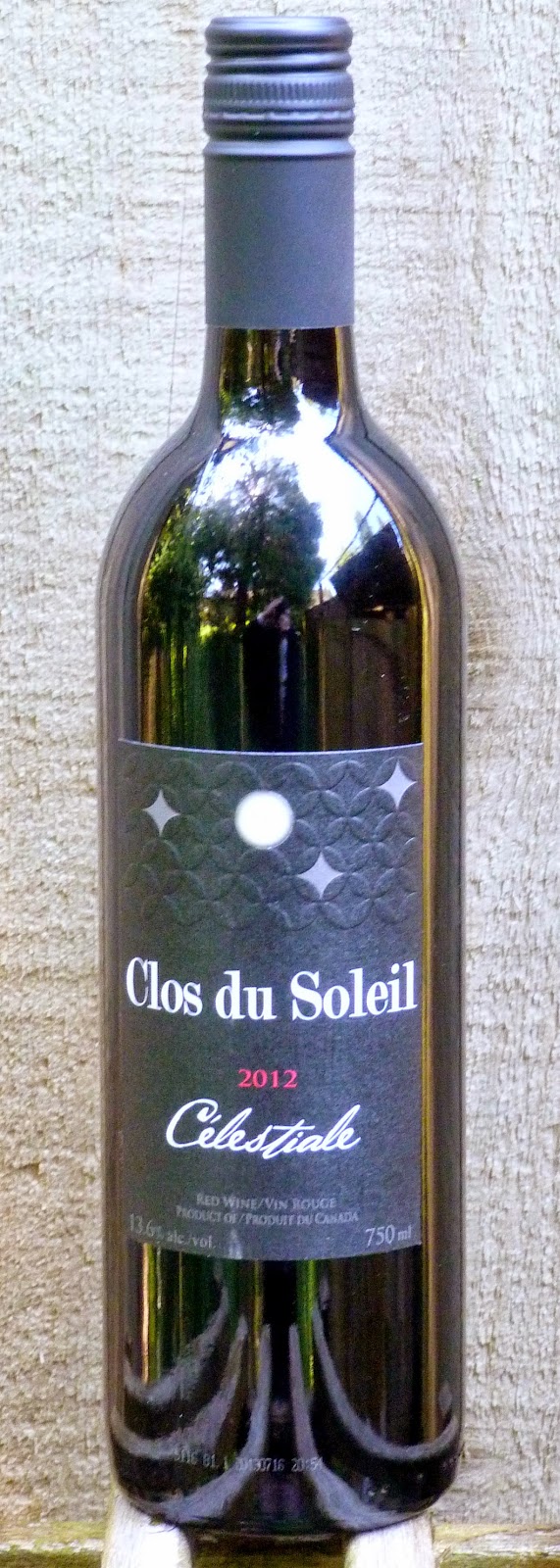
The red wine is the 2012 Célestiale, a Bordeaux blend, from Clos du Soleil Winery in the Similkameen. This winery was opened six years ago and by now has established a solid track record with its wines.

Célestiale is the more immediately approachable of the winery’s two Bordeaux reds. The high-priced ($40 compared with $27) Signature is structured for longer cellaring.

Even though the 2011 vintage was challenging, the 2011 Célestiale achieved scores of 90 and 91 from several reviewers. The 2012 vintage was a much riper one, producing wines that are generous in flavour and texture. As a result, the 2012 Célestiale has immediate appeal.

Clos du Soleil’s consulting winemaker is Ann Sperling. There is change underway in the cellar here, in part because Ann is increasingly busy with Sperling Vineyards and other projects. As well, Michael Clark (right), the new partner who joined Clos du Soleil last year, is also a winemaker.

A financial analyst who also has degrees in physics, Michael began a career shift in 2010 while still working as a portfolio manager with Switzerland’s oldest private bank. He has made wine both in France and in Switzerland while taking his diploma in winemaker from the University of California at Davis.

He is taking over a portfolio of Bordeaux-inspired wines at one of the Similkameen’s best boutique wineries.

Here are notes on the two wines.

Lariana Cellars Viognier 2013 ($23 for 221 cases). This wine begins with appealing aromas of peach and apricot, leading to luscious flavours of peach, apricot, guava and apple. There is just the right degree of acidity to give the wine a refreshing and tangy finish. The texture is utterly sybaritic. 93-95.


Clos du Soleil Célestiale 2012 ($26.90 for 575 cases). This is 31% Merlot, 26% Cabernet Sauvignon, 25% Cabernet Franc, 13% Malbec and 5% Petit Verdot. This juicy wine begins with aromas of black cherry, cassis and vanilla, which follow through to the palate. As well, there are flavours of blueberry and a touch of liquorice. The ripe fruit flavours are so lush that there is an impression of sweetness on the palate. The soft texture suggests this is not meant for long-term aging. However, the wine is so delicious that it won’t be around long either. 92.

Sunday, June 29, 2014

Moon Curser adds Arneis to its distinctive portfolio


Photo: Moon Curser's Beata and Chris Tolley

Few Okanagan wineries are more given to exploring varieties not mainstream to the valley than Moon Curser Vineyards of Osoyoos.

It was the first to release both Tannat, the predominant red in Uruguay, and Touriga Nacional, Portugal’s leading red. It has an Italian red called Dolcetto in its vineyards.

And this spring owners Chris and Beata Tolley have released the Okanagan’s first Arneis. Chris’s ancestry includes northern Italy, accounting for his interest in varieties from that region.

Jancis Robinson (and colleagues), in Wine Grapes, calls this varietal “Piemonte’s scented and full-bodied signature dry white.”

The book, with details on 1,368 varietals, says that “Arneis virtually disappeared in the early 1970s.” Only two producers were bottling it. “However, it was saved from extinction by a welcome revival of white Piemonte wines in the 1980s. The wines are generally unoaked, subtly fruit-scented, full-bodied and tasting of ripe pears but can lack acidity, especially when later picked; best drunk young.”

Since its revival in Italian vineyards, Arneis has been planted in Australia, New Zealand, California and Oregon. The acreage is seldom large but should grow as the variety is exposed to consumers.

Here are notes on Moon Curser’s Arneis and on its other releases this year.

Moon Curser Vineyards Arneis 2013 ($22 for 141 cases). This is believed to be the first Piedmont produced in Canada. It is an interesting wine, with aromas of apples and honeysuckles. The palate is generous, with flavours of pear and melon and with a slight touch of anise on the dry finish. 90.

Moon Curser Vineyards Afraid 2013 ($21.90).  This is the winery’s delicious Rhone white – a blend of 44% Roussanne, 37% Viognier and 19% Marsanne. It begins with aromas of tangerine and apricots, delivering flavours of stone fruits, melon and apples, with a spine of minerality supporting a rich texture and bold (14.1%) alcohol. A wine with power, it has a crisp finish. 91.

Moon Curser Vineyards Viognier 2012 ($28). The 14.3% alcohol declared on the label is the first clue that this is a ripe Viognier that benefitted from plenty of hang time to develop maximum flavour. Aromas of apricot, tangerine and ripe bananas explode from the glass. On the palate, there are flavours of apricot, with touches of orange, pineapple and spice. The finish is dry with just a trace of warmth from the alcohol, nicely balanced with the rich texture of the wine. 91.

Moon Curser Vineyards Nothing to Declare Rosé 2013 ($21.90 for 119 cases). This is a Syrah rosé made by the saignée method. Twenty-six hours of skin contact has given this quite a dark hue. On the nose, there are aromas of plum, cherry and  mulberry.  The wine is packed with flavours of cherry and strawberry. The wine, which finishes dry, has the weight and texture of Beaujolais, with rather soft acidity. 88.

Moon Curser Vineyards Border Vines 2011 ($25 for 1,805 cases). This is the winery’s flagship red, a blend of  38% Malbec, 25% Cabernet Franc, 24% Merlot, 10% Petit Verdot, 2% Cabernet Sauvignon and 1% Carmenère. Almost black in colour, it begins with aromas of cassis and spice, leading to flavours of blueberry and lingonberry, framed by notes of oak, chocolate and vanilla. The bright acidity and firm texture suggest this is a good candidate for cellaring for several years. 88-90.

Moon Curser Vineyards Dead of Night 2011 ($38). This is 50% Syrah and 50% Tannat, both from estate vineyards. This is an inspired blend, with complex aromas of black cherry, plum, vanilla and earth. On the bold palate, there are flavours of black cherry, mulberry and black currant, with peppery, smoky and gamey notes. This is such an expressive wine that it should be matched with boldly flavoured foods, like lamb or venison. 91.

Moon Curser Vineyards Pinot Noir 2012 ($28.90). This is a big ripe wine with aromas of spicy cherry and strawberry. On the palate, there are flavours of strawberry and raspberry. The texture is firm but is evolving toward a silky finish. 88.

Moon Curser Vineyards Carmenère 2012 ($38 for 192 cases). This is a wine of remarkable intensity, beginning with bold black pepper in the aroma and on the palate. On the palate, there are earthy flavours mixed with prunes and black currants. This wine demands full-flavoured foods. 88.

Moon Curser Vineyards Syrah 2012 ($25). Here is a big, juicy Syrah, with generous flavours of plum, black cherry and vanilla. There is a touch  both of earthiness and of white pepper. 90.

Moon Curser Vineyards Tempranillo 2012 ($29 for 260 cases). Dark in colour, the wine declares itself with bold aromas of blackberry, black cherry and vanilla. On the palate, there is a lovely core of sweet fruit flavours, including blackberry and cherry, along with leather and spice and ripe tannins. The finish lingers. 91.

Moon Curser Vineyards Cabernet Sauvignon 2011 ($28.90 for 609 cases). Somewhat lean and tangy, this reflects south Okanagan Cabernet in a cool year. It begins with aromas of mint and black currant. On the palate, there are flavours of red berries, with spice, tobacco and cedar on the finish. This reminded me of a Cabernet from Coonawarra in Australia. 87.

Moon Curser Vineyards Merlot 2011 ($25 for 607 cases). The wine begins with bright red berry and vanilla aromas. On the palate, there are notes of black currant and cherry. The initial firm structure led me to revisit the second half of the bottle on the second day. With exposure to air, the wine filled out dramatically and was much richer on the palate. The lesson: use a decanter. 89.

Moon Curser Vineyards Petit Verdot 2011 ($29 for 175 cases). The colour, as is typical for the variety, is profoundly dark. The aromas are dramatic, with some floral notes (violets) and with ripe fruit aromas of blackberry and plum. There is a hint of mocha in the background. On the palate, the flavours include plum, cherry, cola and liquorice. The structure is still a bit firm but it should be; this wine will age very nicely for five to seven years. 92.


Wednesday, June 25, 2014

Tinhorn Creek Vineyards at 20


 Photo: Tinhorn Creek's Miradoro Restaurant - party central


Tinhorn Creek Vineyards is celebrating its 20th anniversary this year with gusto.

Throughout the season, the winery has hosted, or will host, 20 different events. For example, the afternoon of July 20 is a festival with wine tastings, music and food from the Miradoro Restaurant. There is a starlight dinner scheduled for August 15. There are a series of concerts with such bands as Hey Ocean and Colin James (I am guessing these are sold out).

There are several movie nights in the winery’s amphitheatre, several dinners at Miradoro. The celebrations wind up with a Christmas party on December 6, the 20th of its events.

These people certainly know how to party!

If you can’t join them at the winery, you can always enjoy the wines. The 2013 white and rosé releases are Tinhorn at the top of its game.

Among the other new releases, the very pleasant surprise was the 2010 Oldfield Series Pinot Noir, a $30 wine that tastes like it should cost quite a bit more.

For most of its 20 years, Tinhorn Creek has been known for a lot of varietals but seldom for Pinot Noir. One could say that for a number of other wineries as well. Pinot Noir, after all, is a challenging grape to grow well and to handle well in the winery.

There seems to have been a sea change in Tinhorn Creek’s Pinot Noir. I am not sure what is going so right for them; it certainly would start with the viticulture. Perhaps there is new winery equipment dedicated to Pinot Noir. Another plus is Tinhorn Creek’s decision in recent years to give its reds more bottle age, meaning that the wines are more likely to be ready to drink on release.

The silky Oldfield Series Pinot Noir certainly benefitted from two and a half years of bottle age before its release on July 1, 2014.

Here are notes on current releases.

Tinhorn Creek  Gewürztraminer 2013 ($16.99. This wine has started to pile up awards and for good reason. The spice and lychee aromas just reach out from the glass to announce that this is an intense expression of the varietal. On the palate, there are flavours of grapefruit and lychee. The texture is juicy and the wine is balanced to finish fairly dry. 91.

Tinhorn Creek  Chardonnay 2013 ($18.99). Sixteen per cent of this wine was barrel fermented, giving the winemaker a subtle flavour addition when blending with the tank-fermented wine. The buttery citrus on the palate also suggests a portion saw malolactic fermentation. Fundamentally, this is an appealing fruit-forward Chardonnay with flavours of citrus, apple, guava and tangerine. 89.

Tinhorn Creek  Pinot Gris 2013 ($18.99). The first sample I tasted in March was still in bottle shock. I have tasted this wine several times since it emerged from shock, finding it to be juicy and refreshing, with crisp apple and citrus flavours. 90.

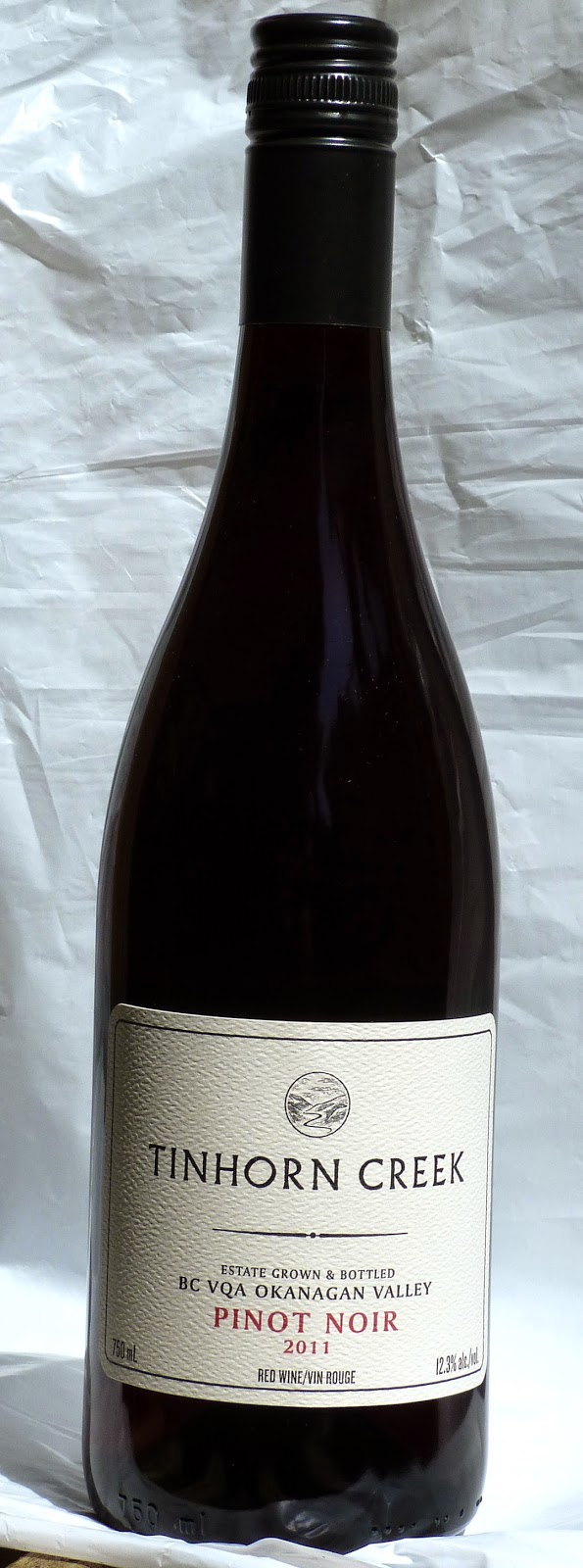
Tinhorn Creek  Pinot Noir 2011 ($21.99). The wine begins with appealing aromas of strawberry mingled with subtle oak. On the silky palate, there are flavours of cherry and strawberry. The moderate alcohol of 12.3% reflects a cool year; even so, the wine finishes with elegance. 90


Tinhorn Creek Oldfield Series 2Bench Rosé 2013 ($22.99 for 1,000 cases). This wine is made entirely with Cabernet Franc and is made very much in the style of a Provence rosé – pale salmon hue, delicate fruit flavours and dry on the finish. It has notes of strawberry and cranberry in the aroma and on the palate. 89.

Tinhorn Creek Oldfield Series 2Bench White 2013 ($22.99). The tropical fruit bomb is a blend of 31% Sauvignon Blanc, 29% Chardonnay, 28% Sémillon, 9% Viognier and 3% Muscat. It is a mouthful of ripe peach, pear and citrus flavours. The wine is rich on the palate and has a lingering finish. 91.


Tinhorn Creek Oldfield Series Pinot Noir 2010 ($29.99). All the stops were pulled out for this wine. This was a cool vintage but picking was delayed until October 8, with the result that the grapes were ripe enough to produce a wine with 14.8% alcohol. It spent a year in French oak barrels and another two and a half years in bottle prior to release. This is a powerful Pinot Noir with aromas of cherry, herbs and sage. It has a juicy concentrated texture with savoury cherry flavours and the complex notes that aficionados like to call barnyard, for reasons that elude me. There is a note of spice on the finish. This is a wine that can be cellared another five years as it expresses its potential. It has won one gold medal and no doubt has others in its future. 92.

Monday, June 23, 2014

Class of 2014: Sea Star Estate Farms and Vineyards


 Photo: Sea Star  Estate Farms winery on Pender Island

A new winery, Sea Star Estate Farms and Vineyards, has emerged from the ashes of Pender Island’s Morning Bay Vineyard and Estate Winery.

Sea Star has burst onto the wine scene with a stunning debut. Its first four white wines, all from 2013 and all from Pender Island grapes, impressed the judges at the recent Northwest Wine Summit competition. Sea Star came away with two gold medals, a silver medal and a designation as one of 16 wineries of distinction in the competition (winners of two or more gold medals each).

It is a strong start for owner David Goudge and his winemaker, Ian Baker. Others also have recognized the quality of the wines. Even before the results of the competition were announced, Sea Star wines had been placed on the lists of several of the best restaurants in Vancouver (Blue Water Cafe, L’Abattoir, Hawksworth, Chambar, and Homer St. Cafe and Bar).

In fact, Blue Water purchased the entire vintage, a little over 200 cases, of Stella Maris, the winery’s elegant white blend. In total, the winery has released about 1,500 cases of Pender Island white wines. It has about 600 cases of a Meritage made with Okanagan grapes that will be released next year.

David, who has lived on Pender Island for about six years, purchased Morning Bay two and a half years ago after it had closed. He set about resuscitating Pender Island’s only winery.

Morning Bay was opened in 2005 by former journalist Keith Watt. He had planted a seven-acre vineyard in 2002, following up by building a handsome winery amid the Pender Island forest. “When people visit your winery and find that the building is serious,” Keith once told me, “they approach your wines seriously.”

David has discovered that the winery building still impresses. “So often, people drive up and their mouths drop,” he says. “They don’t expect this. They kind of think they are going to get a barn leaning slightly to the left or the right. To Keith’s credit, he dreamed big.”

Perhaps Keith dreamed too big. He listed the winery for sale in September 2010 as he struggled to operate Morning Bay under the financial pressure of having built more than a rudimentary winery. He sold the winery to David, operating it under lease for a year as he liquidated his stock of wines.

Since taking over the property, David has invested in new tanks, new equipment, a climate controlled barrel cellar and an updated wine shop. However, to those who attended the rock concerts Morning Bay used to host every fall, the winery will look familiar.

David was born in Ottawa in 1959 and grew up in a home where his parents shared wine at the dinner table. “I am a fan of wine,” he says. “I have never tried to learn how to make it myself. I just leave that to the experts. But I am passionate about wine.”

He came to Vancouver to study architecture at the University of British Columbia. Then he went briefly into the restaurant business before establishing himself as a Vancouver real estate agent. Some of the restaurants that have taken Sea Star wines were restaurants where he entertained clients. That has given him an edge with restaurateurs not known for listing island wines.

“Now when I went back into Vancouver, some of the owners and managers recognized me and ask where I had been,” he says. “I told them I have started a winery on Pender Island and they said when the wine is ready, bring it to us. I kind of had a door open when the wines were available.”

No doubt, the elegantly simple but classic Sea Star labels help sell the wines. Each crisply white label is adorned with a sea star. “For me, the image of a sea star is reminiscent of beach combing in the summer; or you might be out kayaking on a calm day and you can see them up on the rocks,” David says. “They represent summer in the ocean, that’s what I thought.”

They also underline that this is the only winery in British Columbia whose property runs down to the ocean.

Ian Baker, the vineyard manager and winemaker, formerly was a partner at Mistaken Identity Vineyards on Salt Spring Island, where he also made the wines and ran the organic vineyard.

Ian is a one time Department of Fisheries employee and the former operator of a landscape business in Qualicum Beach on Vancouver Island. More to the point, he was a long-time amateur winemaker with, as one of his former partners said, “a box of medals.”  He moved to Sea Star in 2013 after about four years with Mistaken Identity.

The Pender Island grapes in the winery’s 2013 whites are from the 5,000 vines at Sea Star’s vineyard and the 7,000 vines at the 5.5-acre vineyard at Clam Bay Farm on North Pender Island.

Here are notes on the wines.

Sea Star Blanc de Noir 2013 ($17.90 for 312 cases). This Provence-style rosé made from Clam Bay Farm fruit begins with a rose petal hue. It has aromas and flavours of rhubarb, strawberry and cranberry. The racy acidity gives the wine a fresh and tangy finish. The wine is also crisply dry. This wine won a gold medal and “best rosé” at the Northwest Wine Summit. 90.

Sea Star Siegerrebe 2013 ($17.90 for 425 cases). This wonderfully expressive wine, with Clam Bay fruit, begins with aromas of herbs, spice and grapefruit. On the palate, there are flavours of grapefruit, guava, peach and spice. A bowl of tropical fruit flavours, this aromatic wine has a very long finish. The exquisite balance of acidity and residual sugar contributes to the clean, fresh flavours. This wine won gold. 91.

Sea Star Ortega 2013 ($18.90 for 448 cases). Also made with Clam Bay fruit, this wine begins with aromas of melon, herbs and a light pinch of hazelnut. On the palate, there are flavours of grapefruit and honeydew supported by a note of minerality. The finish is dry with a touch of spice. Silver medal. 90.

Sea Star Stella Maris 2013 ($19.90 but sold out). This is an estate-grown blend of Gewürztraminer, Pinot Noir, Pinot Gris, Riesling, Ortega and Schönburger. It is a very complex dry white with the character and body to give it versatility with food. It has aromas of honey, rose petal, herbs and spice. On the palate, there are flavours of apricot and melon, with a pleasing touch of herbs and spice on the finish. 91.