Friday, December 12, 2014

Bartier Brothers release a solid six-pack


 Photo: The Bartier Bros. Cerquiera Vineyard

Everyone who knows winemaker Michael Bartier knows that a droll sense of humour goes along with his talent.

The most recent release of wines from Bartier Brothers Winery comes with an entertaining updated narrative on how Michael and his brother, Don, found themselves in the wine business in the Okanagan.

They are natives of Kelowna who initially set off on different careers. Don went to Calgary, became an accountant and succeeded in the oil and gas business.

Michael (right) has a degree in recreational administration from the University of Victoria and returned to the Okanagan initially to be a rock climbing guide. Then in 1995, at the age of 28, he got a job as a cellar hand at Hawthorne Mountain Vineyards (now See Ya Later Ranch). His career was launched.

Here is where the media kit picks up the story. “Michael has often considered his own winery to make his style of wine, but lacked the business and financial acumen for this undertaking. Don has long been a wine enthusiast, and indeed about the best customer for each winery that Michael worked for.”

In addition to Hawthorne Mountain, Michael has made wine for Township 7 and Road 13. For several years, he has been the senior consultant at Okanagan Crushpad Winery.

With Michael’s advice, Don planted a 2.5-acre block of  Gewürztraminer in 2010 near Summerland, called the Lone Pine Vineyard..

“Michael watched this project closely, and helped a lot. Either Don passed Michael’s test, or Michael laid a trap that Don walked into,” the media kit says. “In either event, the stage was set for the partnership of the Bartier Bros. …”

The brothers released a few wines last year, adding more this year as they build to a full suite of wines.

Their major grape supply is from the 15-acre Cerqueira Vineyard on Black Sage Road. Planted between 1999 and 2009, it has four acres each of Merlot and Chardonnay, 2.6 acres of Syrah, 2.4 acres of Cabernet Franc, and two acres of Sémillon.

“The soils are a heavy, slightly sandy loam with limestone (calcium carbonate0 covered granite cobbles throughout a deep profile,” the media kits says. “With the rough surface of the calcium carbonate, vine roots seek out these rocks for the small amount of water to be found on this surface. It is controversial to say that these vines are ‘feeding’ off these minerals, but that’s exactly what we believe is happening and it shows in the wines.”

Here are notes on those wines. 

Bartier Brothers Semillon 2013 Cerqueira Vineyard ($19.90 for 640 cases).  The wine begins with aromas of grapefruit and apricot. On the palate, there are flavours of grapefruit on a bed of herbs, spice and minerality. The finish is crisp and dry. I would be inclined to cellar this wine for a few years and let time work its magic with this varietal. 90.

Bartier Brothers Gewürztraminer 2013 Lone Pine Vineyard ($18.90 for 211 cases). This wine begins with appealing aromas of apple, peach and ginger. On the palate, a touch of residual sugar lifts the peach and apricot. Well-balanced, the wine finishes dry. 90.

Bartier Brothers Unoaked Chardonnay 2013 Cerqueira Vineyard ($19.90). Here is a textbook example of an unoaked Chardonnay that delivers pure and focus fruit aromas and flavours. Look for citrus and apple with a crisp finish and a surprising amount of weight. The flavours linger. 90.
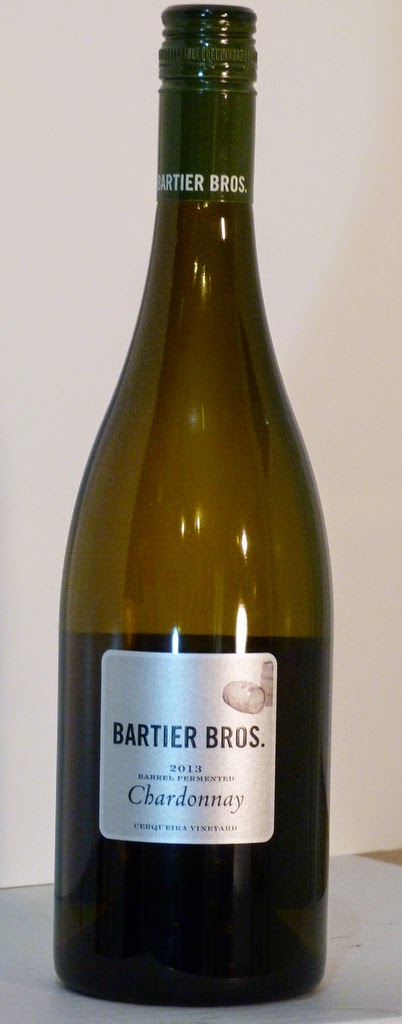
Bartier Brothers Barrel Fermented Chardonnay 2013 Cerqueira Vineyard ($26.90 for 182 cases). Almost from the start of his winemaking career, Michael Bartier has shown a very sure hand with Chardonnay; his wines have won numerous awards. This is another example. It begins with intense aromas of citrus and cloves, leading to rich, layered flavours of grapefruit, ripe peaches, ripe apples. The hint of spice and cloves, likely reflecting time in barrel, gives the wine good length on the finish. 92.

Bartier Brothers Merlot 2011 Cerqueira Vineyard ($26.90 for 350 cases). The wine begins with intense aromas of black currants and black cherries. Ripe tannins give the wine a firm texture, with flavours of black cherry, blackberry, chocolate and spice. This is drinking well but will continue to improve in the cellar over the next three to five years. 91.


Bartier Brothers  Syrah 2011 Cerqueira Vineyard ($26.90 for 325 cases). This wine was tweaked with 13% Cabernet Franc. It smells and tastes like a classic Syrah, with white pepper, black cherry and vanilla in the aroma. The flavours are a blend of plums and peppery prosciutto. 92. 

Wednesday, December 10, 2014

Class of 2014: Monte Creek Ranch


Photo: Monte Creek vineyard with Lion's Head in the distance 

Monte Creek Ranch, the newest winery in British Columbia, has a lot of pioneering history behind its name – and also is pioneering grape varieties new to British Columbia.

Monte Creek is the fourth winery near Kamloops. Its current portfolio of seven wines includes a number made with so-called Minnesota hybrid grapes. These varieties were developed in Minnesota and Wisconsin to survive winter temperatures fatal to vinifera varieties. Most of the wineries in Quebec grow them but this is the first release of these varietals from a British Columbia vineyard.

Some of the history was laid out in a news release that announced the winery:
“Generations back, the small community of Monte Creek, situated east of Kamloops along the South Thompson River and into the rolling hills, was known as "Ducks", after the British settler Jacob Ducks, who ranched the area extensively.

“The town became a hub when Ducks opened a hotel to room railway workers, miners and other ranchers, and achieved fame in 1906 as the site of the last train robbery by the notorious "Gentleman Bandit" Bill Miner. In 1888 Hewitt Bostock purchased 3,380 acres near Kamloops from rancher Ducks. Years passed, yet locals continued to call it Ducks Ranch long after Bostock and his wife made it their home. Today's Monte Creek is a tiny community where farming and ranching is still the mainstay.”

The picture of Bill Miner, apparently from a wanted poster, appears on several of the winery’s labels.

Here is the profile from the new edition of John Schreiner’s Okanagan Wine Tour Guide.
                         
Marquette, La Crescent and Frontenac have joined the lexicon of varietals in British Columbia with the development of this winery. Those are winemaking hybrids bred at the University of Minnesota to survive winters as frigid as those experienced occasionally at Kamloops. In an abundance of caution, Gurjit Sidhu, the owner of Monte Creek, also has installed wind machines for added protection against late spring and early autumn frost.

Since 2010, Monte Creek has planted about 14 hectares (35 acres) on two vineyards: a south-facing slope called Lion’s Head on the north flank of the Thompson River; and a windswept plateau south of the river and beside the highway (where the winery and wine shop are located). In addition to the Minnesota hybrids, Monte Creek also has a large block of Maréchal Foch. On the Lion’s Head slope, Riesling, Pinot Gris and Gewürztraminer are grown.

The first commercial production from this vineyard, about 23 tons in 2013, was vinified for Monte Creek by Eric von Krosigk, the winemaker at Summerhill Pyramid Winery. The wines are promising, in part because the hybrids, which have big berries when grown in eastern Canada, produce small berries with concentrated flavours in the Kamloops climate and soils. Marquette, which the University of Minnesota says is a “grandson” of Pinot Noir, is medium bodied with good flavours. Le Crescent, which has some Muscat in its ancestry, yields a fruity white. “We have at least two very strong ones,” Gurjit says of the gamble on Minnesota hybrids.

The Sidhus are immigrants from the Punjab in India who have already succeeded in horticulture in Canada. Gurjit was just three when his father Gurdev moved the family to British Columbia in 1969. Unable to use his law degree here, he   started a small plant nursery in Mission in 1975. Today, Sidhu & Sons Nursery Ltd., specializing in producing shrubs and trees for landscaping, is one of Canada’s largest nurseries.

In 2001, the Sidhus expanded to growing blueberries, quickly becoming one of the largest producers in the Fraser Valley. Soaring land prices sent Gurjit, who has a diploma in horticulture, looking for cheaper farm land in the interior to plant more blueberries. In 2007 he bought Monte Creek Ranch and then the Lion’s Head Ranch on the north side of the river, almost directly across the valley. Because the Thompson River Valley is not ideal for blueberries, he turned to grapes and a groundbreaking trial of hybrids that could open winegrowing possibilities in British Columbia’s cooler regions.

Since that was written, the winery has built a processing facility in which a tasting room will open in the spring of 2015.

As well, Michael Alexander, 25, (right) a Calgarian who is completing his training this winter at Niagara College, has become the winemaker (with Eric remaining as a consultant. Michael, who had previous experience in both the cellars and the tasting room at Summerhill Pyramid Winery, had the major hand in making the 2014 vintage for Monte Creek.

He has recognized that the Minnesota hybrids are performing differently (and arguably better) in the sunbathed Kamloops terroir than in Quebec. “With the longer growing season and the warmer weather here, we get great ripeness,” he has found. (Photo: Frontenac Gris)

The winery is not relying entirely on grapes that thrive at Kamloops. The inaugural release includes a Cabernet Merlot from grapes purchased in the Okanagan.

“We are working with a few different vineyards,” Monte Creek general manager Erik Fisher said in an interview this fall. “This year we are identifying where we can get the best quality fruit. We are looking at a five year plus option with a grower in the South Okanagan where we can get a consistent supply of Cabernet Sauvignon and Merlot and grow our production levels. The ownership group is also wide open to purchasing some land down there as well.”

Here are notes on the wines.

Monte Creek Hands Up White 2013 ($14.99). This is a blend of  59% Frontenac Blanc, 29% Viognier and 12% La Crescent. Ripening these varieties clear was no issue: the alcohol is 15%. It is noticeable, but not unpleasantly so, in the rich tangerine, caramel and nutty flavours on the full palate. The aromas are fruity, with honeyed notes of melon, citrus and apricot. 87.

Monte Creek Frontenac Gris 2013 ($15.99). The Frontenac Gris grapes thrived in the heat of a Kamloops summer, ripening to almost 30 brix by the time they were picked on October 4. The winery took the hint and made a delicious late harvest wine with 25.6 grams of residual sugar. The wine has a lovely light gold hue with floral and honey aromas. On the palate, there are flavours of ripe apple and cantaloupe. The sugar is superbly balanced so that the finish has just a lingering sweetness. 89.

Monte Creek Gewürztraminer 2013 ($17.99). The wine begins with aromas of grapefruit and herbs, leading to flavours of citrus and grapefruit rind, with a backbone of minerals. Rich on the palate, the wine is dry on the finish. 89.

Monte Creek Riesling 2013 ($18.99). This wine reflects the style that winemaker Eric von Krosigk has adopted with Riesling: low alcohol (9.8%) with just a touch of residual sweetness that rests nicely on the mid-palate. The classic mineral backbone and the hint of petrol is beginning to develop amid the lemon and lime aromas and flavours. 90.

Monte Creek Hands Up Red 2013 ($15.99). This is a blend of 49% Frontenac Noir, 20% Marquette, 10% St. Croix, 8% Cabernet Sauvignon, 8% Merlot and 5% Savrevois. Dark in colour, the wine is intensely aromatic (cherries, blackberries). On the palate, there are flavours of blackberry and cherry. The winery notes describe this as medium-bodied. However, the long ripe tannins give it a full, lingering finish. 88.

Monte Creek Foch 2013 ($19.99). Dark in color, the wine begins with aromas of raspberry and cherry with a touch of graphite. On the palate, it is a rich, plumy wine with overtones of cherry and blackberry. The finish has the classic smoke and dark chocolate note of the varietal. 89.

Monte Creek Cabernet Merlot 2013 ($19.99). This is a blend of Merlot and Cabernet Sauvignon (the winery has not provided a breakdown on how much of each). Dark ruby in colour, it has appealing jammy aromas, leading to flavours currants and black cherry with dark chocolate and tobacco on the finish, along with a touch of cedar. This is a delicious wine. 90.


Monte Creek Ranch Winery
2420 Miner’s Bluff Road,
Kamloops, V0E 2M0
T. 250.572.4040


Tuesday, December 9, 2014

Ten years of Laughing Stock Portfolio


 Photo: Cynthia and David Enns

Laughing Stock Vineyards, which opened in 2005, celebrated its 10th anniversary this year with events that included vertical tastings of its flagship red blend, Portfolio.

At one event at the Naramata winery for its wine club members, owners David and Cynthia Enns offered to sell a limited number of verticals from the winery’s library stock. To their surprise, few sets were purchased -- because most club members already had verticals in their own cellars.

Only a handful of Okanagan wines can boast of a similar following. Oculus from Mission Hill, Nota Bene from Black Hills and Le Grand Vin from Osoyoos Larose, Pinot Noir from Blue Mountain, all of which have released in ten or more vintages, come to mind. Several other producers are closing in on decade-long collectible vintages, a sign of the maturing British Columbia wine industry.

David Enns set out to make a collectible wine from day one after beginning his winemaking in a garage in Whiterock. The first wines he made with Washington State fruit – he crushed a ton of Cabernet Sauvignon in 2001 and two tons of Syrah in 2002 - were the rehearsal before turning pro in 2003.

Laughing Stock’s first vintage was about 500 cases of Portfolio in 2003. It was made in the then-tiny Poplar Grove winery. It was two years before David and Cynthia built a winery on the five-acre Naramata vineyard they had purchased.

“I did the pilgrimage [to Bordeaux] before I blended the 2003 Portfolio,” David says. “I went to Bordeaux for the en primeur tasting. It was an amazing trip of tasting close to 1,000 different wines and then coming back and blending Portfolio.” The 2003 Portfolio is 64% Merlot, 33% Cabernet Sauvignon and 3% Cabernet Franc. 

Opening a winery was a major career change for David and Cynthia, who were then running an investment consulting company. They only sold that business in 2006 after their winery was established.

“Our original business plan was that we were going to buy a lot of our fruit so we don’t have to become farmers,” David recalls. “Well, we quickly realized that if you want good wine, you need good fruit – and you have to grow it. So we hunkered down and bought another 22 acres [in Osoyoos]. So 50% of our fruit comes from Osoyoos and 50% comes from the Naramata Bench.”

For the vertical tasting, Laughing Stock presented several tables, starting with one about the volume of grapes crushed each year.

2003
  8 tons
2004
 32 tons
2005
 43 tons
2006
 87 tons
2007
 78 tons
2008
 98 tons
2009
103 tons
2010
  90 tons
2011
 110 tons
2012
 109 tons
2013
 121 tons

Currently, there are no plans to increase production volumes. “In 2005 I built my winery,” David says. “I built it to do 5,000 to 6,000 cases a year.” Cynthia adds: “We are not increasing production and we are not going to build a new facility in the next five years.”

The Portfolio blend has become more complex as Laughing Stock has been able to access or grow the entire suite of varietals found in most Bordeaux blends.

Another table from the winery sets this out.

Vintage
Merlot %
Cabernet Sauvignon %
Cabernet Franc %
Malbec %
Petit Verdot %
2003
64
33
3


2004
55
35
10


2005
59
33
 3
 4
1
2006
61
16
16
 5
2
2007
56
25
12
 6
1
2008
53
24
12
 8
2
2009
36
27
22
14
1
2010
32
42
 6
18
2
2011
42
32
17
 7
2
2012
45
25
22
 7
1

As that table shows, Portfolio has been anchored with Merlot in every year but 2010. “Back in the day, people said go heavy Merlot all the time,” David says. “It was pretty safe advice. Since then, there has been more Cabernet Sauvignon and Cabernet Franc planted in the right sites now. A more balanced approach can be taken today than 10 years ago.”

However, Portfolio is “definitely skewed towards [Bordeaux] Right Bank style,” David adds. “It is all Right Bank except for 2010, which is Cabernet Sauvignon-based.” That was a reflection of vintage conditions, in which Cabernet Sauvignon shone through better in the blend.

The basic consistency in the style of Portfolio is one reason why the wine is collected. But that does not mean the wine tastes the same today as it did a decade ago. It is a wine that has been continuously refined through access to more and better grapes. The wine also improved after Laughing Stock built its own winery and included sophisticated winemaking equipment. As well, David has worked with a wide variety of French coopers en route to choosing the barrels he believes best suit his style.

“We only get one shot at this a year,” he says. “The coopers I am picking are all French. A lot of the oak is fine-grained and the barrels are medium or medium plus toast.”

Laughing Stock is small enough that it can ferment its grapes in small batches and keep them separate until blending.

“At the fifteen month mark, the following March, is when we start a month of blending trials,” David says. “We will make two cuvees. One is Blind Trust Red and the other is Portfolio.”

The lower-priced Blind Trust Red is bottled in April while the Portfolio blend goes back into barrel for about three more months. Typically, Portfolio has 18 to 20 months of barrel age; between 35% and 55% of those barrels are new. The object is to structure Portfolio as age-worthy, with Blind Trust as an earlier-drinking red.

“We build our wines to age,” Cynthia said at the vertical tasting.  “How well do B.C. wines age? Will they be fresh and clean in 10 years? We can’t answer that question until we get there.”

The tasting, of course, provided the answer. Wines as well made as these can last that long, or almost that long.

Portfolio 2003, however, is beyond its best. Anyone with a few bottles left needs to open them soon. The winery advised drinking it by 2013. The other vintages all are sound.

There is a reason why 2003 is not aging well. That vintage was the hottest in the decade, with 1,494 degree days, about 200 degree days more than the annual average. That produced very ripe grapes. In its youth, this was a jammy and fleshy Portfolio (“a fruit bomb,” Cynthia says), somewhat low in acidity and with 15.1% alcohol. (Due to a labelling error, the bottle read 13.8% alcohol.)


Here are notes on succeeding vintages, with point scores I made during the tasting.

Portfolio 2004: The winery advises drinking it this year but don’t fret if you keep it another year. It is a wine with aromas of vanilla and cassis, with berry flavours that are still bright. The finish has notes of chocolate, thyme and sage. 91.

Portfolio 2005: Drink this by 2015. This was the first Portfolio made in the new gravity-flow winery and incorporating five varietals. It has matured to display aromas of cassis, blueberry and mulberry and to offer of core of cherry and vanilla flavours. 94.

Portfolio 2006: Drink this by 2016. The 2006 vintage was warm and consistent. Beginning with aromas of plum and blueberries, the wine has a concentrated texture with flavours plum, black currant, chocolate and espresso. The texture is still firm. 92.

Portfolio 2007: Drink this by 2018. The wine begins with almost floral aromas of black currant, black cherry and vanilla that are echoed in the flavours. There is a touch of mocha and mint on the finish. 93.

Portfolio 2008: Drink this by 2019. For the first time, fruit from Osoyoos and Cabernet Franc from a grower were incorporated in Portfolio. The wine comes off as bold and muscular, with aromas of black cherry and jammy flavours of black cherry, black currant, plum and sage. 94.

Portfolio 2009: Drink by 2020. This vintage was shortened by frost early in October; fortunately, it has been the second warmest year in the decade (1,427 degree days) and the grapes were superbly ripe. This is big, rich Portfolio with aromas of vanilla, cassis and blueberry and flavours of black cherry, dark chocolate, coffee and liquorice with a hint of graphite on the finish. 95.

Portfolio 2010: Drink by 2021. This was a notoriously cool year, requiring the dropping of some fruit (note the drop in the tonnage crushed). Surprisingly, given the vintage, the best varietal in the winery was Cabernet Sauvignon. This is a fresh and lively Portfolio, a bit lean in texture but with aromas of cassis and flavours of red currant, pomegranate and mint. 93.

Portfolio 2011: The winery has not published a lifespan recommendation; I would suggest drink by 2021. This was another cool vintage (1,195 degree days) with a harvest that did not start until mid-October and did not end until mid-November. However, this wine was good enough to win the Lieutenant Governor’s Award of Excellence. It has aromas of black currant, cedar and spice, with flavours of black currant, cherry and chocolate. 93.

Portfolio 2012: No lifespan recommendation from the winery; I would suggest this will cellar until 2024. The aromas are still closed but the wine has intense flavours of black currant, black cherry and liquorice. The text is generous with long, ripe tannins. This was one of the best vintages, with 1,333 degree days in a long, warm growing season. 92-94. 

Saturday, December 6, 2014

Class of 2014: One Faith Vineyards


Photo: One Faith proprietor Bill Lui

One grasps for words to describe One Faith Vineyards, the Okanagan’s newest winery. Audacious and ambitious, because it launched with the most expensive red wine yet (about $165 a bottle) from a British Columbia winery.

“My goal for One Faith Vineyards is to become the First Growth for the Okanagan,” owner Bill Lui said at the crowded launch party.

The collectors and wine aficionados had the first chance to taste the wine and an opportunity to buy a three-bottle box for $495. Since only 144 cases of 2012 One Faith were made, there is not a lot of wine to go around, even at these prices.

If One Faith succeeds, and I believe it will, this wine is a game changer for the Okanagan. If Bill can get collectors to pay Bordeaux prices for Okanagan wines,   his peers will be able to do the same. That will significantly improve the overall economics of growing wine in a high-cost region like the Okanagan and the Similkameen.

Bill is a Vancouver businessman whose successful medical supply business enabled him to pursue a growing passion for wine, notable for the great reds from Bordeaux. He has taken Wine & Spirits Education Trust courses in wine and wine-making courses at the University of California. He has travelled and tasted in Bordeaux. On a recent trip, he arranged to visit all of the five First Growth producers.

Taking his cue from how the best do it, Bill nailed down a superior source of grapes by leasing several small blocks in Harry McWatters’s Sundial Vineyard on Black Sage Road. Planted in 1992, this is one of the most mature of Okanagan vineyards. It is also farmed by Richard Cleave, a revered veteran grape grower. Bill considers him “the best farmer” in the Okanagan.

Then Bill went to California to hire consulting winemaker Anne Vawter. “He was looking in the Napa Valley for a winemaker,” Anne told me. “He wanted to go outside the fold of the Okanagan, and look for somebody who was making wines in the style that he wanted to make. My name kept popping up.”

Anne grew up near Walla Walla, wine country in Washington State. After considering a career in dentistry, she got a degree in viticulture and enology at the University of California, quickly emerging an important consulting winemaker. Most of her clients (such as Ziata Wines, Oakville Ranch Vineyards and Teaderman Vineyards) are in Napa. Her husband, Cameron Vawter, is the winemaker at Dana Estates at Rutherford.

Anne has her own label, Red Mare Wines, a name inspired by her equestrian interests. She manages Blossom Creek Ranch, a horse farm in Calistoga.

She has now made three vintages for One Faith, starting in 2012. She acknowledges that One Faith has been fortunate to launch with three of the Okanagan’s best vintages.

“I think it is a really fascinating place to make wine,” she says of the Okanagan. “It is similar in certain ways to Washington State, but individual as well. The soil where we are making our wine on the Black Sage Bench area is very uniform sand and very deep sand. That is distinctive and unique. Most places are not going to have that soil structure. That is fascinating for me.”

“I am also drawn to higher latitudes,” she continues. “There is something special that happens, especially with the blending varieties – Merlot, Cabernet Franc, Petit Verdot and Malbec. It is interesting when you have that shorter season, longer days and sometimes higher temperatures … a combination of those things sometimes produces wines that are a little more interesting. It produces rich Merlots, strong, mouth-filling, tannic Merlots. I think somehow it has to do with the shorter season and the longer days.”

Bill Lui has spared no expense. The vines are allowed to produce only between one and two tons of grapes per acre, perhaps a quarter of the usual yield for Bordeaux reds in the Okanagan. Such extreme viticulture is designed to produce concentrated wines with rich flavours. There is a bit more turbo-charging at fermentation, with 10%-15% of the juice bled off after crush, further concentrating the wine.

That juice, by the way, is turned into a rosé called The Girls. The proceeds from that wine go entirely to breast cancer research. There also is a companion red, a home for wine that does not make the cut for blending into One Faith.

The volumes of One Faith are small. Production in 2013 was a little higher than 2012 while the current vintage production was similar to 2012.

“The idea is to keep the production very small, with attention to detail,” Anne says. “All of the wine is barrel-fermented, which takes an amazing amount of space, time and energy. The goal is to maintain something small that we can keep our eyes on.”

The result is what Harry McWatters, who has given marketing advice to Bill, calls “a new milestone in British Columbia wine.”

Here is a note on the wine.

One Faith 2012 ($495 for a box of three). The wine is a blend of 45.4% Merlot, 30% Cabernet Sauvignon and 24.6% Cabernet Franc. The wine was aged between 20 and 22 months in French oak. The wine begins with deep and complex aromas of cassis, vanilla, spice and dark cherry. On the palate, there are layered flavours of black cherry, plum, cassis, chocolate and tobacco. It is a sveltely polished wine with long, silky tannins. The wine is drinking well now but will continue to improve in the bottle for five to eight years. 95.


Tuesday, December 2, 2014

Sandhill’s impressive new digs in Kelowna


 Photo: Winemaker Howard Soon in Sandhill's new barrel room

When the Sandhill Estate Vineyard was developed on Black Sage Road (between 1994 and 2000), two areas were left without vines so that a winery could be built one day.

Since its launch in 1999, the Sandhill wines have always been made at the sprawling Calona winery in downtown Kelowna.

The Black Sage Road winery plans remained dormant. The company that previously owned Calona and Sandhill was short of money. The soundly financed Andrew Peller Ltd. bought Calona and Sandhill in 2005 but found other priorities, including investment in vineyards.

This summer, a brilliant compromise emerged. Instead of a winery in the country on Black Sage Road, Sandhill has been housed in downtown Kelowna, in a spectacular new wine shop attached to the venerable Calona building. Master winemaker Howard Soon continues to make the wines in dedicated quarters in the Calona winery.

The breathtaking tasting room – there are few to match its grandeur in the Okanagan - shows off the wines to great advantage. To consumers, it does not matter that the tasting room is not actually on a vineyard.

A special tasting bar includes a massive interactive screen with stunning views of all the Sandhill vineyards. There is even a view of an old vine in profile, with roots spreading deep into the soil. This is better, in fact, than being in the vineyard where you would never get to see a 12-foot-deep profile of roots and soil unless you brought your own backhoe.

With Sandhill, such detail about the vineyards is fundamental to understanding the wines. Sandhill makes only single vineyard wines. Currently, the winery farms or buys grapes from six specific vineyards. Because Howard never combines grapes from several vineyards in a Sandhill wine, those wines express the terroir of their individual sites.

To experience that, you could taste the winery’s two Pinot Gris wines side by side. One is from the King Brothers mature vineyard just north of Penticton. The other is from Peller’s young Hidden Terrace Vineyard at Covert Farm north of Oliver.  

I have recently tasted the two Cabernet Merlot 2012 wines side by side. One is made with grapes from the sandy Sandhill Estate Vineyard on Black Sage Road; it is a rich and jammy wine. The other is from grapes grown on the extremely rocky Vanessa Vineyard in the Similkameen Valley; it is a firm and mineral-laden wine.

Here are notes on wines tasted recently with Howard in the Sandhill tasting room.

Sandhill Sauvignon Blanc 2013 Hidden Terrace Vineyard ($17.99 for 2,765 cases). The wine begins with aromas of gooseberry, lime and green tomato, leading to flavours of lime and grapefruit. The texture is vibrant and the finish is refreshing. 88.

Sandhill Pinot Blanc 2013 Sandhill Estate Vineyard ($16.99). Half of this wine was barrel fermented in French and American oak, which may account for the fullness of texture and the hint of butter on the palate. The wine begins with aromas of pear and apple and delivers flavours of apple, pineapple and spice. 89.

Sandhill Chardonnay 2013 Sandhill Estate Vineyard ($17.99 for 2,820 cases). Half of this wine was fermented in French oak and aged nine months on the lees. That was done for richness and complexity. The other half was fermented in stainless steel, preserving the vibrant fruit and acidity. Malolactic fermentation was not allowed. The wine begins with aromas of apple and citrus, with a hint of oak. On the palate, there are flavours of ripe apple, tangerine and toasty oak. 89.

Sandhill Single Block Chardonnay 2012 Sandhill Estate Vineyard Block 11 ($30 for 125 cases). The vines on sunbathed Block 11 were planted in 1997 and now produce ripe (14% alcohol) and richly flavoured Chardonnay. About 60% of this wine was fermented and aged eight months in new French oak. The wine begins with alluring tropical fruit aromas and delivers juicy flavours of tangerine and ripe apple. There is an elusive lemon note on the finish that recalls lemon meringue pie. The finish goes on and on. 91.

Sandhill Cabernet Merlot 2012 Vanessa Vineyard ($19.99 for 5,700 cases). This wine is 50% Cabernet Franc, 30% Merlot and 20% Cabernet Sauvignon. The vines in this Similkameen vineyard grow, as Howard notes, “in rows blasted out of the rock.” This wine was aged 13 months in American oak. It is still a wine with grip. The black currant flavours are underlaid with minerality – a smoky, slate character with dark fruit and dark chocolate. 89-90.


Sandhill Cabernet Merlot 2012 Sandhill Estate Vineyard ($19.99). This is a ripe, juicy wine with aromas of cassis and vanilla. On the palate, it delivers flavours of black currant, black cherry, with spice and chocolate on the lingering finish. 90.


Sandhill Pinot Gris 2013 Hidden Terrace Vineyard ($18.99 for 4,872 cases). The wine has aromas and flavours of citrus and apple with both mineral notes and bright acidity forming a spine. One is not in the habit of decanting white wines but it might be considered. A day later, the second half of the bottle expressed more fruit and a fuller texture. 88-90.

Sandhill Syrah 2012 Sandhill Estate Vineyard ($19.99 for 2,268 cases). This wine has aromas and flavours of black cherry, spice and white pepper with a pleasant touch of oak on the finish. The texture is generous. 90.

Sandhill Syrah 2012 Phantom Creek Vineyard ($40 for 12 barrels). Here is a rich, full-bodied wine with aromas of black cherry and vanilla. Those are echoed on the palate, along with flavours of plum. There is a hint of black liquorice on the finish. 91.

Sandhill Single Block Merlot 2011 ($40 for six barrels). This is from Sandhill’s Block C1. The wine begins with alluring aromas of plum, cassis, blueberry and vanilla, and echoes this cornucopia of fruit flavours on the palate. The silky tannins add fullness to the texture. 91.

Sandhill Two 2011 ($35 for 13 barrels). This is 54% Cabernet Sauvignon, 23% Merlot and 23% Cabernet Franc. A wine with a generous texture, this begins with aromas of cassis, vanilla and tobacco. On the palate, there are flavours of black cherry, vanilla and mocha. This is an elegant wine, ready to drink now but with the potential to age well a few more years. 92.

Sandhill Malbec 2011 Phantom Creek Vineyard ($35 for seven barrels). This is sold out. Those who have it in their cellars are fortunate indeed. It begins with the classic perfumed aroma of Malbec (violet, raspberry and spice) and goes on to deliver flavours of currants, blueberry and lingonberry. 91.