Tuesday, August 20, 2013

Laughing Stock's Blind Trust and other releases


The latest package of releases from Laughing Stock Vineyards included some news about this Naramata winery which, this year, marks the 10th anniversary of its first vintage in 2003.

One bit of news: the winery has added concrete eggs to its fermentation cellar. That actually happened in 2011 but, to the best of my knowledge, nothing was said about it.

This is at least the fourth winery that now uses concrete eggs. Okanagan Crush Pad was the first, followed by CedarCreek and Lariana Cellars.

These are egg-shaped fermenters made of concrete. The fermenters are slightly porous, like barrels, but impart no flavour. The shape of the vessels sets up a rolling motion during fermentation, adding to a wine’s exposure to the lees. Arguably, wines fermented in eggs derive a textural benefit.

I say arguably because at least one winemaker – whose ability I respect – dismisses the concrete eggs. But then, he does not have one to work with either.

The other bit of news from Laughing Stock is that the winery is offering its Blind Trust White 2012 on tap in a number of Vancouver restaurants.

The Blind Trust wines, white and red, had been positioned as a challenge to consumers who are meant to guess the varietals in the blends each year. The actual blend composition is printed on the neck of the bottle, under the capsule. To see if you have guessed correctly, you need to peel back the capsules.

Obviously, there is no capsule to look under when you order the wine by the glass. Laughing Stock owners David and Cynthia Enns have addressed that by producing a hanger that servers attach to the stem of the wine glass. When you have made your guess as to the blend, you simply flip the hanger over to find out if you are correct.

Perhaps it is a bit gimmicky, but if you don’t have fun when drinking wine, you should stick with rolling up the rim at Tim Horton’s.

Here are notes on four Laughing Stock releases.


Laughing Stock Pinot Gris 2012 ($22 for 1,180 cases). This is a richly-textured and complex wine. Sixty percent was fermented in second fill French oak barrels, 32% in stainless steel and 8% in the concrete egg. This contributed to the rich mouth feel, along with six months of weekly lees stirring. The wine has pear and citrus aromas leading to flavours of pear, guava, baked apple and tangerine. The finish just won’t quit. 90.

Laughing Stock Blind Trust 2012 ($25 for 751 cases). Let me spoil the fun by telling you this is 50% Pinot Gris, 38% Pinot Blanc and 12% Viognier. The downside of hiding this under the capsule is that the bottles are closed with corks. My sample had just enough cork taint to spoil the flavours and aromas, but not so much that it obscured totally the excellent quality of the wine. Many consumers would have finished the bottle but not with enough pleasure to buy a second. That sort of marginal corkiness is every winery’s bane. A winemaker might prefer full-on taint, so that the consumers will understand the fault is the cork, not the winemaking.

A trip to my local VQA store allowed me to get a sound bottle, which was delicious. Perhaps the surprise is how dominant the Viognier is, contributing a good backbone and notes to herbs, apricot and honey to go along with the apple and melon flavours. 90.

Laughing Stock Blind Trust Red 2011 ($30 for 1,460 cases). This is 47% Merlot, 31% Malbec, 12% Cabernet Sauvignon, 6% Cabernet Franc and 4% Syrah. The blend is so complex that I can’t imagine any consumer coming even close. It begins with an appealing aroma of cherry and black current with a hint of pepper. On the palate, there are flavours of cherry and cassis, along with plum, mint and again a touch of pepper on the finish. A suggestion: decant this and let the aromas and flavours open. 90.


Laughing Stock Syrah 2011 ($36 for 760 cases). The cool 2011 vintage presented a real challenge in making red wines, especially Syrah. Consumers expect the variety to be full-bodied and that sort of ripeness was tough to do in 2011. But David Enns has come pretty close, leaving the grapes hang until the end of October in his Osoyoos vineyard where this varietal is grown. In the winery, he bled off some of the juice for rosé and, in the process, concentrated the wine a bit more. Then the Syrah was co-fermented with 6% Viognier and aged 16 months in French oak (40% new). The result is a wine appropriately dark in colour, with aromas of plum, black cherry, vanilla and spice. On the palate, there are flavours of blackberry, cola, coffee and leather with a hint of pepper. 91.

Saturday, August 17, 2013

Class of 2013: Money Pit Winery


Photo: Scott Stefishen


Money Pit Wines
860 Fairview Road
Oliver, V0H 1T0
Telephone      N/A
Website: www.moneypitwines.ca
Tastings: No tasting room

Scott Stefishen laughs when asked to explain this winery’s cheeky name. “Everyone in the industry says if you own a vineyard or a winery, it’s a money pit,” he says. “It doesn’t end.”

If there is anyone who has figured out how to keep the pit from getting too deep, it is Scott. He launched this winery in his garage in Oliver under a three-year permit from the town (likely renewable for three more years) His annual production is limited to 575 cases. His commercial license relieves him from the cost of buying a vineyard while allowing him to buy grapes both in British Columbia and in Washington State, where grape prices (but not grape quality) are significantly lower.

He does not intend to stay small forever. “As soon as we have product and sales, the bank can look at us for debt financing,” he says. “Either we will take out a small loan, purchase another building and keep our commercial license; or purchase vineyard land and switch over to a land-based license. The end game plan is to own our own land.”

Born in North Vancouver in 1979, Scott’s interest in wine was sparked during a French vacation in 2000, starting in the Beaujolais region. In 2004 he and Kristie, his wife, went to Perth in Australia, where she enrolled in Curtin University’s world-renowned physiotherapy program.

Scott, who had been taking business courses at Capilano University, switched to to Curtin’s winemaking and enology program. “I decided I didn’t want an office job,” Scott says. He made wine at two Australian wineries, including Stella Bella Wines and Rosebrook Estates.

When the couple returned to Canada in 2008, for family reasons, they took their professional qualifications to the Okanagan. Kristie established a physiotherapy clinic there while Scott spent the 2008 crush at Road 13 Vineyards, working with Michael Bartier.

On the strength of Michael’s glowing recommendation, Burrowing Owl Vineyards hired Scott in 2009. “The only problem he had with me is my chosen NHL team,” Scott quipped. Scott is a fan of the New Jersey Devils while Michael supports the Montréal Canadiens.

“I left Burrowing in December 2010,” Scott says. “There were not many jobs available that would give me the flexibility I needed. At the time, my wife was working full time on her business and it was not feasible for both of us to be working full time, with two young children. That was mostly how this venture came about. I needed something I could do to keep myself occupied and passionate about wine.”

He has also helped Sandor Mayer at Inniskillin Okanagan during two vintages, with a primary focus on learning to make Icewine. “It was something I wanted to know,” Scott explains. “For me, it is all about learning and keeping on learning. It is always nice to work under another winemaker and see what they do differently – and see how you can improve your own technique.” In the 2012 vintage, he returned to Road 13, this time working with J-M Bouchard.

Scott also kept a hand in at winemaking by crushing about a ton of grapes each vintage, producing wine for his family’s personal consumption.  At this stage, Money Pitt is not much larger than a home winery. Scott has no intention of getting in over his head.

“I have a commercial winery license at this stage,” he says. “That was the only option I had. I did not have the capital and I did want to involve investors in purchasing land. It is $100,000 to $130,000 an acre. It is not an affordable business model to get into. My plans for the future are to grow until I can afford my own land or find a partnership I can work with.”

The commercial license gives him flexibility in sourcing his grapes. His first white release, a blend called Markup, is Sémillon and Sauvignon Blanc grapes from a vineyard in Oroville, along with Chardonnay purchased at the end of the 2012 vintage from a grower in the Similkameen Valley.

His red wines include a Meritage blend, a Syrah Malbec blend and a Cabernet Sauvignon/Cabernet Franc blend, with grapes sourced in both the Okanagan and in Washington State.

The cap of 575 cases a year for the next three years is a consequence of his zoning of his home on one of Oliver’s main streets. “I am operating under what is called a temporary use permit,” Scott explains. “This technically becomes a commercial zone although we are in a residential area. The town is allowing us the opportunity to grow. The town is trying to develop more businesses in Oliver. We are the trial run to see if the temporary use permit will help.”

He is not uncomfortable with that cap. “Mostly, it is about controlled growth,” Scott says. “I don’t want to have the multi-million expenditure right off the bat, and having to worry about making ends meet. I want to sell out in a year. Even if the demand’s there, I would much rather sell out than have [unsold] stock.”

He has chosen to launch Money Pit with moderately-priced blends. The white is a blend of Sémillon, Sauvignon Blanc and Chardonnay, selling for $15 a bottle. The reds, when released, will all be under $24. The reason I want to do that is that I want to get my name out there and I want to sell out. If I can keep my costs low and my prices low, I hope to sell out every year and build my base.”

With no tasting room planned, Scott is selling the wine through restaurant contacts, friends and family, with the help of a website that is currently under construction.

Money Pit Markup 2012 ($15).  The wine begins with aromas of herbs and wild honey. On the palate, there are flavours of ripe cantaloupe and tangerine with an herbaceous note from the Sémillon. 88.


Wednesday, August 14, 2013

Orofino raises the profile of single vineyards


 Orofino's John and Virginia Weber

There is a new feature in the tasting room at Orofino Vineyards at Cawston: a mural showing the location of the various Similkameen vineyards from which the winery buys grapes.

It reflects the special determination by winery owners John and Virginia Weber to make vineyard-designated wines that show off the terroir and also raise the profile of their growers.

“We are doing more and more of that single vineyard designation on the labels,” John says. “We had done of a bit of that in the past but now it is a focus here.”

With the exception of the Merlot Orofino buys from the Oak Knoll Vineyard in Kaleden, the winery relies on Similkameen grapes.

“I love the grapes and I love the wine,” John says of the Kaleden Merlot, which goes into a wine called Red Bridge Merlot. “But I am a Similkameen guy.”

Six Similkameen vineyards currently supply Orofino, which made 5,200 cases in 2012. The winery’s own 5.5-acre vineyard includes blocks of five varietals planted in 1989, along with replacement blocks planted at various times since 1999. The latest addition, in 2010, was 0.6 acre of Petit Verdot.

The other vineyards, all fairly close to the winery, are:

  • Passion Pit Vineyard, with 1.5 acres of Cabernet Sauvignon planted in 2007. The vineyard is operated by growers Greg Sanderson and Joyce Barton, long time Cawston orchardists. This vineyard gets its name from an old gravel pit once frequented by romantic teenagers.
  • Scout Vineyard, a 4.2-acre property beside the Similkameen River where owners Murray and Maggie Fonteyne grow Syrah, Riesling and Pinot Gris. Orofino takes all of the grapes.
  • Celentano Vineyard, owned by Carmela and Antonio Celentano, has a half acre block of mature Gamay that Orofino has been buying since 2007.  They also grow Riesling but it is under contract to a major winery.
  • Hendsbee Vineyard, with 8.2 acres of vines, is right next door to Orofino. The owners, Lee and Cheryl Hendsbee, are veteran orchardists who began converting their mixed orchard to grapes in 2006. Orofino buys all of the fruit.
  • Blind Creek Vineyard, a 70-acre Cawston vineyard from which Orofino gets small lots of Sauvignon Blanc, and Chardonnay.

The wines that Orofino has released this year (or will release this year) include all of the individual vineyard names on the labels for the first time. It shows commendable sensitivity by the Webers to acknowledge to people on whom they rely for quality grapes. “If they get kudos like that, the growers buy into the program,” John reasons.

One outcome of this program is that Orofino released three different Riesling wines from the 2012 vintage. The differing characters of each Riesling more or less drove the vineyard-designate decision. It began when John decided to his Old Vines Riesling in barrels while fermenting the two other Rieslings in stainless steel. Previously, the wines were blended.

“I kept the Scout and Hendsbee Rieslings separate in tank,” John says. “The differences became so apparent that we decided this is an opportunity to showcase vineyards and styles. The styles are very different.”

Here are notes on the Rieslings.

Orofino Hendsbee Vineyard Riesling 2012: ($22 for 300 cases). The vineyard has two blocks of Riesling (clones 239 and 21B) planted in 2006 and 2008. The wine, with 12.9% alcohol, is a racy and dry Riesling, with aromas and flavours of lime and with a spine of minerals. 90.

Orofino Scout Vineyard Riesling 2012: ($22 for 250 cases). “Not everyone likes searing dry Riesling,” John concedes. “You reach a slightly larger audience when you leave a bit of residual sugar in it.” This wine, with 12% alcohol, has 18 grams of residual sugar, more than twice as much as the Hendsbee. This helps to propel aromas of fruit and apples, along with juicy apple flavours. But the natural acidity balances this wine very well. 91.

Orofino Home Vineyard Old Vines Riesling 2012 ($29 for 100 cases). This elegant wine is totally hand crafted. “It was barrel fermented in three old French and one new acacia barrel,” John says. “Half of that was fermented with commercial yeast and two I let go on their own. It was the first time I had ever done anything like that. There was lots of lees stirring.” This is an age-worthy dry Riesling with intense flavours of citrus and with a textural richness that elongates the finish. 92.

Orofino Riesling 2011 ($20). This vintage is still available and worth picking up because it shows what an extra year in bottle can bring. The wine begins with classic petrol aromas. The texture is rich with flavours of citrus. The finish is dry but the extra year has softened the acidity very nicely. 90.


Here are notes on the other current Orofino releases.

Orofino Muscato Frizzante 2012 ($25 for 500 cases). This is the second vintage of a carbonated sparkling wine that was a big hit in its first vintage, so much so that the winery has almost stopped making a Muscat dessert wine. “We do a tiny production of late harvest as well from our vines, but we prefer to drink bubble to late harvest,” John says. The blend is mostly Muscat but with a critical splash of Riesling and Pinot Gris, which bring up the acidity. This is a charming fruity wine with a crisp, refreshing finish. 90.

Orofino Blind Creek Sauvignon Blanc 2012 ($23). This Loire style wine has herbal aromas and flavours, along with grapefruit and grapefruit rind and with a crisp dry finish. 90.

Orofino Blind Creek Chardonnay 2011 ($25). This vintage is close to sold out but the 2012 is in bottle. Forty percent of this wine was fermented on older American oak. Intentionally, the wine was not encouraged to undergo malolactic fermentation. As a result, the wine has bright, refreshing flavours of apple and citris with just a touch of sweet oak. 90.

Orofino Pinot Gris 2012 ($20). This is a three-vineyard blend. The herbal aromas likely reflect the Similkameen terroir. On the palate, the texture is rich, with flavours of pear and apple. The finish is crisp. 88.

Orofino Celentano Vineyard Gamay 2012 ($23 for 100 cases). This wine was fermented and matured in steel and was bottled five months after harvest to preserve its freshness. The wine has aromas of red cherries and flavours of plum with sage and pepper on the finish. This charming Beaujolais-style red should be especially delicious with a bit of chilling. 90.

Orofino Home Vineyard Pinot Noir 2011 ($32). The winery has five clones of Pinot Noir, giving John a good palate of flavours to work with. The wine was made in the traditional gentle Burgundian style (lightly crushed grapes in an open-top fermenter). The wine was aged 16 months in French oak and was bottled unfiltered and unfined. It shows aromas of strawberry, with spicy cherry flavours and a lovely silky texture. 91.


Orofino Scout Vineyard Syrah 2011 ($29 for 225 cases). This elegant, medium-bodied Syrah – again unfiltered and unfined – has bright peppery cherry aromas and flavours and supple tannins. With 13.4% alcohol, it is not the powerhouse that a hotter vintage would have yielded, but it is a food friendly wine. 91.


Still to come from Orofino this year is the next vintage of Beleza, the flagship Bordeaux red, along with the 2011 Red Bridge Merlot, a pair of single vineyard Cabernet Sauvignons – and 70 cases of Petit Verdot Hendsbee Vineyard 2010. Usually, the Petit Verdot all is blended into Beleza but when the 2010 Beleza was put together, three barrels of Petit Verdot were left over.

So we kept the wine in barrel for an extra six months,” John says. “It spent 26 or 28 months in older barrels. It is a very old world style of red. We are pretty keen on it.”


Monday, August 12, 2013

CedarCreek adds vineyard designated wines


CedarCreek winemaker Darryl Brooker

In its releases for 2013, CedarCreek Estate Winery is offering several wines for which the exact vineyard block is identified on the label.

CedarCreek and winemaker Darryl Brooker began working on vineyard-designated wines when Darryl joined the winery in 2010. “Our vision,” CedarCreek president Gordon Fitzpatrick says, “has been to showcase the unique terroir of the Okanagan, especially our Home Block at CedarCreek.”

Vineyard-designated wines are nothing new in the Old World. There, the producers have had centuries to identify superior blocks, bottling such wines separately rather than having them disappear into blends.

This has to be managed carefully. Obviously, superior lots will lift the overall quality of blends while keeping those lots separate can weaken blends.

The solution lies in very good viticulture. Every block in a vineyard needs to be managed to its full potential, not just the superior blocks. It is evident that CedarCreek is bringing the best practices to all of its vineyards while taking pains bottle separately the wine from the best-performing blocks.

I have recently tasted several of the winery’s single block wines, which CedarCreek has released under its Platinum or reserve designation. The wines are very fine, indeed. I also tasted CedarCreek’s estate tier of wines. The difference between the tiers, aside from price, is not that dramatic. That shows that the farming here is very good.

Here are notes on some of the current releases.

CedarCreek 2011 “Block 5” Platinum Chardonnay ($29.95 for 533 cases). The fruit just sings in this bright and focussed Chardonnay. The wine begins with aromas of citrus and minerals, leading to flavours of honeydew melon. The finish is crisp and tangy. This is the result of fermenting the wine in 500-litre puncheons and not allowing it to undergo malolactic fermentation (which makes Chardonnay buttery). The wine was aged in barriques and puncheons. 93.

CedarCreek 2012 “Block 3” Platinum Riesling (Sold out but may be available at the winery; 300 cases produced). With only eight per cent alcohol, this wine would be very much at home in a fine Mosel cellar. The wine’s 12 grams of acid gives this wine its racy character but the balancing 25 grams of residual sugar lifts the aromas and flavours of lime and grapefruit. The 21-year-old vines on Block 3 are not irrigated. As a result, the roots go deep in the search for water, bringing up notes of minerals on the aroma and palate. 92.

CedarCreek 2010 “Home Block” Platinum Pinot Noir ($39.95 for 559 cases). This is one of the most impressive Pinot Noirs in the Okanagan, period. The grapes are from two small blocks within the Home Block; one with vines planted in 1991 and the other with vines planted in 1995. This shows in the concentrated flavours and textures of the wine. Aged 16 months in French oak, the wine begins with toasty, cherry aromas. On the palate, there are flavours of raspberry and cherry, with spice on the finish. The texture is just beginning to develop the variety’s classic silkiness. This will easily age gracefully for another five years. 92.

CedarCreek 2012 Gewürztraminer ($17.95 for 2,250 cases). CedarCreek started making this wine by pressing the grapes gently and slowly over a 12-hour period. The idea was to capture the sometimes fragile aromatics. The winery succeeded. The wine begins with spicy floral aromas and delivers abundant fruit flavours – lychee, grapefruit and peach. The rich texture and the dry finish very much recall good Alsace gewürztraminer. 90.

CedarCreek 2012 Ehrenfelser ($18.95 for 2,000 cases). Most of the grapes for this wine come from a Westbank vineyard that was planted in 1977. CedarCreek unlocked the exuberant fruity aromas and flavours in 2002 by removing some of the canopy and exposing the grapes to more sunlight. The wine subsequently acquired a cult following. This is a good example, with aromas of peach and citrus and with flavours of peach, pineapple and grapefruit. There is just enough acidity to give the wine a crisp finish. The flavours go on and on. 90.

CedarCreek 2012 Pinot Gris ($17.95 for 5,8o0 cases). This wine was fermented partially with wild yeast. Also, 10% was fermented in French oak. It all added a bit more complexity to a wine with appealing flavours of apple, pear and citrus. The slight touch of residual sugar, well balanced with acidity, pops the flavours very nicely. 90.

CedarCreek 2012 Riesling ($17.95 for 2,200 cases). This is made in a similar style to the Platinum Riesling but with a bit more alcohol, less acidity and less residual sugar. It begins with floral and citrus aromas. On the palate, there are flavours of lemon and lime. The spine of minerals and the crisp acidity give the wine a refreshing finish. 90.


CedarCreek 2012 Rosé ($17.95 for 700 cases). Made with Pinot Noir, this wine has a deep ruby hue. It has aromas and flavours of cherries and strawberries, with firm structure. The finish is almost austerely dry. This wine needs to paired with food. I would have enjoyed it more if the winemaker had left more residual sugar. 86.

Wednesday, August 7, 2013

Class of 2013: Cana Vines Winery


Photo: Lisa Elgert

Cana Vines Winery
129 Brauns Road
Oliver, BC V0H1T2
T 778-439-3340
When to visit: 11 a.m. – 5 p.m. Monday through Saturday and 1 p.m. – 4 p.m. Sundays May to October

If location is a key to success, Cana Vines Winery launched with an advantage. The winery, with its three hectares (7.5 acres) of sunbathed vines, is beside the highway, just south of Vaseux Lake and north of McIntyre Bluff. Not many wineries enjoy as much drive-by traffic.

While the address is Brauns Road, that is a stub of a street from Highway 97 near Vaseux Lake. The highway address of the vineyard is 9001 Highway 97.

“They have changed our address four times since we moved here,” says winemaker Lisa Elgert.

Arnie Elgert, a commercial fisherman, bought the property in 1990, he just wanted to move his family to the Okanagan from Vancouver. “He was thinking of retiring from fishing,” says Filipino-born Mindi, his wife, who had to learn to drive because they were distant from a community.

“My dad researched different crops that could have grown here,” says Lisa, his daughter. “We had all sorts of suggestions – ginseng, hemp, seabuckthorne. Somebody wanted us to open a McDonalds. There were all sorts of ideas. He settled on grapes.”

The family spent the better part of the decade picking rocks while deciding what to grow before vines were planted in 1997. The varietal choices – Merlot, Pinot Noir, Pinot Gris, Riesling and Chardonnay - were made on the advice of Arnie’s friend, Sandor Mayer, the winemaker at Inniskillin Okanagan.

Cana Vines was registered in 2000 as the vineyard’s name, inspired by a passage in Mindi’s bible about the first miracle attributed to Jesus – turning water into wine at a wedding at Cana.

Arnie soon was thinking about opening a winery. He sent Lisa to get a business degree at Trinity Western University with the object of having her run the business. Then in 2008, Arnie was stricken with cancer and died that December. “We were so devastated,” Mindi says. “We tried to get rid of the vineyard so we could forget everything and have a new start.” However, they could not sell the vineyard because of an economic slump. As they continued to farm it and sell the grapes, Lisa took Okanagan College winemaking courses. She and her mother decided to realize Arnie’s dream.

They arranged to have their initial 2011 vintage made at Kalala Organic Estate Winery. That gave them time to turn a three-car garage into a functional winery and to complete a tasting room and a picnic area with a fine view of vineyards and McIntyre Canyon to the south. And they have grafted some of their vines to additional varietals, giving them a bigger tool box for make blends.

The wedding at Cana theme has also inspired the labels of several wines scheduled for release this summer. There is a 2011 Chardonnay called “Water to Wine” and a blend of Pinot Gris, Riesling and Chardonnay called “The Wedding Feast.” An unoaked 2012 Merlot is called “First Sign.”

When I visited the winery in April, prior to the opening of the wine shop, there were only two wines in bottle, although I was able to sample several from barrel or tank. In particular, the unoaked Merlot is juicy and delicious.

Here are notes on the finished wines.

Cana Vines Pinot Gris 2011: ($16 for 126 cases). This fruity wine with a touch of sweetness on the finish has aromas and flavours of pear and apple. Sweetness aside, it is balanced to have a crisp, refreshing finish. 88.

Cana Vines Merlot Rosé 2011: ($14 for 256 cases). Think strawberry. The wine has a strawberry hue, with aromas and flavours of strawberries. It is an easy summer-time quaffer. 88.


Friday, August 2, 2013

Poplar Grove and Monster 2013 wine releases


Photo: Poplar Grove's Tony Holler 

Ian Sutherland, the founding winemaker at Poplar Grove Winery, once said the winery’s maximum production was unlikely to exceed 2,000 cases a year.

That was before Tony Holler came on board in 2007 as the winery’s controlling partner. A native of Summerland, Tony has been an emergency room doctor and then a successful pharmaceutical entrepreneur. Earlier in the decade, he built a home on Naramata Bench lakefront and planted a small vineyard near the original Poplar Grove vineyard. He and Ian had become friends and, when Ian needed a partner, Tony responded forcefully.

A serious wine collector, he had been drinking Poplar Grove wines for years. He had also come to believe that the Okanagan can produce world class wines.

“I wasn’t that interested in having a tiny boutique winery,” he told me last year. “I wanted to really develop a winery that was a sustainable business. What I mean by sustainable is that this business could become a family business that might go through generations of our family. In order to do that, I thought you have to have a certain size.”

He consulted winery owners elsewhere. All told him that he needed to scale up to a certain size in order to afford the talent need to make and sell top notch wines.

“So Ian and I, along with consultants, developed a business plan for a winery that was capable, over time, of going to about 25,000 cases,” Tony said. To secure the quality grapes needed for that growth, Tony and his wife, Barbara, invested in vineyards.

“We have to control all our own fruit,” Tony said. “That was why we ended up buying the roughly 100 acres, half here on the Naramata Bench and half on the Osoyoos East Bench.”

In conjunction with these moves, he had two new wineries built. One is the showpiece Poplar Grove Winery that opened last year on the side of Munson Mountain. The stunning view from its floor to ceiling tasting room windows takes in the city of Penticton.

The second winery, just down the road, is Monster Vineyards. Most of the wines for both Poplar Grove and Monster are made in this second facility. It also has a tasting room, take advantage of the fact it is one of the first wineries on the Naramata Road and draws plenty of visitors.

The business strategy is to deliver good, affordable wines under the Monster label for day to day drinking, and wines under the Poplar Grove label that might turn the heads of collectors and connoisseurs. A tasting of recent releases show that the strategy is working.

Here are my notes.


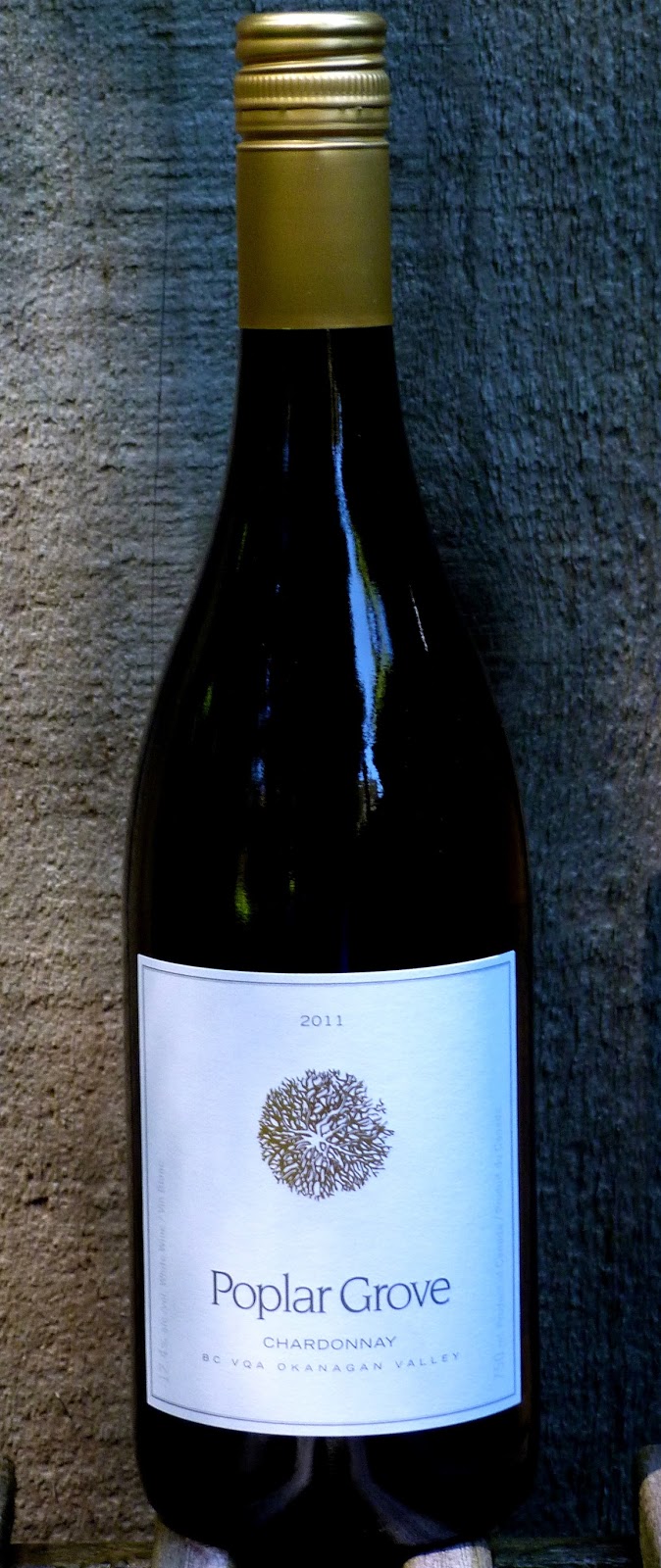
Poplar Grove Chardonnay 2011 ($22). This is a textbook Chardonnay with all the crisp and appealing fruit-forward flavours preferred by those with a bias against oak – but just enough barrel-fermented wine in the blend to add the complexity that this fine varietal deserves. The wine begins with aromas of tangerine, leading to honeyed and lightly buttery citrus flavours. The bright acidity creates a refreshing finish. 91.

Poplar Grove Pinot Gris 2012 ($20). This is a charmer, beginning with aromas of pink grapefruit. On the palate, there are flavours of pink grapefruit, lime and apple. The texture is juicy and the finish is crisp and refreshing. 91.

Poplar Grove Viognier 2011 ($25 for 430 cases). This wine begins with aromas of apricot, tangerine and wild flower honey. On the palate, there are generous layers of apricot and cantaloupe flavours. That ethereal spine of tannin that comes with the variety gives the wine a focussed discipline on the finish. 90.

Poplar Grove Blanc de Noirs 2012 ($24.90). Intense in flavour and vibrant in personality, this delicious rosé is made with Malbec and Syrah. It begins with aromas of raspberry, cherry and rhubarb and delivers flavours of cherry and rhubarb. The finish is balanced to dryness. 91.

Poplar Grove Merlot 2009 ($30). This is a wine that seduces the consumer with its sweet aroma and rich flavours. Indeed, the 15.4% alcohol brings to mind that classic Ogden Nash quip: “Candy is dandy but liquor is quicker.” However, the wine has so much substance that the alcohol does not stand out. The wine, which had 18 months in French oak and another 18 months in bottle before release, begins with aromas of cassis and vanilla. On the unctuous palate, there are flavours of plum, black cherry, chocolate. The finish is persistent, with a hint of spice. 92.

Poplar Grove CSM 2009 ($ for 650 cases). The name indicates the blend: Cabernet Sauvignon, Syrah and Merlot. This is another ripe wine (15% alcohol) that spent 18 months in French oak and another 18 months in bottle before release. The result is an elegant wine with a polished texture. It begins with aromas cassis, cherry and vanilla. On the palate, there are flavours of black currant and plum with dark chocolate and an earthy, gamy undertone. The Cabernet in the blend contributes to a firm spine, denoting this complex wine will age well a few more years. 91.


§

Monster Vineyards Riesling 2011 ($20). This wine has begun to develop some of the classic petrol notes along with its citrus aromas. There is a touch of grapefruit on the palate. The finish is dry, leaning toward austere. 87.

Monster Vineyards Rosé 2012 ($18). Refreshing and juicy, this is a good summer wine, with aromas and flavours of cherry and rhubarb. There is just enough residual sugar to make the aromas and flavours pop. 88.

Monster Vineyards Merlot 2011 ($20). This is a quaffable and simple Merlot with cherry and raspberry flavours and soft tannins. 86.


Monster Vineyards Cabs 2011 ($20). In contrast to the Merlot, this red overdelivers. It presents a fat gob of sweet fruit flavours to the palate – black cherry, black currant, vanilla, chocolate and coffee. This is generous and satisfying red for summer drinking. 89.

Thursday, August 1, 2013

Tasting Road 13’s portfolio


 Photo: Road 13 Vineyards and winery

Several years ago, Road 13 Vineyards announced that it would trim its wine portfolio, eliminating most varietals in favour of blends.

Happily for consumers and members of the winery’s wine club, that did not last. There are at least 24 wines in the current portfolio.

That is not to say that winemaker J-M Bouchard has created a total logistical nightmare for his employers, Pam and Mick Luckhurst. Five of the wines in that portfolio, all very good, comprise about half of the winery’s total production.

The most recent releases included 6,350 cases of Honest John’s Red, 3,592 cases of Honest John’s White and 1,762 cases of Honest John’s Rosé. These are affordably priced between $16 and $20 a bottle. The other big volume red, Seventy-Four K, is a 5,200-case brand selling for $25 while the big volume white, Stemwinder, is a 2,263 case brand at $17.

The rest of the portfolio comprises small lot varietals or blends that simply are too remarkable to be lost in big blends. During a recent winery visit, I was able to taste through most of them with J-M (right) and Pam at the bar of the winery’s elegant tasting lounge and restaurant. Those wines which are available only from the winery (and occasionally from select wine stores and restaurants), are marked with a *.  It is worth a trip to pick up a few.

Here are my notes.

* Peter’s Vineyard Riesling 2012 ($N.A.). Only 108 cases are available. It is a classic old vines Riesling, with aromas and tangy flavours of lime set against a mineral background. The concentrated fruit on the palate gives this a lingering and satisfying finish. 90-91.

* Mitchell’s Vineyard Gewürztraminer 2012 ($24 for 89 cases). If this were from Alsace, it could be called late harvest. With 15.1% alcohol, the wine is rich, even bold. There are aromas of spice and grapefruit, leading to flavours of citrus and ginger. The finish is dry. The vineyard is in Summerland and is farmed by Ron and Susan Mitchell. 90.

* Mitchell’s Vineyard Pinot Gris 2012 ($24 for 235 cases). The wine has aromas of honeysuckle and grapefruit, leading to a rich palate with flavours of pear and a lingering, dry finish. 90.

Stemwinder 2011 ($16.99 for 2,263 cases). This is a blend of 75% Chardonnay, 3% Chardonnay Musqué, 20% Viognier and 2% Roussanne.  There are abundant fruity aromas and flavours, including citrus, apples and stone fruit built around the focussed backbone of the Viognier. 90.

* Viognier 2012 ($24 for 100 cases). The trick with Viognier is to pick it in the exact window, seldom more than three days, when the exotic flavours pop in the grapes. Road 13 succeeded here. The result is a luscious wine with aromas of apricot and peach and with layers of flavour – apricot, honey, vanilla and spice. 91.

* Jackpot Viognier Roussanne Marsanne 2012 ($29.00 for 297 cases). Jackpot designates the top tier wines at Road 13. This wine is 47% Viognier, 38% Roussanne and 15% Marsanne. The previous vintage won a Lieutenant Governor’s Award. This wine is rich and powerful (15.2% alcohol), with aromas and flavours of apricots and tangerine. This is a ripe wine with notes of honey and vanilla on the long finish. 92.

* Jackpot Chenin Blanc 2012 ($24 for 145 six-packs). This wine is from vines that were planted in 1968, very likely the oldest Chenin Blanc in the Okanagan (and only 20 acres in total are grown in the entire valley). J-M fermented this wine in neutral oak barrels, using wild yeast and deliberately letting the ferment temperatures rise to give the wine a full texture. The aromas are very complex, with hints of quince and honey. On the palate, there are layers of apricot, fig, quince and honey. 91.  

* Jackpot Chardonnay 2011 ($40 for 416 six packs). This wine was fermented with natural yeast in French oak and had weekly lees stirring for nine months. After blending the wine spent another five months in neutral oak before bottling. All of that detailed attention produced a richly textured Chardonnay. There is plenty of oak but not so much as to overwhelm the flavours of tangerine, ripe peach, butter and honey. 91. 

* Castle Vineyard Pinot Noir 2011 ($45 for 125 cases). The winery pulled out al the stops, from low tonnage, a week of cold soak, fermentation with wild yeast and very gentle handling. This wine was never pumped and was neither fined nor filtered. The wine begins with a fine dark colour and with aromas of cherries and black olives. On the palate, there are flavours of black cherries and mocha chocolate. This is a wine with power that is still developing its silky texture. 91.

* Jackpot Pinot Noir 2011 ($40 for 125 cases). Dark in hue, this wine is developing the classic silky texture. There are aromas and flavours of cherry and raspberry. 91.

Seventy-Four K 2011 ($25 for 5,200 cases). This is 46% Merlot, 45% Syrah, with touches of Viognier, Cabernet Sauvignon, Cabernet Franc and Mourvedre. Dark ruby in colour, the wine begins with aromas of blackberry, mocha, vanilla and pepper. On the palate, there is black cherry, plum and prune. There is an earthy touch on the finish. 90.

* Syrah 2011 ($35 for 630 cases). This has six per cent Viognier which was added to the blend prior to bottling to lift the aromas and add weight and texture to the palate. The wine begins with aromas of spice and white pepper, along with vibrant red berries. There are flavours of blackberry and plum. This is a good cool-vintage Syrah with 13.6% alcohol and fairly bright acidity. 90.

* Syrah-Malbec 2011 ($32 for 550 cases). This is 66% Syrah, 34% Malbec … and the partnership is excellent. There is spice and pepper in the aroma with flavours of blueberry, black cherry and plum. This is a wine with impressive elegance. 92.    

* Road 9 Farm Syrah-Mourvedre 2011 ($35 for 290 cases). There is only nine per cent Mourvedre in this Rhone-style blend. The wine has a brooding personality, with early aromas and flavours of plum, fig, mulberry, coffee and leather. 91.

Jackpot Malbec 2011 (N.A.). This wine has not been released but when it is, I suspect it will be available only at the winery. The wine, which was aged in neutral oak, presents appealing fruit and berry flavours. 90.

Jackpot Petit Verdot 2011 (N.A.). This is a 2014 release, needing more time in bottle to let the tannins round out. Dark in colour, it has floral aromas, along with notes of graphite. There are flavours of black cherry and black currant. 91-93.

* The Fifth Element 2010 ($49 for 248 cases). This complex red is 48.7% Merlot, 8.1% Cabernet Sauvignon, 20.4% Syrah, 4% Petit Verdot, 17.1% Cabernet Sauvignon and 1.7% Malbec. I can’t even imagine how complicated it was the put the blend together! It begins with aromas of sage, black olives, blackberries and black currants, leading to flavours of cassis and prune. The fruit presents itself sweetly on the palate but the finish is dry and the texture is elegant. 91.