Writer and wine columnist John Schreiner is Canada's most prolific author of books on wine.
Monday, January 16, 2023
No question: Q&A is a superb wine
Photo: Winemaker Michal Mosny
Michal Mosny, the winemaker and co-proprietor of Winemaker’s CUT, recently said the 2020 Okanagan vintage produced the finest grapes he has worked with. “It truly stands out as the best vintage of my career.”
He made that comment when releasing an excellent array of single varietals under the Winemaker’s CUT premium Bohemian label.
A few weeks later, under the Q&A label, he released 670 cases of a red blend from 2020 that may well be the best red wine of his career.
Not directly related to Winemakers’ CUT, Q&A is a joint venture of wine personalities Jason Priestley and Terry David Mulligan with winemaker Michal Mosny. Currently, the wine is available at $50 a bottle through the Winemaker’s CUT website. The Q&A news release says the wine will be available at “selected premium stores” to be listed on the website.
Jason, a Hollywood actor and director from British Columbia, became part of the Okanagan wine industry in 2007 when he joined the ownership group of Black Hills Estate Winery. Ten years later, Andrew Peller Ltd. acquired Black Hills.
“After the sale, I continued to search for exceptional terroir capable of producing a peerless Bordeaux-style blend,” Jason says in a statement. “After looking everywhere, all roads lead to one answer and the answer is once again in the Okanagan.”
For his second entry into the Okanagan wine industry, Jason has teamed up with Terry David Mulligan, a veteran broadcaster and wine lover, the current host of Tasting Room Radio. Previously, he had been a co-host with Jason on Hollywood and Vines TV.
“The Okanagan has always been the answer,” Terry David says in a statement. “I can attest from the time I lived in the Okanagan.”
To make the wine, they enlisted Michal Mosny into the partnership. Born in Slovakia, he and his wife, Martina, came to Canada and settled in the Okanagan. He spent several years as the winemaker at Lunessence Winery & Vineyard in Summerland. He also started making wines under the Winemaker’s CUT label in 2015 and has since opened at District Wine Village.
“I heard about Canadian wine for the first time from Terry and Jason’s international television show, Hollywood and Vines TV,” Michal says in a statement. “They are the reason why I decided to move here with my wife in 2012 and make wines in the Okanagan valley.”
Along came the exceptional 2020 vintage, a perfect year in which to launch a premium wine. The fruit for this wine was sourced from two of the best vineyards near Oliver: Quails Wayside Vineyard and Chahal Vineyard. Presumably, the partners have been shrewd enough to negotiate a supply of grapes in succeeding vintages.
Here is a note on the wine.
Q&A 2020 ($50). The blend is 45% Cabernet Sauvignon, 38% Merlot, 13% Cabernet Franc and 4% Petit Verdot. The wine was aged 11 months in barrel, of which 14% was new French oak and 16% was new Slovakian oak. Of the remainder, 20% was second-fill French oak and the rest was neutral oak. The wine begins with aromas of dark cherry, plum, cloves and cedar. On the palate, there are flavours of cherry, black currant, blackberry, fig and dark chocolate. The texture is firm but softens when the wine has a chance to breath. This wine should be decanted for consumption now. An elegant wine, it has the bones to cellar for a decade or more. 94.
Thursday, January 12, 2023
Vanessa wines - from a vineyard carved from stone
Photo: Master Winemaker Howard Soon
The motto which Vanessa Vineyards displays on its wines is inspired by its Similkameen property: “Carved from stone, fuelled by sun, a vineyard like no other.”
The 75-acre vineyard, planted in 2006, was carved from a rugged sunbathed property on a west-facing bench near the south end of the Similkameen Valley. The property is so rugged that the planting crew kept breaking equipment when preparing the soil.
The vines, on the other hand, were able to put down roots in soil that almost resembled pure rocks. The fruit produces big, bold wines: the three reds reviewed here all have more than 15% alcohol.
“Vanessa grapes are the best grapes I’ve worked with,” says veteran winemaker Howard Soon, who helped develop the vineyard and has made wine from this fruit for more than a decade.
Suki Sekhon, Vanessa’s owner, initially sold the grapes primarily to Andrew Peller Ltd. for Howard Soon’s award-winning Sandhill Wines. The Sekhon family began producing vintages for Vanessa in 2012, with Howard as the winemaker. After he retired from Sandhill, he was named Vanessa’s master winemaker in 2017.
The winery describes him, aptly, as a living legend. He was named a member of the Order of Canada in 2019. In 2021, he received the Karl Kaiser Canadian Winemaker Award, a major Canadian wine industry recognition for his extensive contributions to the industry.
He has produced an astonishing list of award-winning wines at Vanessa, which reproduces the list on its website. As well, the website has a long list of wine stores which stock Vanessa’s vines.
“Since Howard joined our Vineyard, we have been able to produce some of the most profound reds with precise flavour profiles that reflect our unique vineyard,” the winery says.
On its website, the winery proclaims: “Our vision is simple. We want to become one of the premier red sites in Canada, producing the best red wines from the renowned Similkameen Valley.”
You must admire a winery that sets such a high bar for itself – and seems to be living up to it.
Here are notes on four current releases.
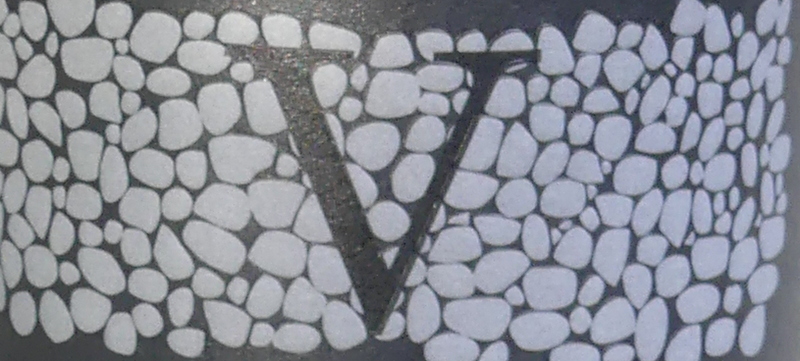
Vanessa V Series 2021 ($N/A for 325 cases). This wine is meant to be the first in a series of wine that are “something special.” It is a blend of 75% Sémillon and 25% Riesling. A delicious white wine, it begins with floral aromas mingled with apple and pear notes. Fresh and lively on the palate, it delivers flavours of peach and pear. 92.
Vanessa Meritage 2016 ($44.99 for 700 cases). The blend is 48% Cabernet Franc, 28% Merlot and 24% Cabernet Sauvignon. Each varietal was barrel-aged for eight months and then, after blending, was aged a further 12 months in American and French oak (40% new). It begins with aromas of dark fruits and cassis. Rich and intense, the wine delivers flavours of dark cherry, plum, fig and dark chocolate. 93.
Vanessa Right Bank 2017 ($44.99 for 715 cases). The blend is 65% Merlot, 18% Cabernet Sauvignon and 17% Cabernet Franc. Similar to the Meritage, the varietals were barrel-aged separately for eight months, blended and then aged a further 12 months in American and French oak. The wine is rich and bold, beginning with aromas of dark cherry and black currant mingled with vanilla and oak. On the palate, the wine delivers flavours of dark cherry and plum, with spice on the long finish. 93.
Vanessa Syrah 2017 ($N/A for 766 cases). There is 10% Viognier in this blend. The wine was aged 20 months in barrel (60% American oak, 40% French). The wine begins with aromas of dark fruit mingled with black pepper. On the palate, the dark fruit flavours mingle with hints of deli meats, black licorice and spice. 91.
Wednesday, January 4, 2023
B.C.'s 2022 vintage was big and may even surpass the quality of the storied 2020 vintage.
Photo: Hester Creek's Mark Hopley (courtesy Hester Creek Winery)
The 2020 vintage, in my judgment, produced the best red wines from the Okanagan that I have ever tasted.
Hester Creek wine maker Mark Hopley agrees with that – and then adds a surprising comment: The wines from the 2022 vintage are even better.
Other winemakers weighing in with similar comments include Andrew Windsor at Maverick Estate Winery. “The 2022 wines will be exceptional,” he wrote recently. “Merlot and Syrah had achieved a level of quality that I had not seen in BC previously and the Cabernets were not far behind.”
Chris Carson, the winemaker at Meyer Family Vineyards, says: “Backed by a moderate and a long autumn, 2022 will be a vintage to watch.”
Not only was 2022 a high-quality vintage; it was also a big vintage. After the small vintages of 2020 and 2021, most wineries reported production substantially higher than expected.
“It was a bigger harvest after two lighter ones,” Hester Creek’s Mark Hopley says. “Crop estimating is not an exact science. Walking through the vineyard, I thought we were heavy. But I did not realize it was going to be as much of a bumper crop as it was. I would say 20% to 25% higher than” the two previous years.
No one was predicting such a high-quality crop last spring, when the weather was both cool and wet. “We got a late start,” Mark says. “Going into summer, it was unusually cool. Everyone was saying we were two or three weeks behind. And summer was also a little cooler.”
“No matter what level of experience you have, or how much knowledge you may have, nothing could have prepared the BC winegrower for what we’ve gone through the past two years,” writes Maverick’s Andrew Windsor. “2021, now known as the year of the heat dome, where we smashed previous high record temperatures across the province in June, baked vineyards and inundated the province with oppressive heat and wildfire smoke. Global warming was hitting us between the eyes, and the BC wine industry seemed to be in the crosshairs.”
“2022 was the opposite,” he continues. “Winter was long, spring even longer. Cold and wet all the way into July. We didn’t even start summer until July. The vineyards by this point were weeks behind typical maturity levels and growers were very concerned that we may not achieve even a marginal level of ripeness this year.”
What saved the vintage was the finest weather in September and October in recent memory.
Ajay Chavan, the winemaker for Mayhem Wines, said: “This slow and steady growing season reminded me of being back home in New Zealand.” While the season started with a cool, wet spring, “the summer delivered our usual glorious Okanagan weather without the heat dome we had in the previous year,” he adds. “The latter half of the season presented great weather for slow and gradual flavour and phenolic development in the fruit, without sugar levels getting out of hand. It seemed like the Fall would never end, with above average temperatures right through October.”
The vines had caught up from a late spring and the grapes ripened to perfection. Most wineries did not finish the harvest until November but, for once, there was no hard October frost to shut down the vines (unlike 2020). In fact, the growing degree days in October – a measure warmth and sunlight – were close to a record for the month.
“The last week of October is always intense, and this year was extreme,” Andrew Windsor writes. “Due to the long late growing season, the Bordeaux varieties were all still hanging and snow was in the forecast. We picked as much and as quickly as possible and successfully filled every single tank in the winery. A full month later we pressed off the last batch.”
“This year, because we waited so long, the fruit really bagged up,” Mark Hopley says. “It was somewhat raisined. That will give somewhat higher alcohols but there will be a lot more structure, a lot more mouth weight, and a lot more colour, because there is a higher ratio of skin to liquid when you are fermenting on the skins.”
Regarding the 2020 vintage, Mary McDermott, the winemaker at Township 7 Vineyards & Winery, writes that the year “brought just about everything mother nature could throw at us, although on balance [it] turned out quite well.” A poor fruit set in the cool spring of 2020 led to yields that were down 20% to 30% from average.
The favourable weather after that cool spring, allowed the vines to catch up. Mary adds: “Overall, the grapes from this harvest were really nicely balanced, with good acidity and slightly lower sugar levels, making for wines with excellent balance, finesse and ageability. However, lower yields meant that there is not as much wine made as we would have hoped.”
My advice is cellar as many 2020 wines as you can; buy the 2021s for earlier drinking while you anticipate the great 2022s.
Here are notes on recent Hester Creek releases.
Hester Creek Select Vineyards Merlot 2021 ($18.99). The note on this wine says that the winery used a new French destemmer to destem the grapes. “This process is extremely gentle on the fruit, enabling the berries to remain whole, helping foster the natural fresh fruit aromas.” It shows in this wine, which was aged only eight months in oak. The body is concentrated and there are aromas and flavours of dark cherry, vanilla, sage and even a hint of licorice. 92.
Hester Creek Select Vineyards Cabernet Merlot 2021 ($18.99). This is 50% Cabernet Franc, 38% Merlot and 12% Cabernet Sauvignon. The wine was aged eight months in barrel (75% French, 25% American). The wine has aromas and bright flavours of blackberry and blueberry, with vanilla and sage on the finish. 91.
Hester Creek Character Red 2021 ($19.99). This is a blend of Merlot, Syrah, Petit Verdot and Malbec, aged eight months in oak (75% French, 25% American). The varietals were fermented separately and the wine was blended after fermentation. The wine is full in texture, with aromas of dark fruits, pepper and spice. The palate delivers flavours of cherry, blueberry, coffee and licorice. 92.
Hester Creek Old Vine Merlot 2020 ($27.99). The aromas of this dark wine telegraph depth and richness. It begins with aromas of dark cherry mingled with cassis, spice and hints of oak. Full on the palate, the wine delivers flavours that echo the aromas. The long, ripe tannins lead to a lingering finish. 93.
Hester Creek Old Vine Cabernet Franc 2020 ($27.99). This wine begins with aromas of blackberry, cherry and spice. On the palate, the fruit is bright with flavours of cherry, red currant, a hint of blueberry and spice. 93.
Friday, December 30, 2022
Frind's red wines show a tasty house style
Photo: Winery principal Markus Frind (courtesy of winery)
Frind Estate Winery’s five red wines from 2021 display an intriguing house style. The flavours are rich and bold while the tannins are long and ripe. These youthful wines are ready to drink now but have the structure to cellar for five or more years.
The winemaking technique may have slightly homogenized the varietal definition. In a blind tasting it might be hard to tell the difference between, say, the Merlot and the Cabernet Franc.
Purists might grumble but the wines are so delicious that the wines will be consumed anyway.
Lacking inside knowledge on how the house style has been achieved, I turned to the winery’s website. Frind prides itself at being one of the more technologically advanced wineries in the Okanagan, reflecting owner Markus Frind’s extensive technological background.
He has given his winemakers some of the most sophisticated tools for dealing with grapes. Here is a quote describing the winery’s automated fermentation tanks:
“Apart from being at the forefront of winemaking technology, these tanks are unique because they are custom designed for Frind Estate Winery and for the wines we are aiming to produce. At Frind we make many smaller select batches of wines, separating vineyards and varietals. This is our point of difference; at some larger, more commercial wineries, it is more economical to blend all their Merlot in one big tank and produce just one batch, whereas we are looking to pinpoint the nuances of flavour components provided by our different vineyards sites and varietals to make our very best wine. At Frind, we want to know which soils our Cabernet Sauvignon clones are thriving in or which Pinot Noir clone prefers a gentle breeze during summer. This is why we have invested heavily into small batch winemaking with the purpose of unravelling and discovering all the flavour profiles our grapes and vineyards are capable of.”
With the exception of Midnight, which was aged nine months in French and American oak, the reds were all aged 10 months in French and American oak barrels. The fruit is from Okanagan and Similkameen vineyards, except for Cabernet Franc, which was sourced just in the Okanagan.
Here are notes on the wines.
Frind Midnight 2021 ($27.99). The wine is made with estate-grown Maréchal Foch grapes – and because has such a strong personality, there is no confusing the varietal here. That personality, however, is nicely in check. This is a wine with aromas of dark cherry and spice and flavours of plum. 90.
Frind Premier Merlot 2021 ($34.99). This wine begins with aromas of dark cherries and plum. Rich in texture, the wine has abundant flavours of cherry, blackberry and chocolate. 92.
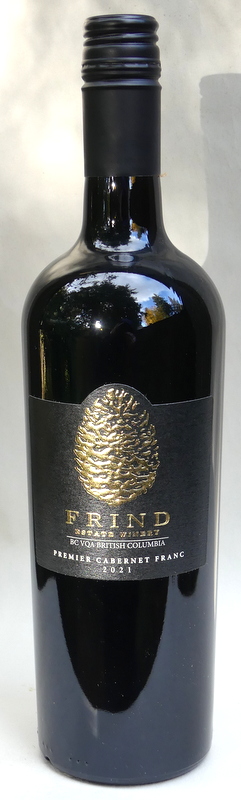
Frind Premier Cabernet Franc 2021 ($36.99). Here is another rich and deeply flavoured wine. It begins with aromas of spice, blackberry, dark cherry, all of which is echoed on the palate. Once again, the finish lingers. 92.
Frind Premier Cabernet Sauvignon 2021 ($39.99). This intense wine will benefit from being decanted. It begins with aromas of black currant and dark chocolate. These are echoed on the palate, along with a hint of black licorice on the persistent finish. 92.
Frind Premier Syrah 2021 ($43.99). Dark in colour, this wine begins with aromas of dark fruits mingled with black pepper. On the palate, there are layers and layers of flavour: dark cherry, blueberry, blackberry and plum with a hint of spice and pepper on the lingering finish. 92.
Friday, December 23, 2022
Blue Mountain's bubbles sparkle
Photo: Blue Mountain winemaker Matt Mavety
Recently, I discovered an article on the internet recounting the history of Champagne.
One fact was new to me: The Champagne region once was far better known for wool production. The wines were considered mediocre. The wool merchants gave away wines casually to their customers.
However, the quality of the wines was improved by the Benedictine monks. Eventually, the demand for Champagne outstripped the demand for wool. If there are any sheep in the vineyards today, they are there for weed control, not for their wool.
I may be stretching it a bit, but there is a parallel in the Okanagan’s dramatic expansion in sparkling wine production in recent years. Before wine was being produced here, the valley was better known for apples and other tree fruits. And before there were orchards, this was ranch country.
Today, there are no ranches and not many orchards in the Okanagan. This is some of the world’s best wine country.
For reasons of terroir as well as reputation, the Champagne region’s wine production is limited largely to sparkling wines. The Okanagan Valley’s unique terroir enables it to grow all the major varietals and wine styles of the world in a valley that is 110 miles long.
I had an essay on the history of Okanagan sparkling wine in my 1996 book, The British Columbia Wine Companion. Because it has been out of print for some time, here is an excerpt:
The first premium quality British Columbia sparkling wine made by the classical method was Sumac Ridge's Stellar's Jay Cuvée, of which the first vintage was 1987. Subsequently, Summerhill Estate Winery has entered the market with its Cipes Brut.
The current generation of sparkling wines in British Columbia emerged from trials conducted, starting in 1983, by Gary Strachan when he was at the Summerland Research Station. Soon after arriving there from Ontario in 1977, he noticed the wineries all complained that British Columbia grapes were excessively acidic. "Why don't we exploit that and make sparkling wines?" he asked himself. The finest sparkling wines are made from grapes that are slightly more acidic than grapes used in table wines. The acidity, which softens as the wines develop in the bottle, is essential if the wines are to retain their fresh, clean flavors through the prolonged production cycle and during further aging in the consumer's cellar. Ironically, the excessive acidity of grapes of which the wineries complained was caused chiefly by poor growing techniques (typically, over-cropping) which vineyardists since have learned to correct.
Sumac Ridge's Harry McWatters was the first producer to cooperate with Strachan's research project, which was funded by a grant from the National Research Council. To a degree, Strachan and McWatters were re-inventing the wheel. After all, Dom Perignon, who died in France in 1715, generally is credited with figuring out how to retain bubbles in wine. However, the French, understandably, have had a long tradition to keeping to themselves the technical nuances of making champagne. "There were lots of books about champagne but they didn't give you the technical background in how to make it," Strachan found. Winemaker Harold Bates, who had acquired sparkling wine experience with T.G. Bright & Co. in Niagara Falls, helped the inexperienced Strachan in the first year of the Summerland trials. In the second year, technical assistance was provided by Eric von Krosigk, a Vernon native who was just completing winemaking studies in Germany that included apprenticeship with a sparkling wine producer. (Subsequently, Bates joined Sumac Ridge and von Krosigk made several vintages of Cipes Brut.) After several trial lots of sparkling wine had been made, Sumac Ridge committed to commercial quantities of sparkling wine, with the first major release being made July 1991, on the winery's tenth anniversary. The flagship, blended from pinot blanc, pinot noir and chardonnay, is Stellar's Jay Cuvee, named for the raucous blue-feathered creature that is British Columbia's provincial bird.
Cipes Brut has a more complex history. In 1989 Summerhill's Stephen Cipes and Kenn Visser, who was then managing Inkameep Vineyards, invited Jack Davies, owner of California's prestigious Schramsberg Champagne Cellars, to consider investing in a sparkling wine facility in British Columbia. "Jack opened our eyes," Cipes said, recalling the enthusiasm that Davies and his winemaker displayed for the potential of the Okanagan. Strachan secured another research grant and a number of cuvees were produced from grapes grown primarily in the Summerhill vineyard. Davies decided not to get involved but Cipes proceeded on his own, enlisting von Krosigk as the winemaker. The Summerhill vineyard is extensively planted to riesling and this grape, widely used for sparkling wines in Germany, became the basis for Cipes Brut. Subsequently, von Krosigk and his successor at Summerhill, Alan Marks, also produced sparkling wines based on pinot noir, chardonnay and pinot meunier, the traditional varieties of Champagne. Okanagan Falls grapegrower Ian Mavety had participated in the Schramsberg trial. When Schramsberg withdrew in 1991, Mavety launched Blue Mountain winery, with half of its production committed to sparkling wine.
Blue Mountain Vineyard & Cellars, to use the winery’s full name, tapped the expertise of a French-trained consultant skilled in making sparkling wines. Today, the wines are made by Ian’s son, Matt, who has developed a very sure hand with the style. Blue Mountain consistently is arguably the best sparkling wine producer in the Okanagan. Its four current releases include three sophisticated wines that, in the tradition of Champagne, were aged on the lees as long as seven and a half years.
Here are notes on the wines.
Blue Mountain Gold Label Brut 2019 ($27.90). This is 65% Pinot Noir, 35% Chardonnay. The wine was on the lees two years. While there is a touch of brioche in the aroma and on the palate, the flavours are also fruity, with notes of lemon. The finish is crisp. 92.
Blue Mountain Brut Rosé 2018 R.D. ($40). This is 70% Pinot Noir, 30% Chardonnay. The wine was on the lees for 30 months. It presents festively in the glass, with a bronze pink hue and an active mousse. Raspberry mingles with brioche on the nose and palate of this delicious wine. 94.
Blue Mountain Blanc de Blancs 2013 R.D. ($50). This is 100% Chardonnay. The wine was on the lees for 7 ½ years, giving it a toasty note on the nose. It is surprisingly, and deliciously, fruity on the palate. With an active mousse, this is a very elegant wine. 94.
Blue Mountain Reserve Brut 2013 R.D. ($50). This is 55% Chardonnay, 45% Pinot Noir. The wine was also on the lees for 7 ½ years, acquiring notes of brioche on the nose and palate. This is a cerebral wine, with elusive fruit on the palate and with a crisp finish. 94.
Subscribe to:
Posts (Atom)