Writer and wine columnist John Schreiner is Canada's most prolific author of books on wine.
Monday, February 7, 2022
CheckMate delivers another 100-point Chardonnay
Photo: Winemaker Philip McGahan
Since CheckMate Artisanal Winery opened in 2015, it has carved out a reputation in particular for its Chardonnay wines.
The winery makes just Chardonnay and Merlot. The Merlot wines are also very fine but we have come to expect solid to great Merlots from the Okanagan. Even when the movie, Sideways, took a run at Merlot, the varietal did not lose significant grip with consumers.
Chardonnay, on the other hand, has had to recover from the deep unpopularity of the varieties in the 1990s. It had become fashionable to declare a preference for “anything but Chardonnay.”
It was a bit of a surprise when Anthony von Mandl decided to create a winery on the Golden Mile Bench with a speciality in super-premium Chardonnays. Those at CheckMate were released around $100 a bottle, give or take. A consumer at the winery once complained that he does not pay that much for a case of wine.
Plenty of other consumers have since stepped up to pay what CheckMate believes its wines are worth. Many of the 2018 Chardonnays are sold out, or close to it, which is why the winery is getting ready to release the 2019s. Whether it is the Chardonnay or the Merlot, the 2019s all need to spend more time in bottle.
Phil McGahan, the winemaker at CheckMate, has a fairly unique style with his wines. “We throw a fair bit of oak on these wines,” he says of the Chardonnays.
Yet these are never over-oaked Chardonnays. The fruit is always the star in these complex wines while the oak is very well integrated. These are also wines which, like good white Burgundies, can age well. Since this is a young winery, we don’t really know how long the Chardonnays will continue getting better in bottle. There is no doubt that the Merlots from CheckMate are age-worthy.
It is worth observing that I have scored the Little Pawn Chardonnay at 100 points for the last three or four vintages. That is extraordinary consistency from a vineyard and a winemaker.
Here are notes on the wines.
CheckMate 2019 Capture Chardonnay ($95 for 11 barrels). The fruit for this wine is from the Border Vista Vineyard which is right against the U.S. border at Osoyoos. Fermentation was entirely with wild yeast. The wine was aged 16 months in French oak (45% new). The wine begins with aromas of stone fruits, orchard blossoms and herbs. Lean on entry, the wine broadens out in the glass. It delivers flavours of Asian pear and green apple, with a salty minerality on the finish. 95.
CheckMate 2019 Queen Taken Chardonnay ($125 for 16 barrels). The fruit is from the Dekleva Vineyard on the Golden Mile Bench near the winery. The 45-year-old Chardonnay vines here now are called the Dekleva Clone. The vines have been supplemented with a 2015 planted of Clone 72, sometimes called the Old Wente Clone. The grapes were fermented with wild yeast and the wine was aged 16 months in French oak (49% new). The wine, which has a moderately fleshy texture, begins with aromas of apricots and spice. That carries through to the flavours. The finish is long, with a hint of wet stone. 95.
CheckMate 2019 Queen's Advantage Chardonnay ($95 for 14 barrels). The grapes are from old vines of indeterminate clones from the Combret Vineyard, also in the Golden Mile Bench. Wild yeasts handled 70% of the fermentation. The wine was aged 16 months in French oak (50% new). The wine begins with aromas of stone fruit, quince and ginger with is echoed on the palate. The finish is long and again shows the wet stone minerality of the vineyard. 96.
CheckMate 2019 Little Pawn Chardonnay ($110 for 15 barrels). This elegant and polished wine once again demonstrates the exceptional terroir of the Jagged Rock Vineyard on the Black Sage Bench. The wine, 88% fermented with wild yeast and aged 16 months in French oak (50% new), begins with appealing aromas of peach mingled with fennel and sage. On the palate, there are flavours of stone fruits, apples and vanilla. The savoury finish refuses to quit. 100.
CheckMate 2019 Knight's Challenge Chardonnay ($95 for 15 barrels). The grapes are from the Sunset Vineyard on the Black Sage Bench, which shares some of the qualities of Jagged Rock. The wine was fermented entirely with wild yeast and was aged in French oak (47% new) for 16 months. The wine is complex, with aromas of lychee and sagebrush. The wine delivers rich layers of fruit including ripe peach and lime with a long, honeyed finish. 99.
CheckMate 2019 Fool's Mate Chardonnay ($94 for 29 barrels and one concrete egg). This wine includes fruit from five different vineyards dominated by Jagged Rock (42%) and Sunset (34%). Wild yeasts handled 58% of the fermentation. The wine was aged 16 months, with 91% aged in French barriques (42% new) and 9% aged in concrete. The wine has aromas and flavours of Asian pear and nectarine with mineral notes mingling with fruit on the finish. 93.
CheckMate 2019 Attack Chardonnay ($115 for two foudres). A foudre is a large oval cask. The fruit for this wine is 67% from the Jagged Rock Vineyard and 33% from the Border Vista Vineyard. The wine was aged 16 months in oak foudres, one of which was new. The size of the casks means that this is the most fruit-forward of the Chardonnays. The wine begins with aromas of citrus leading to flavours of peach, pear and mandarin orange with notes of honey and spice on the finish. The texture of this wine shows a seamless polish. 97.
CheckMate 2019 End Game Merlot ($95 for 17 barrels). The fruit for this wine is from vineyards on the Osoyoos Lake Bench and Black Sage Bench. Fermentation was 100% wild with extended (about 50 days) of skin contact. The wine was aged 21 months in new French oak. The wine begins with aromas of cassis, black cherry and raspberry. On the palate, there are flavours of cherry, raspberry and chocolate. 98.
CheckMate 2019 Silent Bishop Merlot ($95 for 15 barrels). The fruit for this wine is from vineyards on the west side of the south Okanagan, primarily on the Golden Mile Bench. Fermentation was 100% wild, with extended skin contact. The wine was aged 21 months in new French oak. The wine is reminiscent of a fine Bordeaux red, with aromas and flavours of blueberry and dark cherry mingled with herbs, tobacco and mocha. 96.
CheckMate 2019 Opening Gambit Merlot ($95 for 15 barrels). The fruit for this wine is from the Osoyoos Lake Bench. The grapes were fermented entirely with wild yeast; there was extended skin contact and the wine was aged 21 months in new French oak. This full-bodied wine begins with intense aromas of cassis, black cherry and raspberry that reminded one taster of Black Forest cake. The flavours echoed the aromas, along with notes of chocolate. The finish lingers. 98.
CheckMate 2019 Black Rook Merlot ($95 for 12 barrels). The fruit for this wine is from the Black Sage Bench. The grapes were fermented with wild yeast, with extended skin contact. The wine was aged 21 months in new French oak. This is a Merlot that wants to be a Cabernet Franc: it begins with aromas of brambleberries and cigar box. Layers of flavour are presented on the palate: red cherry, blackberry, blueberry and licorice. 96.
Friday, January 28, 2022
Chaberton Estate Winery: largest and oldest in the Fraser Valley
Photo: Chaberton's Eugene Kwan
Opened in 1991, Domaine de Chaberton Estate Winery – as it was then called – was the first winery in the Fraser Valley.
What a path it has blazed! The last time I counted, I found that there now are 50 wineries between Delta and Chilliwack. That figure astonished me. It also surprises everyone to whom I mention it. While there is a tiny Fraser Valley Wineries Association, it has a negligible number of wineries. Most Fraser Valley wineries inexplicably prefer to go it alone.
Chaberton Estate Winery, as it is called now, is the largest and, with a restaurant (check the opening hours), is a destination for those who go wine touring in the valley.
The winery was founded by Claude and Inge Violet, who moved to the valley from France to plant a 40-acre vineyard in 1982. When they retired in 2005, they sold the winery to Vancouver lawyer Eugene Kwan and Hong Kong businessman Anthony Cheng. They remain the current owners.
Chaberton produces wines from its own vineyard, planted largely with white varietals. The winery also buys from an extensive network of growers in the Okanagan and Similkameen Valleys. One of the red blends even includes Chancellor and Baco Noir, two sturdy hybrids that are almost extinct in the Okanagan.
Most of the wines are produced in large enough volume that they can be found without going through the hoops of joining a wine club. Even better, these are generally inexpensive wines.
Here are notes on the wines.
Chaberton White 2020 ($13.10). There are an astonishing 10 varietals in this blend, led by Madeleine Angevine, Gewürztraminer, Chardonnay and Pinot Blanc. The successful result is a fruit bowl of aromas and flavours: nectarine, apple and quince. The wine has a crisp finish with a lingering note of spice. 90.
Chaberton Sauvignon Blanc 2020 ($17.25 for 524 cases). The varietal’s intense aromas and flavours of lime, pineapple and herbs are captured in this zesty and refreshing wine. 91.
Chaberton Valley Chardonnay 2018 ($12.95 for 1,111 cases). This unoaked wine has aromas and flavours of peach and apple. However, there is not much intensity or character. 86.
Chaberton Barrel-Aged Chardonnay 2018 ($21.50 for 569 cases). This wine spent four months in French and American oak. It has aromas and flavours of apples and stone fruits, with a mouth-filling texture. 90.
Chaberton Gewürztraminer 2019 ($17.25). This wine has intense aromas of ginger, grapefruit and mandarin orange, all of which is echoed on the palate. There is a touch of residual sweetness but the balance leads to a finish that is nearly dry. 90.
Chaberton Valley Pink 2020 ($17.25 for 832 cases). This is blend of 70% Zweigelt and 20% Gewürztraminer, filled out with Riesling and Gamay Noir. The wine begins with aromas of spice and cherry. On the palate, there are flavours of cherry, cranberry and raspberry. The finish is dry. 89.
Chaberton Valley Cab 2019 ($18.95 for 1,101 cases). This is a blend of 50% Cabernet Franc, 37% Merlot, 11% Petit Verdot, 4% Malbec and 1% Syrah. The wine was aged 12 in neutral French and American oak. It begins with aromas of cherry and blackberry. On the palate, there are flavours of cherry and plum. The Petit Verdot has added both a dark colour and a firm texture. Very good value. 90.
Chaberton Red 2019 ($13.10). It is a safe bet that there is not another wine in British Columbia like this one. The blend is 40% Merlot, 15% Chancellor, 14% Cabernet Franc, 9% Cabernet Sauvignon, 7% Baco Noir, 6% Pinotage, 5% Gamay Noir, 2% Syrah and 1% Zweigelt. It is an easy-drinking wine, with aromas and flavours of cherry, plum and mocha. 90.
Chaberton Gamay Noir 2020 ($19.95 for 750 cases). This estate-grown red light-bodied, with aromas and flavours of cherry and raspberry. 86.
Chaberton Merlot 2017 ($24.95 for 509 cases). Lengthy barrel aging has developed aromas of spice, dark cherry and cassis. On the palate, which is concentrated, there are flavours of dark fruit mingled with chocolate and oak. 90.
Chaberton Meritage 2017 ($25.95 for 519 cases). This wine is 37% Cabernet Sauvignon, 33% Cabernet Franc and 30% Merlot. Information on barrel aging is not available but from the age of the wine and its mellow richness that it probably has had two years in barrel. The wine begins with aromas of dark fruits mingled with toasted oak. On the palate, there are flavours of black currant, black cherry, fig, plum and spice. The finish is persistent. 92.
Chaberton Syrah 2017 ($28.95 for 500 cases). This big, bold red was aged 24 months in barrel; 48% of the barrels were new and 85% of all the barrels were French oak (with 15% American oak). The wine begins with aromas of dark fruits including plum and cherry. On the palate, which is dense and concentrated, the flavours of fig and plum finish with spice and vanilla. 91.
Monday, January 24, 2022
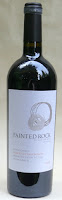
Painted Rock wines lead an export thrust
Photo: Painted Rock's John Skinner
For the past decade, John Skinner has worked hard, with success, at getting the wines of Painted Rock into the European market. He is represented by six agents in Europe and his wines are on the lists of Michelin-starred restaurants.
One of his ambitions is to raise the profile of Okanagan wines in general, so that Painted Rock and other B.C. wines would have a category of their own on wine lists rather than being lumped into the “other” category.
“Exporting for me is more about building a generational brand that it is about selling wine,” John says. “I can sell all my wine to my wine club. But I want to be a winery from a wine region that is internationally recognized.”
John realized early that he was unlikely to win that battle on his own. So he invited other premium Okanagan wineries to join him in the Okanagan Wine Initiative. A group of wineries is likely to have more success at getting enough wines into the market to earn their own category.
The market in which the Okanagan has made significant gains in recent years is Britain. Canada House in London sponsors an annual Canadian wine fair aimed at the trade and at wine enthusiasts.
London is a hotbed of wine influencers. Each year, Painted Rock and the other wineries in the Wine Initiative have invited some of these, including Jancis Robinson MW, to a tasting and dinner. Robinson had had a somewhat frosty relationship with British Columbia wines. However, the repeated opportunities to taste those wines showed to her, and her colleagues, how quickly the wines have been improving.
At one of the dinners, she told John that he had “worn her down.” She wrote a complimentary, and influential article, on Okanagan wines in The Financial Times.
It is recognition of how far Canadian wines have come since the 1970s when there was an ill-fated attempt to export Baby Duck, then Canada’s best-selling wine, to Britain. The wines now being sent to London are a far cry from Baby Duck.
Here are notes on current Painted Rock wines.
Painted Rock Chardonnay 2020 ($42.99 for 320 cases). The craftsmanship that went into this wine is remarkable. The winery did four micro-harvests over two weeks to achieve a palette of flavours. Some 82% of the blend was aged in French oak (73% new, 27% used) for six months. The rest of the blend was aged in stainless steel; and just 27% of this was allowed to go through malolactic fermentation. The wine begins with appealing aromas of peach, nectarine and apple with a subtle hint of oak. In the flavour, the oak is even more subtle and integrated. The fruit is quite expressive: apple, stone fruits. There is a touch of butter. And the finish is long. 92.
Painted Rock Cabernet Franc 2019 ($54.99). This wine was aged 18 months in French oak (40% new). The wine delivers layer upon layer of fruit, with aromas of cherries, plums and spice. The rich palate has flavours of plum, blackberry, dark cherry and cedar. 93.
Painted Rock Cabernet Sauvignon 2019 ($54.99 for 245 cases). This wine was aged in French oak (30% new) for 18 months.The wine begins with aromas of black currants, dark cherry and blueberry which are echoed on the palate along with touches of spice. Long, ripe tannins give elegance to the texture. If you must drink this wine now, decant it and let it breathe for a few hours. 93.
Painted Rock Merlot 2019 ($49.99). This rich and concentrated wine was aged 18 months in French oak (30% new). Aromas of plum, dark cherry and spice bound from the glass. On the palate, there are flavours of dark red fruits mingled with spice. The finish lingers. 93.
Painted Rock Malbec 2019 ($59.99 for 145 cases). This wine was aged for 18 months in French oak (30% new). The wine begins with aromas that are both floral and bold, suggesting blueberries, plums and cherries. The concentrated palate delivers flavours of plums and black currants, with a note of pepper on the finish. 92.
Painted Rock Syrah 2019 ($49.99). This wine was aged 18 months in oak. Thirty per cent of the barrels were new (80% were French oak, 20% were American oak). The remaining 70% barrels were used French oak. The wine begins with aromas of plum and chocolate accented with pepper. That leads to a full-bodied wine with earthy flavours of dark fruits. 92.
Painted Rock Syrah Cabernet Sauvignon 2019 ($49.99 for 220 cases). This is a blend of 79% Syrah, 21% Cabernet Sauvignon. The varietals were fermented separately, aged in French oak (30% new) and blended just before bottling. This is an appealing wine with aromas of dark cherry and cassis accented with pepper. The flavours echo the aroma, with spice and chocolate on the finish. 93.
Painted Rock Red Icon 2019 ($79.99). The blend for Painted Rock’s flagship is 42% Merlot, 19% Cabernet Franc, 15% Petit Verdot, 14% Malbec and 10% Cabernet Sauvignon. The batches were aged in French oak (30% new) for 18 months, with blending prior to bottling. The wine begins with bold aromas of dark cherry, cassis and chocolate. On the palate, there are flavours of dark cherry, blackberry, blueberry and spice. The tannins are long and elegant. Bright acidity gives the wine a refreshing fruit on the finish. 94.
Monday, January 17, 2022
TIME releases family of sparkling wines
Photo: The effervescent Harry McWatters
Two years before his death in 2019, Harry McWatters was involved in making the cuvée for the sparkling wine that would celebrate his 50 vintages in the business.
That wine, McWatters Collection Brut 2017, has just been released TIME Winery in Penticton, along with four other sparkling wines. It is a great tribute to Harry.
In 1989, when he was then president of Sumac Ridge Estate Winery, that winery created Steller’s Jay Brut, the Okanagan’s first sparking wine made in the traditional Champagne method. That is the technique where the bubbles are created when the wine does a second fermentation in bottle. Champagnes all get their fine bubbles and complex flavours in the bottle.
For some years, award-winning Steller’s Jay Brut was one of a very few sparkling wines in the Okanagan, and one of the best. Sumac Ridge, which Harry sold in 2000, still makes the wine and it is still good.
Harry loved sparkling wine. It was, he said, the wine he drank while he was deciding what wine to drink with dinner.
He also delighted in “sabering” bottles of sparkling wine. This involves breaking off the neck of the bottle with a sharp tap from a saber or a big knife. The result is a bang and a spectacular foaming of wine. I saw Harry do it dozens of times but I never mastered the trick.
Harry, whose enthusiasm for the British Columbia wine industry was boundless, launched TIME in 2015 on Black Sage Road and moved it a few years later to downtown Penticton. Nine months after his death, the project’s debts triggered the sale of the winery to new owners. They recapitalized the business while maintaining the continuity by installing Harry’s daughter, Christa-Lee, as president. They have also begun to rebrand the wines, with Chronos gradually succeeding TIME on the labels. Evolve, the budget label, has been retained.
Here are notes on the wines.
Evolve Cellars Effervescence NV ($22.99 for 1,000 cases). This is a blend of 70% Chardonnay, 30% Pinot Blanc (fermented separately). This wine has active bubbles that lift the fruity aromas and flavours (citrus and peach). 89.
Evolve Cellars Pink Effervescence NV ($22.99 for 800 cases). This is a blend of 70% Chardonnay, 28% Pinot Blanc and 2% Syrah for colour). There is a touch of strawberry in this pink, easy-drinking fruity wine. 88.
Chronos Brut NV ($34.99 for 465 cases). This is 80% Chardonnay and 20% Pinot Noir. The varietals were fermented separately and, after blending, finished fermenting in the cuvée close method. The wine has active bubbles, aromas of citrus and bread and flavours of green apple and citrus. There is bracing acidity on the finish. 90.
Time Winery Brut 2018 ($34.99). This is 55% Pinot Noir, 45% Chardonnay. The base wines were fermented in neutral French oak barrels, stainless steel barrels, and stainless steel tanks. The fine bubbles give the wine a creamy texture. There are notes of brioche and lees on both the nose and palate. The finish is crisp and dry. 90.
McWatters Collection Brut 2017 ($64.99 for 480 cases). This is 65% Chardonnay, 25% Pinot Noir and 10% Pinot Blanc. The wine was made in the traditional method and was on the lees in bottle 42 months before being disgorged. The time in bottle has left this wine with a delightful note of brioche in the aroma and on the palate. The texture is creamy; the bubbles are fine; and there are flavours of citrus and apple. 93.
Subscribe to:
Posts (Atom)