Wednesday, July 31, 2019

Vanessa Vineyard's award-winning releases


Photo: Vanessa Vineyard winemaker Howard Soon

At the All Canadian Wine Championships in June, the 2015 Syrah from Vanessa Vineyards won a gold medal.

At lunch a few hours after it was judged, it was the talk among some of the judges. The bottle that had been judged available to taste at lunch. One judge from Quebec rushed to his telephone to order a case of the wine.

I was among the judges but not on the panel that tasted the Vanessa Syrah. I got to taste the wine on my own later, at home.

It is not unusual for the Vanessa wines to create a buzz whenever they are tasted. The wines are from an exceptional vineyard in the Similkameen Valley. They were made formerly by Karen Gillis, the winemaker at Red Rooster Winery.

The winemaker of record now is Howard Soon, who joined Vanessa shortly after retiring from Sandhill Wines in 2017. There, he had already been making some wines from Sandhill from Vanessa grapes.

While the vineyard is Vanessa’s best asset, it also has a treasure in Howard. He is a veteran Okanagan winemaker and his towering status was recognized recently when he was named to the Order of Canada.

The current released include two wines two wines made on Howard’s watch and two made by Karen. It is worth noting that they have long been winemaking colleagues because Andrew Peller Ltd. owns both Sandhill and Red Rooster.

Here are notes on the wines.


Vanessa Vineyard Viognier 2018 ($24.99 for 325 cases). The wine begins with aromas mingling floral notes with apricot. On the palate, the flavours are intense – apricot, nectarine, ripe apple supported by a spine of minerality. The finish is dry and the fruit flavours are persistent. 93.

Vanessa Vineyard Rosé 2018 ($24.99 for 195 cases). This is fashionable pale (Howard thought the previous vintage too dark). It is 67% Syrah and 33% Merlot. The grapes were picked early precisely to yield a crisp wine light in colour. It has aromas of raspberry leading to flavours of raspberry and strawberry. It has a dry finish. 90.

Vanessa Vineyard Cabernet Franc 2016 ($49.99 for 170 cases). This is a bold red (15.5% alcohol) that was aged 20 months in French and American oak barrels. It begins with intense aromas of raspberry and blackberry leading to intense flavours of plum and fig with notes of chocolate. The alcohol gives the wine a swaggering warmth appealing to lovers of big reds. 92.

Vanessa Vineyard Syrah 2015 ($34.99 for 445 cases). This is a textbook Syrah beginning with aromas of plum, black cherry and deli meats. On the palate, there are bold flavours of plum, fig and black pepper mingled with vanilla, dark chocolate and leather. 93.


Monday, July 29, 2019

Hester Creek repeats a clever blend


The winemakers at Hester Creek Estate Winery created a Pinot Gris/Viognier blend for the first time in 2017, and have now repeated the blend in 2018.

The substantial volume, 2,700 cases, indicates that this unusual blend has been successful. In 2017, the production was 1,100 cases. The wine is distributed only through the VQA shops at Save-On-Foods.

The specification sheet does not indicate the percentages of either variety in the blend. Presumably, Pinot Gris dominates and defines the appealing freshness of the wine.

In the winery, the Pinot Gris was fermented at cool temperatures for 16 days in stainless steel. The Viognier was cool-fermented for 17 days in stainless steel. The wines were blended after fermentation and bottled in January, 2019, about three months after harvest. All of these techniques added to the refreshing character of the wine.

I cannot recall any other producer blending these two varieties, if only for economic reasons. Viognier on its own can readily be sold for as much as $10 a bottle more than Pinot Gris. Hester Creek may be leaving a bit of money on the table. Note that the Viognier released on its own sells for $3 a bottle more than the blend.

Consumers should be aware that this tasty Hester Creek blend represents tremendous value.

Here are notes on the wine and on three other recent Hester Creek releases.

Hester Creek Pinot Blanc 2018 ($15.99 for 3,400 cases). Hester Creek has one of the oldest (50 years plus) and best Pinot Blanc blocks in the Okanagan. This wine begins with aromas of apples and peaches. It is fresh and crisp on the palate, with flavours of apples and nectarines. There is a spine of minerality. 91.

Hester Creek Pinot Gris Viognier 2018 ($16.99 for 2,700 cases; Save-On-Foods only). This wine begins with aromas of citrus, pear and lime. On the palate, there are flavours of citrus, pears, apples and apricots. There is a hint of residual sugar very nicely balanced with bright acidity. 92.

Hester Creek Terra Unica Viognier 2018 ($19.99 for 144 cases wine club only). This exceptional Viognier begins with floral aromas that jump from the glass. On the palate, the honeyed texture delivers of peach and apricot with a twist of lime. The bright acidity keeps the wine bright and refreshing. 94.

Hester Creek Terra Unica Cabernet Sauvignon 2017 ($28.99 for 250 cases; wine club only). This wine was aged 12 months in French (75%) and American oak barrels. It begins with aromas of black cherries, black currants, spice and cigar box. On the generous palate, there are flavours of black currant and black cherry mingled with vanilla. The luscious texture gives the wine a rich impact on the palate. 92.


Wednesday, July 24, 2019

Clos do Soleil to champion Malbec


Photo: Clos du Soleil winemaker Michael Clark


Malbec World Day is on April 17 each year. For whatever reason, Clos du Soleil winemaker Michael Clark delayed a month before commenting on his winery’s Malbec program this year.

Clos du Soleil is one of the most accomplished wineries in the Similkameen Valley. Since opening in 2008, it has made its reputation primarily with Bordeaux blends, both red and white. It is exciting to learn the winery now will make a big bet on Malbec.

This is what Michael wrote:

It’s safe to say that Clos du Soleil is having a Malbec moment…
1. Malbec grapes make up the largest block of our newly acquired vineyard – La Côte.
2. Malbec plays a role in our Bordeaux blends.
3. The current 2018 vintage of Clos du Soleil Rosé is made using 100% Malbec grapes. And, biggest news of all…
4. We have a very special, small-lot, wine club members only, Malbec-dominant blend coming – to be released this Fall! Clos du Soleil Winemaker’s Series 2017 Expression is a red blend made up of 63% Malbec, with the balance being Cabernet Sauvignon and Cabernet Franc.
What’s the big deal with Malbec, and why does this once-considered-lowly grape get wine-lovers so excited? Here are a few facts which may help answer this, but the main reason is that, as with any wine, in the right hands it produces truly delicious wines.
  • Say ‘Malbec’ and most people think of Argentina, but this grape variety’s origins actually lie in southwest France, where it is also known as Côt.

  • An inky black grape, it is one of the varieties allowed in a Bordeaux red blend.
  • Malbec wines are ridiculously good-looking, and quite distinctive, thanks to an almost opaque deep purple-red hue, and sometimes featuring a magenta rim.

  • Malbec wines are delicious, displaying floral aromatic notes as well as aromas and flavours of black pepper, dense, plump dark fruits and berries, as well as notes of chocolate.

  • Malbec is a wine which is bold and rich, velvety and luxuriously juicy, yet balanced with acidity and softer tannins.
Mouth watering yet? Keen to have your own Malbec moment – and drink it? Join our wine club to ensure you get a taste of the Clos du Soleil version come Fall.

Meanwhile, here are recent Clos du Soleil releases.

Clos du Soleil Winemaker’s Series Pinot Gris 2018 Whispered Secret Vineyard 2018 ($19.04 for 401 cases). The wine was fermented slowly in stainless steel and French puncheons and aged on the lees for four months. It delivers aromas and flavours of pear and nectarine, with citrus on the crisp finish. 90.

Clos du Soleil Winemaker’s Series Pinot Blanc 2018 Middle Bench Vineyard ($19.91 for 391 cases). This is a textbook Pinot Blanc. The wine was fermented in stainless steel. It is crisp and fresh, delivering aromas and flavours of apple, melon and citrus with a spine of minerality. 91.

Clos du Soleil Fumé Blanc 2018 ($18.17 for 834 cases). This is 76% Sauvignon Blanc and 24% Sémillon. The varieties were vinified separately in a combination of French oak puncheons and stainless steel. The wine begins with herbal aromas mingled with grapefruit. On the palate, there are flavours of lime and grapefruit. The wine is crisply dry with a zesty finish. 91.

Clos du Soleil  Célestiale 2015 ($23.39 for 50 barrels). This wine is a blend of 54% Cabernet Sauvignon, 32% Merlot and 7% each of Cabernet Franc and Malbec. This wine is well-made little brother to the winery’s flagship wine, called Signature. The wine begins with aromas of black currant, cherry and plum. Those are echoed on the palate, along with notes of blueberry and raspberry. The 15 months aging in French oak barrels result in a hint of cedar on the finish. 91.


Sunday, July 21, 2019

Township 7 welcomes Naramata sub-GI


Photo: Naramata Bench vineyards


In May, when the Naramata Bench sub-appellation was approved by the BC government, Township 7 Vineyards posted an ecstatic comment on its web site.

It is, of course, too soon for this summer’s releases from Township 7 to bear the Naramata Bench designation. But since the winery is committed to releasing single vineyard wines where appropriate, look for that on next summer’s wines.

It is also mildly ironic that Township 7’s premium Blue Terrace Vineyard – which Township 7 bought last year – is located just northeast of Oliver in a region that does not have a sub-appellation. However, the winery achieves the objective of releasing wines with a sense of place by designating  vineyards on the labels.

Giving consumers wines with a sense of place is one of the reasons for sub-appellations.

Here is what Township 7 said this spring:

We are thrilled for the new Sub-Geographical designation for the Naramata Bench announced this week by the BC Ministry of Agriculture.
What does this mean? The Sub-GI designation represents increasing alignment of the BC wine industry with world wine standards, and creates a clear sense-of-place for the consumer. This is similar for example to the Sub-AVA designations in Napa Valley, which has 16 (i.e. Los Carneros, Rutherford, Stags Leap District, etc...). The Naramata Bench is the third region in BC to receive Sub-GI designation, following Golden Mile Bench, in 2015, Okanagan Falls last year, and joining Skaha Bluffs today.
To use the Sub-GI on the label, each wine must be submitted to a VQA taste panel along with a declaration of origin of the fruit and lab analysis, and may be subject to an audit by the BCWA at any time. Wines that achieve VQA status and are made from 100% Naramata-grown grapes now may proudly display the phrase: “BC VQA - Okanagan Valley - Naramata Bench”.
Aptly described by the New York Times as “a gloriously scenic highland that is crowded with smaller wineries,” the Naramata Bench is located just north of Penticton. Our property is situated at the start of the Bench, above sweeping sand cliffs that rise from the eastern side of Okanagan Lake, with vineyards that gently slope up to the mountains behind. Our region boasts ideal conditions for grape ripening, the sloping vineyards are located in close proximity to the lake and have excellent exposure to the afternoon sun, with long warm sunny days in summer and a moderating “lake effect” in winter, which results in a nice long growing season. The rolling hills, unique soil types and microclimates enable numerous different varietals to really thrive here.
With its moderate temperatures, abundant sunshine and cooling breezes, the Naramata Bench is ideal for growing premium vinifera grapes. We have proudly been growing grapes on our seven acre Naramata Bench estate since 2004 of Gewürztraminer and Pinot Gris, along with small plantings of Chardonnay, Merlot, Malbec, and Petit Verdot. The terroir is ideal for imparting complex fruit and floral characteristics along with a unique spiciness and well-balanced acidity to our wines. This contributes to that special “sense of place” to our wines, and truly reflects Naramata Bench qualities in a bottle.
Here are notes of Township 7’s four recent releases.


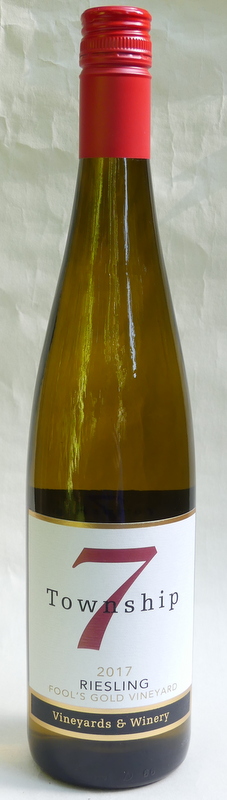
Township 7 Riesling 2017 Fool’s Gold Vineyard ($24.97 for 498 cases). The wine begins with classic aromas of petrol and citrus. The underlying minerality gives the wine a rich mouthfeel, with flavours of lime and lemon zest mingled with petrol. The finish is dry. This wine is showing well now but has more to give with another year or two in the bottle. 91.

Township 7 Reserve Sauvignon Blanc Blue Terrace Vineyard 2018 ($26.97 doe 324 cases). The wine begins with spectacular aromas - herbal notes mixed with lime. That leads to savoury flavours of lime and green melon mingled with spicy oak. This barrel-fermented wine was aged seven months in French oak (85%) and stainless steel. This stylish wine has a lingering zesty finish. 92.

Township 7 Rosé 2018 ($21.97 for 598 cases). This wine is 55% Merlot, 30% Cabernet Sauvignon, 10% Malbec and 5% Petit Verdot. The Merlot, Malbec and Petit Verdot were picked together, sent directly to press and then co-fermented. The wine has the classic pale hue of a Provence rosé. It begins with aromas of strawberry and cherry. Those fruits are echoed on the palate. The wine is dry with the structure reflecting the Cabernet Sauvignon backbone. 90.

Township 7 Reserve 7 2016 ($35.97 for 658 cases). This is the winery’s flagship Bordeaux blend, made with 56% Merlot, 29% Cabernet Franc, 14% Cabernet Sauvignon and one percent combined of Malbec and Petit Verdot.  The wine had been aged 24 months in French and American oak barrels. The wine begins with aromas of plum, black cherry and vanilla. On the palate, there are flavours of black currant mingled with vanilla, cocoa and cigar box. The tannins are firm but polished. This wine has great potential to cellar. 93.


Thursday, July 18, 2019

Two rosés for summer


The demand for rosé has become so vigorous that some producers just send single bottles of rosé for review.

Readers of this blog will know I almost never review a single bottle. My blog has never been set up that way. Nor does a single bottle tell you much about any producer.

But let’s make an exception, given that rosé has become everyone’s summer favourite.

There is also a bit of bad news. The Painted Rock rosé sold out so quickly you might be able to find it only at a restaurant.

Gray Monk’s rosé, a blend of Gamay and Rotberger, seems to be made in a much larger volume, extrapolating from the sec sheet on the winery’s web site. That spec sheet is still for the 2016 wine.

That is a little surprising. Andrew Peller Ltd. has owned Gray Monk for at least a couple of years. Surely, if Peller has the resources to have bottles of rosé shipped to wine writers, they must also have the resources to keep the web site up to date.

It would appear that Peller is discontinuing the single variety Rotberger rosé. The varietal was much loved by the Heiss family, Gray Monk’s founders, who in the 1970s planted the one and only Rotberger block in the Okanagan. Peller has figured out that it is easier to sell a pink wine called rosé than one called Rotberger.

Here are notes on the wines.

Gray Monk Rosé 2018 ($16.49). Fashionably pale, the wine has aromas and flavours of watermelon, pink grapefruit and strawberries. On the palate, the wine is juicy and refreshing. 90.

Painted Rock Rosé 2018 ($24.99). The wine displays a lovely rose petal hue in the glass. Aromas of strawberry and rhubarb are echoed in the intense flavours. The finish is dry and lingering. 92.

Sunday, July 14, 2019

Upper Bench Altitude and other big reds


Photo: Gavin and Shana Miller

The current releases from Upper Bench Estate Winery include a new red blend called Altitude.

Perhaps that is an allusion to the elevation of Upper Bench’s estate vineyard at the eastern edge of Penticton.  Or perhaps a hint of where winemaker Gavin Miller believes the wine fits in his portfolio.

If that is his meaning, the wine does not disappoint. Gavin has established a house style with his reds: the wines are generous and full-bodied, usually the result of limited the crop load to achieve intense flavours. He also gives the wines adequate barrel-aging to polish the tannins and the texture.

Small yields and expensive barrels force Upper Bench to price many of its wines aggressively to get a return on the investment. However, the value is there. The wines will not let you down if you open them for a special occasion.  These are not wines for Tuesday night.

I have dipped into the Upper Bench web site for a bit of background on the winery and its proprietors:

Gavin Miller came to Canada in 1997 and was inspired by the burgeoning wine industry in the Okanagan. He then embarked on a 12-year career journey starting in vineyards, then into the cellar, working for most of the established wineries in and around Penticton and the Naramata Bench, notably making award-winning wines for the likes of Poplar Grove (2004-2008) and Painted Rock (2007-2010).

Shana Miller (The Big Cheese) began her love affair with cheese in 2002, when she was taught the art of cheesemaking by the original cheesemaker at Poplar Grove, Sandra Chalmers. For the next three years, as the head cheesemaker until 2006, Shana truly developed her passion for the pure, timeless art of cheesemaking.

Gavin and Shana had long dreamed of combining their passions and in early 2011 that dream became a reality when they found the perfect property and partners, the Nystroms. The couple’s relationship with Wayne and Margareta Nystrom dates back to 2005. Having lived next door to Poplar Grove Winery, the Nystroms quickly fell in love with Gavin’s first class wines and Shana’s gorgeous cheeses.

The Nystroms always had a deep admiration of the passion the Millers displayed in what they made, so, when Gavin ran into Wayne at the local Safeway and pitched his idea, it was a fairly easy decision for the Nystroms to make. Wayne and Margareta have a blended family with nine children, one of them, Tessa Sjöblom, initially started by helping with some of the design concepts before the company had been aptly christened Upper Bench. With her degree in Bachelors of Business Administration (BBA), Tessa quickly fell into a marketing, advertising and communications role.

Here are notes on the current releases.

Upper Bench Riesling 2018 ($23.10 for 575 cases). The wine begins with aromas of lime and gooseberry. It delivers zesty flavours of lemon and lime with a spine of minerality. The finish is crisp and dry. 90.

Upper Bench Pinot Blanc 2018 ($20.80 for 525 cases). There is four per cent Muscat blended into this wine. The wine begins with aromas of apple and a hint of spice. On the palate, the wine delivers flavours of apple, citrus and melon. The spine of minerals supports a crisp, dry finish. 90.

Upper Bench Yard Wine 2016 ($34.60 for 334 cases). This is 60% Merlot, 28% Cabernet Franc and 12% Cabernet Sauvignon, aged 18 months in French oak (30% new). The wine begins with aromas of cherry mingled with cigar box and vanilla. It delivers flavours of black currant, cedar and chocolate. The firm tannins suggest the bottle should be cellared a few more years. 91.

The winery explains the name thus: “This is a great wine with a great story. Yard Wine is a tribute to a wine that Gavin lovingly made for years, from the tiny vineyard at their old home in Naramata. It is a blend of Merlot and Cabernet Franc, picked on October 31st and November 4th and co-fermented, exactly the same way he always made it.” He slipped some Cabernet Sauvignon into this vintage which like accounts for the firm tannins.

Upper Bench Merlot 2015 ($32.30 for 584 cases). The wine was aged 18 months in French oak (30% new). The begins with aromas of cherry and plum mingled with vanilla. The palate is generous, with flavours of plum, cherry, cassis with a hint of raspberry and cedar on the finish. 91.

Upper Bench Estate Merlot 2015 ($41.50 for 136 cases). This wine, which has five percent Cabernet Sauvignon in the blend, was aged 21 months in French oak (33% new). The wine begins with rich aromas of dark fruits (cherry, plum) mingled with cinnamon and cassis. The palate fulfils the promise of the nose: it is a full-bodied with ripe tannins and flavours of plum, fig and chocolate. The finish is persistent. 93.

Upper Bench Estate Cabernet Sauvignon 2015 ($46.10 for 162 cases). This wine, which has 5% Merlot in the blend, was aged 21 months in French oak (30% new). The wine begins with aromas of black currants and blueberries mingled with dark chocolate and vanilla. On the palate, there are flavours of dark cherry, cassis, blueberry jam, plum and chocolate. Polished tannins give this wine a svelte, elegant texture and a long finish with a lingering note of spice.  94.

Upper Bench Altitude 2015 ($46.10 for 208 cases). This wine is 75% Merlot and 25% Cabernet Sauvignon. It was aged 20 months in French oak (30% new). It begins with aromas of plum and black cherry mingled with vanilla. On the rich palate, the wine delivers flavours of cassis, plum, fig and chocolate. The long, ripe tannins give this wine an almost juicy texture. There are savoury notes on the finish. A sophisticated blend. 93.


Tuesday, July 9, 2019

Arterra Wines buys Culmina from the Triggs family


Photo: Elaine and Donald Triggs

In the words of that great people’s philosopher, Yogi Berra, it is Déjà Vu all over again for Donald and Elaine Triggs.

Culmina Family Estate Winery, founded in 2007 by the Triggs Family, has been acquired by Arterra Wines Canada, the successor to Vincor International – which Donald established in the early 1990s.

Vincor had become the 14th largest wine company in the world by 2006 when it was taken over by Constellation Brands, then the world’s largest wine company. In 2016, Constellation spun off its Canadian wineries and related businesses to the Ontario Teachers Pension Fund. The Canadian assets were renamed Arterra Canada Wines.

This is Arterra’s second acquisition of an Okanagan winery. It bought Laughing Stock Vineyards in 2017.  Arterra’s Okanagan portfolio also includes Jackson Triggs Vintners, Inniskillin Okanagan, Sumac Ridge Estate Winery, Black Sage Vineyards, SunRock Vineyards, See Ya Later Ranch and 50% of Nk’Mip Cellars.

Arterra also owns or controls about 1,000 acres of vineyards, most of it in the South Okanagan.

In 2007, the year after Constellation swallowed Vincor, Don and Elaine bought property on what is now the Golden Mile sub-appellation to develop a major vineyard for the winery they opened in 2013.

“Retirement to me is a nasty word because it implies stopping,” Donald told me at the time.  “I don’t think life is about stopping. It is about continuing and doing what you love.”  

Clearly, he has had a change of heart. The Arterra announcement says: “Don and Elaine are planning for retirement, but will be supporting the transition over the next several months. Sara [their daughter] will be joining Arterra as sales and marketing director in continued support of the vision, strategy and planning for Culmina.”

Donald, who was born in Manitoba in 1944, has had a long and distinguished career in the Canadian wine business. After getting degrees in agriculture and business administration, Donald spent several years in marketing with Colgate-Palmolive before joining the winery arm of John Labatt Ltd. in 1972. Four years later, he was sent to turn around Labatt’s money-losing winery in California.

His performance there caught the eye of headhunters. In 1982, he was recruited to run the Vancouver-based North American operations of Fisons PLC, a British fertilizer company. While Elaine was becoming a chartered accountant, Donald was promoted to Fisons head office in Britain, where he ran a division.

At heart, Donald is an entrepreneur who enjoys building companies.  “I’ve always had this yearning to be in my own business,” he said. “And I really had a twinge in my bones for the wine business.”

In 1989, when Labatt decided to sell its the wine business to the managers, Donald came back from Britain to lead the team that turned it into a thriving wine business. It soon took over T.G. Bright and Co, a wine company started in 1874. Thus, Arterra dates its founding as 1874.

In 1994, Donald and former partner Alan Jackson gave their surnames to Jackson-Triggs when that became the new name for Brights and other winery assets in 1994. In turn, that was the vehicle that was transformed into Vincor.

When Donald and Elaine decided to get back into the wine business in 2007, they looked in detail at five Okanagan sites, in some cases taking soil and temperature readings, before buying 44 acres in 2007 from Olivier Combret and his family, then the owners of Antelope Ridge Estate Winery.

There is a delightful sentimental streak in how Donald and Elaine named their vineyard blocks. The former Combret property is called Arise Vineyard. One of Donald’s ancestors several generations ago was a purser in the first British garrison in the Barbados who settled on a 10-acre farm that he called Arise.  

In 2009, while Arise was being planted, Donald and Elaine bought another 60 acres on two hillside benches above Arise. Here, two new vineyards were planted. The lower of these two is called Stan’s Bench, named for Elaine’s father. The upper bench, a cool northeast slope that rises to 595 meters, is called Margaret’s Bench, for Donald’s mother.

By acquiring Culmina, Arterra adds a solid selection of premium wines to its portfolio, including Riesling, Chardonnay, Bordeaux varietals and blends and an exceptional white called Unicus, made from the first planting of Grüner Veltliner in British Columbia.