Writer and wine columnist John Schreiner is Canada's most prolific author of books on wine.
Saturday, April 16, 2022
Phantom Creek Estates raises the bar
Photo: Phantom Creek proprietor Richter Bai
If ever a winery has raised the bar for south Okanagan wineries – and the bar is already high – it is Richter Bai’s Phantom Creek Estates.
As the following notes indicate, the quality of the wines is impeccable. The scores are comparable to Anthony von Mandl’s CheckMate Artisanal Winery, which just happens to get some of its fruit from vineyards neighbouring Phantom Creek’s vineyards. Obviously, great terroir makes great wine.
Phantom Creek, which made its first vintage in 2016, is now producing 5,000 casers a year, with considerable potential to grow. The winery has 81 acres of vineyards in production along with 113 acres under development, both in the Okanagan and the Similkameen Valleys.
Richter Bai, a Chinese-born entrepreneur, also rivals von Mandl in another way. For more than 20 years, the Mission Hill Family Estate in West Kelowna has been the destination winery in the north Okanagan, with its iconic bell tower, its artwork, its fine restaurant, its outdoor concerts and its extensive portfolio of fine wines.
Phantom Creek has emerged as the destination winery in the south. An imposing sculpture of Helios, the sun god to the ancient Greeks, which greets visitors, was created in Italian marble by Emily Young, an artist described as Britain’s “greatest living stone sculptor.” And that is just for starters. The VIP tasting room is dominated by a glorious Dale Chihuly glass sculpture. He is an American artist with a considerable following.
The tasting room and the restaurant both have great views over the Okanagan Valley. There are summer markets on the estate. This year, the winery has scheduled 15 concerts.
The wines reviewed here are but a small sample of Phantom Creek’s extensive portfolio. What struck me about the red wines in this sample is that all are anchored on Cabernet Franc. That varietal did not have a significant profile for many years, largely because of the greater acreage of Merlot.
CheckMate, as an example, settled on Merlot as its red varietal because far more of that is grown in its vineyards than either Cabernet Franc or Cabernet Sauvignon. Phantom Creek’s vineyards appear to be growing a bigger range of varietals. In any event, it has never been Phantom Creek’s strategy to focus on just two varietals.
Here are notes on the wines.
Phantom Creek Riesling 2019 ($33 for 260 cases). This wine was fermented with indigenous yeast in the winery’s Stockinger (Austrian) oak casks. It is a delicious wine, with aromas of quince and citrus and flavours of citrus and guava. If anything, the exotic tropical fruit has submerged the varietal character of Riesling. But if you can live without the usual racy characters of Riesling, this wine will not disappoint. 91.
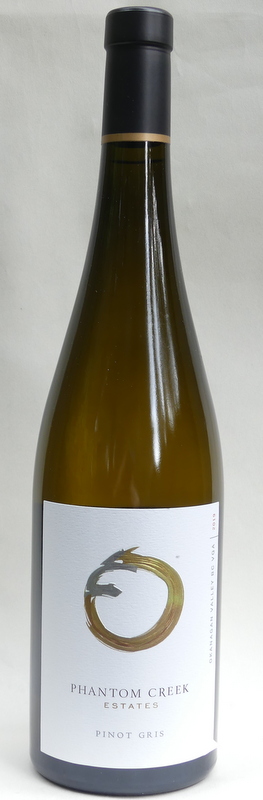
Phantom Creek Pinot Gris 2019 ($27.49 for 500 cases). This wine is listed in the BC Liquor Distribution Branch. This wine, which was aged 16 months in an oak foudre, presents in the glass with light golden hue. It begins with aromas of spicy oak mingled with pear and pineapple. On the palate, the wine has a rich honeyed texture with flavours of ripe pear and pineapple and a lingering finish. 93.
Phantom Creek Chardonnay 2020 ($48 for 16 barrels). This is a wine club exclusive. There is a superb balance of fruit and oak so that the fruit remains the star of this elegant wine. It has aromas and spicy flavours of butter, ripe peaches, apricots and tropical fruits. 93.
Phantom Creek Petite Cuvée No. 4 2019 ($37.99). This is listed in the BCLDB. The wine was aged 20 months in oak (43% new). The blend is 42% Cabernet Franc, 26% Cabernet Sauvignon, 24% Merlot, 7% Petit Verdot and 1% Syrah. This wine begins with aromas of cassis and dark cherry. Bold and ripe on the palate, the wine delivers flavours of dark cherry, blackberry and chocolate. The long, ripe tannins give the wine a persistent finish. 94.
Phantom Creek Becker Vineyard Cuvée No. 27 2019 ($60 for 40 barrels). This vineyard is on the Black Sage Bench near the winery. This wine was aged 19 months in oak (50% new). The blend is 55% Cabernet Franc, 28% Merlot, 9% Carménère, 7% Syrah and 1% Cabernet Sauvignon. The wine begins with aromas of cassis and cherry. On the palate, there are flavours of blackberry, black cherry, black currant and dark chocolate. The firm texture suggests this wine is a candidate for cellaring. The finish lingers. 93.
Phantom Creek Kobau Vineyard Cuvée No. 15 2019 ($80 for 40 barrels). This is a wine from the Golden Mile and is a credit to the appellation. It was aged 20 months in oak (36% new). The blend is 69% Cabernet Franc, 27% Merlot and 4% Syrah. It is ripe and rich, with aromas of black cherry, black currant and spice. There are layers of flavour on the palate: black cherry, black currant, coffee and chocolate. The finish is very long. 95.
Tuesday, April 12, 2022
Monte Creek rebrands with new labels
Photo: Monte Creek Winery
The wines being released this spring by Kamloops-based Monte Creek Winery all have new labels, representing one of the most effective label redesigns recently by any British Columbia winery.
The story-telling labels that have been on every vintage since 2013, the winery’s first, have been replaced with labels that ooze elegance and sophistication – the sort of labels that fine restaurants would have on their tables.
“When we moved into the Thompson Valley, it was quite a new area for viticulture,” general manager Erik Fisher recounts. Monte Creek Ranch, as the winery called itself initially, is a 10-minute drive east of Kamloops and is one of just four wineries in the Thompson River Valley.
“The community was not as wine involved, or as developed in its food and wine culture scene,” Erik says. “We felt like we really needed to embrace our surroundings. We did have a lot of interesting and unique story lines to communicate. We talked a lot about the lineage of the property and the pioneers that developed this region. We even got into talking about the infamous Billy Miner, the gentleman bandit. The last Canadian train robbery, for all intents and purposes, took place on our land in 1906. We thought, how great is that! That is a story line that we probably should embrace.”
The mustachioed visage of Miner appeared on many labels, most prominently on a blend called Hands Up Red.
“We gained a lot of support from the residents in our immediate area,” Erik says. “They really embraced what we were doing. There is a lot of pride in this region.”
However, Billy Miner and his back story did not resonate that well in big urban markets. The wines were selling but not as fast as they should have.
“There was a really big disconnect in urban centres with our brand,” Erik explains. “We felt that the juice was good and we felt there was great value for the money. We did a lot of things to get attention in the marketplace - albeit a very noisy market place. But the average consumer in an urban market like Vancouver or Calgary was picking up our bottle and going: ‘These guys seem like they have a lot to say; I just don’t know what it is. There is this elderly gentleman, Billy Miner, on the label. Is he the winemaker? Is this wine made in a barn? Is this some kind of a dude ranch? What is going on here? I don’t know if I feel comfortable bringing this to a dinner party’.”
The rebranding began with dropping “Ranch” from the winery’s name. “When we went through a number of exercises as group, it was clear and obvious that our three core values right from that start were quality, innovation and sustainability,” Erik says. “It is not like we changed from what we were doing then to what we are doing now. But we have gotten completely out of livestock. None of us ride horseback. I shouldn’t say we are completely out of livestock. We have chicken ‘tractors’ and pigs to eat the compost from our restaurant, but we certainly got out of cattle.”
He continues: “When you looked at our former labels, they really perpetuated that ranch image … that we were very much like a working ranch in the western sense. None of us were wearing belt buckles to work and riding on the weekend. We did not feel the label really signified who we were and where we wanted to go. We felt we needed a new, fresh aesthetic that spoke more genuinely about who we are and what we think we represent, and that ideally is fresher and more premium to the consumer. So far, it has been very well received.”
Monte Creek wines now are released primarily in two tiers. Ancient Waters, the small lot tier, refers to the geological processes that shaped the terroir. “The ancient waters left behind the broad spectrum of soils that create diverse flavour and character in our fruit,” the winery notes. The higher volume Living Land tier signifies the regenerative agriculture techniques employed by Monte Creek.
The new labels have been designed by Adrienne Van Haeren, the sole owner of Signify Designs in Woodstock, Ontario. She happens to be Erik’s sister but, more to the point, she has been a successful designer for other packaged goods. This is her first foray into wine labels, and likely not the last.
Pristine and uncluttered, the labels are anchored by a monogram which should be timeless. The elements of the monogram include an M and a C, symbolic of the winery name but also of the local ancient lakes. An elusive V represents the land while the parallel lines in the logo represent vineyard rows. The barely discernible thumbprint echoes handcrafted wines.
Here are notes on some of the current releases.
Monte Creek Riesling b> Living Land Series 2021 ($21.99). This delicious, well-balanced wine begins with aromas of lemon and lime. The intense flavours include lime, green apple and hints of peach. The finish is long, zesty and refreshing. 92.
Monte Creek Chardonnay 2020 Ancient Waters Series ($29.99). This is an elegant wine, beginning with aromas of apple, peach and a hint of butter. These elements are all echoed on the palate, along with stone fruits. This is an appealing, fruit-forward Chardonnay. 91.
Monte Creek Rosé Living Land Series 2021 ($18.99) This is a robust, dry rosé made with Cabernet Franc and Marquette juice. It has a medium-dark hue. It begins with aromas of watermelon and cherry, leading to flavours of cherry and cranberry. 90.
Monte Creek Pinot Noir Living Land Series 2020 ($24.99). This is a full-flavoured wine, beginning with aromas of cherry. On the palate, there are notes of plum, cherry, spice and a hint of licorice. 90.
Monte Creek Cabernet Franc 2020 Living Land Series ($22.99). This is 91% Cabernet Franc and 9% Merlot, aged in oak. It is a bright, aromatic red with vibrant aromas of raspberry and blackberry. The palate has juicy flavours of cherry, blackberry, raspberry and spice. 90.
Monte Creek Blueberry Wine NV ($16.99). This wine presents in the glass with a deep scarlet hue, with blueberry aromas that jump from the glass. Fresh berry flavours carry through to a dry finish with a hint of spice. This is a versatile wine, suitable as an aperitif, superb with cheese and good wherever else your culinary imagination takes you. 90.
Wednesday, April 6, 2022
Modest Wines has fun with wine
Photo: Winemaker Jeff Hundertmark
Jeff Hundertmark, the winemaker at Mt. Boucherie Estate Winery, has just made the third release of the winery’s fun portfolio under the Modest label.
It is not that the Modest wines lack seriousness. The wines are very solid but there is a lot of tongue in cheeks in how the labels present the wines.
That is best illustrated by the name given to the Chenin Blanc: steen down do long. “Steen is what this noble grape is referred to in South Africa where it finds some of its most inspiring incarnations,” the winery explains. “Down So Long is how we have felt for the last two years.”
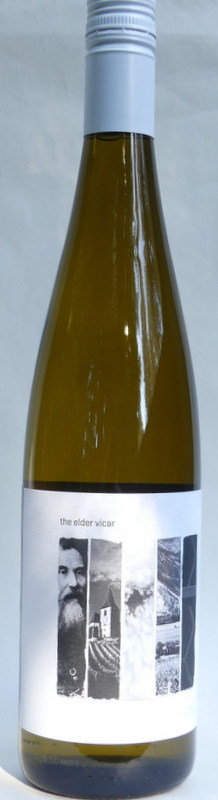
The Alsace-inspired white blend is called the elder vicar in homage to Father Pandossy, the missionary credited with planting the first grapes in the Okanagan. For years, he was even called the father of British Columbia wine even though there is no evidence that the Pandossy Mission ever sold a single bottle of wine. The bearded visage used here to break up the text may or may not be Father Pandossy.
Another wine is called la graves robber. The winery explains: “Graves is a region in the Left Bank of Bordeaux … which produces the best Sauvignon/Sémillon blends in the world. We ‘robbed’ this style and made it our own here in BC.”
The red made from Carménère (a rarely grown grape in the Okanagan) is called the crimson crusader. The reason: in fall, the vine leaves turn crimson. “Crusader,” the winery adds, “is a reference to the fact that this noble grape was on the verge of extinction before it left France and found a new home … in Chile.”
There is a little more to the story than that. European varietals were planted in Chile roughly 175 years ago, before phylloxera decimated European vineyards. Isolated behind the Andes, the vineyards of Chile were never infested with phylloxera. Carménère and all the other European varieties flourished there. Because it is a late-ripening varietal, it was not replanted in Bordeaux after the French had figured out how to deal with phylloxera.
For a long time, Chilean grape growers did not single out Carménère. It usually was underplanted with Merlot and was only identified as a distinctive varietal in the 1990s. The first Carménère in the Okanagan was planted by Black Hills Estate Winery in 2001, with the first release of a varietal wine in 2005.
Only a handful of other producers now make this distinctive red. “Modest Wines is pleased to offer 7.2% of all the Carménère grown in Canada,” the winery reports.
Modest’s Sangiovese wine is called by jove because, according to the winery, the name of the grape comes from Sanguis Jovis, meaning blood of Jove.
It is not just that the wines have fanciful names. Each label has a number of panels, each with an interesting back story. Whether the consumers will get these stories is another matter: One really needs the spec sheet for each wine. By the time you have figured out all the meanings, the bottle will be empty.
My advice: buy more than one bottle.
Here are notes on the wines.
Modest the elder vicar 2021 ($24.99). This is a co-fermented blend of Muscat, Riesling, Pinot Gris and Gewürztraminer. Fermentation was with wild yeast; and ferment was stopped to leave the wine slightly off-dry. A drier finish would have benefitted the wine. This is a fleshy wine with aromas and flavours of stone fruit, ripe pear, guava and spice. 88.
Modest la graves robber 2021 ($27.99). The blend is 57% Sauvignon Blanc and 43% Sémillon. The wine, which was fermented cool, was bottled early to preserve the zesty aromas and flavours. There is lots of lychee and lime here, with an herbal note on the crisp finish. 91.
Modest steen down so long 2021 ($27.99). This wine is made with Chenin Blanc, sourced from a vineyard in East Kelowna. The wine has aromas of citrus and apple. Brisk acidity lifts the flavours of green apple and quince. There is a hint of wet stone on the finish. 91.
Modest the eye of the partridge 2021 ($27.99). This is a Pinot Noir rosé, so named because the pale pink hue is said to resemble a partridge’s eye. The wine has aromas and flavours of watermelon and strawberry. Finishing dry, this is a refreshing wine. 90.
Modest by jove 2020 ($29.99). The blend is 95% Sangiovese, with Merlot and Cabernet Franc filling in the rest. This medium-bodied wine begins with aromas of spice and cherries. On the palate, there are red fruit flavours, with an earthy and herbal note on the finish. 88.
Modest the crimson crusader 2020 ($29.99). The grape here is Carménère, a varietal planted in just a handful of Okanagan vineyards. Dark cherry and pepper jump from the glass. On the palate, pepper frames flavours of plum and dark cherry. The wine, which was aged 12 months in French oak, has a lingering, savoury finish. 91.
Tuesday, March 29, 2022
Darryl Brooker becomes CEO of Okanagan Crush Pad
Photo: Winery executive Darryl Brooker (Credit Lionel Trudel
After an 11-month detour into the cannabis industry, veteran winery executive Darryl Brooker has returned to wine, becoming chief executive of Okanagan Crush Pad Winery in Summerland.
Christine Coletta and Steve Lornie, the founders of OCP, describe Darryl’s appointment as “key part of their succession plan”.
“Steve and I had come to a critical point: plan to sell, or develop a dynamic succession plan,” Christine said in an announcement. “It's evident that we chose the latter by bringing Darryl into our wine family. We are excited to drive forward doing what we love, and with Darryl’s help build a stronger wine culture in our business and provide key support [that will replace] our reliance on outside consultants.”
In a comment for which there will be wide agreement in the British Columbia wine industry, Christine added: “I’m confident that I speak on behalf of the entire BC wine industry in welcoming Darryl back. His talent and vast experience is rare in our field and we all felt the loss when he briefly departed to a different industry.”
Darryl’s previous major role in BC wine was with Mission Hill Family Estates. He joined that winery in July, 2015, progressing from vice-president of winemaking to general manager and then, from January 2018 to April 2021 as president.
He left there to spend almost a year as chief executive of Flowr Corp., a Toronto-based company with what is called an “operating campus” in Kelowna. The company produces both recreational and medicinal cannabis products.
OCP was founded in 2010 by Christine, a wine marketing executive, and her husband, Steve, a successful builder. The winery now is a major producer of organically-grown wines from three vineyards, including its Garnet Valley vineyard north of Summerland. The property is 320 acres. Currently, 55 acres has been planted, with a further 10 acres of Chardonnay due to be planted this year.
OCP has also taken over the grape contracts with the King family. They operate a 50-acre vineyard just north of Penticton and previously has been long-time suppliers to Andrew Peller’s Sandhill Wines. This contract nails down an assured grape supply to support OCP’s growth.
OCP has just begun an expansion of its Summerland winery, which will double the capacity to 20,000 square feet. The winery also has longer term plans for facilities in the Garnet Valley.
Darryl says he was contacted several months ago by Christine to discuss winery executives who might be “a good fit” for OCP, allowing the founders to step back from the business. “I realized that I missed the wine industry more than I thought I would,” Darryl says.
Born in Canberra in 1973, Brooker is a graduate of the Wine Executive Program at University of California Davis (2018), having previously earned a graduate diploma in wine business management at the University of Adelaide, Australia (2003) and a Bachelor of Applied Science, Wine Science at Charles Sturt University, Australia (2001). Before that, he served in the Australian Navy as a submariner.
He spent four years at New Zealand’s well-regarded Villa Maria Winery before responding to an advertisement for a winemaker for Flat Rock Cellars, then an Ontario winery under development.He arrived in time to make the winery’s debut 1,000 cases in 2003. “I’ve never started a winery from scratch before,” Darryl told me in a 2004 interview.
He moved to Andrew Peller Ltd. in Ontario in 2005 as senior winemaker. He left there in 2010 to join CedarCreek Estate Winery in Kelowna as vice-president of winemaking at operations. After Mission Hill owner Anthony von Mandl bought CedarCreek, Darryl moved to Mission Hill.
The OCP team that Darryl has includes Matt Dumayne, the chief winemaker since 2013, along with director of viticulture Duncan Billing, and Andrew Raines, director of sales for OCP’s sales division.
“I always had in the back of my mind that I would work in the wine industry again,” Darryl said in a statement. “I didn't feel my story had finished and I know I still have a lot more to give to BC and Canadian wine. It just had to be a winery that I truly believed in the vision and potential.”
Friday, March 25, 2022
CheckMate's superb 2018 Merlots
Photo: Winemaker Philip McGahan
In the ultimate example of focus, CheckMate Artisanal Winery makes wine from just two varietals, Chardonnay and Merlot. The grapes are all from south Okanagan Vineyards operated by Anthony von Mandl’s Sebastian Farms.
This post is concerned with reviewing four of CheckMate’s 2018 Merlot wines which are to be released late this spring or early summer. As always, these are excellent wines.
Why did CheckMate settle on Merlot when winemaker and general manager Philip McGahan was getting the winery launched?
“There is not that much Syrah planted in our vineyard holdings,” says Philip, who, as an Australian, would surely be comfortable making Syrah. Of course, he would likely want to call it Shiraz, as the Australians do.
“Merlot was obviously one of the big plantings early on in the valley, so those were the most mature vines, and the most diversity from which we could source fruit in the South Okanagan,” Philip continues. “Merlot is the most consistent variety. We can get it ripe and off before the early cold snaps come in mid-October. There have been several years where the cold snap is 8th or 9th of October, where it suddenly drops to -8C. We generally have our Merlots off by that time. And we felt that while Merlot can be a big, jammy kind of wine in California or Australia, when it is in an environment that is a bit tougher on it, it can make a more complex wine.”
Cabernet Sauvignon was not considered as a single varietal wine for CheckMate, and not just because this grape is not as widely grown as Merlot but also because it ripens later than Merlot.
“The feeling about Cabernet Sauvignon is that, while it can be great in blends, as a standalone wine, you will not get that consistency year over year,” Philip explains.
The 2019 vintage is a case in point when Merlot succeeded while Cabernet Sauvignon faced a challenge when there was a sharp October 9 freeze that turned vine leaves brown and stopped any ripening activity.
“I remember that year,” Philip says. “We were picking our last Merlot on the morning of the freeze. It did not impact the fruit but the canopy was gone by the end of the day. We went through and picked everything.”
Because of a inadvertent early wine release (to reviewers) by Checkmate, I tasted and reviewed the 2019 Merlots earlier this year. Those wines have yet to be released. However, the quality is very high, a credit to the viticultural acumen of Sebastian Farms. I scored the four wines in the high 90s.
Here are notes on the 2018s.
CheckMate End Game Merlot 2018 ($95 for nine barrels). The fruit for this wine is from vineyards on the Black Sage Bench and the Osoyoos East Bench. Fermentation was done with indigenous yeast and the wine was aged in new French oak for 21 months. The wine begins with aromas of black cherry, blueberry, plum and spice. The palate repeats the aromas, with flavours of black cherry mingled with spice. 95.

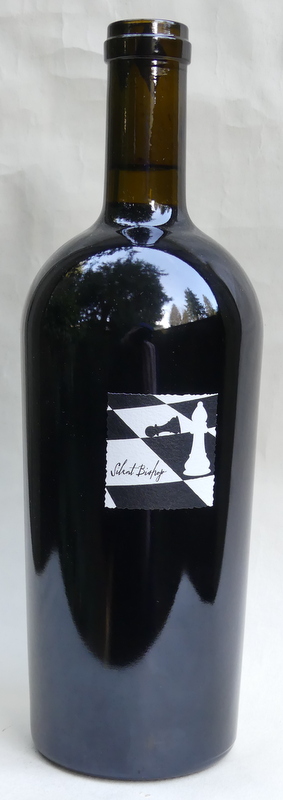
CheckMate Silent Bishop Merlot 2018 ($95 for nine barrels). The fruit for this wine is from vineyards on western benches in the South Okanagan. The wine was fermented with indigenous yeast and aged 21 months in new French oak. The bright aromas and flavours reflect that the fruit is from the cooler side of the valley. There are aromas of red currant, raspberry and cherry with green herbal notes, all of which carries through to the flavour. The tannins, while ripe, still have grip. 94.
CheckMate Opening Gambit Merlot 2018 ($95 for 12 barrels). The fruit for this wine is from Osoyoos East Bench vineyards. The wine was fermented with indigenous yeast and aged 21 months in new French oak. This wine begins with intense aromas of cassis and cherry. The intensity is repeated on the palate with ripe flavours of dark cherry and cassis that lead to hints of chocolate and tobacco on the very long finish. The plush tannins enhance the texture. 98.
CheckMate Black Rook Merlot 2018 ($95 for 10 barrels). The fruit for this wine is all from vineyards on the Black Sage Bench. The wine was fermented with indigenous yeast and aged 21 months in new French oak. Once again, the aromas bound from the glass, with notes of brambleberry, cherry, sage and spice. On the rich palate, there are flavours of dark fruits, coffee and licorice. Ripe tannins support a lingering finish. 97.
Subscribe to:
Posts (Atom)