Wednesday, November 5, 2014

Maverick Estate Winery: golden or not?


 Photo: Winemaker Bertus Albertyn

The new Golden Mile sub-appellation has such tight boundaries that it excludes some of the best producers on what was historically considered the Golden Mile.

The only published map of the sub-appellation that I can find is a bit hard to read. However,  Maverick Estate Winery is beyond the southern limit of the Golden Mile Bench.

As I read the final report on the sub-appellations, wineries within the historical Golden Mile (as opposed to the bench defined by soil characteristics) might still be allowed to use a variation of Golden Mile on their labels.

Maverick, which was established in 2009 by winemaker Bertus Albertyn, his father Dr. Schalk De Witt, and their spouses, should be one such winery. Its wines are bound to reflect well on the reputation of Golden Mile.

A doctor from South Africa, Schalk was practicing in Edmonton when he bought he bought two parcels for future vineyards in 2006 and 2009. The latter block, seven and a half acres beside highway 97, was an organic farm that was soon planted to vines. Planting is scheduled to begin in 2015 on the other block, 48 acres of raw land next to the Osoyoos Larose vineyard.

Schalk had great good fortune when one of his daughters, Elzaan, (also a doctor), married Bertus, the winemaker with the training to manage vineyards and make superb wines.

When Bertus, born in 1978 in South Africa, finished his enology degree at Stellenbosch University, he started his career at a large wine cooperative before joining family-owned Avondale in 1994 as winemaker.  He came to the Okanagan early in 2009 when Elzaan began to practice in Osoyoos. He was Burrowing Owl Winery’s winemaker until mid-2013, when he left to concentrate on Maverick.

Maverick began selling wines in 2013. This summer, it opened an elegant tasting room on the property beside the highway.

The winery has quickly established itself as a rising star among the new Okanagan wineries. Here are notes on current releases.

Maverick Chardonnay 2013 ($26.90 for 100 cases). The winemaker uses the term “restrained power” to describe this wine. My first impression is how exquisitely pure and pristine the fruit aromas and flavours are. There is a note of peach and tangerine in the aroma, leading for flavours of tangerine, peach and mango. The wine is very subtly oaked (just five months in new French oak. The wine is elegant and refreshing with a lingering finish. 91.

Maverick Rubicon 2012 ($25 for 360 cases). This is a blend of 65% Syrah, 25% Cabernet Franc and 15% Cabernet Sauvignon. It is a very effective blend: the Cabernet Franc brings vibrant brambly flavours and aromas while the Syrah adds gamey plum and pepper. The Cabernet Sauvignon adds the structure. The wine, which was aged in a 3,500 litre oak vat, is drinking well now but will age. The winery recommends drinking it over the next three to seven years – if you can keep your fingers away from it. 91.

Maverick Pinot Noir 2013 ($29 for 250 cases). Here is a robust, assertive Pinot Noir, beginning with aromas of toasty oak, dark berries and vanilla. The wine tastes of black cherries and spice. The texture is elegantly silky, with a rich and long-lasting finish. 91.

Maverick Sofia 2012 ($30 for 285 cases of 500 ml bottles). The back label of this VQA wine describes Sofia (named for the winemaker’s daughter) as a Port. I am not sure how this slipped through the regulators because Canada, under an international agreement, is not permitted to use Europe’s wine names on its VQA wines. In fact, the label was rejected but due apparently to a printer's error, it ended up on the bottle. The winery is asking for a one-time exception. That said, I doubt that Portugal will be up in arms over Maverick’s 285 cases.

To make this wine, the grapes – ripened to 28 Brix – were handpicked into 30 pound trays and were cooled to 10°C overnight. In the tradition of Port, the grapes went into a large bin and were crushed by foot. The must was fermented several weeks on the skins, with alcohol distilled from the winery’s own grapes used to fortify the wine and stop fermentation. The must was then pressed and the wine was aged 18 months in French oak. The brandy spirit used to fortify the wine also was aged in oak for 12 months.


This is a terrific wine but, made with Syrah, also an atypical Port. The aromas began to fill the room as soon as the cork was pulled. In the glass, there are aromas of spice, white pepper, and Christmas fruitcake that are echoed in the flavours. The savoury flavours include plum, liquorice, chocolate and candied peel. The texture is rich. The wine carries its 19% alcohol very well, with a finish that goes on and on. 92.

Thursday, October 30, 2014

Travels in Sicily - Cantine Pellegrino


Photo: Casks of Marsala at Pellegrino winery


Since it was founded in 1860, the Pellegrino winery has remained both a leading Marsala producer and family-owned.

That has not been easy. In the edition published in 2006, The Oxford Companion to Wine says this in its entry on Marsala wines: “Production figures show a wine virtually on its death-bed.”

Yet since that was written, the gleaming white Pellegrino winery in the city of Marsala added in 2014 what must be one of the most elegant tasting rooms in Sicily. It has placed historical winemaking artefacts throughout its remarkably clean cellars. Those cellars contain 52 vats full of Marsala, each with a capacity of 300 hectolitres. Some death bed, indeed.

It must be admitted, however, that Pellegrino also makes table wines under the Duca di Castelmonte label. Table wines now account for 60% of the eight million bottles of wine made each year by this winery, with Marsala and another dessert wine accounting for 40%. The winery also produces and exports sacramental wine, the demand for which, presumably, is healthier than the demand for Marsala.

The winery was founded in 1860 by Carlo Pellegrino, very likely at the inspiration of his French wife who was from a winemaking family in Sauternes. Over six generations, marriages have changed the surnames of the owners; but the family still owns all the shares of Pellegrino. At several points in the winery, the Pellegrino family tree is prominently displayed.

The winery, by the way, is not related to the sparkling water of the same name.

Pellegrino was one of the Sicilian families that took control of the once-burgeoning Marsala business from its English founders.

In its account, the Oxford Companion notes that an English merchant named John Woodhouse, on arriving at the port of Marsala, in 1770, discovered that the local wine somewhat resembled Madeira and decided to test the market by shipping some to Britain. He is said to have “invented” Marsala by adding 8.5 gallons of grape spirit to each 105-gallon barrel of wine. The point of fortifying it was to make it more stable for shipping.

The wine was such a success that he opened his own warehouse and cellar in Marsala by 1796.

“The victualling of Nelson’s fleet in 1798 doubtlessly assisted in spreading the name of the wine,” the Oxford Companion observes.

Hugh Johnson, in his Modern Encyclopedia of Wine, writes: “In a sense it is Italy’s sherry, without sherry’s brilliant finesse or limitless aging capacity.” His brief entry makes it evident that he is not a Marsala fan – or has not had much opportunity to taste good examples.

In the 1960s and 1970s, the Marsala wine producers sought to extend their wine’s real by making wines flavour with coffee, chocolate, strawberries, almonds and eggs. These were all called Marsala until 1984, when the DOC rules were tightened and the Marsala name was limited to undoctored wines.

There still are numerous types of Marsala. Pellegrino makes a dozen different examples. The primary wines are:

  • Marsala Fine, which is aged only one year in wood. This is the wine which is a staple in cooking. Hugh Johnson suggests that “Fine is normally sweet and rather nasty.” I can’t comment because none of the Marsala producers I visited offered an example for tasting.
  • Marsala Fine Rubino, which is a sweet red wine made from the Nero D’Avola grape which is the backbone of Sicilian red wines. Pellegrino makes only a small volume and does not export it, which is a pity. I thought the wine was delicious, a bit like Ruby Port but not as heavy.
  • Marsala Superiore Reserva Oro, gold in colour with textures and flavours burnished during four or five years aging in cask. The dry version has an appealing nutty flavour.
  • Marsala Superiore Reserva 1985 Ambra.  Aged five years in wood, this rich and nutty Marsala is an excellent wine as a dry aperitif. This is the bottle I chose at the winery, where it retails for the equivalent of $20, an incredible bargain.
  • Marsala Virgine Soleras. This wonderful wine is made by the solera method, with cask-aged wine as old as 30 years in the blend. It is very much like a dry sherry, with flavours of butterscotch, hazelnuts and wood. It also retails for $43.50 a bottle.

The new tasting room, called Overture, aims at accelerating wine tourism. It is actually a four-storey building with a projection room in the basement, a retail outlet on the main floor, tasting rooms on the next level and a room for viewing the seacoast scenery on the top floor.

That is not this tourist-oriented winery’s only venue for special events. The Pellegrino property also includes two huge silos built as wine storage tanks in 1950, when Marsala was still in its heyday.

Pellegrino stopped storing wine in them in 1990 and has since converted them into function rooms, with a professional kitchen and a professional tasting room. The tanks are so huge that there is an elevator for those who do not care to climb four levels to the top.

The tasting at Pellegrino included a few examples of table wines as well, all of them very well made – and probably hard to find in my market. Sicilian wines are especially interesting because many are made with indigenous grapes. A white variety called Grillo, which is used in making Marsala, yields surprisingly fresh and crisp whites.

There is no Grillo listed by the British Columbia Liquor Distribution Branch (some private stores have various examples). The LDB, however, lists Pinot Grigio from Sicily. Even if Pinot Grigio is easier to sell than Grillo, it is absurd to list that varietal from Sicily when far better ones come from northern Italy.


Saturday, October 25, 2014

Halloween party wines


Somewhere out there, a Halloween party is looking for wines that fit the theme.

Besieged, a red wine with a scary label from the Ravenswood winery in Sonoma fits the bill. It has just been listed in British Columbia at $25 a bottle.

If you prefer Okanagan wines, choose the scary labels but excellent wines from Moon Curser Vineyards in Osoyoos. Example: Afraid of the Dark is an award-winning white for $22.

The dark label of the Ravenswood wine features three ravens flying against a stormy sky. Apparently, the inspiration was a memory that Joel Peterson, Ravenwood’s founding winemaker, has of once picking grapes ahead of a threatening storm while a flock of noisy ravens wheeled overhead.

A flock is sometimes also referred to with the archaic phrase, a murder of ravens (or crows) because the black birds were associated with ill luck in the early middle ages.

Far from having bad luck, Joel has had a long success as a winemaker, with the ravens being the totem for the winery.

Besieged is an intriguing blend: Petite Sirah, Carignane, Zinfandel, Syrah, Barbera, Alicante Bouschet and Mourvèdre. The percentages are not revealed and it would have been a challenge keeping track during the blending.

Besieged 2013 is a delicious wine. Dark in colour and full-bodied, it begins with aromas of plum and blackberry. On the palate, the fruit flavours are richly layered, including plum, blackberry and black cherry. There is spice and black liquorice on the finish. 90.

The label of Besieged immediately reminded me of Moon Curser’s wines. Most of their labels feature the silhouette of a wolf and a raven with a lantern. The wolf – there are sometimes two –has a spade over its shoulder, as though it was about to unearth or bury something. The raven’s lantern provides the light on a dark night.

The story behind Moon Curser is different than Ravenswood’s. The original name of the Canadian winery, which opened in 2006, was Twisted Tree Vineyards. A few years later, owners Beata and Chris Tolley decided that name was somewhat bland. They hired Vancouver marketer Bernie Hadley-Beauregard to rebrand the winery.

The new name and the scary labels emerged from south Okanagan’s 19th Century history of gold mining. At that time, the nearest smelter was in Spokane, across the border. The miners had to pay duties if they declared their gold at the border. Consequently, there was a certain amount of smuggling at night. The miners cursed the moon when it was bright enough to reveal them to the authorities.

The Tolleys have had fun with this history, with labels such as Afraid of the Dark, Nothing to Declare, Contraband and Dead of Night. The latter, arguably their flagship wine at $38, is a blend of equal percentages of Tannat and Syrah.

However, Moon Curser’s Border Vines is more comparable to Besieged with a price of $25 for a six-grape blend of Bordeaux varieties.

The Moon Curser wines can be found in VQA stores while Besieged is not listed in about 80 Liquor Distribution Branch stores. And there is ample stock, with about 3,000 bottles of Besieged available.


Wednesday, October 22, 2014

Travels in Sicily – Cantine Florio


Photo: Cellar at Cantine Florio


Before the 1943 Allied landing in Sicily, the Americans softened up the enemy by bombing Cantine Florio, Italy’s oldest producer of Marsala wines.

 From the air, the sprawling Florio cellar looked like a strategic target, given its location beside the ocean and near the railroad station. One can imagine the chagrin of General Patton’s troops when they arrived in Marsala to discover that the bombs had destroyed thousands of litres of wine.

 Only a small quantity of wine from 1939 and 1941 remain today at the winery, available to collectors with deep pockets. Even in a time when Marsala wines no longer enjoy the fashion of earlier times, these precious and long-lived vintages sell for more than $1,000 a bottle.

 The credit for developing Marsala generally goes to an English trader named John Woodhouse. He sailed into the port of Marsala in 1773 and discovered a wine being made there somewhat similar to Madeira and Sherry. He fortified the local wine and sent a shipload to England. The wine was so successful that he established his own blending centre in Sicily. His success attracted other English wine merchants to Marsala as well.

 In 1833, a Palermo pharmacist and entrepreneur, Vincenzo Florio, set up the first Marsala winery owned by an Italian. Florio, who was originally from northern Italy, became a powerful businessman. In addition to the winery, he owned a shipping line, a fish processing business, a ceramics factory and extensive real estate. Eventually, he bought Woodhouse’s business.

 In 1906, Vincenzo sponsored the Targa Florio, the world’s oldest sports car race. It is still being run every year near Palermo.

There also is a suggestion that he backed General Giuseppe Garibaldi, who began his campaign to unite Italy by landing with his troops at Marsala in 1860. Today, the Florio cellars have a Garibaldi memorial, including a number of rifles that the general have given to Vincenzo.

 The Florio family had the usual problems with the third generation. Vincenzo’s grandson proved to be a playboy. By the 1920s the winery was acquired by Cinzano. It changed ownership again in 1998 and is now part of a large private wine group which includes table wine producers Corvo and Duca di Salaparuta.

 Florio remains a leading Marsala producer and its cellar, which was grandly rebuilt after the war, is one of the top winery tourist attractions in the small city of Marsala.

 The wine, Marsala, was the first in Italy – in 1969 – to get its own DOC (Denominazione di origine controllata). The regulations specify where the wines can be made in Western Sicily and from what grape varieties. The major variety is Grillo, a thick-skinned white grape that also yields remarkably good table wines.

 Depending on how the wines are made and how long they are aged, Marsala styles range from bone dry to sweet. The basic wine is designated Marsala Fine, an unfortunate term that implies the wine is indeed fine. In fact, it is a wine aged only for a year. “It is too young for tasting,” Florio tour director Valentina Gambino asserted. “This kind of Marsala is good only for cooking.”

 If the British Columbia Liquor Distribution Branch is typical, this is the only Marsala you can find on liquor store shelves these days.

 Marsala wines become interesting when aged in oak for two or more years. A two-year-old wine can be labelled Marsala Superiore while a four-year wine can be called Marsala Superiore Riserva.
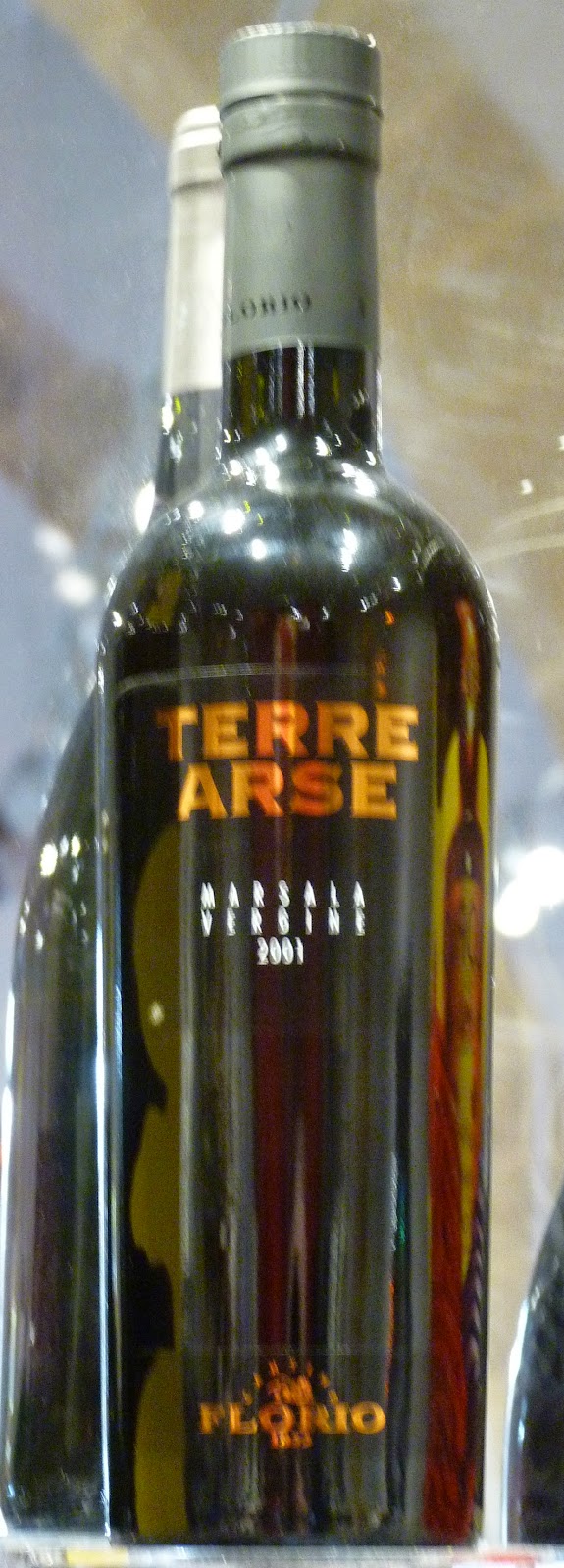
At a recent tasting at the winery, the tour group started with an excellent nutty dry Marsala aged eight years. The wine has an unfortunate name (at least for the North American market) of Terre Arse, which means a field dried by the sun.

The contrasting style was illustrated with Targa, a semi-sweet Marsala with six years of age. Its name was inspired by the car race.

Fortified to about 19% and exposed to oxygen while aging in vats or barrels, Marsala is among the most long-lived of wines. It is also a sturdy wine that can be opened and consumed gradually over several years without any deterioration of flavour. Marsala pairs well with food and is especially good as an aperitif. And consumers need to rediscover their Marsala palates because there is a lot of it available, usually at reasonable prices. Cantine Florio currently is aging about six million litres.

Friday, October 17, 2014

A trio from Therapy Vineyards


Photo: Therapy winemaker Steve Latchford


A trio of wines has just been released by Naramata’s Therapy Vineyards includes, as usual, winemaker Steve Latchford’s excellent winemaking notes.

There is detail here not often revealed by other winemakers. I don’t think it is that most winemakers want to keep secrets, but merely that consumers and wine reviewers would not understand some of the technical details.

Example: the Pinot Noir was fermented with “R2, Alpha and Indigenous yeast strains” and the malolactic fermentation was started with “SB3 Instant”.

Among winemakers, those details are important. The various properties of different yeast strains can have a profound impact on the aroma and the flavour of the wine. The choices are incredibly complex. Just google Scott Laboratories and look through the near infinite list of yeasts.

I take a lot of comfort, however, from the fact that Steve provides this esoteric information. It tells me he has a good handle on what he is doing in the winery.

Let me reproduce the biography of him from the Therapy web site:

Steven Latchford was born in Ontario’s Prince Edward County in 1982, His work ethic was developed early on by working in the dairy industry  and moving onto graphic arts and design.  The wine industry allows Steve to still use his agriculture background by growing grapes and his artistic side by crafting unique wine blends.

He started in the wine industry at the tender age of 18 when he enrolled at Niagara College Teaching Winery. Unable to legally drink at the time Steve patiently waited to finish his sensory classes when he was 19.

Graduating in 2004 from the program Steve had already found winemaking, viticulture and sales employment from Vincor International in 2001 at Jackson Triggs. He also helped produce the first vintage of Le Clos Jordanne  organic wines with Thomas Bachelor which were made at Jackson Triggs and worked along side Gerald Klose in Vincor’s sprawling vineyards for 2 summers helping foster the grape growing. Allowing him to watch the process from vineyard to winery to bottle.

Working closely under Tom Seaver  and Kristine Casey at Jackson Triggs Steve was able to build a foundation of winemaking knowledge and find his passion for oenology. Marco Piccoli took over as head winemaker at Jackson Triggs  in 2005 and helped shepherd  Steve’s creativity in Icewine  and sparkling production.  Steve and Marco are still close friends and stay in contact regularly.

After leaving Niagara and Vincor in the summer of 2007 Steve was looking for a new challenge and found himself in the Okanagan Valley. Tasting his way through almost every winery in the valley, Steve ended up finding a home in August 2007 at Naramata’s Holman Lang group of wineries. He spent 14 months working closely with Bernhard Schirrmeister before being recruited to work at Therapy Vineyards.

Since starting at Therapy Vineyards in 2009 Steve has been able to create wines that stayed true to Therapy’s original wine style as well as fostering in new labels including Bi-Polar Icewine, Fizzio-Therapy sparkling and a very highly successful Artist Series Riesling.

Still being under 35 years of age has allowed Steve some different insight into the winemaking process and allows himself plenty of room for playing with blends, fermenting trials and production techniques. Steve looks forward to furthering Therapy’s brand into the future and producing many more highly awarded wines.

Here are notes on the trio of releases.

Therapy Vineyards Pinot Gris 2013 ($19.99 for 217 cases). Cool fermentation retained superbly aromatic aromas in this wine, including green apple and lime, leading to flavours of citrus and pear. The wine has good weight on the palate, with lingering fruit flavours on the persistent finish. There is a crisp mineral note on the finish. It is drinking well now but I agree with the winemaker’s suggestion that this might be aged a few years. There is a good argument that we drink our Pinot Gris wines too young. 89-90.

Therapy  Vineyards Freudian Sip 2013 ($17.99 for 1,100 cases). This is a blend of 43% Pinot Gris, 28% Riesling, 15% Sauvignon Blanc and 14% Kerner. The winemaking processes, including several hours of skin contact with a special enzyme, were all designed to capture the aromatics which these four varietals have in abundance. The wine begins with aromas of peach, melon and citrus, leading to flavours of green apple and lime. Good acidity balances the residual sweetness here. The wine has a long but zesty finish. 90.


Therapy Vineyards Pinot Noir 2012 ($22.99 for 300 cases). This wine was made with grapes from three different Naramata vineyards, fermented separately and blended later. The fruit was given a five-day cold soak to extract colour and flavour and then fermented for two to three weeks. The wine was aged in a combination of new and used French oak. The wine begins with aromas of cherry, vanilla and cloves. On the palate, there are flavours of cherry and raspberry mingled with toasty oak and chocolate. Spicy on the finish, the wine has good concentration with a texture hinting at a future silkiness with more bottle age. 89.

Tuesday, October 14, 2014

Class of 2014: Hugging Tree Winery


Photo: The Makepeace family (left to right) Walter, Cristine, Brad and Jennifer


The Similkameen Valley’s winery population has grown by one, with the opening last month of Hugging Tree Winery.

A family-owned and operated winery, Hugging Tree is located on the east side of Highway 3. The tasting room is modest but comfortable. The family members who take turns behind the tasting bar create a friendly atmosphere.

One need not limit the conversation to wine. Cristine Makepeace, one of the proprietors, is an enthusiastic organic gardener. She also makes excellent peach jam from the farm’s peaches and sells the jams in the wine shop.

Here is the text of the Hugging Tree profile from the recent edition of John Schreiner’s Okanagan Wine Tour Guide.

Walter and Cristine Makepeace moved 13 times during their careers with the RCMP. In 2005, just before Walter retired from the force, they settled down in the south Similkameen Valley, buying a highway-side organic apple and peach orchard near Cawston where they could finally put down roots for themselves and for their three children. Nine years later, the property has blossomed into a family-operated estate winery that includes daughter Jennifer and sons Brad and Wes.

Walter, who was born in Vancouver in 1953, joined the RCMP in 1975. His wife Cristine, whom he had met in high school in Surrey, joined the force soon after. At the time of their retirement, Walter was the staff sergeant in charge of the South Okanagan and Cristine, who joined the RCMP in 1990 (and who had previously run the Keremeos detachment), retired in 2013 as a sergeant posted at the Vancouver headquarters.

Their interest in wine burgeoned after they were posted to Oliver in 1993. Walter says “the bug” was put in his ear by Randy Toor, one of the owners of Desert Hills Estate Winery and then an auxiliary RCMP constable. “He was just getting into grape growing and he said, ‘Walt, you should buy a vineyard’,” Walter remembers. A volunteer spot at a winery during a wine festival motivated him even further. “I worked the till one of the days,” Walter says. “There was a line-up. Everybody was standing there with credit cards and money in their hands and they all had smiles on their faces. I said, ‘I have got to become a part of this’.”

Their search for a vineyard ended when George Hanson, the owner of Seven Stones Winery, directed them to a 24-hectare (60-acre) property located almost across the highway from Seven Stones. Half of the property was orchard; the other half was raw land. (A pair of entangled willow trees on the lawn inspired the winery’s name.) Walter planted grapes on the second half in 2007 and 2008 and now has an eight-hectare (20-acre) vineyard, all of it in Bordeaux reds except for a modest block of Viognier. Syrah planted unsuccessfully on another four hectares (10 acres) was removed, making room for a white varietal in future, as well as for a winery cellar.

Walter contracted Serendipity Winery to make the wines in 2011 (50 cases of Cabernet Sauvignon) and in 2012 (1,400 cases). Both Walter and Brad, his son, have taken viticulture and winemaking courses at Okanagan College. Brad is the emerging winemaker, a career choice flowing from the family’s roots decision. Brad was a professional snowboarder, rock musician and bartender in Whistler until he decided to move to the farm. “I wanted to support my dad’s dreams,” Brad says. “And when I spent time here, I got addicted to the lifestyle and the valley and the beauty.”

Hugging Tree Winery
1002 Highway 3
Cawston BC
T 250.499.2201

To expand on that, Hugging Tree’s consulting wine maker is Richard Kanazawa who, until recently, was the winemaker at Serendipity. Richard has his own label, Kanazawa Wines, now based on a Naramata vineyard.

Because Hugging Tree will not have a press of its own until next season, the 2014 crush will be done by Richard and Brad at Synchromesh Wines in Okanagan Falls.

Here are notes on the current releases.

Hugging Tree Viognier 2013 ($17 for about 275 cases). A delicious wine, it has aromas of tropical fruits that jump from the glass. On the palate, there are flavours of lychee, green apple and apricot. Bright acidity gives this wine a tangy, refreshing finish. 90.

Hugging Tree Rosé 2013 ($18 for about 330 cases). This made with Merlot and Cabernet Sauvignon juice. The wine has aromas of strawberry and candy apple, leading to strawberry flavours and a crisp, dry finish. 90.

Hugging Tree Moonchild Merlot 2012 ($21 for about 500 cases). The name is an obscure astrological reference with special meaning to the Makepeace family. The rest of us need only enjoy the wine which begins with a touch of vanilla, oak and black currant on the nose. On the palate, there are flavours of black currants and blueberries. The ripe tannins give the wine a generous texture. 89.

Hugging Tree Telltale 2012 ($25 for about 600 cases). This is 48% Merlot, 33% Cabernet Sauvignon and 19% Cabernet Franc. This is a well-made Meritage from a strong vintage. It begins with aromas of blackberry and cassis. On the generous palate, there are flavours of black current, blackberry, raspberry, with a touch of vanilla and chocolate. With a firm (but not hard) texture, this wine is three to four years away from peaking. 90-92.


Hugging Tree Vista 2012 ($35 for 75 cases). This is 65% Cabernet Sauvignon and 35% Syrah. It is a wine with considerable intensity. It begins with aromas of pomegranate and black cherry mingled with the meaty notes of rare steak. On the palate, there are flavours of pomegranate, black cherry and black currant. The texture is firm and the wine should be cellared for a few years. 90 - 91.

Saturday, October 11, 2014

Class of 2014: SOAHC Estate Wines


Photo: SOAHC's Kim McLaughlin and Jamie Fochuk, with the next generation. Courtesy SOAHC Estate Wines

SOAHC is the first winery in British Columbia to be biodynamic from its inception.

Proprietor Jamie Fochuk, in developing the vineyard at Fruitvale (southeast of Trail), tapped the expertise of two French consultants: Philippe Armenier, a biodynamic farming consultant, and Alain Sutre, a Bordeaux winemaking consultant. The mineral spine in the winery’s debut releases, as well as the winemaking, reflects that expertise.

Here is the profile of the winery from my recently published John Schreiner’s Okanagan Wine Tour Guide.

Let’s clear up the name first: it is nothing more than “chaos” spelled backwards. Proprietor Jamie Fochuk explains that it is an allusion to the biodynamic viticultural practices in his vineyard.

Born in Edmonton in 1973, Jamie grew up in a farming family. After a post high school stint on the ski hills at Lake Louise, he decided to get “a real job,” and moved to Ontario wine country (his father was living in St. Catherines). When a basic viticulture course at the University of Guelph revealed an aptitude for grape growing, Jamie found a job in 1996 with Klaus Reif, a leading Niagara vintner.

Eventually, Jamie was torn between a desire to continue studies at Brock University, where he was doing well, or moving to the Okanagan. The practical-minded Klaus advised that “you will learn more behind a press than at school” and recommended him to Harry McWatters. Jamie immersed himself in viticulture at a succession of Okanagan wineries including Hawthorne Mountain Vineyards, Stag’s Hollow Winery and Black Hills Estate Winery.

He began his search for suitable vineyard land with several years of climate study. A property near Fairview Cellars was appealing but too expensive. Then his research led him to the Columbia Valley southeast of Trail. The Columbia Gardens Vineyard had opened here in 2001, giving credibility to growing grapes in the valley. In 2006, Jamie and his partner, Kim McLaughlin, bought a nearby hillside property with excellent climate and soil properties. Detailed soil analysis revealed, as Jamie expected, no negative impact from the Trail refinery. “I know that giant molecules of heavy metals can’t float in the air,” he says. “We are a long way away. The one question would be the Columbia River, but our water comes off the mountains.”

After clearing the trees and making biodynamic amendments to the soil, Jamie in 2010 planted Chardonnay and Riesling on the vineyard’s 2.7 hectare (6.7 acre) lower terrace. He followed that by planting Pinot Noir, Gamay and Siegerrebe on the 4.85 hectare (12 acre) middle terrace. A three hectare upper terrace remains to be planted. In his planting decisions, he has taken advice from Alain Sutre, the Bordeaux consultant who works with leading Okanagan wineries.

With no farm building yet converted to a winery, Jamie began making his wines at the Synchromesh Winery in Okanagan Falls, producing about 30 cases in 2012 and 400 cases in 2013. When a winery opens here, Jamie says the tasting room likely will resemble the original Black Hills wine shop – a plank across two barrels.

SOAHC Estate Winery
392 Columbia Gardens Road
Fruitvale BC V1R 4W6
T 250.367.7594

Here are notes on the two wines just released.

SOAHC Riesling 2013 ($23.50). Here is a tingling Riesling with laser focussed acidity and 9.5% alcohol. The wine starts with aromas of lemon and herbs and delivers flavours of lime, green apples and herbs with a backbone of minerals. This wine really should be cellared for another two to three years to let the acidity settle down and to allow the nascent complexity emerge. 88.


SOAHC Chardonnay 2013 ($26.50). This wine begins with good aromas of citrus and green apples subtly supported by French oak. On the palate, the wine has the brightness of Chablis, with flavours of grapefruit and apple wrapped around a spine of minerals. 89.