Thursday, August 10, 2017

Class of 2016: Anthony Buchanan Wines


Photo: Nicole and Anthony Buchanan

Until recently, Gray Monk’s George and Trudy Heiss were the only winery owners in BC who had previously been hairdressers.

That ceased to be unique when Anthony Buchanan left his Victoria salon to become a winemaker in 2010.

Now, with his wife Nicole, he operates Anthony Buchanan Wines, a boutique virtual winery specializing in Pinot Blanc and Pinot Noir. A member of the Garagiste North group of small producers, Anthony currently makes less than 500 cases of wine a year.

When he and Nicole, an accountant, have established the brand, there is a carefully considered plan to locate the winery on a property of their own in the Okanagan. They are following a trail blazed by several former virtual wineries that have grown into land-based wineries.

These include Domaine Roche, just opened at the end of Penticton; Kanazawa Winery, which moved into a Naramata Road property this spring; Bonamici Cellars, which just began planting a vineyard on Oliver Ranch Road in Okanagan Falls. It is the normal, and desired, evolution for virtual wineries.

Anthony was born in 1970 in Owen Sound, Ontario, and grew up in London and then Victoria, to which he moved with his mother in 1980.

“I was a hair dresser for 21 years,” Anthony says. “I got into hair dressing right out of high school. I owned my own business for 11 years in Victoria.”

Interested in food and wine, he joined the Opimian Society – a national wine club – when he was 26. “With his first taste of a Gevrey-Chambertin, Anthony was hooked on Pinot Noir,” Anthony writes on his website.
“In 2001, 2002, I started to think about a different career choice,” he told me in a recent interview. “I have always loved food and wine. I like the social aspect of it as well.”

Initially, he set out to be a sommelier, taking the first two levels of Wine and Spirits Education Trust course and the level one course from the International Sommelier Guild. But as he learned some winemaking details from these courses, he decided that winemaking had more appeal as a career. He started with a distance learning course in enology from the University of California at Davis.

At a winemaker dinner in Victoria, he happened to be seated beside Michael Bartier, who had just begun his rise as an Okanagan winemaker. Michael advised Anthony to feel out his proposed new career by working a harvest in the Okanagan. Anthony spent the 2007 crush at Blue Mountain Vineyards & Cellars where winemaker Matt Mavety advised him to study enology. In 2009, Anthony enrolled in the two-year program at Washington State University.

“It is a very good program,” Anthony says now. “They take 30 students a year. It is very similar to the UCDavis program but from what I hear inside the industry is that it is a lot more hands-on practical winemaking. The Davis program is good if you really like to write research papers.”

Anthony had already begun to switch careers. In 2007, he had begin working in the cellars at the Church & State Winery near Brentwood on Vancouver Island. It was here that he met Nicole, who was doing the winery’s books. He also gained valuable experience from the winemakers there at the time, Napa consultant Bill Dyer and winemaker Jim Faulkner.

Anthony left that job initially to devote his fulltime to the Washington State program. Then in 2010, he and Nicole moved to the Okanagan. He went to work at the Soaring Eagle Winery  as the winery was in receivership.

“Some people think I have taken the hard way into this business, but it has been good for me,” Anthony says. “I have learned a lot and I have been put into some situations which I think some winemakers don’t experience. By that, I mean a lot of corrective winemaking. I have had to salvage large amounts of wine. Your really learn quite a bit in that process. Then when you are all of a sudden given pristine fruit, the facility and the equipment, it is almost like a dream come true.”
He left Soaring Eagle – which by that time was Bench 1775 and under new owners – in July 2012, joining Eau Vivre Winery & Vineyard at Cawston by the 2012 harvest. Four years later, he became the winemaker at Desert Hills Estate Winery near Oliver.

Anthony had begin making wines for his own label at Eau Vivre and has continued to do so at Desert Hills, a much larger producer. It is a generous privilege his employers have given him since many wineries forbid their winemakers to freelance with their own labels.

“When I was at Eau Vivre, the owners were very supportive of me making a small amount of wine,” Anthony says. “They looked at it as a win/win situation for both myself and their winery. The more exposure my wine got or Eau Vivre’s wine got, it benefitted both of us.”

Before he joined Desert Hills, he had a long conversation about this with the Desert Hills owners. “I wanted to make sure that there was going to be no issue with me making wine there,” Anthony says. “They have been extremely supportive of my label.” Desert Hills even offered to distribute Anthony’s label, an offer he declined.

“I have always committed myself to putting my job first, meaning that I look after Desert Hill wines first, and then at the end of the day, if I need to do something with my own label, then I do,” Anthony says. “It is not really a conflict because Desert Hills does not produce either a Pinot Noir or a Pinot Blanc. It just works, it works really well. I am sure some other owners would not want that. I have been lucky that I have had two that have allowed me to do this.”

At Anthony Buchanan Wines, he focussed on Pinot Noir and Pinot Blanc because he really likes the varieties.

“Pinot Noir has been a long-term passion of mine,” Anthony says. “I have always enjoyed drinking Pinot Noir from many different regions around the world. And then I also saw a need to make Pinot Blanc. I think it is extremely undervalued. There are not a lot of wineries that produce Pinot Blanc.”

His debut vintage of Pinot Noir was 2014. He added Pinot Blanc the following year. So far, he has worked with grapes from several different vineyards while he begins developing relationships with the growers who want their names on his labels. It is also a recognition he believes the growers should have.

In the future, he plans to add a Riesling and another red varietal, not yet decided on, to his portfolio. “I think four wines will probably be it for the portfolio,” he says. “The idea is to slowly establish the brand in the market place and get a really good following. We will take each year, each vintage as it comes. But there is the end goal of obtaining a small piece of property.”

Here are notes on currant releases. The white is $20 a bottle and the red is $30. The winery’s website has details on where the wines are available.

Anthony Buchanan Pinot Blanc 2015: The grapes for this wine are from a Naramata Bench vineyard. Seventy per cent of the wine was fermented and aged in stainless steel; 30% in new French oak. The wine has a subtle toasted note in the aroma from the oak, along with a suggestion of grapefruit. It has flavours of apple and pear and has a dry finish. 88.

Anthony Buchanan Pinot Blanc 2016: The grapes for this wine are from a vineyard on the Black Sage gravel bar. A portion was fermented in a concrete barrel. As well, 20% of the wine was fermented with indigenous yeast. The brightness of the fruit aromas and flavours – crisp apple and citrus – reflect the excellent 2016 vintage while the backbone of minerals in the wine expresses the terroir. 90.

Anthony Buchanan Pinot Noir 2014: This wine is made with a Pommard clone of Pinot Noir from the Jinny Lee Vineyard in Summerland. This dark-hued wine shows intensity in the aromas and flavours of cherries and dark berries, along with a toasty note (30% of the barrels in which the wine was aged were new). The texture portends the ability of this wine to cellar for another five years. 90.

Anthony Buchanan Pinot Noir 2015: This wine was made with clone 115 Pinot Noir from the Sonora Pines Vineyard north of Oliver. The wine is a combination of tank-fermented and barrel-fermented portions. It is a pretty wine, with aromas and flavours of strawberry and cherry. The fruit flavours are juicy. The wine already has a silky texture. This is the wine to drink while the 2014 is aging. 90.


Tuesday, August 8, 2017

Bella's artisanal sparkling wines


Photo: Jay Drysdale and Wendy Rose

The tasting room at Bella Wines is one of the most remote among the Naramata Bench wineries. Even so, it is only the middle of August and most of the wines are sold out.

Winery owners Jay Drysdale and Wendy Rose bought this bucolic farm on Gulch Road in 2013 and planted three acres of Chardonnay and Gamay in 2014.

“I was worried whether people would travel this far,” Jay admits. The turnoff to Gulch Road off Naramata Road is well along the northern end of the road.

The location has not, in fact, discouraged visitors. “The people that find us really want to be here,” Jay says. “We have been sold out every summer since we opened [in 2015]. It has been amazing.”

The reason is that Bella is unique among the Naramata Bench wineries (indeed, unique in British Columbia) in that it produces sparkling wines exclusively. The wines are made only with Gamay Noir and Chardonnay grapes. The three styles of sparkling wine include wines made in the ancestral method, echoing the artisanal Champagnes that wine farmers made before Dom Perignon.

Bella’s farmhouse and the postage-stamp organic vineyard, where pigs and chickens forage among the vines, seems transported from an 18th Century French countryside. So is Jay’s winemaking. Wines begin fermenting outside with wild yeast in neutral barrels. Most have the second ferment in bottle in the traditional Champagne method. Nothing is added except yeast and enough sugar for the second ferment.

Many of these wines are disgorged after just six to nine months on the lees, to be released when the flavours still express the fruit. Cuvées that Jay judges exceptional spend three or four years on the lees and are released as reserve wines. These are the wines with which he goes “toe to toe” with grower Champagnes.

Close to a quarter of Jay’s wine is made in the ancestral method, where still-fermenting wines are bottled and finish creating bubbles in those bottles. On release, ancestral sparkling wines might be a little cloudy and, well, funky – but always interesting.

“My approach to this was to go back to basics, in that I really try and make wines that show a real honesty of where they come from,” Jay says.  “I like breaking the norm. I think B.C. has copied each other too long. I think it is time to shake things up a bit and try different things.”

Born in Kamloops in 1972, Jay learned wine while paying his way through college by cooking in Vancouver restaurants. There was a career detour to Calgary where, among other ventures, he developed a chain of spas. But after taking a sommelier course, he began working in wine stores. He moved to the Okanagan in 2004, first to run an Oliver restaurant and wine store and then in 2008 to work with the British Columbia Wine Institute.

In 2010 Jay took a sales position with the Enotecca group of wineries. “That’s when I fell in love with winemaking,” he says. With coaching from Severine Pinte, Le Vieux Pin’s winemaker, he began making wine for personal consumption while enrolling in Washington State University’s winemaking program.

“I got hooked in the winemaking, and I knew I wanted to do my own thing,” Jay says. “Then I met Wendy, who shares the passion I have for bubbles.” Wendy grew up in a California household where Champagne was served regularly.

Together, they launched Bella in 2012, operating as a virtual winery until establishing the vineyard and tasting room on the Gulch Road farm.

Jay refers to the location as a homestead. “We grow our own food,” he says. “We raise pigs and chickens for meat and eggs. We have a huge vegetable garden. I am actually testing vegetable crops in between the vine rows this year because I see seven feet of wasted space. I have 100 feet of potatoes down one row, 100 feet of bests and carrots down another. I am going to see how they do for breaking up soil compaction; and beneficial or non-beneficial bugs. I am testing a lot right now to see what works and what doesn’t.”


The estate vineyard, with its young vines, still accounts for only a fraction of the 2,000 cases of wine Bella now makes each year. So far, most of the wine is made with purchased grapes, with each lot turned into a vineyard-designated wine. Jay has not locked down all of his vineyard sources; but this gives Bella wines a kaleidoscope of character from vintage to vintage.

“I really enjoy discovering the personalities that come from each of these vineyards,” Jay says.

Here are notes on some of the wines still available, either on line or in Bella’s tasting room;

Bella Sparkling Gamay 2016 Hillside Vineyard ($26 for 135 cases). The grapes are from one of the oldest plantings in the Okanagan. Whole cluster ferment has given the wine a pale golden hue but a rich, layered palate of fruit. 90.


Bella Sparkling Blanc de Blancs 2016 Keremeos Vineyard ($26 for 100 cases). This begins with toasty notes of lees, leading to a fruity palate and a finish of spice and sage. 89.

Bella Sparkling Blanc de Blancs 2016 Kamloops. ($27 for 165 cases. The Chardonnay in this wine is from the limestone-rich Harper’s Trail vineyard at Kamloops. The wine is crisp and fresh with flavours of lime and apple and with a backbone of minerals. 91.

Bella 2016 Chardonnay Ancestrale Keremeos Vineyard ($40 for 135 cases). Slightly off-dry, this wine is fruity with notes of peach, apple and lime. 90.

Bella 2016 Gamay Noir Ancestrale Mariani Vineyard ($40 for 54 cases). There are flavours of ripe apple and peach mingled with a funky hint of vegemite.    89.

Bella 2016 Gamay Noir Westbank Vineyard Ancestrale ($40 for 160 cases). This wine begins with a lovely pink hue. There are hints of cranberry and plum on the aroma and palate. The wine has a crisp and dry finish. 90.


Monday, August 7, 2017

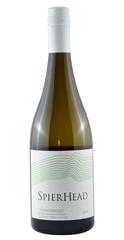
SpierHead builds new winery


 Photo: SpierHead's Bill Knutson

The construction activity this summer at SpierHead Wine in East Kelowna is for a new production facility.

“We are currently bottling about 4,000 cases per year,” says Bill Knutson, one of the owners. “We’d like the nudge that figure up a bit but our existing building has reached capacity.”

The winery has now planted 14 acres of its 20-acre property, which was an apple orchard before Bill and his partners began planting grapes in 2008 on the ironically named Gentleman Farmer Vineyard. The last of the apple trees were removed last year, making room for more grapes and for the new building.

Only two or three acres remain to be planted. With Pinot Noir now occupying more than three-quarter of the property, Bill is debating whether to plant more Riesling or perhaps Chardonnay, or a white yet to be determined.

“We are going to try and focus more” Bill says. “I think there is an opportunity to up our game on the Riesling and the Chardonnay. Pinot Gris is going to be Pinot Gris. But fundamentally, what we hope to be is a Pinot Noir house.”

The additional plantings this spring – mostly Pinot Noir, with a small block of Riesling – will support future increases in production for this winery. The large Pinot Noir planting done in 2014 will produce its first crop this year and the winery will need to accommodate 300 or 400 more cases.

SpierHead has managed its growth carefully since opening in 2010, even if Bill jokes that the new production facility will “ensure that there is no risk of the bank balance turning positive.”

Here are notes on current releases.


SpierHead Pinot Gris 2016 ($19). The wine begins with fresh aromas of apples, pears and peaches, echoed in the juicy flavours. The wine has a crisp finish. 90.

SpierHead Chardonnay 2016 ($23 for 460 cases). This Chablis-style Chardonnay begins with citrus aromas that lead to crisp, fresh flavours of green apple and citrus. A portion was aged in neutral oak, with the result that the oak is hardly perceptible on the tangy palate. 90.

SpierHead Riesling 2016 ($21 for 222 cases). The wine begins with lovely aromas of lemon and lime along with notes of herbs. The wine is savoury, with flavours of herbs and spice mingling with citrus and lemon zest. The finish is dry and crisp. 91.

SpierHead Pinot Noir 2015 Okanagan ($25). This wine has aromas and flavours of strawberry and raspberry, with a touch of spice on the finish. The bright fruit flavours and the silky texture make this an appealing wine for early drinking. 90.

SpierHead Pinot Noir 2015 Golden Retreat Vineyard ($30). This vineyard is in Summerland (and also produces Pinot Gris for SpierHead). There is a Pommard clone and three Dijon clones (115, 667 and 778) in this dark and full-bodied wine with cherry flavours and a rich velvet texture. 91.

SpierHead Pinot Noir 2015 Saddle Block Vineyard ($30). There are three Dijon clones in this dark, spicy wine with aromas and flavours of cherry and strawberry. The texture is silky. 91.

SpierHead Pinot Noir Cuvée 2015 ($38). This wine is a blend of multiple clones (Pommard and Dijon 115, 667, 777 and 828), selected from the best barrels. It is a rich and complex wine, generous in texture, with cherry aromas. The flavours of plum and cherry lead to a lingering finish with a touch of cloves. 94.


Thursday, August 3, 2017

Laughing Stock releases contrast two vintages


 Photo: David Enns in the Laughing Stock cellar


The latest releases from Laughing Stock Vineyards show off the Okanagan’s two most recent vintages. The contrast between them was dramatic.

The 2016 vintage started with the earliest budbreak in the Okanagan’s history. The vines had a three-week head start and might have produced a huge crop, had the weather not moderated in summer. In the end, the season was long.

“Overall [we had] an exceptional harvest with a very long growing season, meaning more time on the vines for the grapes to develop complex flavours,” the winery notes.

The 2015 vintage was the hottest on record in the Okanagan (at least so far). “Hot vintages don’t necessarily guarantee a stellar vintage as vines can shut down once temperatures go beyond 35◦C,” the winery comments. “And typical of hot recent summers, forest fires abounded, creating other issues such as valley smoke which clouded the sunshine for a few weeks and slowed ripening. Overall, harvest dates were two to three weeks early with fabulously ripe fruit.”

The vintages show in these wines. The two white wines exhibit the balance and crisp acidity that marks so many of the excellent 2016 whites. The three reds from 2015 all echo that “fabulously ripe fruit” that the winery writes about. That means bold, lush wines flirting with high alcohol levels.

To the credit of David and Cynthia Enns, the owners of Laughing Stock, they handled the challenge of 2015 well.

Here are notes on the wines.

Laughing Stock Pinot Gris 2016 ($19.99 for 1,500 cases). The wine has aromas of  pear and peach, leading to flavours of apple, peach and pear around a backbone of crisp minerals and acidity. The finish is dry. 90.

Laughing Stock Viognier 2016 ($22.99 for 625 cases). The wine begins with powerful aromas of apricots and peaches. On the palate, the rich texture is remarkable, delivering flavours that echo the aromas. There is a hint of honey and vanilla on the nose that repeats on the sybaritic finish. 92.

Laughing Stock Pinot Noir 2015 ($32.99 for 300 cases). This wine, which was aged 14 months in French oak barrels, is available only to members of Laughing Stock’s wine club. Members will get a bold and robust Pinot Noir with aromas and flavours of cherry and plum and with a savoury, spicy finish. A fellow taster commented that “you can taste the sun.” There is indeed a touch of warmth from the 14.5% alcohol; the wine reflects the vintage. 90.

Laughing Stock Syrah 2015 ($35.99 for 948 cases). There is three percent Viognier here, co-fermented with one lot of Syrah in stainless steel. A second lot was fermented in an open-top French oak puncheon and a third lot in a larger French oak tank. The latter lot was 80% whole berry and 20% whole cluster. This detail indicates the length David Enns goes to for complexity. With 14.9% alcohol reflecting a hot vintage, this is a muscular Syrah with aromas of blueberry jam and black cherry. On the palate, there are flavours of black cherry and figs with a note of black pepper. The texture is lush and the finish has an earthy, savoury note. 90.


Laughing Stock Blind Trust Red 2015 ($28.99 for 1,932 cases). Spoiler alert: if you peel away the capsule, you will find this is a blend 44% Merlot, 34% Malbec, 19% Cabernet Sauvignon and 3% Cabernet Franc. The wine was aged 15 months in French oak barrels (25% new). This big, mouth-filling red is a fine alternative for those who do not have access to Portfolio, Laughing Stocks icon blend. The wine begins with aromas of black cherry and black currant. The rich and ripe palate delivered flavours of black cherry, figs, chocolate and vanilla. 92.

Wednesday, August 2, 2017

The View raises its Pinotage profile


Photo: The View's Jennifer Molgat


Mellasat Vineyards in South Africa likes to bill itself as the “home of White Pinotage.” Its first vintage of a white wine from South Africa’s iconic red varietal was made in 2007.

The View Vineyards in Kelowna, operated by Jennifer Molgat, might want to call itself the second home of White Pinotage, after being quite successful with two vintages. It is part of what Jennifer calls a Pinotage trifecta: the winery also makes a rosé and a reserve red from the variety.

“We are flying our Pinotage flag high,” Jennifer says.

The winery is on an historic East Kelowna farm that has been in her family for more than a century, primarily as an apple orchard. Chris Turton, her father, began planting grapes in 1994. He added a 3.78-acre block of Pinotage in 1998, which has since been expanded to eight acres. The winery’s vineyard totals 48 acres.

Pinotage, a cross between Pinot Noir and Cinsault, was created in 1925 by Abraham Perold, a professor of viticulture at Stellenbosch University. The first commercial planting was in 1941 and the variety eventually established itself as something of a signature of the South African wine industry.

The variety came to the Okanagan in the early 1990s when Paul Moser, the South African businessman who founded Lake Breeze Vineyards, imported some vines. Lanny Martiniuk, the owner of Stoneboat Vineyards, propagated the vines and then decided to plant his own block. Chris Turton’s decision to plant Pinotage was made independently.

To date, those three producers are believed the only ones making Pinotage in BC. When The View first made Pinotage, the variety usually hid behind a proprietary name because consumers were not familiar with the variety. That has now changed.

“In the decade since we started – we started in 2007 – we have gone from ‘Pinot what, what is that a blend of?’ to ‘I love your Pinotage!’,” Jennifer says. That is why she now puts the varietal proudly on three different wines.

In 2016 The View replaced a five-acre block of Optima with Pinot Noir, a variety that likely will compete with the visibility of Pinotage.

“We are having fun with the Pinotage,” Jennifer says. “I can see as the Pinot Noir matures that our Pinotage program will definitely lean towards the white and the rosé wines. Pinotage makes an incredible rosé. The white has become fairly popular and the red is delicious. It is developing a following, but I can see that it may take a little bit of a back seat to the Pinot Noir.”


Creating The View’s White Pinotage in 2015 was what Jennifer calls “a project” for Mike Anderson, one of the winery’s two winemakers. “The White Pinotage is whole-cluster pressed, with a very gentle press cycle,” Jennifer says. The 2015 vintage was fermented entirely in stainless steel while 16% of the 2016 was fermented in neutral oak; the rest was in stainless steel.

The 2016 Pinotage Rosé is made in a dry but juicy style. “We destemmed the grapes and soaked them on the skins for 18 hours in the press, for just a slight colour extraction,” Jennifer says. The fermentation was cool. The result is a wine so delicious that she says it is “hard to spit” during a tasting.

“We did not have the confidence before to call it a Pinotage Rosé,” she says. “We had other names for it, such as Distraction Rosé and Voulez View Rosé. And then, with the popularity of the White Pinotage, we said we are going to fly the Pinotage flag and call it Pinotage Rosé.”

The winery made its first Pinotage Reserve in 2014 (now sold out) followed by the 2015, the current release. The wine is aged 10 months, primarily in French oak barrels, 40% of which are new. The oak adds a pleasant toasty note to the wine. Soft tannins give the wine a generous texture. However, Jennifer does not recommend cellaring the Reserve more than three to five years.

The winery gets a lot of mileage from its Pinotage grapes in blends as well. Silver Lining Red 2015 ($15.95) is 94% Pinotage with five percent Merlot and one percent Baco Noir. The Silver Lining Rosé, an off-dry $15.95 wine, is 50% Pinotage with Ehrenfelser, Gewürztraminer, Riesling and Baco Noir filling out the blend. Voulez View Rosé is a Pinotage/Riesling blend. Voulez View 2014 Rouge is 85% Pinotage and 15% Merlot. There is even a fortified red called Well Heeled Red which is 90% Pinotage, 10% Merlot.

(The Voulez View label is being retired. Consumers do not always get the pun.)

Here are notes on some current releases from The View.

The View White Pinotage 2016 ($19.95). The wine is crisp and refreshing, with aromas of citrus, spice and herbs leading to flavours of apple and melon. 90.

The View Dry Riesling 2016 ($N/A). This is a zesty, refreshing wine with citrus aromas and flavours. There is a fine spine of minerality. This wine should be cellared for several years to fully achieve its complex potential. 90.

The View Pinot Gris 2016 ($19.95). The wine has aromas and flavours of citrus and pear with some green apple notes and a touch of spice on the finish. 90.

The View Pinotage Rosé 2016 (N/A). Pale rose petal in hue, the wine begins with aromas of cherry and strawberry. On the palate, it has a luscious texture with strawberry flavours and a dry finish. 91.

The View Pinotage Reserve 2015 ($25.95). The wine begins with aromas of cherries mingled with toasty oak and white pepper. On the palate, the cherry flavours are accented with notes of mocha and toasty oak. The tannins are ripe and the texture is generous. 92.


Monday, July 31, 2017

Road 13 tilts toward the Rhône


Photo: Road 13's Joe Luckhurst

Last summer, when winemaker Jeff Del Nin took over at Road 13 Vineyard from J-M Bouchard, he remarked to a friend that opportunities like Road 13 don’t come along very often.

It is a striking comment, considering that Jeff had been making wine since 2009 at Church & State Wines, one of the other leading wineries in the south Okanagan.

That remark was echoed by how well Road 13 did in the 2017 National Wine Awards. It was the top BC winery, winning 13 medals. The performance also was among the top 10 Canadian wineries.

What attractions did Road 13 offer?

Perhaps it was that the winery is in a quirky replica of a 19th Century Bavarian castle with a modern production wing attached to it. Perhaps it is the volatile but passionate personality of Mick Luckhurst, one of Road 13’s proprietors.

Perhaps it is neither. Church & State’s production facility is a former fruit cold storage. There is only limited production in the showpiece Robert Mackenzie-designed winery on Black Sage Road. And Kim Pullen the owner of Church & State, is another passionate, volatile vintner.

The real attraction of Road 13 is it access to vineyards, such as the superb Blind Creek Vineyard in the Similkameen, that grow excellent Rhône varietals, among other varietals. Jeff has a track record for producing Rhône varietals, such as the award-winning TreBella, one of Church & State’s best whites. The Australian-trained but Canadian-born winemaker had not worked with Rhône varietals before he joined Church & State. He proved himself a fast learner.

This summer’s releases from Road 13 include an outstanding Marsanne and two excellent Syrahs (the latter would have been made by J-M but finished by Jeff).

Mick’s son, Joseph, who is Road 13’s general manager, told me last summer that he intended to increase Road 13’s focus on Rhône varietals.

“I honestly believe this is where BC can shine,” he said. It is also where Road 13 can establish an identity that differentiates its wines from all of the Bordeaux blends in the South Okanagan. “Very few wineries have become branded for the Rhônes,” he said. “There is room there to be one of the guys.”

Here are notes on the wines.


Road 13 Honest John’s White 2016 ($17 for 1,827 cases). This is a blend of 54% unoaked Chardonnay, 24% Pinot Gris, 10% Kerner, 7% Chenin Blanc, 3% Viognier and 2% Orange Muscat. The result is a dry white with fruit bowl of aromas and flavours (citrus, apples and melon); and with a crisp, spicy finish. 90.


Road 13 Chip off the Old Block Chenin Blanc 2016 ($19 for 249 cases). The wine is so named because the grapes come from a relatively young planting, propagated with cuttings from the winery’s 1968 Chenin Blanc block. The wine begins with dramatic aromas of citrus, apples and stone fruit. That is echoed in the intense fruit flavours. All is wrapped around a spine of minerality. The wine is crisply dry with a lingering finish. 91.


Road 13 Marsanne 2016 ($24 for 75 cases). There is two per cent Viognier added to this wine for what the winery calls “additional aromatic lift and complexity.” The wine begins with aromas of citrus, apples and melons. On the seductive palate, there are honeyed flavours of peach and nectarine, with a hint of vanilla on the finish. 92.

Road 13 Honest John’s Rosé 2016 ($18 for 2,327 cases). This is a robust and dry rosé, assembled from a blend of 54% Merlot, 24% Pinot Noir, 10% Gamay Noir, 5% Viognier, 2% Syrah and 1% Cabernet Franc. The colour is vibrantly pink. There are aromas of strawberry and watermelon leading for mouth-filling cherry and strawberry flavours. 90.

Road 13 Syrah Malbec 2015 ($37 for 347 cases). The blend is 70% Syrah, 24% Malbec, 3% Viognier and 3% Gamay. Dark and concentrated, the wine begins with quite dramatic aromas of ripe red fruits, including cherries, blackberries and boysenberries. The texture is luscious. The wine delivers savoury and ripe flavours of black cherry, black currant, sweet tobacco and mocha. The alcohol is 15% but the wine has the concentration to carry it. 94.


Road 13 Syrah 2015 ($35 for 381 cases). The blend is 94% Syrah, 3% Viognier, 3% Roussanne and 2% Mourvedre. Dark in colour, the wine begins once again with dramatic aromas of black cherry, blueberry, plum and black pepper. On the rich palate, the wine echoes to ripe fruits from the aroma. The finish is long, with a hint of pepper and deli spice. 92.

Friday, July 28, 2017

Singletree releases its first Grüner Veltliner


Photo:Singletree's Andrew Etsell

Abbotsford’s Singletree Winery has released the first Fraser Valley-grown Grüner Veltliner wine.

The renowned white varietal of Austria, Grüner Veltliner has been grown in British Columbia for less than a decade. Today, six wineries are producing wine from the grape, with Singletree the most recent to release a wine from the variety.

Andrew Etsell, who runs Singletree, credits his parents, Garnet and Debbie, for inspiring his interest in Grüner Veltliner.

“My parents go skiing to Austria every winter,” he says. And Laura [Preckel, Andrew’s partner] and myself have also travelled through Austria. We really discovered the grape there. I had not heard of it before, since there was not a lot in BC. I started tasting the Grüner Veltliners from around Austria and I saw how wide a range of styles it is made in there. I thought that Austria has a fairly similar climate to us. Why can’t we grow it here?”

The answer is that, until a decade ago, importers of grape wines could find no sources of vines that were certified virus-free and thus would be allowed into Canada.

“We actually look at planting Grüner Veltliner in 2010,” Andrew says. “It took us until 2013 before we found vines. I believe they came out of Ontario. We only have an acre because that is all that is available. We took what we could.”

He now has one acre of Grüner Veltliner among the 12 acres of vines Singletree has planted since 2010. The major varietal is Siegerrebe, an early-ripening grape well suited to the Fraser Valley. Singletree also grows Pinot Gris, Sauvignon Blanc and Pinot Noir.

On the strength of the winery’s initial release, he is looking for additional sources so he can increase Singletree’s Grüner Veltliner. “We are also looking at working with a nursery. If we can’t find the vines, we would take cuttings from our own vineyard.”

Andrew adds: “I always like growing grapes that are not as mainstream as most. The Siegerrebe and the Grüner Veltliner are not grown by a lot of people. The Grüner Veltliner, with the minerality and the citrus and honey, is just an interesting grape to grow here.”

The winery, which opened its tasting room in 2015, was developed because the underlying Etsell family business, a turkey farm, was judged not big enough to support the elder Etsells and their two sons.

Farming is in their blood. “I have always wanted to farm,” says Garnet Etsell, who once owned a blueberry farm when he was a teenager. “My first degree was actually in animal science, so we went into dairy farming.” Because that business struggled, Garnet got a business degree and switched to accounting. But he never lost the desire to farm.

“In 2001, we decided to purchase a piece of property at the north end of Mt. Lehman Road [near Abbotsford].  “I said to my wife I have always wanted to farm. If I didn’t have a commercial operation by the time I was 45, that was going to be it. Just before I turned 45, we bought our first commercial turkey operation.”

Andrew, meanwhile, studied horticulture with the idea of developing a plant nursery on the family farm. In 2004, he went to Mission Hill Family Estate to gain some practical agriculture experience – and developed a strong interest in winegrowing.

“I started looking at planting down here in 2004, 2005,” he says. “Over the next four or five years, I researched the wineries here in the valley and tried to find out what had done well and what they would not plant again. We also worked with a few consultants.”

More than one suggested he plant some of the same Blattner hybrids that a number of small growers in the Fraser Valley already had. He rebuffed one consultant by challenging him to “bring me one good bottle of Blattner wine and I will plant the variety.”
“They grow great here,” Andrew acknowledges. “They are disease resistant and they ripen early. They are a great grape for the area but you can’t sell the wines.”

But he was impressed with whites made from a two-acre Siegerrebe block a friend had planted at nearby Clearbrook. Andrew leased that block and planted five more acres of that aromatic German vinifera in Singletree’s estate vineyard.

Beginning with the debut 2013 vintage, Singletree arranged to have Okanagan Crush Pad and its winemaker, Matt Dumayne, make the wines. Andrew has since augmented his skills with a two-year winemaking course at the University of California in Davis. Singletree has begun to build its own winemaking facility in time for Andrew to take full responsibility by the 2018 crush.

Here are notes on current releases at Singletree.


Singletree Winery Grüner Veltliner 2016 ($17.30 for 150 cases). The wine begins with lightly honeyed aromas of mango and melon. It has flavours of citrus, melon and apple. Bright acidity and good minerality give the wine a refreshing and tangy dry finish. There is the suggestion of white pepper on the finish, a characteristic of the variety and one that is likely to be more expressive as the vines mature. 91.

Singletree Winery Siggy 2016 ($19.04 for 170 cases). This is the winery’s flagship Siegerrebe white wine with a more consumer-friendly name. Beginning with spicy and fruity aromas, it delivers a basket of tropical fruit flavours. The finish is dry and refreshing. 90.

Singletree Winery Pinot Gris 2015 ($19.04 for 200 cases). This wine was fermented in concrete, enhancing the rich texture. It delivers flavours of pear and apple with a touch of spice on the dry finish. 88.

Singletree Winery Chardonnay 2015 ($20.98 for 300 cases). This wine was fermented in barrels and in stainless steel and aged in barrel (30% new). The subtle oak frames flavours of peach and pear. 89.

Singletree Winery Rosé 2016 ($17.30 for 200 cases). This wine was made with organic Pinot Noir. Aromas of rhubarb and strawberry lead to crisp, refreshing flavours of strawberry and watermelon. 90.


Singletree Winery Harness 2014 ($30.35 for 275 cases). To be released this fall, this is blend of 51.3% Merlot and 48.7% Cabernet Sauvignon. Made with grapes from a great red vintage, this wine was aged in barrel for 18 months. It begins with aromas of cassis, black fruits and spice leading to flavours of blackcurrant and black cherry mingled with notes of leather and chocolate. 91.