Writer and wine columnist John Schreiner is Canada's most prolific author of books on wine.
Monday, May 12, 2025
Hillside Winery is relying on its deep inventory
Photo: Winemaker Kathy Malone
The good news from Kathy Malone, the winemaker at Hillside Winery, is that Hillside’s vines, for the most part, survived the 2024 freeze and should produce a crop in the 2025 season.
This is consistent with the experience of most Naramata Bench vineyards. The nearby Okanagan Lake moderated that cold spell enough that most varietals pulled through, perhaps with the exception of Syrah, which suffered generally. Hillside’s Syrah block endured 25% vine death.
In the 2024 vintage, Hillside was able to pick just enough Pinot Gris from its Naramata sources to make one barrel of wine. As well, Kathy made a small amount of unoaked Pinot Gris from Washington State juice. Aside from that Hillside purchased no fruit from U.S. growers.
“Fortunately, Hillside has a deep portfolio to help tide us over the shortfall of 2024,” Kathy writes.
Here are notes on three examples from that inventory.
Hillside Below The Road Rosé 2023 ($35 for 150 cases). This wine is for the wine club and half the production has been sold. The wine is a blend of Merlot, Cabernet Franc and Cabernet Sauvignon, fermented on older French oak barrels with lees stirring. The result is a serious and textural rosé that flirts with being a light red wine. There are flavours of red plum and strawberry. The finish is long. 91.
Hillside Heritage Cabernet Franc 2020 ($40 for 345 cases). There are just 100 cases of this wine left. It recalls what a fine vintage that 2020 was on the Naramata Bench. The wine is concentrated in texture and flavour. The aromas of blackberry, raspberry and sweet tobacco are echoed on the seamless palate. 91.
Hillside Mosaic 2018 ($70 for 280 cases). Hillside’s flagship red, Mosaic is blended to taste and not to a strict varietal formula. Consequently, this is the first time in Mosaic’s 16-year history that Malbec is the leader, with 35% of the blend. The wine also has 29% Merlot, 16% Cabernet Franc, 13% Cabernet Sauvignon and 7% Petit Verdot. Aging was in French oak (43% new). It is an elegant wine with aromas of spice, blackberry and cassis. The texture is polished, with long, ripe tannins. The flavours reflect the lifted notes of sweet fruit typical of Malbec. 93.
Tuesday, May 6, 2025
Gehringer Brothers 2024 International Series wines
Photo: Winemaker Brendon Gehringer
One day last September, a truck loaded with 15,000 pounds of California-grown Sauvignon Blanc grapes rolled up the driveway at Gehringer Brothers Winery just as I was interviewing winemaker Brendon Gehringer.
Like almost all wineries in the South Okanagan, the winery had no crop from its own vineyards due to the severe frost damage during the 2024 vintage. “To help keep our cellar doors open and ensure we had wine (for the market), we elected to purchase fruit from the USA for our 2024 vintage,” the winery explains in the technical sheets accompanying the 2024 releases.
“It is all uncharted territory for us,” Brendon told me as we watched the truck pull into the yard. “It is not something I have ever dealt with.”
Photo: Newly arrived Sauvignon Blanc outside the Gehringer winery
Brendon represents the next generation of the Gehringer family. He is the son of Walter, one of the two founding brothers in the business. While his father and his uncle Gordon had both received their winemaker training in Germany, Brendon elected to go to Australia for his schooling. That led to a lengthy stay there before he returned to the family business in the summer of 2023.
He was just in time to endure the winter that wiped out all of Gehringer’s crop and about 15 acres (40%) of the vineyard, all of which has been or will be replanted.
“I was prepared to go to Germany,” he says. “My German is good enough for me to get by. But there were a number of newer winemakers coming to the valley that are of Australian background or Australian-trained. The discussion was that if I went to Germany, I would learn something similar to what we already know. Going to Australia would give us a different perspective.”
Brendon enrolled in Adelaide University’s wine program in 2008. After university, he worked for a year or so at a small sparkling wine producer. “I learned a fair bit there are far as that process goes,” he says. “They were quite a small facility. I was essentially their one employee in the winery. I got to do everything. It was a neat experience.”
Then he did a vintage with a large export-oriented winery in McLaren Vale. “It was not a place where I would have enjoyed working for a long term but it was a neat experience to see how larger wineries operate,” Brendon says.
From there he moved to Kellermeister Wines in the Barossa Valley late in 2014, working with owner Mark Pearse. The winery is smaller than Gehringer Brothers, producing about 8,000 cases a year.
“It was a good job there, working for a smaller producer that was making some really good wine,” Brendon says. “Because it was a small facility, it was between me as the assistant winemaker, and the owner, Mark Pearse, who was senior winemaker. We essentially ran most of the show. It was good experience to see the full process from grapes to bottle and be personally involved in the whole aspect. I had grown up in a small winery where we had that same hands-on approach from grapes to bottle. I fitted in there quite well. Mark appreciated having me there and he treated me quite well.”
However, there always was the pull of the family winery in the Okanagan. Walter Gehringer once told me that if Brendon (who had acquired an Australian wife and a young family) did not return from Australia, the Gehringers might have to sell the winery.
“It had gotten to the point where Claire and I were figuring out what our next plan should be,” Brendon recalls. “I enjoyed my job at Kellermeister but we had this opportunity to move back to Canada and the family business.”
Initially, he got involved with the Okanagan winery remotely. “While I was still at Kellermeister, I told my boss that I would like to try a little bit of stuff with the family business. He was supportive of that. For about a year, I spent one day a week from Australia on the family business. Then I decided I was not quite staying on top of my job at Kellermeister. So I needed make a decision to dive into the family business a bit more. So I spent another year and a bit working from home for Gehringer Brothers, but remotely. Taking care of the website; design aspect things; spending a fair amount of time on the phone with Dad. After working remotely for the business here for a year and a bit, we decided to move. We timed it so my eldest would start kindergarten. We came to the Okanagan in August 2023.”
Brendon has some ideas about new directions that Gehringer Brothers might explore, given his Australian experience. “Right now, it is in a bit of a holding pattern,” he told me last fall. “We are going to keep the status quo and keep things where they are at. Longer term, it would be nice to have a bit more emphasis on red wines. In Australia, the biggest portion of what we made was red wine. I enjoyed learning a lot about that there. It would be nice to have an opportunity here to bring that here.”
He elaborates: “It would be nice to create a few higher tiers, a few premium products. There is an interest in premium products. People have come by and said we really like your wine but it is almost not expensive enough to justify buying this. In certain social spheres, it makes a difference as far as the value of the wine you put on the table. Whether the wine any good or not is almost a side note. It is more, ‘how much did you pay for it.’ It would be nice to provide that but I feel there still needs to be a certain value. The quality has to match if you are charging a lot more for the wine. There has to be a value proposition there as well.”
Here are notes on the current releases in what the winery calls its international series. The prices are wholesale but reflect the Gehringer tradition of very good value.
Gehringer Brothers International Series Dry Riesling 2024 ($13.45). This wine was suffering still from bottling shock that appeared to have supressed the varietal flavours. It is made with Washington grapes that were given a long, cool ferment. It shows aromas and flavours of citrus, with a crisply dry finish. 88.
Gehringer Brothers International Series Riesling 2024 ($13.45). Made with Washington grapes, this is an off-dry wine in the traditional Gehringer style. There was no bottle shock here. The delicious wine is full of aromas and flavours of citrus and nectarine, with a generous texture and a long finish. 92.
Gehringer Brothers International Series Desert Sun 2024 ($9.86). This off-dry white blend is made with grapes from both California and Washington (the winery has not published the varietals). The wine has aromas and flavours of peaches and nectarines. The residual sugar, nicely balanced with acidity, gives the wine a bit of weight on the palate. 90.
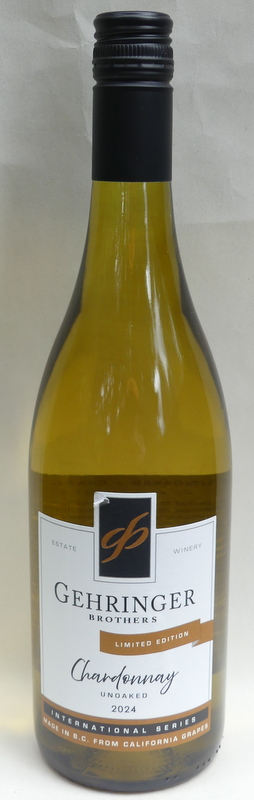
Gehringer Brothers International Series Chardonnay Unoaked 2024 ($13.45). This wine is made with California grapes, fermented cool and given extended lees contact. The wine presents in the glass with a lightly golden hue, with aromas of apples and peaches that are echoed on the palate. 90.
Gehringer Brothers International Series Sauvignon Blanc 2024 ($14.25). The fruit is from California. When the grapes arrived at the winery, they were crushed, given 12 hours on the skins and then pressed. This enhanced the aromas and flavours of lime, grapefruit and mango. The finish is crisp and zesty. 90.
Gehringer Brothers International Series Pinot Gris 2024 ($14.25). This wine was made with California grapes. When they arrived at the winery, they were allowed a long, cool ferment. The flavours and aromas are fresh with notes of peaches and pears. The finish is long. 89.
Gehringer Brothers International Series Rosé 2024 ($13.06). This wine is with California Cabernet Sauvignon grapes, pressed gently and allowed a long, cool ferment. The wine delivers a juicy mouthful of cherry, strawberry and raspberry flavours. 89
Saturday, April 26, 2025
Noble Ridge debuts its 2024 Vilicus wines
Photo: Jim and Leslie D'Andrea (photo courtesy Noble Ridge winery)
Noble Ridge Vineyard & Winery in Okanagan Falls marked the recent Earth Day by reiterating its status as the first vineyard and winery in Canada to be biosphere certified.
“That means we’ve officially joined a global movement committed to sustainability, community, and long-term positive impact,” the winery writes. “Our Biosphere Certification, granted through the Thompson Okanagan Tourist Association and based on 17 United Nations sustainable development goals, is proof that we’re walking the walk when it comes for our planet, our people and the future.”
Owners Leslie and Jim D’Andrea opened this winery 20 years ago. The actions they have taken over the years to have a sustainable winery include avoiding pesticides and using cover crops instead; irrigating efficiently to reduce water usage; using solar power and geothermal energy in the winery; putting wines in lighter bottles; and doing extensive recycling.
Winemaker Benoit Gauthier calculates that vineyard water usage has been reduced by 18% since 2021; and he is not easing up on water conservation. Planting cover crops and placing compost beneath the vines has helped cut down on water usage while also improving soil health.
While all of these “steady, thoughtful changes” were being made (quoting the winery), Noble Ridge – like so many other Okanagan wineries – had to deal with the impact of the hard freeze in January 2024. With no grape production in the 2024 vintage, Noble Ridge sourced grapes in Washington State. The wines are just being released, labelled as Vilicus.
The name in inspired by the Latin word Vilicus meaning ‘steward,’ and is meant to symbolize the winery’s stewardship in every sense of the word.
Meanwhile, the estate vineyards are being rejuvenated. “If the 2025 growing season goes smoothy,” Benoit writes, “we are hoping to harvest about 50% of our typical crop this year, with a return to near full production expected by 2026.”
Here are notes on the first four wines in the Vilicus series.
Noble Ridge Vilicus Pinot Grigio 2024 ($21 for 630 cases). The grapes were sourced in Washington’s Horse Heaven Hills AVA. The fruit was picked and pressed under Benoit’s supervision, with the must transported to Okanagan Falls for fermentation. The wine is crisp and fresh. Aromas of apple, pear and peach are echoed on the palate. 89.
Noble Ridge Vilicus Pinot Gris/Viognier 2024 ($21 for 630 cases). The fruit is from the Horse Heaven Hills AVA, with the Viognier from the Goose Gap AVA. The proportion of each is not broken out in the specifications. However, the Viognier adds a bit of weight and structure to the wine, complementing the floral notes in the aroma and the peachy flavours. 90.
Noble Ridge Vilicus Viognier 2024 ($21 for 190 cases). The fruit is all from the Goose Gap AVA. This is a luscious wine, with aromas and flavours of peach and quince mingled with honey. There is just a hint of residual sweetness offset with good balance. 91.
Noble Ridge Vilicus Rosé 2024 ($21 for 500 cases). The varietal here is Malbec from the Wahluke AVA. The wine has an appealing rose petal hue. It has aromas and flavours of strawberry, raspberry and watermelon. 90.
Monday, April 21, 2025
40 Knots Winery expands to cider-making
Photo: Brenda Hetman Craig and Layne Craig (photo courtesy 40 Knots)
Comox-based 40 Knots Winery has added four outstanding sparkling apple ciders to its already extensive wine portfolio.
If you have not yet encountered the ciders, don’t wait too long. These are immensely appealing but the production volumes are limited. If you share my taste, you will want more than one bottle.
40 Knots is within earshot of the Comox air force base. The estate vineyard was started in 2007 by Bill Montgomery, a retired owner of a tugboat company. He eventually discovered he had taken on more than he wanted to manage and put the winery on the market. In 2014, it was acquired by an energetic husband and wife team from Fort St. John, Layne Craig and Brenda Hetman-Craig.
Adding ciders made in the traditional and labour-intensive French method certainly demonstrates how energetic they and their winemaking team are. There are 12 cider apple varieties used here. The juice is pressed by hand, does primary fermentation in stainless steel, secondary fermentation in the bottle, with additional blending of a flavouring dosage when the cider is disgorged.
The result is remarkable: delicious and complex sparkling beverages that are underpriced, in my view.
Some background on the owners was provided on a early website: “Layne, who grew up on a Saskatchewan farm wanted to put his love of the land into play, while Brenda wanted to put her business management skills toward building a successful family business, one that would ultimately involve their grown children. It was an added bonus for Layne, a pilot, that the Comox air force base is nearby. Planes can often be seen overhead adding to the force of energy that surrounds the site.”
Here are notes on current wine and cider releases:
40 Knots Sieg 2023 ($29.50 for 313 cases). The fruit is estate-grown Siegerrebe, an aromatic white varietal. The wine was aged eight months on the lees, with weekly stirring. It begins with dramatic aromas of lime and other tropical fruits, echoed on the palate with a whole tropical orchard, including lychee and green melon. The finish is dry, with lingering fruit and spice. 91.
40 Knots White Seas 2023 ($27.50 for 594 cases). This is a blend of 93% Epicure and 7% Pinot Gris. The wine was aged on the lees for eight months. It begins with aromas of apple and lemon, leading to flavours of apple and grapefruit. Bright acidity balanced with a touch of residual sugar gives the wine a tart and refreshing finish. 89.
40 Knots Pinot Gris 2023 ($29.50 for 341 cases). This wine was fermented cool and aged eight months on the lees in stainless steel. It begins with aromas of pear and apple leading to flavours of apple and citrus. Bright acidity gives the wine a crisp, tart finish. 88.
40 Knots Auxerrois 2023 ($32 for 227 cases). This varietal is a white from Alsace that deserves a higher profile for the complex wine it produces. There are aromas and flavours of apricot, apple and quince. The texture is generous with notes of minerality and herbs on the dry and lingering finish. 91.
40 Knots Rosé 2023 ($29.50 for 550 cases). This is a blend of 67% Pinot Noir and 33% Gamay, both estate-grown. The fruit was pressed gently, yielding a delicate rose petal hue to the wine. It has aromas and flavours of strawberries with a hint of watermelon. The finish is crisply dry. 89.
40 Knots Gamay Noir 2023 ($42 for 500 cases). The fruit is estate-grown Gamay Noir. It was cold-soaked on the skins for four to seven days. After ferment, the wine was aged in stainless steel. It begins with expressive red berry aromas (cherry, raspberry) echoed in the fruit sweetness on the palate. The wine is bright and lively. 90.
40 Knots Carambolage 2023 ($42 for 267 cases). This red wine is a blend of 43% Cabernet Libre, 34% Gamay and 23% Pinot Noir. The components were aged in a mix of stainless steel and French oak barrels. In the glass, the wine presents with a brilliant red hue and aromas of cherry. The palate delivers more cherry and red berry flavours with a hint of pepper on the finish. 90.
40 Knots Knotty Cider Apple Hops NV ($27.50). This cider was made with hand-pressed juice from cider apples. It was fermented in stainless steel and neutral French oak barrels, with secondary fermentation in the bottle. Locally-sourced hops were used for the dosage. This golden-hued cider has aromas and flours of apple with the complexity of a hops note on the finish. 90.
40 Knots Knotty Cider Apple Black Currant NV ($27.50). This cider was made with hand-pressed juice from cider apples. It was fermented in stainless steel and neutral French oak barrels, with secondary fermentation in the bottle. Black currant concentrate was added when the cider was disgorged. It has a rose petal hue in the glass along with an active mousse. On the palate, it is tart and refreshing. 90.
40 Knots Knotty Cider Apple Quince NV ($27.50). This cider was made with hand-pressed juice from cider apples. It was fermented in stainless steel and neutral French oak barrels, with secondary fermentation in the bottle. Quince juice was added when the cider was disgorged. In the glass, the cider displays a golden hue and active bubbles, leading to an appealing fruity aroma and delicious flavours of apple and quince. The finish is crisp. 90.
40 Knots Knotty Cider Apple Cranberry NV ($27.50). This cider was made with hand-pressed juice from cider apples. It was fermented in stainless steel and neutral French oak barrels, with secondary fermentation in the bottle. Cranberry concentrate (made from locally grown berries) was used as a dosage, imparting an appealing rosé hue to the cider. It is crisp and tangy on the palate. 90.
Subscribe to:
Posts (Atom)