Writer and wine columnist John Schreiner is Canada's most prolific author of books on wine.
Saturday, July 17, 2021
Culmina adds an orange wine
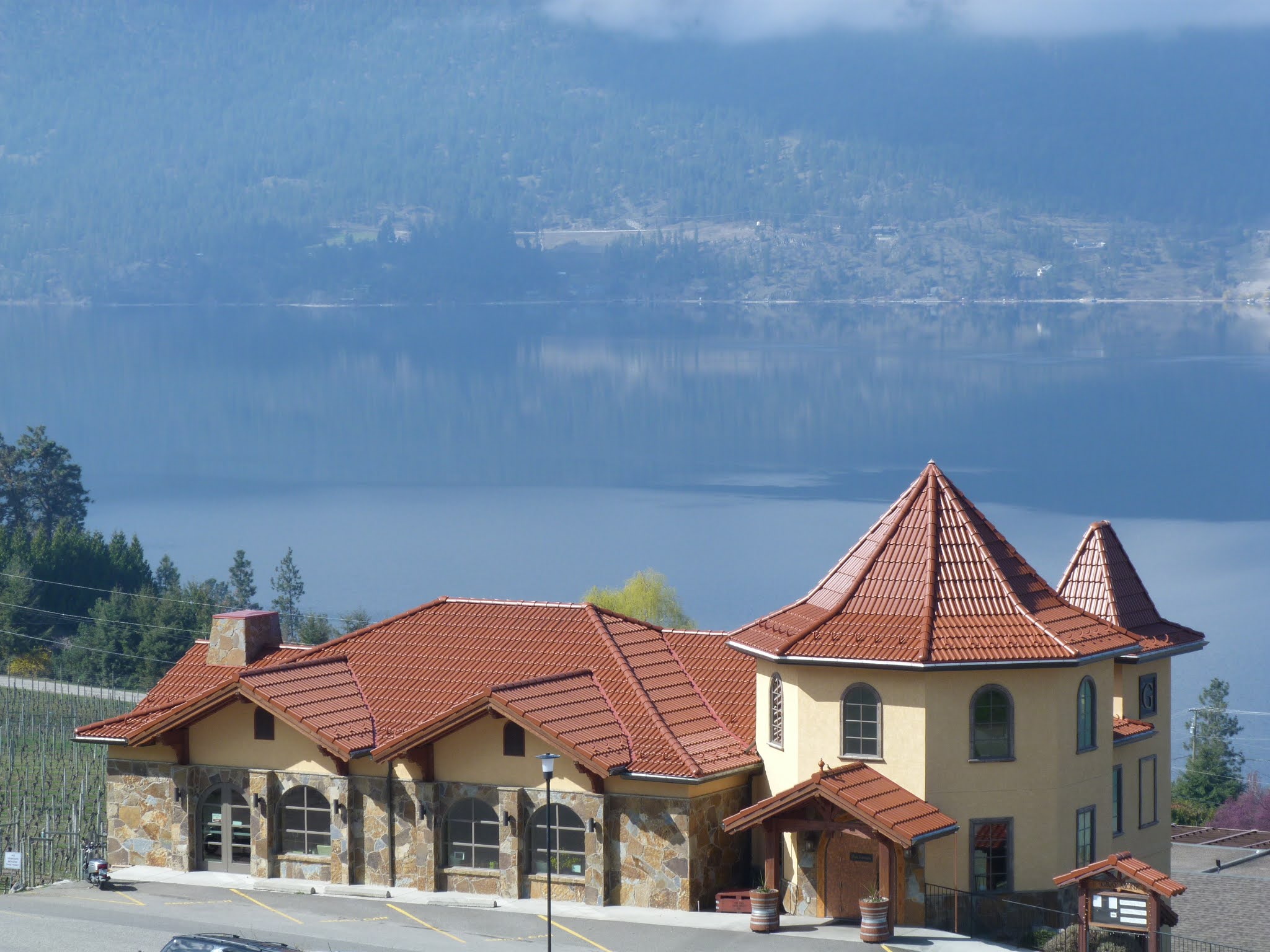
Photo: Culmina's winery on The Golden Mile
In 2020, Culmina Family Estate Winery made its first orange wine, joining the small but growing number of producers entering this category.
There will be consumers out there who will ask why. These cerebral wines seem to be a great favourite with sommeliers. It is debatable how popular they are with the average consumers who prefer wines that please the palate, not test it.
Of course, one should not avoid the opportunity of tasting something new and different. Many consumers have developed a taste for olives or kimchi – or even vegemite. One never knows.
Orange wines are not made from oranges. They are made by fermenting white wines on the skins and seeds. The wines usually pick up colour from the skins, along with tannin and slightly bitter flavours recalling steeped tea.
While these wines are relatively new in the portfolios of contemporary wineries, there is a tradition for such wines going back thousands of years to Georgia. The Georgian winemaking style of fermenting and aging on the skins in buried pottery jars has been making a comeback. You might ask why since, with modern winemaking technology, wines can be made that are clean and fresh.
As you might guess, I am not a fan of drinking intellectual curiosities when I can drink wines whose flavours are more easily appealing.
Having said that, I do not think that J-M Enixon, Culmina’s winemaker, has been burying pottery jars in the winery’s vineyard. This orange wine is clean and drinkable. There is nothing weird going on here – other than the decision to make an orange wine in the first place.
Here are notes on the current releases.
Culmina Dilemma 2017 ($31 for 825 cases). This is 100% Chardonnay matured nine months in French oak barrels (28% new); 20% of the wine was matured in stainless steel. Only 30% was allowed to undergo malolactic fermentation. The result is a wine with aromas of vanilla and orange. The palate is fresh and fruit forward, with complexing notes of butter, apricot and orange. The finish lingers. 92.
Culmina Saignée 2020 ($24 for 500 cases). Five varietals were bled for the juice to make this delicious, if fashionably pale, rosé. The blend is 48% Cabernet Franc, 17% Syrah, 15% Malbec, 12% Cabernet Sauvignon and 8% Merlot. It begins with wild strawberry, apple and watermelon. The palate is packed with fruit, echoing the aromas plus orange and pink grapefruit. The bright acidity gives this wine a crisp, refreshing finish. 93.
Culmina No. 013 Orange Wine Gewürztraminer 2020 ($25 for 150 cases). This wine was fermented 67 days on the skins in stainless steel and with indigenous yeast. The slight haze in the appearance suggests the wine is unfined. The aroma is dramatic, with a rush of spice which the winery suggests is juniper mingled with grapefruit. It has flavours of orange and dried apricots, with a salty note on the finish. 90.
Culmina No. 014 Wild Ferment Rosé 2020 ($29 for 150 cases). This is a blend of 60% Cabernet Franc, 25% Malbec and 15%. It was produced with a combination of saignée and direct pressing. The juice was allowed just two hours of skin contact, producing a delicately-hued rosé. It was fermented with indigenous yeast and aged for 61 days (70% in stainless steel, 30% in neutral oak). It has delicate aromas of strawberry and watermelon which are echoed on the juicy palate. The texture gives the wine a satisfying finish. 92.
Culmina Syrah 2018 ($42 for 150 cases). The wine begins with aromas of plum, fig and black cherry mingled with vanilla. These are all echoed on the palate along with classic notes of black pepper. The long, ripe tannins add elegance to this full-bodied red. 93.
Culmina Hypothesis 2016 ($46 for 900 cases). The blend is 42% Cabernet Sauvignon, 33% Merlot, 19% Cabernet Franc, 5% Malbec and 1% Petit Verdot. The wine was aged 16 months in French oak (33% new, 37% one year old, 30% two or more years old. The wine begins with aromas of cassis, black cherry and sweet tobacco. Long, ripe tannins give the wine a polished texture to show off the flavours of dark cherry, blackberry, black currant, plum and mocha. This is Culmina’s flagship red, built to age like a fine Bordeaux. 92.
Tuesday, July 13, 2021
Burrowing Owl buys Wild Goose Vineyards
Photo: Left to right - Hagen Kruger, Chris Wyse, Alex Kruger, Kerri Wyse-McNolty, Roland Kruger, Jim Wyse and Nikolas Kruger
Burrowing Owl Estate Winery’s purchase of Wild Goose Vineyards unites two of the founding families of the British Columbia wine industry.
The acquisition, which was announced on July 13, also concludes a bizarre period in which Wild Goose had to put itself in receivership in order to survive as one of the Okanagan’s best-loved wineries.
The Kruger family, which operates Wild Goose, has lived in the valley since 1984 when the late Adolf Kruger purchased a vineyard site near Okanagan Falls for what became one of the early farmgate wineries. It now produces about 20,000 cases of wine a year and owns 40 acres of vineyards. The winery is managed by Adolf’s heirs: Roland, the general manager; his brother Hagen, the consulting winemaker; and Hagen’s sons, Nikolas, the winemaker, and Alex, a vineyard supervisor.
Burrowing Owl, which produces about 50,000 cases a year, is operated by the Wyse family. It was founded in 1993 by Jim and Midge Wyse. His son, Chris, is now the president of Burrowing Owl. His daughter, Kerri Wyse-McNolty, is a winery executive. Based near Oliver, Burrowing Owl owns 210 acres of vineyards in the south Okanagan and the Similkameen Valley.
The Supreme Court of British Columbia accepted Burrowing Owl’s offer of $12.6 million for Wild Goose. The sum pays off both secured and unsecured creditors.
“We are very excited about this acquisition,” Chris Wyse said in a news release. “We have been looking at various opportunities to grow our business over the past few years, and we feel that Wild Goose is a perfect fit for us.”
There is almost no overlap between the portfolios of the wineries. Burrowing Owl is renowned primarily for its big red wines while Wild Goose has made its reputation with Riesling, Gewürztraminer, Pinot Gris and Pinot Blanc.
The stellar reputation of Wild Goose with consumer seems to have survived the receivership almost intact. “We appreciate the family heritage and history of Wild Goose, as well as … the strength of reputation and brand that the Kruger family has built since 1984,” Chris Wyse said.
The Wild Goose saga began after Adolf Kruger died in 2016, leaving his heirs with the task of rolling over the business.
“The transition from Hagen and myself to our kids would have been extremely difficult and challenging,” Roland told me in a 2019 interview. “A lot of soul searching was done. A lot of tough decisions were made. We felt to move Wild Goose forward, we needed to find some partners to help grow the winery.”
They engaged a mergers and acquisitions specialist and did extensive marketing of the company. In a March 15 affidavit filed in court, Roland said: “That marketing included distribution to a list of approximately 80 potential buyers throughout North America. … No American buyers expressed any interest.”
A few Canadian producers looked at Wild Goose but none made offers. “Prospective wine industry purchasers expressed reservations about the winery’s focus principally on white wine varietals,” Roland wrote.
However, a Vancouver developer, Portliving Group, which had just purchased three lakefront motels in Penticton, was interested in Wild Goose, offering $12.25 million which the Kruger family accepted in September 2019 since no one else had made an offer for the winery. Neither Portliving nor the winery ever disclosed that Wild Goose had been sold.
The deal was convoluted, involving staged payments to the Krugers. When Portliving suffered cost overruns and other problems with its development projects, the payment flow to the Krugers became erratic. The Krugers went to court in May, 2020, and secured an agreement which seemed to resolve issues between them and Portliving.
By the end of 2020, Portliving again was in default to the Krugers. “It has concerned me,” Roland wrote in his March 15, 2021 affidavit, “that the owners of Wild Goose have withdrawn substantial amounts from Wild Goose’s line of credit for us outside of Wild Goose.”
Portliving’s alarming financial status is evident from an affidavit filed in May, 2020, by Tobi Reyes, the company’s principal, regarding the company’s efforts to restructure one of its Vancouver projects. He wrote: “If there were enforcement proceedings brought against me and/or Development Inc. on account of the Petitioner’s mortgages, that event would trigger defaults under a large number of other loans within the Port Capital Group, with an aggregate balance of over $400 million.”
In March, 2021, the Krugers felt they had no choice but to petition in the winery into receivership, enabling the receiver to find a new buyer to restructure the finances. “Wild Goose now faces a cash flow crisis,” Roland said in his affidavit. “As a result of the Bank of Montreal freezing the line of credit, Wild Goose bounced payroll cheques and had to make payroll from a different account.”
“This has been the most painful and stressful experience that we have ever experienced in our lives,” Roland said in an interview in April. “It is something that no one would ever want to go through.”
The Bowra Group, which managed the receivership, engaged a realtor to market the winery. A minimum, or “stalking horse” bid of $11.7 million was on the table from Suki Sekhon, one of the owners of Vanessa Vineyards who had earlier injected some cash into Wild Goose. Portliving’s Tobi Reyes, rejected that bid while trying to structure a new bid.
But when the court-ordered period for selling the winery ended, the court accepted Burrowing Owl’s bid with its straight-forward terms and its commitment to pay off both secured and non-secured creditors.
“We looked at first just at the strength of the business,” Chris Wyse said in an interview. “The business made sense. It’s profitable. We went a little deeper than looking at a few financial statements. We met with Roland; we toured the facility, we looked at how things were running. We surveyed the market to see how strong their products were. At the end of the day, everything was good. The only thing that was bad was the word, receivership, on the front cover of the marketing brochure.”
Unlike wineries which had previously look at Wild Goose, Burrowing Owl was attracted, not deterred, by the strong portfolio of whites.
“We are really attracted to their whites,” Chris says. “That is partly what attracted us to the whole program … having that strong white portfolio and maybe developing it some more. Perhaps we are zagging when everybody else is zigging, but we see a strong white producer and knowledge base.”
Burrowing Owl intends to keep Wild Goose’s staff in place. “We don’t really have any need to modify the staff in any way,” Chris says. “We think they have a good crew there running the business. We certainly hope to merge knowledge and talent. We hope they will all stay on and carry on what they are doing.”
That includes Roland Kruger; his brother Hagen if he choses to come out of retirement; and Hagen’s sons. “We hope to keep the Kruger profile up front and centre as the family that runs the business,” Chris says
“We have a lot of mutual respect for each other,” Roland says of the Wyse family. “They make some of the best wines in the province.”
Sunday, July 11, 2021
Nostalgia: a new twist on Oliver Twist
Photo: Gina Fernandes Harfman
In a long overdue move, Gina Fernandes Harfman has changed the name of Oliver Twist Winery to Nostalgia Winery. Visitors will finally stop asking if the winery has any connection to Charles Dickens or his heirs.
The eccentric name (the winery is near Oliver) was conceived by Denice and Bruce Hagerman who converted an orchard on Black Sage Road to vineyard in 2006 and opened the winery the following year. Gina, whose father has a vineyard in Osoyoos, began working at Oliver Twist in 2009. Three years later, she bought the winery from the Hagermans.
“I kept the Oliver Twist name out of respect for Bruce and Denise,” Gina says now. “I was 31, 32 when they offered the winery to me. I didn’t know what I was doing. They helped me so much.”
After Gina created a successful line of wines in 2013 under the Nostalgia label, the name change became obvious. And it fits her interest in nostalgic objects: she owns a 1961 Chevrolet Belair.
“Everything we were doing at the winery was pushing in the direction of Nostalgia,” Gina says. “Nostalgia is easy to explain. We listen to the old music; we have all the old cars. And me being fourth generation in Osoyoos, there is nostalgia there, too.”
The early Nostalgia wines often had cheeky labels featuring pin-up girls. For the current relaunch, the pin-ups have been downplayed in favour of labels that are less provocative.
The winery’s primary source of fruit is still the vineyard planted by the Hagermans, with some updating by Gina. The 14 ½-acre vineyard grows Pinot Gris, Viognier, Chardonnay and Kerner, along with Merlot and Syrah. Gina has added Cabernet Franc, Malbec and Petit Verdot. She also buys fruit from other growers.
“My dad grows Petit Verdot as well,” Gina says. “His vineyard is right on the border in Osoyoos.”
Nostalgia’s consulting winemaker is Okanagan veteran Christine Leroux, who has worked with the winery since it first opened. Assistant winemaker Brendan Miu joined the winery last year.
The best-selling white wine in the portfolio is Kerner. This is a white, a cross of Trollinger and Riesling, that was developed in the 1960s at the Weinsberg Institute in Württemberg and named for a 19th Century German poet, Justinus Kerner. He was so honoured because he was a leading citizen of Weinsberg, where he is also remembered with a statue.
Gray Monk was the first Okanagan winery to plant the varietal in its new vineyard in 1975. After Gray Monk made award-winning wines, Kerner was planted in a small number of other vineyards.
It is likely that the Hagermans planted it because their immediate neighbour to the south, David Wagner, was a Kerner enthusiast. David had come across Kerner as an amateur winemaker in the Fraser Valley (his club was purchasing the grapes from the interior). When David established Carriage House Winery, he devoted a quarter of his eight-acre vineyard to Kerner. The winery has since closed and David has moved on, but Gina continues to champion the grape as “sunshine in the glass.”
Here are notes on the wines.
Nostalgia Pinot Gris 2020 ($21.99 for 235 cases). Gina calls this aromatic and fruity wine “the Okanagan in a glass.” It has aromas and flavours of peaches and pears with a bright, refreshing finish. 90.
Nostalgia Viognier 2020 ($24.99 for 153 cases). “It is a little more exotic, a little more full-bodied,” Gina says of this varietal. “It sometimes steals the show from Pinot Gris.” This has aromas and flavours of apricot. The backbone of minerality and tannin defines the structure and frames the long, fresh finish. 91.
Nostalgia Chardonnay 2020 ($24.99 for 63 cases). The volume of this wine is so small because Gina replaced part of her Chardonnay block with Cabernet Franc. This is a crisp, fruit-forward wine with flavours of apple and pear mingled subtly with oak. 90.
Nostalgia Pin Up Series Boogie Woogie White 2020 ($19.99 for 263 cases). This is 50/50 blend of Viognier and Chardonnay. A slight hint of residual sugar in this approachable white supports notes of citrus and stone fruit. 89.
Nostalgia Kerner 2020 ($21.99 for 631 cases). This wine has 8.9 grams is residual sugar, one reason why it is Nostalgia’s best seller. There are aromas and flavours of pear and tangerine mingled with spice. 90.
Nostalgia Rosé 2020 ($23.99 for 344 cases). Made by the saignée method, this is a blend of 24% Cabernet Sauvignon, 23% Merlot, 23% Syrah, 17% Malbec and 13% Cabernet Franc. Refreshing and juicy, this dry rosé has aromas and flavours of strawberry and watermelon. 90.
Nostalgia Chantilly Lace NV ($24.99 for 425 cases). Made by the frizzante sparkling wine method, this is 81% Kerner and 19% Chardonnay. At 34.7 grams of residual sugar, this the winery’s sweetest white. It is so well-balanced, however, that it is fresh. The flavours are dominated by Kerner’s medley of tropical fruit. 90.
Nostalgia Merlot 2018 ($32.99 for 174 cases). This wine was aged for 15 months in French and American oak. It begins with hold aromas of black cherry and baking spice. The flavours are bold, with black cherry and plum mingled with vanilla and mocha. 90.
Nostalgia Family Collection Meritage 2018 ($37.99 for 196 cases). This is a blend of 51% Merlot, 21% Cabernet Sauvignon, 14% Cabernet Franc, 11% Malbec and 3% Petit Verdot. Rich in texture and bold in flavour, this wine begins with aromas of black cherry and cassis. On the palate, there are flavours of black cherry, black currant, dark chocolate and tobacco. 92.
Nostalgia Family Collection Syrah 2018 ($39.99 for 76 cases). This is available only to wine club members. The Syrah grapes were co-fermented with Viognier. The wine was aged in French oak (32% new). This is a savoury wine with signature black pepper in the aroma and one the finish, framing the complex red and dark fruits. 92.
Thursday, July 8, 2021
Tinhorn Creek hires Leandro Nosal
Photo: Winemaker Leandro Nosal (courtesy Wild Thistle Photography)
Tinhorn Creek Vineyards has just appointed Argentinian-born, European-trained Leandro Nosal as its head winemaker.
This is likely the first time that South American winemaker has taken over the cellar at a major Okanagan winery. Leandro, however, is familiar with the Okanagan. He started working in the valley in 2014 at LaStella Winery before moving the Mission Hill group of wineries.
He was assistant winemaker at CedarCreek Estate Winery from February 2016 to May 2017; then assistant winemaker at Mission Hill Family Estate Winery for a year; and then assistant winemaker at Checkmate Artisanal Winery for the last three years.
“It is a great move for Leandro,” CheckMate winemaker and general manager Philip McGahan said in an email. “I’m sad to see him go.”
“I am a winemaker in one of the most promising wine regions of North America,” Leandro writes at his LinkedIn page. “The Okanagan valley, in British Columbia, is coming of age showing all its greatness and I am proud to be crafting wines here.”
The previous senior winemaker at Tinhorn Creek was Andrew Windsor who left there in April 2020 when he and partner Jan Nelson bought Maverick Estate Winery. The 2020 vintage at Tinhorn Creek was handled by Ross Wise MW, the senior Okanagan winemaker for Andrew Peller Ltd., with Korol Kuklo, Tinhorn’s long-time assistant winemaker. Peller owns Tinhorn Creek.
Leandro was born in Mendozo, the wine capital of Argentina, and describes himself as the fourth generation of his family active in the wine industry.
He brings an impressive resume of education and international experience to Tinhorn Creek. He has an Agricultural Engineering degree from Universidad Nacional de Cuyo in Mendoza, as well as a Master of Science in Viticulture and Oenology, earned while studying abroad in Montpellier in France and Torino in Italy. He also has a business management certificate from the University of Toronto School 0f Continuing Studies.
He steps into a job with one of the South Okanagan’s most accomplished wineries. Tinhorn Creek was established in 1993. Almost until the company was acquired by Peller in 2017, the head winemaker was California-trained Sandra Oldfield. The winery’s reserve wines are released under the Oldfield Reserve label.
Two recent releases indicate the strength of the portfolio that Leandro will now be in charge of.
Tinhorn Creek Oldfield Reserve Rosé 2020 ($21.99). This bold rosé is 100% Cabernet Franc which was allowed to soak on the skins for 24 hours before fermenting in stainless steel. The result is a deep-hued rosé with a dramatic presentation in the glass. The wine begins with aromas of strawberry and watermelon. On the palate, there are flavours of strawberry and cherry with a hint of anise on the lingering finish. 91.
Tinhorn Creek Oldfield Reserve Cabernet Franc 2018 ($34.99). This is 88% Cabernet Franc, 12% Merlot. The wine was aged in French oak barrels for 18 months. It begins with aromas of blueberry, blackberry, black cherry mingled with spice. There is brambly dark fruit on the palate echoing the aroma. The texture is concentrated, with long ripe tannins giving the wine length and elegance. The spice persists on the long finish. 92.
Sunday, July 4, 2021
Remembering George Heiss
Photo: Trudy and George Heiss accepting wine industry award
Gray Monk Estate Winery’s co-founder George Heiss, a truly legendary figure in British Columbia wine, died on June 29. His accomplishments are all the more impressive, given that his first career was in hair styling.
George was born in 1939 in Vienna and grew up in a family of hair dressers. His father, also George, was a three-time world champion hair stylist. When he was sixteen, the young George apprenticed in his parents’ salon.
George worked his way around Europe and then abroad, ending up in Edmonton in 1960 where he met another young hairdresser, Trudy Peter. They married in 1962 and successfully operated two hair salons in Edmonton until, in a career change in 1972, they bought an orchard overlooking the lake at Okanagan Centre and set about developing a vineyard and winery there. For cash flow until the vineyard was established, George continued to do hair styling in Kelowna until 1979.
George once told me in a 2003 interview that he did not regret the career change. “But I also don’t regret being in the other one, either. I tell you why: I have worked all my life with people, and very closely with people, because hairdressing is one on one, and maybe with the more difficult set of the human race, the females. In Edmonton, I used to do up to 35 customers a day. Both Trudy and I have the advantage that we know how to deal with people, talk to people. It’s very natural. Having been in the service industry all the time, it becomes very easy for us to be service oriented.”
The move to grape growing was inspired by Trudy’s father, Hugo. She was born Waltraud Peter in Rostock, a German community on the Baltic where her father was a machinist and millwright. Her parents fled what was then East Germany, coming to Canada in 1952 and settling in Edmonton. Her parents bought a pear orchard near Okanagan Centre in 1968. Hugo Peter converted it to a vineyard, teaching himself viticulture from professional publications obtained from Germany. His enthusiastic letters about the Okanagan persuaded Trudy and George Heiss to move there.
Being novices, the couple initially planted what everyone else was growing — French hybrids such as Maréchal Foch and Rosette (Seibel 1000). They delayed applying for a winery licence after tasting wines from hybrids and studied Hugo Peter’s German wine-growing publications. George famously said that “Maréchal Foch was not exported from France … it was deported.”
George did not like the wines being made with the hybrid grapes. “We always had quite good wine at home when I grew up,” he told me. “I grew up with wine because it was always on the table. It was either wine or beer; it depended on what my mother cooked.”
In 1975, when Hugo Peter travelled to Europe, he was able to source vinifera vines from the Alsace research station in Colmar.
This was the turning point for the Heisses and for the Okanagan. In the spring of 1976, George planted 2,000 Pinot Auxerrois vines, 10 Gewürztraminer vines, and 50 Pinot Gris vines, all firsts for the Okanagan. There was also enough Pinot Gris budwood to produce about 4,000 vines for planting in 1977. This initial planting of Pinot Gris laid the foundation for the success of what now is the most widely grown white variety in British Columbia.
George also struck a friendship with Helmut Becker, a leading German grape scientist, who first visited the Okanagan in 1975 while consulting in Washington State.
“He came up to see us and he spent the day with us,” George recounted in 2002. “He went all over the place here and he said, ‘you can grow anything’. And that’s when he offered us 34 different varieties and told us to do the research. I said we were not set up to do the research. After a lot of discussion, the Grapegrowers’ Association took it over and it became the Becker Project.” That seven-year trial identified other vinifera vines suitable for the Okanagan. George served as chairman of viticulture for the association.
In 1980 the Heisses filed the application for what became the Gray Monk winery when it opened in 1982. (The name is a translation of Grauer Mönsch, one of the many German synonyms for Pinot Gris.) The varieties that had been imported from Alsace gave Gray Monk’s wines an immediate advantage in quality. Throughout the 1980s the winery dominated B.C. wine competitions with its vinifera wines, easily besting wines made with hybrid varieties.
Hard work and viticultural foresight paid off. Gray Monk eventually had one of the largest wine portfolios in the Okanagan, ranging from the value-priced best-selling Latitude 50 wines to the still affordable reserve wines in the Odyssey Series.
Affordable pricing was a Gray Monk hallmark. “We run out every year and somebody said, ‘you should put your prices up’,” George told me in 2004. “I said, no. Why should I penalize my customers? They’ve been hanging in with me for so many years. If we raise the prices, it is strictly because all other costs have gone up.”
His customers reciprocated that loyalty. “Business has been very good, almost too good,” George told me in 2005. “Please don’t write that; it sounds like bragging. I am almost embarrassed with how it’s going.”
George and Trudy worked as hard at industry matters as they did at their own business. George was a founding member of the British Columbia Wine Institute and served a number of years as technical chair of the Vintners Quality Alliance.
He did not have much patience for navigating the myriad of government rules wineries have had to live with. It once was against regulations to have tasting room seating for guests. “Me being me, I asked the inspector what do I do with a guy who comes in a wheel chair?” George said once. “Does he have to get up?”
A large and energetic man, George typically took a direct approach to problems. In a 1985 article, the Farm Credit Corporation's magazine Encounter reported that when George was asked about dealing with birds in the vineyards, he drew a pistol from his pocket. "The starlings are bad but the robins are even worse. You can shoot one off a wire and the guy sitting next to him will watch the body fall and say 'Oh look, Fred just fell off the wire,' then he'll hop down and eat your grapes. They are fearless and stupid and very difficult to control."
Photo: Gray Monk Winery
By the time George and Trudy sold the winery in 2017 to Andrew Peller Ltd., Gray Monk was producing well over 100,000 cases a year. And the formerly cramped winery had, after a series of expansions, grown to a castle-like structure that would not have looked out of place on George’s native Austria.
Subscribe to:
Posts (Atom)