Thursday, July 12, 2018

Bartier Bros. current releases


\


Photo: Winemaker Michael Bartier

The current releases from Bartier Bros. winery came once again with a good media package on a USB memory stick.

I have chosen to reproduce the biographies of the two brothers. Michael Bartier is well known because he has been in the Okanagan wine industry for about 25 years. His older brother, Don, is not as well known because most of his career has been in the Alberta oil patch.

Here is what the winery says about them.


Don Bartier grew up in the Okanagan Valley but moved to Calgary as a young man to pursue his accounting designation; he’s been trying to get back since . . .
In the oil and gas industry since 1978, Don has worked in various accounting, management, and teaching roles. He’s worked on some fascinating projects and is both proud and delighted to have his name associated with them.
Being an Okanagan boy with a fiendish work ethic and a love of wine, Don, with his wife Sheila and her brother and sister, planted Sheila’s family property in Summerland to grapes. With lots of subterranean experience working in oil and natural gas, Don was ready to get on the land and grow something.
Don has participated in several organizations outside work:
·       Past player and past member of the executive of the Calgary Hornets Rugby Football Club

·       Past registrar of and coach in the Calgary Northwest Ringette Association

·       Past president of the Canadian Association of Petroleum Land Administration (CAPLA).

He and Sheila have two grown daughters out in the world and a Siberian Husky at home. The funny thing is, all of this has prepared Don well for the wine industry. He knows how to put his head down and work.

Michael Bartier was born and raised in the Okanagan Valley, leaving home after finishing high school for university. After receiving a degree from the University of Victoria and working in wine sales on Vancouver Island for a few years, he and his wife Jodi returned home to the Okanagan. While looking for a “real job”, Michael accepted casual work with a friend at a winery. Since he’s still doing this, you could say he hasn’t found a real job yet.
Through on-the-job training, university extension, and distance learning at Washington State University and University of California, Davis, Michael eventually worked his way into a winemaking position.
He quickly made a name for himself: first as a maker of white wines, earning two Canadian White Wine of the Year titles within three years, and then as a maker of red wines with several consecutive Lieutenant Governor’s awards for his red wines.
Michael enjoyed stints at Hawthorne Mountain Vineyards, Township 7, and Road 13, among others. Currently, he consults as a technical advisor in winemaking and farming practices to several wineries and vineyards in British Columbia.
Michael and Jodi have a teenage son, who is also their best friend. They’re a tight family with an enviable lifestyle sharing great food and many outdoor activities.
Michael’s winemaking philosophy is simple:
1)     Plant the correct grapes on the correct site.
2)    Farm healthy soils and vines, and great fruit will follow.
3)    Take the good fruit into the cellar, and make sure the vineyard character, not the winemaker’s manipulations, make it to the glass.
4)    Don’t try to copy Napa, or Bordeaux, or Burgundy; make Okanagan wine. These places make beautiful wines, but they’re different from what the Okanagan gives, and they don’t have the privilege of working with Okanagan grapes.

Here are notes on the current releases.


Bartier Bros. Pinot Gris 2017 ($21.99 for 229 cases). This wine, fermented cool and aged four months in stainless steel on the lees, has aromas and flavours of apple and peach. The sweet honey note on the nose adds to the appeal; but the finish is crisp, with lingering notes of lemon. 91.

Bartier Bros. Sauvignon Blanc 2017 ($21.99 for 132 cases). Reminiscent of Sancerre, this wine begins with herbal and citrus aromas. On the palate, the flavours of herbs and grapefruit are supported by slatey minerality. The finish is crisply dry. 90.

Bartier Bros. Sémillon 2017 ($N/A for 258 cases). This vintage produced a wine with 13.1% alcohol. It begins with aromas of lemon and fresh hay leading to flavours of grapefruit. Dry, it has a lingering finish. 91.

Bartier Bros. Sémillon 2016 ($17.99 for 648 cases). Fermented with indigenous yeast, the wine aromas of lemon which are echoed on the palate, along with tangy orange notes. The bright acidity is well-balanced with a touch of residual sugar, so that the wine finishes dry. With just 11.6% alcohol, the wine is light and refreshing. 91.

Bartier Bros. Sémillon 2015 ($25.99 for 73 cases). With 12.6% alcohol, this sits in the middle of this three-vintage vertical. Yet the texture makes the wine seem richer. There are aromas and favours of lemon and orange; the mineral backbone adds to the structure. 91.

Bartier Bros. Chardonnay 2016 ($22.99 for 425 cases). This wine begins with aromas of white peach and citrus. On the palate, there are flavours of ripe apple and citrus around a spine of minerals. Six months of lees aging have given the wine good texture. The finish lingers. 91.

Bartier Bros. Granite 2017 ($25.99 for 135 cases). This Bartier’s entry into the “orange” category. It is 63% Gewürztraminer and 37% Pinot Gris. The grapes were destemmed and crushed into one-ton open top fermenters. The wine was fermented with indigenous yeast, macerating on the skins for 19 days before aging four months on lees in stainless steel. The color is light bronze. The wine begins with aromas strawberry, orange and sweet tobacco, echoed on the palate. There also are hints of spice and cedar on the dry finish. The flavours linger. 92.

Bartier Bros. Rosé 2017 ($17.99 for 1,868 cases). The complexity of this rosé boggles the mind: 18% Cabernet Franc, 18% Muscat Ottonel, 31% Gewürztraminer and 40% Chardonnay. But it is a delicious wine: fashionably pale, with aromas and flavours of strawberry, rose petal, citrus and plum. The wine has a polished texture and a crisp, dry finish. 91.

Bartier Bros. Merlot 2016 ($22.99 for 691 cases). The wine begins with lovely ripe fruit aromas, hinting of black currant jam. The long ripe tannins give this wine a generous texture. It has flavours of cassis, black cherry, ripe blueberry. 91.

Bartier Bros. Cabernet Franc 2016 ($25.99 for 505 cases). The wine has the classic brambly aromas and spicy flavours of the varietal. The wine should be decanted for drinking now, or better, cellared for several years to allow it to develop. 91.

Bartier Bros. Syrah 2016 ($29.99 for 491 cases). The grapes for this wine were de-stemmed and crushed into neutral 225 litre French oak barrels, to be fermented with natural yeast. The barrels were rolled once or twice a day for 36 years month to achieve extended maceration. The wine was then aged 14 months in neutral barrels. The wine begins with aromas of vanilla, pepper and fruitcake spices. These are echoed in the flavours, along with hints of cedar and tobacco. There is a smoky note on the finish. 91.

Tuesday, July 10, 2018

Oliver Twist celebrates Nostalgia


Photo: Oliver Twist's Gina Harfman

Gina Harfman, who purchased Oliver Twist in 2012 from founders Bruce and Denice Hagerman, decided to keep the winery name while creating a second label – Nostalgia – to put her own stamp on the business. The Nostalgia wines all have labels featuring pin-up girls created by San Diego designer Ralph Birch. “We have a lot of old things in here,” Gina explains. “We go for the 1950s/1960s theme. The baby boomers really like it.”

There are four wines in the Nostalgia series at this time: Boogie Woogie White, Pink Cadillac, Rockabilly Red and a fortified cherry/Merlot blend called Cherry Baby. Coming shortly is a Kerner-based sparkling wine with the fetching name, Chantilly Lace.

Clearly, Gina is having fun.

She grew up around wine. Her maternal grandfather, Joe Fernandes, left Madeira in the 1960s to establish an orchard in Osoyoos. Her father, Fred, has six hectares (15 acres) of vineyard in Osoyoos. That sparked Gina’s winemaking career, starting with the assistant winemaker course at Okanagan College in 2009 and a crush and a half at Cassini Cellars (until she went on maternity leave). She helped Denice and consultant Christine Leroux with the 2011 crush at Oliver Twist. “We were bottling one day,” Gina remembers. “Bruce and Denice said, ‘Why don’t you buy the winery?’”

The offer was in character for the Hagermans who had made a lifetime habit of moving to fresh adventures. “I like to do different things,” Bruce said once. “I asked an old lady about the things she did in her life, and what it was she regretted. She said, ‘Sonny, it is not the things I did in my life that I regret, it is the things I didn’t do.’”

Denice continues to help Gina, now a single mother of two with a passion for winemaking. She has an extensive portfolio of small lot wines, offered exclusively to members of the wine club that Oliver Twist established in 2013. The five wines in the Nostalgia series, along with the Kerner and Pinot Gris from Oliver Twist’s seven-hectare (17-acre) vineyard constitute the winery’s major volume.

Here are notes on the current releases.

Oliver Twist Boogie Woogie White 2017 ($20). This is blend of Chardonnay and Viognier, made in a big, juicy style, with flavours of peach and pear. 90.

Oliver Twist  Pink Cadillac 2017 ($21.90). This is a Syrah-based rosé with touches of Merlot, Cabernet Sauvignon and Malbec. The colour is vibrant. It has aromas and flavours of cherry, with a juicy texture. 89.

Oliver Twist Rockabilly Red 2016 ($27.90 for 486 cases). This is 41% Merlot, 39% Cabernet Sauvignon, 8% Syrah, 7% Malbec and 6% Cabernet Franc. One of the winery’s best sellers, it has aromas and flavours of black cherry and plum with notes of licorice and chocolate on the finish. 90.

Oliver Twist Kerner 2017 ($20). This is the signature white variety at Oliver Twist – one of the few wineries even making this German white. This is a richly flavoured white, with a basket of flavours including peach, pear, apple, apricot, honey and spice. The finish is off-dry. 91.

Oliver Twist Petit Verdot 2014 ($50 for 23 cases).  This is a bold, dark and ageworthy wine, with flavours of plum and fig around a spine of minerality. It finishes with spicy dark berry flavours. 92.

Oliver Twist Malbec 2013 ($44.90 for 32 cases). This wine begins with the alluring perfume of the varietal, leading to flavours of cherry and mulberry. Long ripe tannins define the structure. 92.

Oliver Twist Cabernet Sauvignon 2013 ($44.90 for 50 cases). The concentrated wine, with aromas and flavours of black currant, leather and tobacco, is still developing to a peak in 2020. 92.

Oliver Twist Merlot 2013 ($26.90). This is 90% Merlot, with 7% Cabernet Sauvignon and 3% Malbec added for complexity. The texture still is firm; the wine should be decanted to that the berry aromas and flavours have a chance to emerge. 90.

Oliver Twist Bordeaux Blend 2013 ($32.90 for 10 barrels). The blend is 52% Merlot, 34% Cabernet Sauvignon, 11% Cabernet Franc, finished with Malbec and Petit Verdot. It is a concentrated red with aromas of black currant and black cherry that lead to flavours of dark fruit mingled with dark chocolate and dark coffee. It is a mystery how she got this label through the VQA panel. 92.

Oliver Twist Syrah 2014 ($27.90). This is a bold, masculine interpretation of the variety, with black pepper aromas and with flavours of fig, prune and deli meats. The texture is dense and the colour is dark. 92.

Oliver Twist Late Harvest Kerner 2016 ($22). The residual sugar plumps up the aromas and flavours of honey and tropical fruits. 90.

Oliver Twist Cherry Baby NV ($45 for 500 ml). This fortified wine is 60% cherries, 40$ Merlot. Flavours of cherry and cherry pits dominate the profile, with a dollop of sweet fruit on the palate but with a comparatively dry finish. 88.

Friday, July 6, 2018

Little Engine shoots for the moon


Photo: Winemaker Scott Robinson

The bar is set high at Little Engine Wines, which has three tiers of wine – silver, gold and platinum. Silver is the entry level.

“I am trying to make silvers to compete with other people’s reserves,” winemaker Scott Robinson says.

He also acknowledges that the term, “reserve,” does not have the credibility that one would expect. The term is used rather loosely among wineries and there are no standards defining it.

“You can’t be cropping at six, seven tons an acre and call it a reserve,” he says. “If you have a reserve wine that costs $20 a bottle, how is that a reserve? In our first year, we called our golds reserve, but we quickly moved it to silver, gold and platinum for that reason.”

The winery made its first vintage in 2014 and opened its Naramata Road wine shop in 2016. As the estate vineyards come into production, the majority of the 4,000 cases being made each year is in the gold tier of quality. It is the ambition of Steven French, who owns the winery with his wife, Nicole, that the platinum tier wines will emerge as the volume leaders, at least in the best vintages.

Given the quality of the current releases, that is not an unreasonable target.

Former Calgarians, Steven and Nicole bought an orchard property in 2011 at the start of the Naramata Bench. Here, they built their home and, while doing that, replaced the fruit trees with vineyard. Subsequently, they bought a second property on Naramata Road for more vines and a winery. More recently, they acquired an adjacent property that has been planted primarily to Pinot Noir this spring. In total, they own or control about 25 acres of vineyard on the Naramata Bench.

Estate-grown grapes are critical to the quality of the wines that Little Engine  sets out to make. “That’s where we have 100% control over keeping the crops down: three tons an acre for Merlot and Chardonnay and two tons an acre for Pinot Noir,” Scott says.

From the start, Scott and the owners of Little Engine have had shared objectives. The winery’s labels, with a ladder reaching for the moon, clearly announce the ambitions. “Our family motto is ‘Dreams don’t come true; dreams are made true,’” Steven once told me. “If it takes a ladder to get there, don’t give up. It is just like the little engine that could.”

Scott’s first career was in kinesiology. In 2005, he began splitting his time between that career and working harvests in the Okanagan. In 2008, he enrolled in a master’s program in winemaking at the University of Adelaide. He considered staying in Australia until he was recruited in 2009 by La Frenz Winery, another star on the Naramata Bench.

He left La Frenz in 2012, intending to return to Adelaide for a doctorate but instead joined a Penticton businessman to open a small winery. When that partnership collapsed in 2015, he was recruited by Little Engine because, in Steven’s words, Scott is a “perfectionist.”

“From day one, when we met,” Scott says, “I said it has to be about the wine, because that is all I stand for. I am happy to be hiding in the cellar. I just want to make wine and the wine needs to speak for itself. I need the flexibility to produce the best wines.”

He gets that with superbly grown fruit and with the cellar tools that are key to making premium wines. The Little Engine cellar has, for a small winery, a significant amount of new French oak, including a number of larger format puncheons. These allow Scott to ferment and age the Platinum Chardonnay, for example, entirely in new oak without having oak flavours overwhelm the palate.

The winemaking is detail-oriented. Pinot Noir is fermented with indigenous yeast while cultured yeasts are used with Sauvignon Blanc, Chardonnay and Merlot. “I let them all start uninoculated,” Scott says. “I intervene on some of them, because with Merlot – and the same with Chardonnay – I am driving a specific flavour profile.”

The house style at Little Engine is wines – in every tier – that are packed with flavour. The reds are big in structure and bold in texture. The wines are approachable on release but clearly age-worthy. None is inexpensive but none is disappointing. Here, you get what you pay for.

Here are notes on the current releases. The platinum wines, for the most part, are limited to the winery’s wine club and to the tasting room.


Little Engine Sauvignon Blanc 2017 Silver ($30). This wine begins dramatically with aromas of lime and guava. On the palate, the fruit is intense, with layers of flavour – lime, apple and a medley of tropical fruits. The texture is rich, with bright acidity giving the wine a long and refreshing finish. 93.

Little Engine Chardonnay 2016 Silver ($30). The wine begins with aromas of citrus accented with a hint of toasty oak. The palate is rich with a medley of fruit flavours including citrus and apple subtly mingled with oak. The wine has a bright, fresh and lingering finish. 93.

Little Engine Chardonnay 2016 Gold ($55). This barrel-fermented Chardonnay is bold in every way, with aromas of marmalade and butterscotch leading to quite voluptuous flavours of ripe apple mingled with marmalade and framed with toasty oak notes. The unctuous flavours persist on the long finish. 93.

Little Engine Chardonnay 2016 Platinum ($NA). This wine was fermented entirely in new French oak, including puncheons. The oak is well integrated, adding hints of toast to the buttery flavours of ripe mango and marmalade. The flavours are rich and layered, with a touch of spice on the finish. This is an elegantly polished wine. 95.

Little Engine Pinot Noir 2016 Silver ($35). This wine, which was aged in French oak (30% new), begins with aromas of cherry and strawberry. These are echoed on the palate, mingled with spice on the savoury finish. The ripe, silky tannins give the wine a velvet texture. 92.

Little Engine Pinot Noir 2016 Gold ($55). Half of this wine was aged in puncheons, with 57% of the barrels and puncheons new. The puncheons moderate the oak expression while softening the texture of the wine. There are dark fruit aromas. The palate is plush, with flavours of black cherry mingled with mocha and spice. The wine has the complex savoury flavours on the finish sometimes called “forest floor.” 94.

Little Engine Pinot Noir 2016 Platinum ($NA). Eighty-nine percent of this wine was aged in new oak, adding bold spicy aromas and flavours mingled with layers of spicy dark fruit This fleshy wine has both power and elegance, with a structure designed for a long life in the cellar. 94.

Little Engine Merlot 2016 Silver ($35). The wine begins with aromas of cassis and blackberry. The palate is packed with ripe flavours of black cherry, mulberry and black currant. There is a long finish with notes of spice and dark fruit. The texture is firm but the wine is approachable now. 92.

Little Engine Merlot 2016 Gold ($55). This is a muscular wine with powerful aromas of cassis and black cherry. On the palate there are flavours of black currant, black cherry and plum, with layers of concentration. Dark fruit flavours and spice persist on the long finish. 94.

Little Engine Merlot 2016 Platinum ($NA). This is a big, powerful wine built for long-term aging. It has aromas and flavours of black cherry, plum and fig with spicy dark fruit on the finish. The texture is rich and concentrated. 96.

Little Engine Rosé 2017 ($25). This is 70% Pinot Noir and 30% Merlot. Dark in colour, it has aromas of cherries and strawberries. On the palate, the wine has layers of fruit and delivers a lingering finish. 92.


Tuesday, July 3, 2018

Camelot Vineyards celebrates King Arthur


 Photo: Camelot's Robert Brass (left) with wine director Julian Samoisette

Visitors arriving at the tasting room of Camelot Vineyards in Kelowna all pass by a large stone with a sword impaled in it.

It celebrates the legend of King Arthur. Inside the tasting room, however, one finds far better beverages than the king and his knights got to drink. (They probably had either beer or mead.) The current releases from the winery are delicious and affordable.

For background on the winery, here is an excerpt from the 2014 edition of John Schreiner’s Okanagan Wine Tour Guide.

Since opening this winery, Robert Young and Denise Brass, his wife, have added a unique wine country festival: the day-long Medieval Fair, celebrating European history and culture of the 11th to 16th Centuries. It is a colourful spectacle, including jousts by armour-clad individuals who belong to a Kelowna historical group calling itself the Duchy of Connaught. 

Robert’s father, R.J., who died in 1996, once named a family home Camelot; Robert and Denise honoured his memory by calling the winery Camelot and then added the touches from King Arthur’s court that led to the annual fair. A sword embedded in a stone greets visitors. Inside the wine shop, there is a round table and replica suit of armour that Denise bought at auction for $650. “We had seen a genuine one from England,” she says, a bit wistfully. “They were going for about five thousands pounds.”

R.J. Young was ahead of his time when he planted a hectare (2.5 acres) of Maréchal Foch vines on this property in 1974. Unable to get a winery contract, he soon pulled them out and planted apples. When Robert and Denise took over the farm, they continued to grow apples until 2006, when the price fell below the packing house handling charges. Vines replaced the orchard in the next year: 1.6 hectares (four acres) of Pinot Gris, Riesling, Gewürztraminer and Pinot Noir. The original plan was just to sell the grapes but, perhaps reflecting on R.J.’s experience, the couple chose to develop their own winery.

The venture is something of a retirement project, even if both are about 10 years from retiring. Robert, who was born in Quesnel, BC, in 1961, and Denise, who was born in Britain, have been Air Canada flight attendants for about 20 years. They usually work together on the same international flights, on schedules that allow time to deal with the vineyard between flights.

When they launched the winery, which opened in 2009, Robert and Denise also engaged the legendary Kelowna winemaker, Ann Sperling, to make Camelot’s wines. It was a convenient arrangement: Ann also used the Camelot winery to make initial vintages for Sperling Vineyards (her family winery) and Clos Du Soleil Winery, where she was consulting winemaker.

Both of those wineries have since built their own processing facilities. However, the arrangement allowed Robert to mentor with Ann. Today, with about three years to go to retirement, he and Camelot wine director Julian Samoisette are making the wines.

Julian, who was born in Manitoba in 1986, grew up in Kelowna. He and his wife, Angelica, spent a year teaching English in northern China. On their return to Kelowna, he developed his interest in wine while working with a large liquor store. He joined Camelot in 2014 to manage the wine shop and has since moved on to viticulture and winemaking.

Here are notes on his wines.

Camelot White Knight 2017 ($17.90). This is a blend of Riesling and Gewürztraminer. It begins with aromas of spice and orange peel, leading to flavours of grapefruit, peach and pineapple. The finish is slightly off-dry but the wine is refreshing. 90.


Camelot Pinot Gris 2017 ($19.90). The wine begins with aromas of pear and bananas. These are echoed on the fruity palate. The finish is crisp, dry and refreshing. 90.
  

Camelot Rosé 2017 “Ruthless” ($19.90). This Pinot Noir rosé is named for Ruth Young, described by the winery as the matriarch of Camelot Vineyards. It begins with an appealing vibrant rose petal hue, leading to aromas of strawberry. The fruity flavours are juicy, including strawberry and watermelon. The finish is off-dry but very well balanced toward a refreshing crispness. 91.


Camelot  Immortal Reserve Pinot Noir 2015 ($NA for 4,000 bottles). This bold, intense Pinot Noir begins with aromas of cherry and toasty oak leading to flavours of strawberry and raspberry. The silken texture, polished by two years of bottle age, adds to the elegance of the wine. 90.


Camelot Meritage 2015 ($24.90). This is a blend of 78% Merlot, 17% Cabernet Sauvignon and 5% Cabernet Franc. It begins with aromas of cassis and black cherry, leading to flavours of black cherry mingled with blackberry, coffee, chocolate framed by good oak. 91.


Friday, June 29, 2018

CedarCreek heads toward organic viticulture


Photo: Winemaker Taylor Whelan


Winemaker Taylor Whelan’s covering letter with CedarCreek’s spring release includes a titillating forecast that the construction at the winery is nearly concluded.

“We are in the home stretch of the last 18 months of construction as our team here prepares for the largest opening of a winery property since Mission Hill Family Estate was unveiled nearly 20 years ago,” Taylor writes.

He was referring to the new tasting room and restaurant that has risen at the winery, replacing an old cottage once used for winery offices. During the past two seasons, the extensive construction at CedarCreek almost certainly discouraged some visitors from navigating the parking lot.

Soon, they will find good access again, with a larger tasting room and a year-round restaurant. Since June 1, CedarCreek has offered lunch in the Vineyard Terrace, a stopgap – however pleasant – until the restaurant is open.

Taylor’s letter also draws attention to a pair of important changes in viticulture and in winemaking.

First, the 50-acre Home Vineyard is well along in its transition to organic production, which began in 2017. CedarCreek plans to get organic certification in 2019 for that vineyard.  The winery is also moving toward organic viticulture in its Osoyoos vineyards.

“The changes in the vineyards and the grapes themselves are dramatic,” Taylor writes. “We’ll be talking to you more about that as our 2017 wines emerge from the cellar in the coming months.”

Second, Taylor draws attention to the increasing use of oak with the wines, but not to make the flavours taste oaky. “By fermenting a portion of our aromatic whites in neutral oak barrels, the oak imparts texture, rather than flavour, letting the fruit shine on the palate,” he writes.

As it happens, the current release includes several 2017 wines and they certainly are full of flavour. Here are notes on the wines.


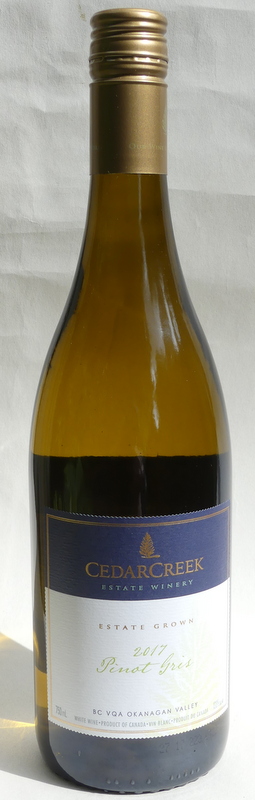
CedarCreek Estate Pinot Gris 2017 ($18.99 for 3,104 cases). The winery gets grapes both from its home vineyard in East Kelowna and from its Osoyoos vineyards, giving the winemaker ripe flavours with crisp acidity. Some 29% of this wine was fermented in neutral oak to add texture; the rest was fermented in stainless steel. The wine begins with appealing aromas of pear and apple. On the palate, these join with citrus to create a medley of tropical fruit. The finish is crisp and refreshing. 91.

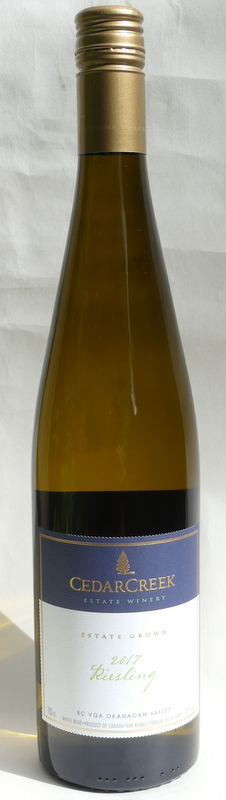
CedarCreek Estate Riesling 2017 ($18.99 for 1,125 cases). This wine begins with lovely aromas that are at once floral and citrus. There are intense flavours of lemon, lime and tangerine. The aromas and flavours are fleshed out by the 19.2 grams of residual sugar which is well balanced with 10.6 grams of acidity. The result is a lingering finish that seems dry. With just 10.5% alcohol, the wine, even with its intensity, is light and elegant. 91.

CedarCreek Estate Gewürztraminer 2017 ($18.99 for 830 cases). Taylor and his winemaking crew have given a lot of respect to this varietal, starting with crushing the grapes by foot and then allowing the juice to macerate on the skins for 12 hours. A third was fermented in barrel to add texture (the wine has a fatness on the palate). The wine begins with aromas of ginger and lychee. The flavours are a medley of spiced pear and apple. There is a touch of warmth on the palate from the 14% alcohol. With a dry finish, this an Alsace-style Gewürztraminer for food, not for the mid-afternoon tipple. 90.

CedarCreek Platinum Block 5 Chardonnay 2016 ($34.99 for 756 six-packs). This wine was fermented with wild yeast in French oak barrels and puncheons. It also aged 10 months in oak. The wine begins with aromas of mango, apple and very subdued oak. On the palate, the flavours hint at lemon and apple. The texture is pleasantly full but good acidity leads to a refreshing finish. 93.

CedarCreek Platinum Block 1 Pinot Noir Rosé 2017 ($29.99 for 784 cases). This is likely to top-priced Okanagan rosé – but the wine delivers! The wine resulted from picks 10 days apart. The earlier harvest captured herbaceous flavours will the second captured ripe fruit flavours; both picks were combined in this wine which was fermented 89% in stainless steel, 11% in oak. The colour is fashionable pale (but not anaemic). There are aromas and flavours of strawberry, watermelon and pink grapefruit. The flavours persist on the finish. 93.

CedarCreek Estate Meritage 2015 ($24.99 for 2,168 cases). The blend is 38% Malbec, 37% Merlot, 20% Cabernet Sauvignon and 5% Cabernet Franc. The wine was aged 20 months in French oak. What makes this wine stand apart is that it is anchored by Malbec. That variety contributes a deep colour and a powerful perfumed aroma of plum and blueberry. On the palate, the wine is bold and generous, with a medley of dark fruit flavours that persist on the finish. 92.

Monday, June 25, 2018

Culmina's vineyard begins to deliver


Photo: Vintner Donald Triggs at Culmina winery

Culmina Winery’s 56-acre vineyard was planted over a number of years, starting about a decade ago, by Donald and Elaine Triggs. Judging from the current releases, the vines have begun to deliver on the promise of the site.

The site, most of which is in the Golden Mile sub-appellation, consists of a series of benches, each higher than the other. Margaret’s Bench, the highest and coolest, has an elevation of 600 meters, or 200 meters higher than Culmina’s Arise Bench. This is the large vineyard encompassing the road to the winery. It is planted primarily to Bordeaux reds.

The elevations and the aspects give the winery the ability to grow a significant range of varieties – some benefitting from a cool location, such as Grunner Veltliner, Riesling and Chardonnay. Others varieties (Bordeaux reds and Syrah) grow in the warmer locations.

The current releases show the winery is now beginning to release some single varietal Bordeaux reds, even though the primary intent of the Triggs family was to produce a sophisticated red blend (called Hypothesis) in preference to a portfolio of single varietals.

“Why a blend versus a single varietal?” Donald said last year. “Fundamentally, my passion was rooted in the fact that the harmony of the blend creates more complexity in the wine. To me, the blend creates that complexity that has a beginning, a middle and an end. Each of the varieties contribute to that process. That was the first vision we really had.”

With that in mind the family chose a site where it believed the Bordeaux varietals would ripen consistently. “I felt there was a bit of challenge there; a challenge in understanding that each cultivar has to be sited differently, managed differently, to get the best results from each,” Donald said in 2017. “I don’t think we have the time to draw conclusions yet. Our oldest vines are six, seven years old. There is definitely global warming going on.”

He did venture some conclusions, however. “My perspective on the Cabs is that we are not there yet,” Donald said. “Merlot is further along in development, in terms of the intensity of flavours and what it is starting to give us. Cabernet Franc may be next, but Cabernet Sauvignon is still a baby in terms of developing in the vineyard. I am optimistic. We are getting ripe fruit.”

He made those comments before the winery had released three Bordeaux reds from the 2015 vintage, the warmest vintage yet in the Okanagan. Whatever one thinks about climate change, these are big ripe wines that should make one excited about what Culmina is producing.

The 2016 and 2017 vintages were solid vintages, producing high quality wines. And keep an eye on the 2018 vintage. To the end of May, the heat units have been higher even than 2015.

Here are notes on the Culmina releases.


Culmina Unicus 2017 ($27). This is the winery’s Grüner Veltliner, fermented 57% in stainless steel, 25% in a concrete egg and 18% in a concrete amphora, a technique that adds texture while preserving the wonderful fruit flavours. It begins with aromas of grapefruit, leading to a mouthful of tropical fruit. On the finish, there is the classic note of white pepper true to the variety. 93.

Culmina R&D White Blend 2017 ($19). This wine is a blend of Chardonnay, Riesling, Gewürztraminer and Viognier. The wine beguiles with spicy, fruity aromas leading to flavours of melon and apple mingled with an herbal note. The finish is dry. 90.

Culmina R&D Rosé Blend 2017 ($19). This is a blend of Merlot, Malbec and Cabernet Sauvignon. Fashionably pale, the wine hints of strawberries in the aroma, echoing that in the flavour. The tangy finish is refreshing. 88.

Culmina N◦ 004 Stan’s Bench Chardonnay 2016 ($39). This estate-grown Chardonnay was aged 60% in used oak, 40% in stainless steel. The result is a generously textured with bright citrus and apple flavours mingled with hints of oak. The aroma shows buttery marmalade notes. 92.

Culmina Saignée 2017 ($24). This rosé is made by bleeding juice from red grapes just after crush. The blend is 56% Merlot, 19% Cabernet Sauvignon, 14% Malbec and 11% Cabernet Franc. Pale in colour, the wine begins with a delicate raspberry aroma. The surprise is the fullness on the palate, with flavours cherry and cranberry. Dry on the finish, this is an excellent food wine. 90.


Culmina Merlot 2015 ($35). This wine, which was aged in French oak (20% new),  begins with expressive aromas of spicy dark fruit and cassis. The wine is big and firm and definitely benefits from decanting. It will age well, revealing more complexity beyond the flavours of black currant. 91.

Culmina Cabernet Sauvignon 2015 ($39). This wine was aged 16 months in French oak (50% new). It is a concentrated, well-structured wine that begins with aromas of cassis and black cherry. On the palate, there are flavours of blackberry, black cherry and black currant. The long, ripe tannins make this wine, paradoxically, more approachable now than the Merlot but it will cellar well. 92.

Culmina Malbec 2015 ($N/A). This wine is a show stopper, beginning with the intriguing floral perfume on the nose. It has flavours of black cherry and mulberry. The texture is concentrated. The bottle was sampled over several days, with the wine becoming richer in flavour and texture. This generous wine was aged 16 months in French oak (50% one-year old, 50% two-year old). This is arguably the best Malbec so far from the Okanagan. 93.


Wednesday, June 20, 2018

Class of 2018: Here’s The Thing Vineyards


 Photo: Jamie and Leah McDowell

Here’s The Thing Vineyards
4740 Black Sage Road
Oliver BC V0H 1T0.
When to visit: daily 11 am-5pm.


Leah McDowell, who operates this winery with husband Jamie, recalls an aphorism from Michael Bartier, their winemaking consultant.

“Michael always says it is easy to grow grapes and make wine,” Leah remarks. “Somebody has to sell it. This is where people hit roadblocks. That’s what I do: I sell wine. I have always sold wine.”

Indeed, it would be hard to find another new winery owner with as much marketing experience. She formerly ran two VQA stores as well as a retail store under the Okanagan Estate Wineries license. Jamie, meanwhile, was the distribution manager for a large paper company.

Born in Langley in 1963, Leah initially studied kinesiology before leaving university to work as an administrative assistant and then start their family. She returned to the work force at a Save-On-Foods store then managed by Darrell Jones, now the president of Overwaitea Food Group.

In 2003, she heard about the VQA wine stores that were being fostered by the British Columbia Wine Institute. “I went into one in Langley and I thought that would make a nice business,” Leah remembers. “Three months later I had my license. I opened my first VQA store in December 2003 in Burnaby.”

In 2009, she took over the Okanagan Estate Wineries store in downtown Vancouver’s Hudson’s Bay store. She sold it to the manager five years later, using the proceeds to buy a VQA license in Victoria and relocate it to Abbotsford.

Then in 2014, the Wine Institute reached an agreement to begin moving VQA licenses to Save-On-Foods stores. “I knew that for me at least it was over,” Leah recognized. “You’d never be able to compete with the likes of the Pattison Group.”

She telephoned her former boss, Darrell Jones, - who still remembered her -  and completed the sale of her VQA stores by early 2016. Over a dinner later that spring, Kim Pullen, then the owner of Church & State Wines, asked Leah what she planned to do next.

“We really had no clue,” Leah said. “We were trying to figure out something we could do together, Jamie and I.” Kim Pullen suggested they open a small winery.

They engaged Michael Bartier to help them find property. As it happened, Michael had been working for Road 13 Vineyards and knew that Road 13 wanted to sell its 10-acre Rockpile Vineyard on Black Sage Road. A deal was struck and the McDowell winery project got a running start. Rockpile had been planted in 2006. They took over a property with enough grapes to support, eventually, the production of 3,000 cases a year.

Road 13 handed the vineyard over after the 2016 harvest. Here’s The Thing got all of the fruit in 2017 but sold some grapes. Leah’s sales experience told her to move cautiously while establishing her brand. The winery opened with 1,200 cases.

The major blocks in the vineyard are four acres of Cabernet Franc and three acres of Syrah. There is about one acre each of Gamay, Viognier and Roussanne. Jamie would like some Chardonnay but the vineyard is fully planted.

Leah admires Viognier wines. “One of the first I said to Michael is that I don’t even know what Roussanne is, I am ripping it all out and I am planting Viognier. He said, no we are not doing that. We are going to grow the Roussanne, we’re going to make the wine, we’re going to see what we’ve got and then if we want to blend it or sell it, then we have that option. If we rip it out, it’s over.”
It was very good advice. One of the white Rhone varietals, Roussanne has proven to make an interesting and delicious companion to Here’s The Thing’s Viognier.

Experiences like that have cemented a tight relationship between the McDowells and Michael. His Bartier Brothers winery and vineyard is next door, conveniently allowing Here’s The Thing to process its grapes there but cellar the wines in its own solar-powered building. Both the winery and the wine shop at Here’s The Thing are off the grid.

“Michael, Jamie and I understand each other and our goals are the same,” Leah says. “The terroir is what gives us our grapes. The way we farm them is what makes them good. And our winemaker takes all that and puts it into the bottle for us. It really is that simple. It has been a great partnership for us and we are proud to tell people that Michael is our winemaker.”

The winery’s name is Leah’s creation.

“We knew we would be a fairly small winery,” she says. “What I was looking for was something fun and casual and laid back. I wanted to attract people with the name and the label – and then when they tasted the wine, they would know we are dead serious about good wine. Maybe not mind-blowing wine but solid wine at a reasonable price, delivered in a laid-back casual way.”

Here are notes on the current releases.


Here’s the Thing “Really” Roussanne 2017 ($25). The wine begins with aromas of peach and stone fruit, leading to flavours of quince, pineapple and apricot. It has a dry finish, with hints of minerality. 90.

Here’s the Thing “Hundred Percent” Viognier 2017 ($25). This is a classic Viognier, beginning with aromas of apricot. On the palate, there are flavours of apricot and peach. The texture of the wine is full, with a spine of minerality running through it. There is a hint of almond on the dry finish. 90.
Here’s the Thing “Living the Dream” Rosé 2017 ($20). This is a blend of 96% Pinot Gris and 4% Cabernet Franc. The wine is fashionably pale with delicate aromas of raspberry. On the palate, it is light and refreshing with flavours of apple. 89.

Here’s the Thing “One More Thing” Cabernet Merlot 2016 ($30). This is a blend of 50% Cabernet Franc and 50% Merlot. It begins with aromas of black cherry and vanilla. On the palate, there are flavours of black currant, blackberry with spice and a hint of coffee on the finish. 89.

Here’s the Thing “Seriously” Syrah 2016 ($35). The wine begins with aromas of white pepper and dark fruits. On the palate, there are meaty flavours of black cherry and plum with a touch of licorice on the finish. 90.