Monday, November 13, 2017

Laughing Stock ferments Syrah in clay


Photo: Laughing Stock's David Enns

Five years ago, Laughing Stock Vineyards co-proprietor and winemaker David Enns added a pair of 500 litre terracotta clay amphorae to his winemaking tools.

The Romans, and probably earlier civilizations, fermented, stored and shipped wines in amphorae. When the Romans occupied the Iberian Peninsula, they planted extensive vineyards, shipping the wine back to Rome and other parts of their empire in amphorae. The empties were not returned to the vineyards, for practical reasons. It has been said that one of Rome’s seven hills consists of broken amphorae (an improbable story).

The amphorae at Laughing Stock are strictly for making and storing wine. The wine gets to the consumer is glass bottles.

This fall’s releases from Laughing Stock included the winery’s flagship red, Portfolio, as well as the Okanagan’s first Amphora Syrah. The winery made just 100 cases of the Syrah, a delicious natural wine that is already sold out.

The previous amphora releases from Laughing Stock were Viognier Roussanne blends released as orange wines. Those wines get colour from prolonged skin contact and perhaps a touch of oxidation. The style has become all the rage with sommeliers. They are welcome to all the orange wine they can drink and/or sell.

In the 2016 vintage, David fermented Syrah in his amphorae with altogether more pleasing results, at least to my palate.

“Part of the experience of working with Amphorae,” the winery explains, “has been to explore the boundaries of winemaking. Each year David has left the wine ‘on the skins’. In past vintages the Viognier Roussanne has been left on the skin progressively longer, starting with 5 weeks and ending with 5.5 months on the third vintage.”

He pushed the envelop further with the 2016. “We placed the Syrah grapes in our Amphorae and left them fully untouched for eight months,” the winery said. “After 10 days, the wild ferment began at a low temperature and slowly progressed for five weeks. This hands-off approach results in slower extraction from the grape skins, while the tannin works as a natural oxidant.”

Portfolio 2015, one of the iconic red wines from the Okanagan, is made more conventionally. The berries are fermented in both stainless steel and oak, and the wine is aged 20 months in French oak (40% new, 60% second fill).

I have always enjoyed Portfolio. This vintage is no exception.

Here are notes on the wines.

Laughing Stock Amphora Syrah 2016 (Sold out). The wine begins with aromas of plum and black cherry with a hint of pepper. On the palate, this is bold, ripe wine with flavours of figs and dark chocolate. The texture is rich, with just enough tannin to give the wine ability to age. The winery recommends cellaring it five to seven years from the vintage. 90.


Laughing Stock Portfolio 2015 ($44.90 plus tax for 2,500 cases). The blend is 45% Merlot, 32% Cabernet Sauvignon, 18% Cabernet Franc, 4% Malbec and 1% Petit Verdot. When poured in the glass, the wine’s aromas just bound out: cassis, blueberry, blackberry and vanilla. On the palate, there are flavours of sweet fruit: cassis, black cherry and mulberry. The long, ripe tannins are polished. The wine is full-bodied, with a long elegant finish. Previous vintages have cellared well for at least 10 years. This wine is approachable now but there is no hurry to drink it. 94.

Friday, November 10, 2017

Moraine is completing a new winery


Photo: Moraine winemaker Jacqueline Kemp

The new winery under construction at Moraine Estate Winery will totally transform this Naramata Road property.

In effect, the facility is catching up with the transformation of the wines since 2012, when Moraine hired New Zealand-trained winemaker Jacqueline (Jacq) Kemp.

The original winery on this property was called Zero Balance. It was one of seven properties owned by the Holman Lang Group, which went bankrupt in 2010. The following year, Oleg Aristarkhov, a Siberian-born electrical engineer who had emigrated to Edmonton in the 1990s, bought Zero Balance.

He also planted four acres of Pinot Noir on the Naramata Bench in 2010. He saw Zero Balance, with seven acres of vineyard and a highly visible location right on Naramata Road, as a good business opportunity. “I have liked wines all of my life,” he said.

The most charitable description of Zero Balance is that it was a homely winery. However, Oleg and Sveltlana, his wife, turned the old house beside the road into a charming tasting room.

Initially, they arranged to have their wines made elsewhere until Jacq said she could turn a large equipment building on the property into a winery. It did not take too long for Moraine’s production, which had risen to about 6,000 cases a year, to outgrow the building. In fact, the 2016 crop was unexpectedly large. Jacq made 8,000 cases in pretty cramped quarters, with some difficulty.

The new winery has a capacity of 15,000 cases. The building also accommodates several tasting rooms and apartments. It does not look that large from the road – but it has several levels below ground.  Moraine lost some vines to make room for the winery – an utterly disposable variety called Dunkelfelder. It is a very dark-fleshed grape, planted initially when wineries used it to add colour to wines. More capable viticulture has make colouring grapes unnecessary.

Now 41, Jacq  was born in New Zealand. Because her father was a New Zealand diplomat, she grew up in Europe, primarily in Belgium.

“I was introduced to wine when I was seven, eight, nine, ten,” she remembers. “It is part of your meal. I was getting to taste wine when I was little and really enjoying it. That was really where it started … going out with Dad to the supermarket and seeing the hundreds of bottles on the shelves; and going to the different wine regions with him.”

Winemaking was not her first career choice even when it seemed to be her first love. “I did my honours in animal and human nutrition, but I was always taking wine courses along side,” she says. “And then I realized one day I had to make a choice; whether I was going to go into cancer research and spend most of my time in a lab; or switch to my other passion, which was wine. That was where I made my switch.”

She augmented her scientific training with wine courses at Lincoln University in Christchurch in 2000. “It was an easy step,” she says. “I spent my whole time in the vineyard and the winery at Lincoln University and just did the papers. My focus was getting my hands into the vineyards and getting as much practical experience at that stage as I could.”

A brief winemaking excursion to the Mornington Peninsula near Melbourne in Australia was cut short when she was put off by the frightening number of scorpions and poisonous snakes in Australia. New Zealand’s wild life is famously benign.

Back in New Zealand, she started working in the cellars of Sacred Hill Winery in Hawke’s Bay. “My first job at Sacred Hill was racking Chardonnay from barrel,” she says. “That is pretty much where my interest in Chardonnay began. They had some pretty good Chardonnay there.”

The senior winemaker, Tony Bish, initiated her by asking her to make wines from a dodgy lot of Malbec. “He gave me the worst grapes you could imagine and said, ‘See if you can make something from this.’ Off I went. One day, they were doing a tasting with all their Malbecs and I stuck my wine in there. He said, ‘What’s this? Where does this come from?’”

“I said it was mine,” Jacq recounts. Impressed, the winemaker appropriated the wine for Sacred Hill.

“It was a good start for me to have some really difficult grapes to work with,” she says. “It also taught me how to manage grapes that were really green, or had wasp pick in them … all these different bits and pieces. It was a really good learning step in my career.”

She went on to make wine at Akarua Winery, a notable Pinot Noir specialist in the Central Otago region on New Zealand’s south island.

She came to Canada in 2008 when Chris Carson, now her former husband, was recruited by Meyer Family Vineyards at Okanagan Falls.

“I had always wanted to come to Canada and that was the time when it just made sense” she says. “We could move into the wine industry here and still have a family. In New Zealand, that was not all that possible. You needed to exit the wine industry to have your family, and then jump back in.”

She picked up her winemaking career in the Okanagan primarily as a consultant, joining Moraine in 2012.


The key to her winemaking is the exceptional attention she and Oleg pay to the vineyards.

“Tony Bish at Sacred Hill told me that from that start,” Jacq says. “He spent 80% of his time in the vineyard, and I was with him. That’s where it all happens. That is where that quality comes from. That is what New Zealand does as a whole. Even our big wineries are so focussed on viticulture. Winemaking? Yeah, we’ll get to that – but if the grapes don’t come in right, it is just a mess.”

A case in point was how she managed Pinot Noir in 2015, a hot year when the grapes wanted to ripen prematurely, before flavours were fully developed.

“I was trying to slow those vines down as much as possible in 2015,” she says. The vines carried a higher than usual crop to prevent the grapes ripening in mid-August. “If we had taken our crop down to the normal level at the start of August, we would have been ripe way too early. I was trying to put the hand brake on as much as I could.”

Here are notes on Moraine’s current releases.

Moraine Chardonnay 2016 ($26 for 142 cases). The oak use is restrained (six months in French oak, 50% new). As well, the winemaker eschews lees stirring. The result is a lively, fruit-forward wine with aromas and flavours of melon touched with vanilla and butterscotch. 91.

Moraine Pinot Gris 2016 ($19). Fermented and aged in stainless steel, this is a refreshing wine with aromas and flavours of pear and melon. It is juicy on the palate but crisp on the finish. 89.

Moraine Viognier 2016 ($24 for 245 cases). This wine is floral and fruity on the nose, with flavours of pineapple and apricot. “I picked it quite early,” Jacq explains. “On this site, if it gets really ripe, it gets really soapy.  I picked it just about when its flavours were coming out, about 22 brix. It has good acidity in there and that is balanced with residual sugar.” 90.

Moraine Riesling 2016 ($24 for 397 cases). The grapes are grown in a section of the vineyard with mineral soils laid down at the time of the glaciers. That seems to account for the mineral-driven tension and bright acidity of the wine, which has aromas and flavours of lime and lemon. The finish is dry without being austere.  The wine is exclusive to the tasting room and to Moraine’s wine club. 91.

Moraine Pink Mountain Rosé 2016 ($23 for 154 cases). This is a wild-ferment whole bunch Gamay Noir rosé. It is a lively, juicy wine with aromas and flavours of wild strawberry. A very light touch of residual sugar (six grams) adds to the refreshing character of what is a dry rosé. 90.

Moraine Pinot Noir 2015 ($27). Made with just the 767 clone and aged in oak for 10 months, this wine’s boldness reflects the hot 2015 vintage. It is a generous wine with almost jammy flavours of plum and strawberry. The texture is silky and the finish is long. 9o.

Moraine Pinot Noir 2016 (tank sample). This wine was entirely fermented with wild yeast. Because the vintage was cooler, the cherry and strawberry aromas and flavours are bright and appealing. 91.

Moraine Syrah 2015 ($26 for 249 cases). This is estate-grown Syrah that succeeds because the vineyard, moderated by exposure to the lake, permits extra hang time for the variety. “I thought there was no way we were going to grow Syrah here,” Jacq marvels. “For me, it is one of the quieter stars, a good example of Syrah from the Naramata Bench.” The slightly smoky and dark fruit aromas jump from the glass, leading to flavours of black cherry, plum, fig and bacon and a hint of pepper. 92.

Moraine Malbec 2015 ($35 for 152 cases). Like the Syrah, this estate-grown Malbec benefits from the particular terroir of the vineyard. It begins with the variety’s familiar floral perfume, leading to flavours of black cherry and blackberry. There is a hint of pepper on the finish. 92.

Moraine Meritage 2014 ($35 for 403 cases). This is a blend of 45% Merlot (from Oliver), 33% Cabernet Franc and 22% Malbec (both from the Naramata Bench). It has aromas and flavours of black currant, blackberry and black cherry. There is a hint of licorice and vanilla. The wine was aged 20 months in French oak (about 50% new). 90.


Wednesday, November 8, 2017

Tasting with Blair Gillingham at Ruby Blues


Photo: Winemaker Blair Gillingham

One day this summer, Ruby Blues Winery’s winemaker, Blair Gillingham, and I were tasting his wines beside the vineyard, just off Naramata Road.

When I remarked that the Ruby Blues Viognier has won the Lieutenant Governor’s Award of Excellence four times, he pointed to the nearby rows of vines. We were sitting beside the Viognier. It was evident from the neat rows that exemplary viticulture is why that wine keep winning.

Winery owners Beat and Prudence Mahrer make Blair’s task in the cellar easy by delivering good grapes. It helps that the Viognier block is right beside the crush pad where it can be monitored all season and processed immediately on being harvested.

“Beat and Prudence have been farming for a long time,” Blair says. “Their vineyard management and protocol is spot on. These are really our babies. The Viognier is definitely the most babied. This is how a vineyard should be grown.”

Former fitness club owners in their native Switzerland, the Mahrers moved to the Okanagan in 1990, buying an apple orchard near Naramata and promptly replacing the trees with vines. Here, they opened Red Rooster Winery in 1997. They subsequently moved Red Rooster to the grand set of buildings it still occupies on Naramata Road.

They continued to farm 14 acres of vines after selling Red Rooster to Andrew Peller Ltd. in 2005. But Prudence missed the wine business so much that, in 2009, she and Beat opened Ruby Blues just across the road from Red Rooster.

Ruby Blues has had several good winemakers, starting with consultant Philip Soo. He was succeeded by Lyndsay O’Rourke. When she left in 2014 to concentrate on her own Tightrope Winery, Blair took over.

Blair was born in Kamloops in 1981 and grew up in Victoria. Initially, he thought of becoming a teacher.

“I took a year off between high school and university,” he says. “My plan was to go to Japan and teach English. That did not work out, so I went to Australia. I got to do a lot of surfing; I had a job at a ski hill. I was in Sidney during the Olympics, working there.”

He made friends with a family that had a winery in the Hunter Valley. He visited then during harvest and his wine interest was born. When he returned to Victoria, a sister who was working in a wine shop suggested he should move to the Okanagan, work in a winery and take winemaking courses.

He began by working the harvest at Sumac Ridge in 2001 and went on through a variety of roles – but none that seemed to be leading to winemaking. He enrolled in some winemaking courses in the Okanagan as well but was not satisfied he was learning enough. “I had opportunities to travel again and work overseas, so I went to New Zealand and worked the harvest there at Kim Crawford in 2006.”  

Blair returned to the Okanagan to a job at Jackson-Triggs Winery. He stayed there until 2010 before he decided to go overseas again. “By late 2009, I had decided I needed to expand my wings and gain more knowledge of the wine industry as a whole,” he says. “So I thought, let’s go to Germany, let’s learn how to make some Riesling.”

He had a contact in Germany, Johannes Hasselbach from Gunderloch Winery. They had met when the German was working the 2006 harvest at Jackson-Triggs. Johannes referred him in 2010 to one of the leading wineries in Austria, Weingut Jurtschitsch.

“Since I had just come off working two harvests in Australia, they said, great, you can make our red wine,” Blair says. “Over a period of time, I became a junior kellermeister. I worked with the cellar master and we oversaw all the operations in the cellar.”

He spent two years in Austria before he decided to return to the Okanagan in 2012. Bill Eggert at Fairview Cellars gave him a job. “I worked at Fairview for a year and a half. That was a solid year and a half,” Blair says. “I definitely learned a lot working with Bill. I really respected what he was doing. The red wines are amazing. I even had an opportunity to plant some Grüner Veltliner on his Crooked Post property at Gallagher Lake.”

Leaving Fairview Cellars early in 2014, Blair went back to New Zealand to work the harvest and pile on more experience. “During that time, I had been interviewing with Ruby Blues,” he says. “I came back from New Zealand, came here and got the job.”

His experience on three continents has equipped him with what amounts to a graduate degree in hands-on winemaking. The Ruby Blues wines continue to win awards.

Here are notes on some of his current releases.

Ruby Blues White Stiletto 2016 ($20). This is a blend of Chardonnay and Pinot Blanc, along with Gewürztraminer, Riesling and Muscat. The wine delivers spicy and floral aromas on a juicy palate, with flavours of peaches, pineapples and apples. It fills the mouth and lingers on the palate. 91.

Ruby Blues Late Harvest 2014 ($35). The grapes for this were picked in mid-November at Icewine temperatures. (The wine cannot be called Icewine because Ruby Blues is not under VQA rules.) The wine begins with a powerful aroma of tropical fruits. That carries through to flavours of ripe pineapple. The palate is lush and plump. The mouthfilling finish is persistent. 93.

Ruby Blues Peace & Love & Bubbles Frizzante NV ($25). This is a refreshing pink sparkling wine made with Merlot, Chardonnay and Gewürztraminer. Crisp and fruity, this is a classic brunch wine. 90.

Ruby Blues Red Stiletto NV ($25 for 2,200 cases). This is an easy-drinking blend anchored with 50% Syrah, with the addition of 20% Merlot, 15% Cabernet Sauvignon, 12% Pinot Noir and 3% Dunkelfelder. It is always a blend of several vintages, allowing the wine to be consistent from year to year. It is a big mouthful of fruit, with aromas and flavours of black cherry, spice, leather and chocolate. The soft tannins give the wine a generous texture. There is a hint of oak framing the flavours. 90.

Ruby Blues Merlot Cabernet Sauvignon 2014 ($30 for 150 cases). This is 80% Merlot, 20% Cabernet Sauvignon. Dark in colour, the wine begins with aromas of black cherry, blueberry, cassis and vanilla, leading to flavours of black currant, leather and spice. The firm texture reflects a very fine Okanagan vintage. The wine benefits from being decanted. 91.

Ruby Blues Black Stiletto 2015 ($35 for 250 cases). First made in 2013, the Black Stiletto blend is a barrel selection reserve taking Ruby Blues consumers a step up from Red Stiletto. This wine is a blend of 35% Syrah, 27% Merlot, 23% Cabernet Sauvignon, 11% Pinot Noir and 4% Dunkelfelder. This is a dark and complex wine, with aromas of black cherry, blueberry and spice. On the palate, there are flavours of black currant, black cherry and dark chocolate. The ripe tannins give the wine a generous texture. Decanting is advised. 92.

Ruby Blues Reserve Syrah 2015 ($50 for 50 cases). The grapes are from Prudence Mahrer’s Blue Pig Vineyard. Bold on the palate, it begins with aromas of pepper, black cherry and figs. On the palate, there are flavours of a potpourri of dark Christmas Cake fruits mingled with hints of chocolate and pepper. 92.


Monday, November 6, 2017

Steller's Jay Brut: still a rose by another name


Photo: Jason James in the Stellers's Jay cellar

Steller’s Jay Brut, one of the pioneering sparkling wines in the Okanagan, has a slightly new name: Mountain Jay Brut.

There is no reason to be alarmed. It still is the same great wine it has always been.

There is an obscure regulatory reason for the change in name. The communications spokesperson for Steller’s Jay explains: “It was given a new name because of new rules set by the BC Wine Authority that no longer permitted Steller’s Jay to call its product "Steller’s Jay Brut” which could imply “brut" as a production method instead of a wine name. Because loyal Steller’s Jay customers were familiar with the name “brut”, Steller’s Jay was able to rename the product under new labelling rules allowing a proprietary name, thus Mountain Jay Brut was born.”

I can’t say I understand that. Brut is a style of dry sparkling wine but Steller’s Jay Brut surely was registered as a wine name  long before the BC Wine Authority even existed. Apparently, the producers of Steller’s Jay were given the idiotic option of listing the varietals in the wine on the front label.

I wonder what the regulators will require of Blue Mountain Vineyard and Cellars. Blue Mountain Brut has been in the market almost as long as Steller’s Jay. In fact, Blue Mountain even has a Reserve Brut.

I included Steller’s Jay this spring in Icon: Flagship Wines from British Columbia’s Best Wineries. Here is an excerpt which provides background on the wine.

Steller’s Jay Brut, a Champagne method sparkling wine, emerged from sparkling wine trials begun in 1985 by Sumac Ridge Estate Winery founder Harry McWatters and his winemaking team. That vintage was not released. It was said that Harry drank it all. He is a great lover of sparkling wine, often saying that is what he drinks while deciding what wine to have for dinner.

The first commercial Steller’s Jay Brut was a blend of 1987 (85%) and 1985 (15%) wines. The cuvée was 70% Pinot Blanc, 15% Chardonnay and 15% Pinot Noir. The wine, which was named in honour of British Columbia’s official bird, was released in July, 1989 after just two years on the lees. Some subsequent vintages have benefited from three years en tirage.

The cuvée has always included Pinot Blanc, Chardonnay and Pinot Noir. Pinot Blanc, while not a traditional sparkling wine varietal, contributes subtle fruitiness to the wine. The proportion was reduced to about 40% of the cuvée as more Chardonnay and Pinot Noir became available. The wine is balanced to have a crisp and fairly dry finish. A typical blend has 10-12 grams of residual sugar and seven to nine grams of acidity per litre. The wine is made in the traditional style of Champagne. The wines for the cuvée are fermented to dryness. The wines are blended, then bottled with a dosage of sugar and yeast, undergoing a second fermentation in heavy bottles capable of containing six or so atmospheres of pressure. The time spent aging in bottle and on the yeast lees creates the fine bubbles and the toasty aromas typical of fine sparkling wine.

Over the wine’s first two decades, Steller’s Jay Brut grew in volume to about 10,000 cases a year, with a quality that has made it among the most awarded of Canadian sparkling wines.  As a result of its success, this former flagship of Sumac Ridge was promoted in 2013 to a stand-alone brand.

The wine continues to be made at Sumac Ridge and by winemaker Jason James. Here is a note on the new release.

Steller’s Jay Mountain Jay Brut 2014 ($25 plus tax). The cuvée is 38% Chardonnay, 34% Pinot Blanc and 28% Pinot Noir. The touch of brioche in the aroma carries through to the flavour, where there also is a hint of apple and citrus. The 14.5 grams of residual sugar, well balanced with acidity, gives the wine a creamy texture. The finish still leans to brut-style dryness. 92.


Friday, November 3, 2017

Stag's Hollow releases three reds


Photo: Stag's Hollow's Larry Gerelus and Dwight Sick

In this fall’s vintage, Stag’s Hollow Winery & Vineyard was in the enviable position of getting 85% of its grapes from its own vineyards.

That is enviable because, as a winemaker at another winery told me recently, the vineyard is where the quality happens. A skilled winemaker is an asset, but only if the grapes are well grown.

Stag’s Hollow scores on both counts. Larry Gerelus, who owns the winery with his wife, Linda Pruegger, now has close to 25 years of experience as a grape grower. Dwight Sick, the winemaker, is one of the Okanagan’s most naturally talented winemakers. A former flight attendant, he had certainly established himself in his second career.

In 2012, Stag’s Hollow planted most of its 16-acre Shuttleworth Creek Vineyard, which is just south of Okanagan Falls. This has more than doubled the estate vineyards and has enabled the winery to increase its production of single vineyard wines and of interesting varietals – such as Albariño, a Spanish white grape and Dolcetto, an Italian red. Each is grown by just by one other Okanagan winery.  

The current releases include a young Pinot Noir from Shuttleworth Creek, along with Syrah and Grenache from two vineyards that are established growers for Stag’s Hollow.

Here are notes on the wines.

Stag’s Hollow Pinot Noir 2015 Shuttleworth Creek Vineyard ($25.99 for 190 cases). The winery grows five clones of Pinot Noir here. The winemaker says the wine “has many attributes I associate with cool climate Pinot Noir from Central Otago in New Zealand.” I found the aromas and flavours of black currant and cherry to show herbaceousness, more likely due to the youthfulness of the vines. 87.

Stag’s Hollow Grenache 2016 ($25.99). Dwight Sick is the Okanagan’s foremost proponent of Grenache. He began making the varietal about 2010 when he found it was being grown by the Kiln House Vineyard on the Penticton West Bench. This wine also has come Grenache from the Hearle Vineyard on the Osoyoos East Bench (along with 10% Syrah in the blend). It is a delicious wine starting with the appealing bright cherry hue in the glass. It has red berry aromas.  On the palate, there are flavours of cherry, red currant and strawberry with a touch of spice and pepper on the finish. 90.


Stag’s Hollow Syrah 2015 Amalia Vineyard ($23.99). This delicious Syrah delivers both Christmas spices and deli spices on a bold and generous palate. The flavours of sweet fruit – plum and fig – are punctuated with a note of pepper. The finish is very long. 92.

Tuesday, October 31, 2017

Tantalus Vineyard reviews: better late than never


Photo: Tantalus winemaker David Patterson

When Tantalus Vineyards sent me their releases for 2017 this spring or early this summer, I decided to wait a few months before reviewing them.

Bad idea if you were waiting on my reviews, which is not too likely. Tantalus sells easily on its reputation.

But here was my rationale for taking my time.

The flagship wines at Tantalus are made with Riesling grapes. Riesling takes its own sweet time to develop in bottle, so I decided to give the Rieslings a few more months to really blossom.

Then life happened. It took me longer than anticipated to get to the wines. I expect most of those wines are now sold out. Even so, I am still going to report on my reviews. The information may be useful of you happened to find some on a wine store shelf of in a restaurant. A little more time has helped soften the often bright acidity of these Rieslings.

Under the direction of winemaker and general manager David Patterson, Tantalus has firmly established itself as one of the Okanagan’s best and most focussed wineries.

David, who received his winemaker training at Lincoln University in New Zealand, credits tasting a 2008 Tantalus Riesling for firing his interest in the Okanagan. He was then working for a wine retailer in Vancouver after having worked vintages at wineries in Oregon, New Zealand and Australia.

“I tasted it and it was wonderful,” David said of the 2008 Tantalus Riesling. “I joined them for harvest in 2009. It was my stroke 0f luck that the winemaker at the time was Matt Holmes. I had worked with him in New Zealand. He was moving on. So instead of just working the vintage, I ended up becoming the winemaker in 2009.”

The Tantalus property, now about 75 acres in size, is one of East Kelowna’s historic vineyards, planted in the late 1920s by a pioneer grower, J.W. Hughes. He later sold the property to the Dulik family. They get the credit for planting Riesling there in 1978. When Eric Savics, the current owner, bought the property in 2004, he reduced the varieties being grown, developing a tight focus that included more Riesling, along with Pinot Noir and Chardonnay.

These are strong, terroir-driven wines. “For me, tasting those wines, it is always remarkable how consistent the palate is,” David says. “There are little variations but you can tell it is from the same property. It does not matter on the winemaker or the vintage. I think we always have a very consistent balanced palate.”

Here are notes on the recent releases.

Tantalus Riesling 2016 ($19.91). When I tasted this in July, I made a note that it should be cellared for another year. The wine is simply yummy, with floral aromas and with flavours of lemon and lime on the juicy palate. The bright racy acidity gives the wine great freshness, with 17 grams of residual sugar to balance the wine’s attack. 92.

Tantalus Old Vines Riesling 2014 ($30.35). This wine is made from the 1978 planting of Clone 21B Riesling. Those vines deliver intensely concentrated aromas and flavours. It begins with aromas of lemon and lime, with a complexing hint of petrol. The aromas are echoed on the palate, along with the distinctive mineral notes of this vineyard. The racy acidity gives the wine a dry finish; there is just enough residual sweetness to prevent the wine tasting austere. The finish goes on and on. This complex wine should peak in about 10 years. 94.

Tantalus Old Vines Riesling Brut 2014 ($34.70). Only 200 cases of this exceptional sparkling wine were made. It was disgorged after two years en tirage. The fine bubbles deliver aromas of citrus and brioche, followed by flavours of citrus and apple. The wine has a long, elegant finish with a touch of almond. 94.

Tantalus Blanc de Noir 2014 ($27.74). This traditional method sparkling wine is made with grapes from a 1985 block of Pinot Noir. The wine spent two years on tirage before being disgorged. Rose petal pink in colour, the wine’s fine bubbles create a lively display in the glass. The aromas and flavour recall strawberries and pink grapefruit. The bubbles create a creamy impression on the palate but the fresh acidity gives a crisp finish. 91.

Tantalus Juveniles Chardonnay 2016 ($17.30). This wine was made from the fourth harvest of a young Chardonnay block. Fermented with wild yeast, the wine is fresh and fruit forward, with aromas and flavours of lemon and green apples. 88.

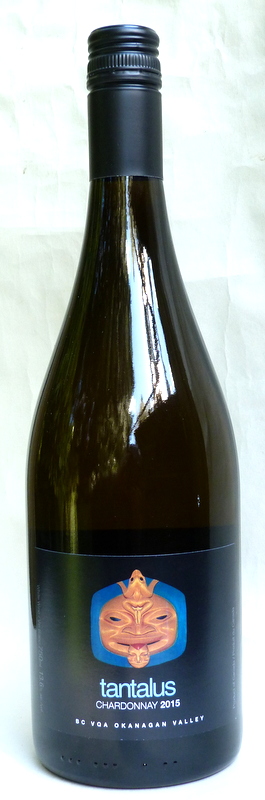
Tantalus Chardonnay 2015 ($26.00). This style of this wine pays tribute to White Burgundy. The wine was fermented with natural yeast in French oak puncheons and barriques, 30% of which were new. The wine has aromas of citrus with a touch of vanilla. Full on the palate, it has flavours of lemon, apple and nectarine. The wine is elegant, with a refreshing focus of fruit on the finish. 92.

Tantalus Rosé 2016 ($19.09). This is 60% Pinot Noir, 40% Pinot Meunier. Light pink in hue, the wine has aromas and flavours of strawberry, raspberry and pink grapefruit. The finish is crisp and dry; I might have preferred just a touch of residual sugar to fully bring out the charm of the wine. 90.


Friday, October 27, 2017

Roche Wines has a home on Upper Bench Road


Photo: Pénélope and Dylan Roche

Roche Wines, which opened its winery this summer on Upper Bench Road in Penticton, should encourage all ambitious young Okanagan vintners trying to figure out how to open their own wineries with limited resources.

Since I have not seen the books at Roche Wines, I have no idea whether some family money is backing up owners Dylan and Pénélope Roche. But I do know that this young couple, who moved to the Okanagan from France in 2011, have developed their business one methodical step after another. Other aspiring young vintners might look on Roche Wines as a case study.

Dylan was born in Vancouver in 1976, the son of a lawyer and a nurse, and got a degree in urban geography from the University of British Columbia. After college, he went to Burgundy in 2000 as a bike mechanic and cycling guide with Butterfield & Robinson. Exploring wineries in his free time inspired a passion for wine. By 2003, he was enrolled in enology studies in Beaune.

 That led to winemaking apprenticeships over the next five years in Côte d’Or, Chablis and New Zealand. He then became a wine educator and program director at Château Lynch-Bages in Pauillac from  March, 2006 to February 2008.

Dylan then became assistant winemaker at two estates in Péssac-Léognan and the winemaker at Château Bellevue de Tayac in Margaux in 2010, just before he and Pénélope decided on a winemaking career the Okanagan. Pénélope was born in France, with five generations of winemaking and viticulture behind her in the family estate, Château Les Carmes in Haut-Brion (which was sold just before the couple came to Canada). She also has formal winemaking training and experience in Spain, New Zealand and Australia.

While Pénélope worked as a consulting viticulturist in the Okanagan, Dylan became the winemaker at Intersection Wines, remaining there until early 2016.

They established the Roche label as a virtual winery with a small production of Chardonnay in 2012. Virtual wineries produce wine in existing licenced wineries. It is a way of getting into the business without investing in production facilities until wine sales justify it.

Roche Wines was an early member of the Garagiste wineries, a group of largely Okanagan wineries (many virtual) producing less than 2,000 cases a year. This year’s vintage is pushing Roche beyond that threshold. It has taken the couple about five years to grow from 85 cases of Chardonnay in 2012 to their own winery and vineyard.

Their search for a vineyard was confined largely to the Naramata Bench and to Okanagan Falls until they bought an eight-acre property with four acres of vines on Upper Bench Road in 2014.

“We had driven by this property a few times,” Dylan says. “It was on the market for a while [since 2013].” Because there was a meadow and a planting of Christmas trees near the road, “it was not an obvious vineyard from the road.”

The property was one-third of a block owned a veteran viticulturist named John Barnay, who had planted grapes about 2o years ago and still farms the adjacent block.

Initially, Dylan was lukewarm on the property because of the varieties in his four acres: one acre of Zweigelt and three acres of Schönburger. “We hesitated,” he said, after they first looked at the land. “Then a few months later, we said this is the perfect location, the perfect exposure, the perfect soil. It is just the two varieties that we were sticking on.”

Neither he nor Pénélope had experience with those two varieties. But they were impressed that the own-rooted vines were about 20 years old and very healthy. They bought the property and kept the Zweigelt and the Schönburger. The latter was under contract to another winery through this vintage, although Dylan kept enough back so he could learn the potential of Schönburger.”

“We talked about tearing out Schönburger and planting something else, probably Pinot Noir,” Dylan says. “But it is like adopting a puppy … you get fond of it. Pénélope is now protecting it.” However, they have planted an additional 1.75 acres of vines, two-thirds Chardonnay and one-third Pinot Noir.

Dylan turns the Zweigelt, an Austrian red not well-known in this market, into an a very successful dry rosé. One of his secrets: a dash of Schönburger is blended into the wine to lift the aromatics.

Beginning in 2013, Dylan and Pénélope began to extend their portfolio by purchasing Pinot Noir and Pinot Gris from the 15-acre Kozier Organic Vineyard on Todd Road, not far away on the Naramata Bench. They had become friends of owner Len Kozier and his family in 2012 while buying grapes for Intersection.

They continued to buy fruit after Len died suddenly early in 2013. Last year, the Kozier family turned over farming that vineyard to Dylan and Pénélope. “The vineyard has Merlot, Pinot Noir, Pinot Gris, Gewürztraminer and Viognier,” Dylan says.

The control of that grape supply and the opening of the Roche winery this fall is triggering a major extension of the Roche portfolio.

“We were limiting our scope when we were working for other wineries, just for time and logistics,” Dylan says. “We were at one white, one red and one rosé for a couple of years. In 2016, we added a few wines in anticipation of opening. By this time next year, we will be up to eight or nine wines. We don’t want to go much beyond that.” 

“We have continued with the Pinot Gris, the Pinot Noir and the rosé,” Dylan adds. “We have a second Pinot Gris, and a Schönburger. This fall, there will be two different Pinot Noirs. We also have Merlot, Cabernet Franc and Cabernet Sauvignon in the barrel. We haven’t forgotten that Pénélope is from Bordeaux.”  

The winery, a metal-clad building fronting on Upper Bench Road, is designed for a capacity of 6,000 to 10,000 cases. It is a practical, well-designed building, double-insulated to conserve energy consumption. The compact tasting room is tucked into a corner with windows that look over the vineyard. It is not a LEED building but the design principles reflect Dylan’s LEED thinking.

Here are notes on Roche wines.

Roche Pinot Gris 2014 ($25.90). This may be sold out … but it is a complex wine with intense fruit flavours and herbal/honeyed notes in the aroma. This makes the case for aging Pinot Gris. 92.

Roche Pinot Gris 2015 ($25.90). The winery released 236 cases this summer. The wine was fermented in neutral oak. It has good weight, with aromas and flavours of pears and a hint of vanilla on the finish. 92.

Roche Pinot Gris ‘Inox’ 2016 ($20.90). This tank-fermented and aged wine is crisp, with aromas and flavours of citrus, pears and apples. A nice spine of minerality adds to the weight and structure. 90.

Roche Arôme 2016 ($17.90 for 130 cases). This is the winery’s dry Schönburger, a crisply spicy and aromatic white that certainly makes the case for keeping the variety in the portfolio. The wine is exotic, with tropical fruit and herbal flavours. 91.

Roche Pinot Noir 2014 ($34.90). The wine begins with aromas of cherry mingled with classic “forest floor” notes. Time in barrel have given this a toasty note. Flavours of strawberry and cherry dominate the palate. The texture is silky. 91.