Friday, October 6, 2017

House of Rose is a good-time winery


Photo: Grape stomping at House of Rose (photo courtesy of winery)

The grape stomps on the Saturday afternoons during the Okanagan Fall Wine Festival are becoming something of a tradition at House of Rose Winery near Kelowna.

Such a rollicking public romp fits the informal atmosphere that has prevailed at this winery since it was opened in 1993 by the ebullient Vern Rose. While the winery at 2270 Garner Road is perceived to be somewhat off the beaten path, it scores high as a wine-touring destination because shows guests a good time.

The grape stomp is just one example. “It's free (we encourage a food bank donation) and fun for the whole family,” says co-proprietor Aura Rose. “People love to get it off their bucket list. We've watched babies to those over eighty jump into our specially made Grape Stomping Barrel - sort of a take on the famous I Love Lucy clip. ” 

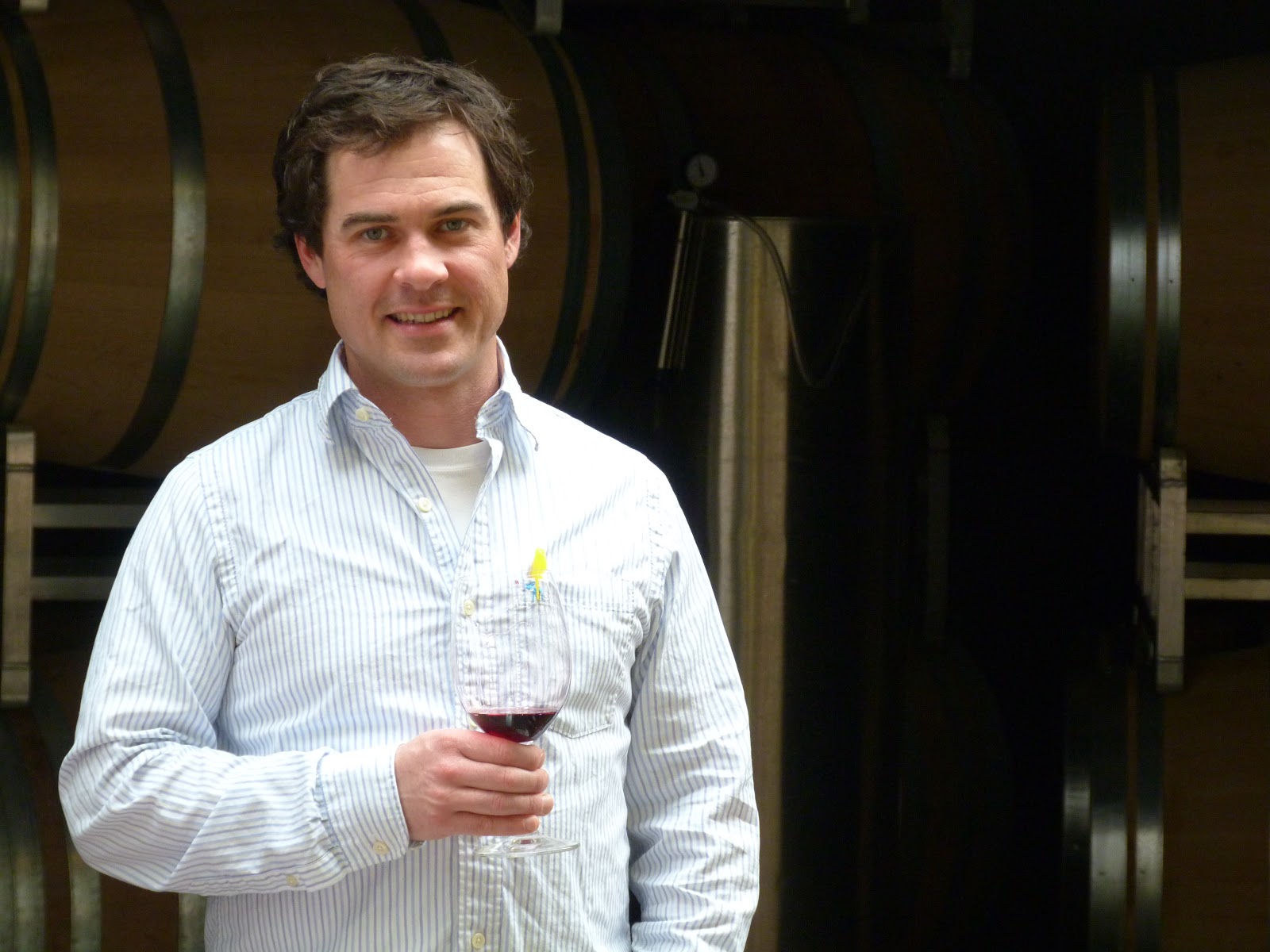
There are also music concerts during the summer. There are customer appreciation days. This summer, the winery applied for a license to host weddings in the vineyard. And there is a BnB suite at the winery, one of the additional features created by Vern’s daughter Aura, and her husband, Wouter van der Hall (left). They took over the winery in 2009, two years after a stroke incapacitated Vern.

Since I have not blogged about this winery before, here is some background on its history from the 2012 edition of John Schreiner’s Okanagan Wine Tour Guide.

After running this winery for 10 years, Vern Rose began thinking of selling in the 2003 vintage, when he turned 76, because that was one of his toughest summers. The Okanagan Mountain Park forest fire threatened his Rutland neighbourhood three times, forcing evacuation of the winery and sharply curtailing the usual number of visitors. Yet even after such a taxing summer, Vern hoped that a buyer would let him manage the vineyard for five more years. Before a buyer emerged, Vern was incapacitated by a stroke that sapped the energy from one of the wine world’s great characters.  

A Saskatchewan native who was born in 1927, Rose acquired his Okanagan vineyard after retiring in 1982 from a career as a schoolteacher in Edmonton. A few years later he accomplished his lifelong dream to visit New Zealand. Not one to merely enjoy the sights, he attended a viticultural conference and volunteered at a vineyard. That inspired him to open his winery north of Kelowna. His habit of wearing Tilley hats (a clean one at wine shows, a scruffy one in the vineyard) became his trademark.

He was perhaps the only Okanagan vintner to still back the heritage varieties that most others removed in the 1988 pullout. House of Rose still produces both Okanagan Riesling and De Chaunac in its 2.2-hectare (5½-acre) vineyard, along with Verdelet for icewine and Maréchal Foch, almost the only red hybrid to make a comeback in British Columbia. The vineyard also has Chardonnay and Cabernet Foch. The latter was provided to Vern by Swiss plant breeder Valentin Blattner after the two had become fishing buddies.

Aura, who runs her own health care communications company, became involved with House of Rose in 1996 as the bookkeeper. She and Wouter, a Dutch-born child welfare consultant, have brought discipline to the sprawling wine portfolio at House of Rose, with perhaps more focus on the heritage varietals and on Winter Wine, as the trademarked dessert wines are called.

While there have been changes in the vineyard since that was written, House of Rose still grows De Chaunac (the only Okanagan winery with the variety) and, among other wines, turns it into port.

Both the winery’s labels and the off-dry style of some of the wines differentiate House of Rose from many of its peers. The winery’s signature red is called Hot Flash. It is off-dry and, with softer tannins, made to be quaffable. “We did a focus group with 85 women to create this wine - easy drinking and no food necessary,” Aura says.

Another label is called Sweet Mystery. “We've been making a sweet red for a few years now, [and] they are becoming more popular,” Aura says. “The secret ingredient in this wine is our port.”

Here are notes on current releases from House of Rose. Prices do not include tax.

House of Rose Cool Splash 2016 ($15.57). This is a Pinot Gris with a name suggestive of a summertime frolic. It begins with aromas of apples and stone fruits, leading to flavours of apple and melon. A touch of residual sugar balances the racy acidity. 88.

House of Rose Grapes With Benefits 2016 ($15.57). The winery does not disclose the blend of this wine; however, a dash of 2014 Viognier Icewine is included to add a touch of honeyed sweetness to the pineapple and citrus aromas and flavours. This is a good aperitif. 89.

House of Rose Rosé eh 2016 ($16.43). This robust rosé wine is a blend of Gewürztraminer, Maréchal Foch and Syrah. It begins with a brilliant strawberry pink hue. It has aromas of cherries and strawberries and flavours of watermelon. The finish is spicy and dry. 88.

House of Rose Merlot 2014 ($19.91). This wine begins with aromas of cherry, plum and blackberry, leading earthy flavours of cherry and cranberry, punctuated with a touch of oak. 90.

House of Rose Hot Flash 2016 ($17.30). This dark wine is an unoaked blend of Maréchal Foch and Syrah, with the dark cherry and gamey deli aromas of the Foch carrying the day. The gamey and cherry notes are echoed on the palate, along with some of the classical vegetative Foch flavours. This retro wine brings back pleasant memories of the 1980s, when many wineries still grew Foch. 88.

House of Rose Sweet Mystery 2016 ($17.30). This unconventional red is a blend of Maréchal Foch, Pinot Noir and Syrah. The wine begins with jammy aromas of plum and blueberry, echoed in the flavours. The wine is off-dry but the residual sweetness lifts the aromas and adds flesh to the texture. A good quaffing red. 88.


House of Rose Vintage Okanagan Tawny 2012 ($26 for 375 ml). This is made with the De Chaunac grape, a French hybrid once ubiquitous in Canadian vineyards but now almost gone. The wine has excellent rancio character of a tawny port, although lighter in body that a Portuguese tawny. There is an aroma of plum and fig. On the palate, there are flavours of chocolate, cherry and fig. The alcohol is 16.9% but it is not clear from the winery notes whether this was fortified or whether that was achieved by two years of slowly fermenting until the yeast quit. In any event, the finish is smooth. 88.

Wednesday, October 4, 2017

Harry McWatters in his 50th vintage


Photo: Harry McWatters toasts yet another vintage


Okanagan wine pioneer Harry McWatters this year marks his fiftieth vintage since he started his career with the long-gone Casabello winery in Penticton in 1968.

Since then, he went on to found Sumac Ridge Estate Winery and to buy Hawthorne Mountain Vineyards (now See Ya Later Ranch). Those wineries were acquired in 2000 by Vincor. Harry remained involved with Vincor and its successor until 2008.

On leaving there, he launched a new label, McWatters Collection, and then a new winery, Time Estate Winery. He started building a new winery on his Black Sage Road vineyard in 2015.

When that vineyard and project were acquired by Phantom Creek Estates (which will open its winery in a few years), Harry regrouped and bought the 12,000-square-foot former Pen-Mar four-theatre cinema in downtown Penticton as the new home for Time.

“I came here [to the theatre] in 1957,” Harry recalls. “I was 12 years old. I brought a date for a Saturday afternoon matinee.  It cost 25 cents for admission, soft drink and popcorn for both of us.”

The 2017 crush, Harry’s 50th vintage, is taking place in that movie house, which has been beautifully restored and equipped with the latest winemaking equipment.

As if this is not enough to keep him busy, he operates a winery north of Summerland called Evolve Cellars, in a facility formerly known as Bonitas before Harry leased the building.

The bottom line is that Harry goes into his 50th vintage with three well-made brands that have quickly gained a following: Time, Evolve and McWatters Collection.

And Time has just been named the official wine supplier for the Calgary Flames (and associated sports teams).  The first two wines being offered to Saddledome patrons are a 2016 Pinot Gris and a 2016 Cabernet Merlot. They will be co-branded as “It’s Go TIME Calgary Flames.” The wines will also be available at retail in Calgary.

A raconteur par excellence, Harry has tales from most of his vintages. When Sumac Ridge was launched in 1980, Harry and his partner, Lloyd Schmidt, made the wines that year at the Casabello winery. They did not finish modifying the former golf course club house in which they were installing the Sumac Ridge processing equipment until 1981.

“Probably the most memorable vintage, not necessarily for the positives, was 1981,” Harry remembers. “It was a really, really challenging vintage. We froze on the 28th of September. It was a very cool late summer. The next day, the leaves started to shrivel and fall. Picking was easy. But it is also the vintage when Lloyd Schmidt got his hand caught in the crusher. He and I were doing all of the crushing. He got his hand in the crusher and took the end off two fingers.”

Another memory: The last vintage in which Sumac Ridge made Okanagan Riesling was 1988. Harry never planted the grape, which is a foxy hybrid that once was ubiquitous in the Okanagan. After the free trade agreement was signed, almost all the Okanagan Riesling vines were pulled out because the variety was banned in the incoming VQA rules.

Harry was an early and major supporter of VQA, even though the ban of the variety caused significant short-term pain for Sumac Ridge’s adherence to that principle. “When we stopped making Okanagan Riesling, it was a 10,000-case brand,” Harry says. “We took a big hit, walking away from a 10,000-case brand.”

Another memory: In 1993, when the grape crop was large, Sumac took a contract to crush and process 100 tons of Pinot Blanc for Andrés Wines. The grower supplying the grapes over-cropped the vines and overwhelmed Sumac Ridge with 193 tons.

“The deal I had made was to produce 100 gallons of juice from every ton; everything left over, we kept,” Harry says. “I charged them $125 a ton to process it. By doing the 200 tons, although it almost killed our crush staff, it went a long way to help buying our new Bucher press. It was $80,000. At the time, $80,000 in the early 1990s, just after we had bought the vineyard, was a big amount.”

Another memory comes from notable 1995 vintage. That was the year when Sumac Ridge got its first harvest from the vineyard that Harry and Lloyd had planted in 1992 on Black Sage Road with 100 acres of Bordeaux red varieties. It was seen as a both a viticultural and financial gamble. “We stretched everything to the limit to buy 115 acres, and have the money to go ahead and plant it,” Harry recalls.

The wines made from that first harvest were outstanding. The Sumac Ridge 1995 Meritage was judged best red wine in Canada. In 1997, when the wine was released, Harry took samples to VinExpo, the big wine industry fair in Bordeaux.

A senior Bordeaux wine official complimented Harry on the Meritage and was completely dumfounded when he learned the wine was from three-year-old [or third leaf] vines. Harry recalls: “He said that is impossible because ‘you don’t get fruit until fourth or fifth leaf’. The only way I could exit the conversation was to admit I must have been mistaken about the year I planted the vines. It is, of course, not a mistake I would have made.”

The vintages of 1996 and 1999 are remembered as excellent for sparkling wine but, because they were very cool, difficult for table wines.

“1999 was a tough decision for us,” Harry says. “At Veraison, we were so far behind that we dropped 50% of our fruit on the ground. Because we dropped so much fruit, we had a very light crop. It was not financially very rewarding but the quality stood up better than the 1998 [a big, hot vintage]. We had some pretty good wines in 1999 in a vintage that did not have a great reputation. It is a judgment call you have to make. I don’t regret having made that decision but it had a huge impact financially.”

One could speculate that this left Sumac Ridge vulnerable to the successful takeover offer from Vincor.


Photo: Time's cellar in the former moving theatre

Harry has shown remarkable ability to rebound from setbacks and always remain at the centre of the action in the BC wine industry. Now, back at the scene of his first movie date, the Time Winery is just the latest sequel in a remarkable career.

Here are notes on the current releases.

Evolve Effervescence NV ($19.99). This Charmat method sparkling wine is made primarily with Chardonnay with about 15% Pinot Noir in the cuvée. The wine has vigorous bubbles, a bready hint on the nose and crisp, refreshing green apple flavours. 90.

Evolve Pinot Blanc 2016 ($15.99). This is a clean and focussed white from a grape that does not always get its due. There are aromas and flavours of apple and pear. The finish is crisp and fresh. 90.

Evolve Riesling 2016 ($16.99). This wine has just 10.8% alcohol because the fermentation was stopped to preserve some residual sugar. The sweetness is very well balanced with acidity. The wine has aromas and flavours of lime with a finish that has a zesty beginning and a lingering end. 90.

Time Sauvignon Blanc 2016 ($22.99 for 250 cases). This barrel-fermented wine begins with aromas of lemon and a hint of oak and vanilla. On the palate, the wine is light, with clean, fresh citrus flavours. The finish is crisp and dry. 88.

Time Riesling 2016 ($22.99 for 220 cases). This wine, with just 9.5% alcohol, recalls elegant Rhine Rieslings. It begins with aromas of lemon and lemon zest, leading to intense lemon and lime on the palate, mingled with good minerality. The racy acidity is well balanced with almost imperceptible sweetness. 90.

Time Chardonnay 2014 ($25). This wine is still made with grapes from the Sundial Vineyard on Black Sage Road; it was subsequently sold. The wine begins with aromas of vanilla and marmalade leading to a rich palate with flavours of baked apple and butterscotch. The finish is long, with notes of oak mingled with ripe fruit. 90.

Time Viognier 2016 ($22.99 for 130 cases). This wine begins with aromas of ripe pineapple and apricot, leading to a palate loaded with stone fruit flavours, subtly framed with delicate oak. 91.

Time Cabernet Franc 2014 ($19.99). A classic example of the variety’s appealing brambleberry aromas and flavours – think of a mix of black cherry and blackberry. The long ripe tannins give this wine a lush and generous structure. 91.

Time Merlot 2015 ($N/A). The youthful firmness of this wine calls for decanting, which allows the blueberry and black currant aromas and flavours to open. The concentrated texture becomes juicy. 90.

McWatters Collection Chardonnay 2014 ($30 for 520 cases). This wine won a gold medal earlier this year at the Chardonnay du Monde competition in France. It begins with an intense aroma of marmalade, baked apple and vanilla, leading to flavours of baked apple and citrus, with a light note of butterscotch. This opulent wine has the perfect balance of almost tropical fruit flavours and oak.  92.

McWatters Collection Chardonnay 2015 ($N/A). Recently bottled, this is developing into a rich and buttery Chardonnay with aromas and flavours of citrus. 91.

Evolve Cabernet Merlot 2016 ($19.99). This is an easy-drinking blend, soft and juicy with aromas and flavours of cassis and blueberry. 88.

Evolve Shiraz 2016 ($19.99). The winemaker has done a good job emulating the style of Australian Shiraz. The wine is generous on the palate, with aromas and flavours of black cherries, figs and licorice. 88.


Evolve Elevate Carménère 2014 ($30). This bold, assertive red begins with dark fruit aromas accented by cracked black pepper. The palate delivers flavours of plum, fig, black currant with a note of pepper on the finish. 91.

Sunday, October 1, 2017

Culmina releases third vintage of Hypothesis


 Photo: Culmina's Donald Triggs

The new 2013 Hypothesis, the flagship red from Culmina Family Estate Winery, is the best of the three vintages released to date from the winery.

One almost would doubt that on hearing the long view taken by Donald Triggs, one of the winery’s owner.

The Triggs family – Don, wife Elaine and daughter Sara – recently previewed Hypothesis 2013 to the trade. It was benchmarked against earlier vintages of Hypothesis as well as half a dozen international wines. The wine held its own.

Don was asked whether Culmina had achieved its objective with this wine. “We are on the trail and we will find out if we are there in about 20 years,” he said.

It is not a flip answer. The Culmina project, which from the outset has been about raising the bar in the Okanagan, is a long-term venture of necessity. The Triggs family only began planting its Golden Mile vineyards in 2007 and made the winery’s first vintages in 2011.

“When we started the project, Alain Sutre was one of our advisors at the time,” Don says. “He said three things to me that I have not forgotten. One: ‘I don’t think we have found the real potential of the Okanagan yet.’ Two: ‘you are really going to have to understand your terroir.’ Three: ‘you have to be very, very, very patient’.” Hence, the 20-year horizon.

The Culmina portfolio includes both white a red varietal wines but Hypothesis has been a blend of Bordeaux grape varieties from the beginning.

“Why a blend versus a single varietal?” Don asks rhetorically. “Fundamentally, my passion was rooted in the fact that the harmony of the blend creates more complexity in the wine. To me, the blend creates that complexity that has a beginning, a middle and an end. Each of the varieties contribute to that process. That was the first vision we really had.”

The first three vintages of Hypothesis are blends of Merlot, Cabernet Sauvignon and Cabernet Franc, the varieties planted earliest at Culmina. Subsequently, Malbec and Petit Verdot have been planted. The 2015 vintage of Hypothesis will include all five the Bordeaux reds in the vineyard.

Obviously, Hypothesis is a work in progress. Don attributes the more generous texture of the 2013 compared to the earlier two vintages to – at least in part – the increasing maturity of the vines. “It is still a young vineyard,” he says.

Even if the direction of Hypothesis is being established, there will be significant tweaks to the style as the Triggs family and their winemakers come to understand what the vineyard can give them.

“We had a meeting with Sara and [winemaker] Jean-Marc Enixon recently, discussing the style of wine and where we want to go,” Elaine Triggs says (right). “For me, I want a beautiful bouquet; I want a sense of fruit and style; the expression of our terroir and land; wine that is well-structured and well-balanced; wine that has fine tannins but is not overly tannic, so it is perhaps a little bit softer than what our younger wines were, I think. We would like to move that, but not too much, so we would still have a wine that has the ability to age.” 

“We are probably taking an evolution,” Don says. “As the vines mature more, we will back off some of the tannins and try to find finer tannins; try to find tannins that are more approachable when they are young, so that we don’t have to wait quite as long.  We are exploring things. To say that we have a defined style right now … it is going to take time. Maybe in 20 years, we will say we are really happy with our vineyard and its style.”

Followers of Culmina’s wines likely will want to come along for the ride, given what the winery has been releasing. Here are notes on two wines.

One is a Riesling, part of Culmina’s number series. This is the third in a series of special small lot wines designed to explore, and showcase, the terroir and the evolving understanding of the vineyards.

Culmina No. 003 En Coteaux Riesling 2016 ($35). This is an intense later harvest Riesling. The grapes were picked on November 18, 2016, at a ripeness of 29 Brix, and were fermented in stainless steel. The opulent wine has 37 grams of residual sugar balanced with 6.48 grams of acidity. The wine begins with aromas of lime and stone fruit leading to a rich palate, with flavours of apple mingled with lime. The finish is exceptionally persistent. 92.

Culmina Hypothesis 2013 ($46 for 1,500 cases). This is 38% Merlot, 36% Cabernet Franc and 26% Cabernet Sauvignon. It has been aged 16 months in French oak barrels (60% new, 40% one-year old). The wine begins with a powerful aroma of berries (blackberry, cherry, mulberry) and vanilla, leading to flavours of dark fruits (black cherry and plum). The tannins are long and fine and the finish lingers. This is a wine of power (14% alcohol) but also with elegant harmony. 94.


Tuesday, September 26, 2017

Howard Soon becomes winemaker at Vanessa Vineyards


Photo: Vanessa master winemaker Howard Soon

Vanessa Vineyards has recruited the briefly-retired Howard Soon as its master winemaker.

It is a coup that did not surprise anyone in the wine industry. Howard, who retired this summer after 37 vintages with Calona Vineyards and Sandhill Wines, has been involved with the Vanessa project in the Similkameen for a number of years. When Vanessa, which was planted a decade ago, began selling its grapes to Andrew Peller Ltd., Howard began making single vineyard wines with those grapes for Sandhill.

In a statement, he said: “I’ve worked with Vanessa Vineyard grapes since its founding, and believe it is unlike any other vineyard due to the site’s unique topography, climatic conditions and soil types – the perfect combination for making truly distinctive wine.”


Vanessa, which opened a tasting room in the Similkameen just this summer, began releasing wines under its own label in the 2012. These impressive red wines have been made to date by Karen Gillis, the winemaker at Red Rooster Winery, another Peller-owned property. Because Vanessa is not expected to build its own winery in the Similkameen for several years, the 2017 vintage and perhaps the 2018 will also be made at Red Rooster, but under Howard’s hand.

“I wasn’t looking for a job,” Howard says. But, after a career with a major winery, he could not pass up the opportunity to “dedicate myself to this vineyard.”

I included Vanessa Vineyards in the book I published this spring: Icon: Flagship Wines from British Columbia’s Best Wineries. Here is an excerpt to provide background on the winery.

This 30-hectare (75-acre) Similkameen Valley vineyard was developed on exceptionally rocky raw land. To prepare it for planting in 2006, the vineyard managers brought in a rock crusher more appropriate, perhaps, to a quarry. The machine wore out two sets of teeth while pulverizing the rock. It is not surprising that the red wines from this vineyard have a spine of minerality that should contribute to their longevity.

The specifications released with the first wines outline this terroir: “The vines grow in rows of rocks, stressing the plants, absorbing the day heat and imparting that warmth during the cooler nights. This gives the grapes their unique and complex character. The west to southwest exposure on which the rocky vineyard sits benefits from the afternoon sun, which contributes to lengthening the growing season and producing low yields of intensely ripe fruit.”

Proprietors John Welson and Suki Sekhon did not necessarily have a winery in mind when they bought this property in 2005. Suki is a successful Vancouver developer, while John is a retired stockbroker who is passionate about wine. In his Vancouver business, Suki constructs buildings that are leased to clients. He thought he could develop a vineyard and then lease it to a winery. That is not the wine industry’s usual business model. Wineries need to know the quality of the grapes before committing to buying them. When the vineyard produced fruit, Suki and John began selling grapes to Andrew Peller Ltd., the owner of nearby Rocky Ridge Vineyard and also Sandhill Wines. In 2010, Howard Soon, the Sandhill winemaker, added a Vanessa Cabernet Merlot blend made with their grapes to his portfolio of single-vineyard wines.

That wine helped encourage John and Suki to open a boutique winery. “We kind of went into this initially, basically to build a vineyard, and then, as you get into it, the industry just pulls you along,” John admits.

Except for two acres of Viognier, the Vanessa vineyard is planted entirely to sun-loving reds: Syrah, Cabernet Sauvignon, Cabernet Franc, and Merlot. Suki had concluded that it is one of the warmest sites in the sun-bathed Similkameen and is best suited for red varietals. He will find a cooler site if he and John decide they need white wines in their portfolio.

Old maps show that an easement for a stagecoach road from Osoyoos to Princeton ran by the property. For a time, the partners considered calling the winery Stagecoach Road or Old Stagecoach Road. In the end, they opted for Vanessa, the name of Suki’s eldest daughter.

Howard Soon is one of the most respected winemakers in British Columbia, both for the many awards his wines have won and for the young winemakers he has mentored. He hides his celebrity behind a down-to-earth personality and a self-deprecating sense of humour.

He was born in 1952 in Vancouver, the grandson of a shopkeeper who emigrated from southern China in the 1880s. Howard graduated in biochemistry from the University of British Columbia in 1974. After five years in the brewing industry, he joined Calona in 1980 as a quality control supervisor, became assistant winemaker in 1981 and subsequently was promoted to chief winemaker.

His new role at Vanessa is hardly a part-time venture. “I am in there all the way,” he says. “I’m excited to go back to the work bench. It will be refreshing to be hands on with these small productions.

Currently, Vanessa produces about 3,000 cases a year. The vineyard would support 10,000 cases a year but the winery’s owners are in no rush to get there. The significant shortage of grapes that has developed in the Okanagan and the Similkameen creates a strong demand for Vanessa’s grapes.

“We have a big vineyard and a small winery,” says Vanessa partner John Welson. “We have control over the quality of the fruit and we have the financial backing to support the vineyard.”

None of the Vanessa wines are currently released to wine stores. They are available in a handful of restaurants, at the tasting room (right) and to members of Vanessa’s wine club.

Here are notes one some of the current releases.

Vanessa Meritage 2013 ($36 for 625 cases). This is a blend of 44% Cabernet Sauvignon, 32% Cabernet Franc 32% and 24% Merlot. It is a bold red, beginning with aromas of vanilla and spice that reflect the 18 months the wine had in barrel. The barrel regime was complex: individual varieties were fermented in and aged eight months in barrel. Then the wine was blended and aged another 12 months in French and American oak barrels, of which 60% were new. On the palate, there are flavours of black currants, black cherries, coffee and licorice. The finish is lingering, with notes of spice and cedar. 93.

Vanessa Syrah 2013 ($39 for 270 cases). This is 91% Syrah co-fermented with 9% Viognier in the classic style of the Rhone. This wine has been aged 18 months in French and American barrels, again 60% new. Powerful aromas explode from the glass: white and black pepper, gamy red fruit, chocolate and licorice. All of this is echoed on the palate, along with flavours of plum, figs, black olives and leather. 92.

Vanessa Right Bank 2014 ($39.99 for 1,090 cases). This is a rich, full-bodied Meritage anchored with Merlot in the classis right bank style of Bordeaux. The flavours of plum, black cherry and cassis simply enrobe the palate with luscious fruit. 93.

Vanessa Merlot 2014 ($34.99 for 570 cases). This is the first single variety Merlot from Vanessa. The wine shows good concentration, with aromas of black currant, black cherry and spice, all of which is echoed in the dried fruit flavours on the rich palate. 92.

Vanessa Cabernet Franc 2015 (Not yet released). This is a delicious wine, with brambly aromas and flavours, including black berry and black cherry. The texture, with long ripe tannins, is generous and approachable. 92.


Vanessa Cabernet Sauvignon 2015 (Not yet released). This wine suggests that Vanessa will emerge as a leading Cabernet Sauvignon producer. It recalls a Margaret River Cabernet from Australia, with bell pepper mingled with sage aromas. On the palate, there are flavours of black currant, black cherry, black olives and tobacco. The firm texture supports a wine with ability to mature in the cellar. 92.

Monday, September 25, 2017

CedarCreek honours The Senator


Photo: Senator Ross Fitzpatrick (left) and Gordon Fitzpatrick (credit Albert Normandin).


The approach by visitors to CedarCreek Estate Winery this summer involved negotiating a lot of construction activity and equipment.

It was a case of short-term pain for long-term gain. The 30-year-old winery, which was acquired in 2013 by Mission Hill proprietor Anthony von Mandl, is being renovated to accommodate a year-round full-service restaurant and an expanded wine shop and tasting room.

In fact, there has been a lot of activity at this site in recent years. The new Martin’s Lane Winery, also owned by von Mandl, has been built just north of CedarCreek.

But judging from the wines released this summer, everything is in order at the back end of CedarCreek. Winemaker Taylor Whelan has produced excellent wines.

The current releases include a fine white blend called Senator’s White. (There is also a Senator's Red which I have not tasted.) This is a touching tribute to the previous owner of CedarCreek, Senator Ross Fitzpatrick. Born in the Okanagan, the son of a packinghouse manager, the senator had successful careers in both business and politics. However, his Okanagan roots led to his 1986 purchase of a small cottage winery called Uniacke, which he promptly renamed CedarCreek.

The senator talked about it in a 2004 book, A Wine Journal, that I was commissioned to write for CedarCreek.

“I started working in a packinghouse when I was 13 years old, putting handles on grape baskets,” he says. Having grown up amid orchards, Fitzpatrick was determined to own one. “In my first year in university, I took agriculture because I wanted to come back here.” Later, he switched to commerce courses, equipping himself for a life in business. While his business career advanced elsewhere in North America, he returned regularly to the Okanagan to bid on one orchard property or another but never closing a deal until 1986. That was when he bought a struggling estate winery called Uniacke which then had as many fruit trees as it had grape vines.  

In 1958, as Ross Fitzpatrick graduated from the University of British Columbia, a royal commission was studying the problems of the Okanagan’s fruit packing industry. Fitzpatrick was recruited from university to become the research assistant to Dean E.D. MacPhee, the royal commissioner.

After that commission reported (with a massive 819-page report that restructured the fruit industry), Fitzpatrick worked for two years in the Vancouver office of Sun-Rype, the orchard industry’s marketing arm, before leaving for postgraduate work in the eastern United States and then a political job in Ottawa as the executive assistant to Jack Nicholson, a cabinet minister from British Columbia.
“I went off and did a lot of other things but my heart was always here,” he says. “I kept coming back, looking at places to buy that I couldn’t afford. There are half a dozen key orchard properties in the Okanagan that are very historic, one being Greata -- which we now have.”  It was many years and several business successes later before Fitzpatrick could afford to satisfy his homing instinct.

In 1962 Fitzpatrick applied, and was accepted, for postgraduate business studies at several major American universities, ultimately enrolling at Columbia University’s Graduate School of Business in New York. That spring, while he was waiting for the start of the semester, Fitzpatrick, who had been active in campus politics at UBC, worked on Jack Nicholson’s successful election campaign.

Intensely interested in politics even then, Fitzpatrick spent a semester prior to Columbia studying economics at the University of Maryland. His studies, he recalls, were not nearly as engaging as the hours spent at the Library of Congress, observing John F. Kennedy’s incandescent presidency. Along with transferring to Columbia, Fitzpatrick prepared to work in the United States after completing his studies.

But early in 1963, when the Liberals were elected to government, Nicholson invited him to Ottawa as his executive assistant. His dean at Columbia advised him to take the job. Fitzpatrick wrote his examinations early (and earned “dean’s list” marks) but never found time to write the thesis required for the degree. “It is the only thing I have started that I never finished,” he said. He spent the next three years in Ottawa, where he formed a lifelong friendship with Jean Chrétien, then a rising young Quebec politician.

When Chrétien became the prime minister thirty years later, Ross Fitzpatrick was an invaluable advisor in British Columbia and on the new government’s transition team. In 1998, the prime minister appointed Fitzpatrick a senator from British Columbia. True to his homing instinct, the Senator established his office in Kelowna, initially in an office tower not far from where he was born in a house on Bernard Avenue in 1933.

Given his busy schedule, the senator put the management of CedarCreek in the hands of his son, Gordon. He ran the winery so well that the asset attracted the offer from von Mandl. They did the initial deal on a handshake.

Greata Ranch, referred to in the book excerpt, was retained by the Fitzpatrick family. It reopened this year as Fitzpatrick Family Vineyards.

By making a wine called Senator’s White, Anthony von Mandl has honoured the exceptional legacy of Ross Fitzpatrick.

Here are notes on the wines.

CedarCreek Senator’s White 2016 ($18.99 for 2,000 cases). This is a blend of 53% Chardonnay and 47% Sauvignon Blanc, fermented primarily in stainless steel (15% in neutral French oak). The wine begins with lovely aromas of apple, melon and passionfruit, leading to flavours of ripe pear, apples and stone fruit. It is a dry wine with a rich, svelte texture and a lingering finish. 92.

CedarCreek Pinot Gris 2016 ($18.99 for 6,798 cases). This wine has aromas and flavours of pear, nectarine and citrus with a spine of minerality. The almost imperceptible residual sugar is balanced with bright acidity. The wine has a briskly focussed freshness on the palate and finish. 90.

CedarCreek Riesling 2016 ($17.99 for 1.342 cases). This is an exquisitely-balanced Riesling. The wine, with just 11% alcohol, has 19.5 grams of residual sugar and 9.5 grams of acid. The wine delivers aromas and flavours of lime and peach. This bright, focussed wine has a delicious, lingering finish that seems drier than the numbers suggest. This makes for a great food wine (we enjoyed it with sushi) and an excellent aperitif. 91.

CedarCreek Platinum Haynes Creek Viognier 2016 ($28.99 for 741 cases). This is an outstanding Viognier from one of the winery’s Osoyoos vineyards. Some 40% was fermented in French oak barriques; 30% in in barrels and foudre; and 30% in a 660-litre concrete egg. This has helped give the wine a rich, unctuous texture. The wine begins with expressive aromas of ripe apricot and pineapple, leading for flavours of peach and apricot. Fruit flavours coat the mouth and led to an intense and memorable finish. 94.


CedarCreek Pinot Noir 2015 ($24.95 for 3,060 cases). This wine is made with grapes from five different blocks of Pinot Noir, each aged separately in French oak barrels. The result is a dark wine with aromas of black cherry and plum that are echoed on the generous palate. 90.


Friday, September 22, 2017

CheckMate releases 2014 Merlots


Photo: CheckMate's pop-up wine shop

CheckMate Artisanal Winery is about unveil its second release of Merlots, four red wines from the superb 2014 vintage.

The big change from last year, when the winery released its debut 2013 Merlots, is that visitors to the Okanagan can sample the hard-to-get wines in a tasting room opened this summer at the winery.

The original concept for CheckMate did not include a public wine shop. It was going to be a very exclusive winery making very exclusive wines. Then the wines - $100 (plus or minus) Chardonnays and $85 Merlots – began receiving rave reviews.

It must have been frustrating to those who collect premium Okanagan wines. Here were ultra-premium wines available, almost without exception, only in fine dining restaurants and by the case, online.

I don’t know who was responsible for this summer’s sea change in the CheckMate policy. But I was delighted to find a wine shop when I visited there in August.

CheckMate is on the Golden Mile, south of Oliver, at a location that should get a lot of visitors. Culmina Family Estate Winery, which has a busy tasting room, is just across the road. And one virtually drives past Road 13 Vineyards (which has two tasting rooms) on the way up the hill to visit Culmina and CheckMate.

It is not surprising that there has been steady visitor traffic at CheckMate this summer. The tasting room, open seven days a week, will be open until mid-October. After that, any visitor interested in a tasting can call winemaker Phil McGahan (250-707-2299) and make an appointment. The winery has a second tasting area in the processing facility, in what was the tasting room in former times, when this was Antelope Ridge Winery.
The CheckMate tasting room is a clever pop-up structure designed by Tom Kundig, the star Seattle architect who redesigned Mission Hill Family Estate winery two decades ago. Mission Hill and CheckMate have the same owner, Anthony von Mandl.

CheckMate has a tasting fee, of course: $20 to taste four wines, $30 to taste six wines. It is refundable with the purchase of just one bottle.

“We do get people who get sticker shock,” winemaker Phil admits. “And when we quote the tasting fee, that reinforces the sticker shock. We will get people who say they don’t usually pay that much for a bottle of wine. But with these wines, when you try them, tasting is believing.”

There is no doubt that the CheckMate wines are among the best produced in the Okanagan. When I tasted the 2014 Chardonnays this spring, I came close to awarding 100 points to one.

At the recent Judgment of British Columbia, six British Columbia Merlot wines were pitted against six international Merlots. The panel of judges rated CheckMate Black Rook Merlot 2013 in first place.

Phil must be the envy of many winemakers in the Okanagan. He has had the budget to modernize completely the aging Antelope Ridge facility with state of the art winemaking equipment. He also has his choice of exceptional grapes from seven or eight of the best vineyards his employer owns in the South Okanagan. And the grapes are grown to his exacting specifications.

Born in 1969 in Australia, Phil (left) was raised on a wheat farm in Queensland. His first career was law. After articling, he joined a legal publishing company. “I worked my way up there, at one of the biggest publishing companies in Australia.” But city living did not appeal to him, so he enrolled in the winemaking program at Charles Sturt University. 

He was able to take the course part-time while working, starting with a custom crush winery in the Hunter Valley.  “I worked there four or five years while I finished my degree.”
During that time, he worked the 2005 harvest at the prestigious Williams Selyem Winery in Sonoma. “Once I graduated, I came back [to California] as an assistant winemaker,” Phil says. He was soon promoted, become one of the winery’s three winemakers. Because he was the junior of the three, his career path was limited. He was ready to move to the Okanagan in 2012 when von Mandl recruited him to craft world-class wines at CheckMate.

The four Merlots just being released all are elegant, terroir-driven wines. Each reflects the distinctively different vineyard sites from which the grapes came. Deciding which one to buy is tough. Each wine is very good – but these are not identical quadruplets.

Below is a view of the wine shop's interior.


Here are notes on the wines. One striking note: these wines were all aged in new French oak, but the wines are so concentrated that the oak is perfectly integrated with the fruit.

Volume of production is given in barrels. In general, each barrel contains between 23 and 25 cases of wine.

CheckMate End Game Merlot 2014 ($85 for 16 barrels). This wine is a blend, with grapes from both Black Sage Road and Osoyoos East Bench sites. The wine was fermented with wild yeast and was aged 21 months in barrels. The wine begins with appealing aromas of sweet red berries and cassis. On the opulent palate, there are savoury and bright flavours of cherry, plum, cassis and vanilla. The wine is elegant and polished, with long, ripe tannins. 93.

CheckMate Silent Bishop Merlot 2014 ($85 for 24 barrels). The grapes for this are from three sites on the western side of the valley. Generally, this is the cooler side which benefits from morning sun but does not bake in the late afternoon sun. Expect brighter fruit flavours and fresh acidity. This wine is intense because the very long and even 2014 vintage also delivered good ripeness. (This has 14.7% alcohol, versus 14.6% for the previous wine.) The wine begins with aromas of dark fruits leading to flavours of black cherry, mocha and coffee, with spice on the finish. This wine also was fermented with wild yeast and aged 21 months in new French oak. 92.

CheckMate Opening Gambit Merlot 2014 ($85 for 23 barrels). The grapes are from Osoyoos East Bench sites. “You get nice pure fruit from the Osoyoos East Bench,” Phil has found. This wine begins with aromas of cassis with elusive notes reminiscent of spice and iodine. On the palate, there are flavours of black cherry and black currant that linger sweetly on the finish. The firm texture suggests this wine will age especially well. 93.

CheckMate Black Rook Merlot 2014 ($85 for 17 barrels). The grapes for this wine are from the Black Sage Bench. The wine is dark, with lifted floral, cassis and vanilla aromas. It is rich on the palate, with savoury flavours of black cherry and black currant. Long ripe tannins give the wine a generous texture and a lingering, harmonious finish. 95.


Monday, September 18, 2017

Black Hills wines: if you hesitate, they are sold out


Photo: Winemaker Graham Pierce


The most vigorous rumour in the Okanagan in the summer of 2017 was that Black Hills Estate Winery was about to be taken over by Mission Hill Family Estate.

Glenn Fawcett, the winery’s president, eventually denied the rumour.BHEW is still owned by the same Limited Partnership Group and still run by the same management team as it has had for the last 10 years,” he said in an email in mid-August.

What he did not reveal - not that one would expect him to do so - was that Black Hills had been in talks since April with potential buyers. In late September, it was acquired by Andrew Peller Ltd.

It did not surprise the industry that such a transaction took place. There are a large number of shareholders in Vinequest Wine Partners Limited Partnership, some of whom  wanted to cash in after 10 years. After all  Glenn had promised them a "liquidity event" within five to seven years.

On the other hand, I have not heard of a lot of impatient shareholders, since  Black Hills is doing very well. With the benefit of well-grown grapes, winemaker Graham Pierce has been crafting wines that add value to the underlying asset all of the time.

One indication of how well the winery is doing is this: earlier this summer, six samples were sent for my review. I was a little slow getting around to them (it has been a hectic summer). Now, most seem to be sold out, at least on the winery website. That explains the lack of pricing on my reviews.

I am reporting on the wines anyway. You might still find some in restaurants or private wine stores.

The good news for Black Hills fans is that John Peller, the chair of APL, has already indicated that production volume will be increased at Black Hills because it will have access for additional grapes controlled by APL.

Black Hills has always been a challenge for consumers who dawdle when buying the wines. Nota Bene, its flagship red, which commands about $60 a bottle now, typically sells out within a day or two of release. 

Black Hills, however, is one of a handful of wineries that offer periodic vertical tastings of flagship wines. There will be an 18-year vertical of Nota Bene at Spirit Ridge Resort in Osoyoos on September 30. Tickets are $199. Don’t too excited: the event is sold out.


Here are notes on the wines.

Black Hills Roussanne 2015 ($N/A). This wine, impressive packaged in weighty bottle, begins with aromas of toasted nuts and ripe apricots. On the palate, the texture is rich, with flavours of ripe apricots. The finish is complex, with notes of honey and smoky toasted oak. This is a white wine with power. 91.

Black Hills Chardonnay 2015 ($N/A). This appealing wine begins with aromas of citrus, butter and vanilla. The latter come from barrel fermentation but the oak is seamlessly integrated in the wine, allowing the fruit to have the starring role. The flavours of marmalade and nectarine are intense, with a long finish. 92.

Black Hills Alibi 2016 ($N/A). This is a blend of 70% Sauvignon Blanc and 30% Sémillon. Created early in the winery’s history, it is one of its most sought-after whites. This wine is crisp and refreshing, with aromas and flavours of lime and lemon punctuated by a pleasant herbal finish. 91.

Black Hills Rosé 2016 ($N/A). This is 100% Pinot Noir. It is delicate and refreshing, with flavours and aromas of cherries. The finish is dry. 90.

Black Hills Cellar Hand Punch Down Red 2015 ($24.90). The blend is not revealed but the wine certainly is based on the Bordeaux reds grown here, possibly with a touch of Syrah. The wine is rich and delicious, beginning with aromas of black currant, black cherry and a touch of oak. The palate delivers more black cherry and black currant, with spice on the finish. 90.


Black Hills Carménère 2015 ($N/A). This winery pioneered Carménère in the Okanagan. Dark in colour, the wine begins with aromas of pepper and plum. On the palate, it is bold with flavours of plum and fig. There are hints of chocolate and tobacco as well, with peppery flavours. Some may find the pepper character over the top; others will hurry to find a good steak. 92.