Sunday, May 7, 2017

Little Engine winery hosts first wine release dinner


Photo: Little Engine winemaker Scott Robinson


Little Engine Wines, which opened on Naramata Road last June, will host its first spring wine release dinner next Saturday, May 13.

There are, I understand, still a few tickets left. It would be worth giving the winery a call at 250.493.0033. It promises to be a spectacular evening. The legendary Joy Road Catering is handling the menu. And Little Engine winemaker Scott Robinson will be there to speak to wines from the winery’s silver, gold and platinum tiers.

The silver tier is supposedly the entry level tier. Some entry! This would be the reserve level at some other producers. Winery owners Steven and Nicole French want the Little Engine wines to lay down quality markers. Scott, who was previously the winemaker at La Frenz Winery, spares no effort to accomplish that goal.

“Scott is an absolute perfectionist,” Steven told me last year. “He is so meticulous. We loved the taste of his wines. That is why we followed Scott. We could go out and court any winemaker, but we knew what we wanted from a taste perspective.”

For Steven and Nicole, Little Engine was a career change from the energy business in Alberta. Both were born in 1969: Nicole in London, ON, and Steven in Winnipeg.

“We finished university [in London] and moved to Calgary and stayed there for over 20 years,” Steven says. “I had a great career. I was in oil and gas. I am a finance guy.” Latterly, he was an executive with Secure Energy Services Ltd.

They bought Okanagan property in 2011, initially so that their athletic sons could go to the hockey school in Penticton. The decision to launch a winery was triggered by a long-time interest in wines. “We enjoy good food and good wine,” Nicole says.

The winery is now producing about 2,800 cases a year and will expand as its vineyards come into production. It also buys grapes from select growers. “The growers we work with understand what our goal is,” Scott says.

Little Engine aspires to make just quality wines. As a result, some consumers will find the prices beyond the budget. However, Little Engine is not gouging, in my view. Wines like this just are expensive to make. “We call ourselves producers of wine for enthusiasts and collectors,” Steven says.

Here are notes of wines included in the spring release.

Little Engine Sauvignon Blanc 2016 ($30 for 300 cases). Aromas of lime and tropical fruit explode from the glass. On the palate, there are flavours of lime, guava and gooseberry. Bright acidity gives the wine a zesty and refreshing finish. 91.

Little Engine Silver Chardonnay 2015 ($30). This is an elegant Chardonnay with aromas of citrus, butter and vanilla and with flavours that dance on the palate, with notes of citrus, peach, vanilla and cloves. The production of this wine was extremely complex, involving multiple pickings to express a medley of flavours. A portion was aged in oak and a portion in barrel, with the oak notes framing vibrant fruit flavours. 90.

Little Engine Gold Chardonnay 2014 ($55). This complex and ageworthy wine spent 16 months in French oak. Regular lees stirring added bready notes to the citrus aroma, as well as a rich texture. On the palate, the marmalade and guava flavours are framed with oak. The vibrant acidity allows the wine to show a freshness and a fruitiness that rides on top of the oak. 93.

Little Engine Platinum Chardonnay 2015 ($75). Just when one thinks it cannot get better, it does. This is a rich, even unctuous, Chardonnay. The layers of flavour, a trademark of the winemaker’s style, unpeel one after the other. There are aromas and flavours of orange and other citrus fruits; notes of malolactic fermentation turn this into a vinous marmalade. There are notes of vanilla and cloves on the lingering finish. 95.

Little Engine French Family Release Pinot Noir 2014 ($45). This is a Pinot Noir that delivers a sensual experience. It begins with aromas of forest floor, along with cherry and strawberry, leading to flavours of cherry and pomegranate, with spice and vanilla on the finish. The texture is like rich velvet. The spice reflects the 20 months this wine aged in French oak (25% new). 92.

Little Engine Silver Pinot Noir 2015 ($35). This is a medium-bodied Pinot Noir with bright berry aromas and flavours, including cherry and strawberry. There is a hint of spice and strawberry on the finish. The texture still is firm but has begun to evolve toward the silkiness of the variety. 91.

Little Engine Gold Pinot Noir 2015 ($55). The grapes are from the same vineyard that grew the 2015 Silver. This wine, however, saw more new French oak (42%). It is fuller in body, with layers of berry flavours – cherry, strawberry, blackberry compote - and with a finish where spice and herbs dance with each other. The texture is richly concentrated. 94.

Little Engine Silver Merlot 2014 ($35). Steven French argues that “Merlot hasn’t been given its fair shake” the Okanagan. Little Engine seems to be on a mission to show how delicious that Merlot wine can be. This “entry level” Merlot is easily a match for some of the Merlot Reserves in the valley. It begins with aromas of cassis and blueberry leading to spicy flavours of dark fruit. There is a hint of black coffee mingling with the spice on the finish. The texture is bold. 90.

Little Engine Gold Merlot 2015 ($55 for 140 cases). This is a step up in bold aromas, flavours and concentration. There is vanilla and cassis on the nose, leading to flavours of blueberry, black currant and vanilla. This is a wine for cellaring. 94.

Little Engine Platinum Merlot 2015 ($75 for 100 cases). This is an even bigger expression of Merlot, made from fruit so ripe and concentrated that the alcohol is 15.1%. The wine carries it. It begins with aromas of plum, figs and cassis. There are bold, ripe figgy flavours with notes of chocolate and dark coffee. Did I say the texture is big? You could almost cut this with a knife. The wine is not released yet.96.

Little Engine Platinum Cabernet Sauvignon 2015 ($75 for 60 cases). This wine, not yet released, is made with grapes from the Osoyoos East Bench. At this youthful stage, the wine has bright fruit aromas, with floral and herbal notes. On the palate, there are flavours of red and black currants and cherries. This is clearly a wine to lay away for a decade. 93.

Little Engine Platinum Cabernet Franc 2015 ($75). This wine is also made with Osoyoos East Bench fruit and also is not yet released. It begins with dramatic brambly aromas, leading to intense and vibrant flavours of blackberry and raspberry. This wine also demands being laid down into the next decade. 95.


Wednesday, May 3, 2017

Fitzpatrick Family Vineyards opens


Photo: Gordon Fitzpatrick with a glass of Fitz Brut


Gordon Fitzpatrick has such confidence in the sparkling wines at Fitzpatrick Family Vineyards that visitors to the newly-opened winery’s sparkling wine bar will be offered Champagne to compare with Fitz Brut.

After tasting two vintages of Fitz Brut, I agree that the Fitzpatrick wines measure up favourably to French Champagne. In fact, a lot of British Columbia sparkling wines are quite competitive with international bubble. I applaud Gordon for making that point.

Fitzpatrick Family Vineyards (FFV) has just opened for its first full season at the lakeside vineyard beside the highway midway between Peachland and Summerland. Formerly, this was the Greata Ranch Vineyards Winery which the Fitzpatricks closed in 2014 after operating it for 10 years. Since then, they have redeveloped the property as an 8,000-case winery with underground cellars for 118,000 bottles of bubbly. And the winery has been totally rebranded.

That decision was made after the Fitzpatricks sold CedarCreek Estate Winery to Anthony von Mandl, the proprietor of Mission Hill Family winery. The Fitzpatricks shelved a plan to spend $2 million on CedarCreek, focussing their resources instead on Greata Ranch.

“We have always bemoaned the fact that Greata did not get the attention we thought it deserved,” says Gordon, who had also been CedarCreek’s president. “My main focus was the brand at CedarCreek and most of the [Greata Ranch] grapes went into CedarCreek wines. We had a wine shop and a second label, Greata Ranch, but it never got the attention it deserved. I wanted to see what we could do by giving Greata its own personality.”

That personality includes a focus on sparkling wines, about half of the production at FFV. That evolved from a recognition that the 40-acre Greata Ranch Vineyard produces excellent fruit for sparkling wines. “With our winemakers, we discussed what they thought Greata’s best suit was,” Gordon says. “They came back with no reservations to say sparkling. We have all of this Chardonnay and Pinot Noir. Given the site and the acidity, that would be a natural.”

Greata Ranch once was a famed orchard but had become a derelict property by the time Senator Ross Fitzpatrick (Gordon’s father) bought it in 1994. Senator Fitzpatrick planted the vineyard in 1995.

The transition to sparkling started with the 2012 vintage. Darryl Brooker, then the winemaker at CedarCreek and now the general manager at Mission Hill, made sparkling cuvées in 2012 and 2013. Taylor Whelan, his successor at Mission Hill, was responsible for the next two cuvées, which are still resting in the FFV cellar.

The 2016 cuvées have been made by a New Zealand winemaker, Sarah Bain, who was recruited last fall.

A brief biography is on the winery’s website: “Sarah began her path in the wine industry working in the vineyards of Central Otago, New Zealand in 2004. It was just a summer job to start, but it only took one vintage to convince her that growing and making wine was her future. Since then, her career has been based mainly in Central Otago at two leading organic & biodynamic producers. She worked first at Burn Cottage making premium quality Pinot Noir and then at Quartz Reef, one of New Zealand’s leading producers of Traditional Method sparkling. Sarah has also worked vintages in California, Germany and Canada.”

She did a crush in 2013 at Okanagan Crush Pad winery which whetted her appetite for the Okanagan.

The FFV winery is significantly expanded from the footprint of the Greata Ranch winery. The former tasting room has been extended to become what Gordon calls “the great hall. (right)” The tasting bar will serve the FFV table wines, which are primarily aromatic whites and rosé. Red wine (Pinot Noir and Meritage) accounts for just 12% of the production; at full production, there will only be 76 barrels in the cellar.

Sparkling wines are available in a separate tasting room. These wines are featured as part of an hour-plus hospitality tours of the cellars and the vineyard. Many of these tours will be led personally by Gordon or the winemaker. There also are shorter tours for those who don’t want to drill down so deeply into the vineyard and the cellars.

The FFV facility also includes a bistro, with 22 seats inside and 44 seats outside. A seasonal restaurant, it is managed by Chef Tony de Luca of the Niagara Culinary College and a team of his best students. There is also a lounge where visitors can relax with a glass of wine and take in the view over Okanagan Lake. And there are facilities for weddings.

Here are notes on the sparkling wines currently available.

Fitz Brut 2012 ($32.50).  This is 69% Pinot Noir and 31% Chardonnay, barrel-fermented in neutral oak and aged about 36 months on the lees. This is a bright, crisp wine with hints of apples mingled with toasty lees notes on the palate. 92.

Fitz Brut 2013 ($32.99). This is 53% Pinot Noir and 47% Chardonnay. The wines were barrel fermented in neutral oak and aged about 27 months on the lees. With grapes from a slightly warmer vintage, this wine has a rich texture and softer acidity, with flavours of citrus and ripe apple. 91.


Monday, May 1, 2017

Arrowleaf will plant the Arvine grape


Photo: Winemaker Manuel Zuppiger  

Petite Arvine, a grape variety new to the Okanagan, will be planted next year by Arrowleaf Cellars.

It is not a coincidence that the vine is an indigenous Swiss variety. The family which owns Arrowleaf has Swiss roots.

“I have always wanted it,” says Manuel Zuppiger, the Arrowleaf winemaker. “We found a nursery in Ontario, selling it commercially. We said, let’s try it. I don’t know how many years they will be selling it.”

Arrowleaf is not going out on a limb. Less than an acre of this white variety will be planted. Three or four years from now, Arrowleaf should be adding the wine to its well-made portfolio. The small volume likely will be sold just in the winery’s elegant wine shop.

Jancis Robinson and colleagues call the variety Arvine in Wine Grapes, the massive book on 1,368 varietals published in 2012. Petite was added to the name to distinguish it from Gros Arvine, which may be a related grape.

“Arvine is indigenous to the Valais in Switzerland,” the book says. “Like many other varieties from the Valais, Arvine is often said to have been introduced by the Romans. … Arvine the finest of the Valais varieties and produces wines that are nervy but also have substance, typically with flavours of grapefruit and a mineral saltiness.”

It says something about the wines that the legendary Angelo Gaja once had an experimental planting in Langhe, in Northwest Italy. He gave up on the variety because he had “severe problems with coulure and broken shoots.” That does not mean the variety is unsuitable for the North Okanagan, where disease pressure is low. Time will tell.

Arrowleaf has been highly successful since opening in 2003. Production reached 16,000 cases in 2016. The winery relies on estate-grown grapes but also buys from several other vineyards (some of which it manages). Most of its fruit sources are from the North Okanagan.

Named for the Okanagan’s familiar springtime flower, Arrowleaf Cellars came about because owner Joe Zuppiger’s five children did not care for milking cows. Dairy farmers near Zurich in Switzerland, the Zuppigers moved to an Alberta dairy farm in 1986. When it became clear that his children wanted to do something else, Joe bought this 6.5-hectare (16-acre) north Okanagan vineyard in 1997. A born farmer, Joe had already grown fruit in Switzerland

After the Zuppigers sold grapes for several years, Manuel, born in 1976, enrolled in Switzerland’s top wine school. He graduated in 2001 and showed such promise that he landed a practicum with Grant Burge, a leading Australian winemaker, before returning to Arrowleaf.

Over half of Arrowleaf’s production is white wine. Most are aromatic, generally made in a juicy, refreshing style. The Arrowleaf vineyard was first planted in 1986 exclusively with white varietals, including the prized Alsace clone of Gewürztraminer, along with Bacchus, Pinot Gris and Vidal. After taking over the property, Joe added Merlot and Zweigelt and arranged long-term contracts for Pinot Noir and Riesling.

Here are notes on current releases:

Arrowleaf Bacchus 2016 ($15.49 for 2,745 cases). The Bacchus vines were already 11 years old when the Zuppiger family bought this Lake Country vineyard. That was good fortune, for this is one of best-selling wines here. Light and refreshing, with just 11% alcohol, the wine has aromas and flavours of lime and grapefruit. A touch of residual sugar lifts the spicy, fruity flavours. 90.

Arrowleaf Pinot Gris 2016 ($16.49 for 2,465 cases). This wine has aromas of apples and pears, leading to flavours of apple, pear and peach. The wine is juicy, with a weight that fills the mouth with fruit flavours. 91.

Arrowleaf Snow Tropics 2016 ($15.90 for 1,252 cases). This is a blend of 65%  Riesling and 35% Gewürztraminer. Previous vintages used Vidal in the blend. This vintage retains the residual sweetness of the style while benefitting from the lively acidity of Riesling. The wine has appealing floral and tropical fruit aromas. On the palate, it is a fruit bowl with flavours of peaches and grapefruit. 90.          

Arrowleaf Riesling 2016 ($17.99 for 900 cases). The wine has aromas and flavours of lemon, lime and pineapple. It is balanced to a lingering, dry finish. The wine has the youthful fruitiness of a young Riesling and is drinking well now. A year or two of additional bottle age will bring out much more intensity and complexity. 90.


Arrowleaf Gewürztraminer 2015 ($15.50 for 779 cases). This wine has consistently been one of the Okanagan’s best Gewürztraminers, with an intensity of spice and lychee recalling similar wines from Alsace. Full-bodied, the wine has just a note of residual sweetness. 92.

Arrowleaf Rosé 2016 ($16.49 for 1,020 cases). This is a blend of 71% Pinot Noir and 29% Zweigelt. The wine, delicate salmon pink in hue, jumps from the glass with aromas of strawberry and cranberry and fills the mouth with red berry flavours. A hint of sweetness lifts both the aromas and flavours. One glass immediately leads to a second of this refreshing wine. 91.

Arrowleaf Pinot Noir 2015 ($19 for 2,004 cases). This is a fruit-forward Pinot Noir, aged nine months in French oak puncheons. It has aromas and flavours of cherry and raspberry with a touch of vanilla and leather. The texture is silky. 90.

Arrowleaf Solstice Pinot Noir 2014 ($26.49 for 375 cases). Solstice is the Arrowleaf term for reserve wines. This Pinot Noir was made with five clones and was aged 12 months in French oak puncheons. The wine is a step up in complexity and intensity, as one would expect. It begins with aromas of black cherry and spice which are echoed on the palate. The flavours are framed subtly with oak. The texture is silky and elegant. 91.

Arrowleaf Zweigelt 2014 ($19.49 for 590 cases). This Austrian variety seems well-suited to making bold and ripe reds in the North Okanagan. This dark wine begins with aromas of white pepper, cloves, cherry and plum. The flavours are rich and punchy, with notes of black cherry, plum, leather, spice and red licorice. There is a hint of smokiness on the finish. 90.

Arrowleaf Merlot 2014 ($19 for 482 cases). Arrowleaf believes it is the northern-most grower of Merlot in the Okanagan. The grapes, planted in 1998, are farmed accordingly to achieve full ripeness. The long and even 2014 vintage enabled the winery to delivery a bold and ripe red, with aromas and flavours of blackberry and black currant. The wine was aged 15 months in American oak (20% new) and shows a touch of vanilla on the finish. 90.

Arrowleaf Solstice Reserve 2014 ($25.24 for 582 cases). The winery’s flagship red, this is 71% Merlot and 29% Zweigelt. The wine was aged 15 months in French and American oak barrels. The best barrels were chosen for this reserve. The wine is structured to age with firm ripe tannins. It begins with aromas black cherry and plum, which are echoed on the palate, along with dark chocolate and vanilla. 92.

Arrowleaf Vidal Icewine 2015 ($43 for 150 cases). This is the first Icewine ever made by Arrowleaf; previously, the winery made just late harvest Vidal. This wine begins with aromas of ripe pineapple. On the palate, there are flavours of honey, quince and ripe pineapple, with a long, luscious sweet finish. 92.


Thursday, April 27, 2017

Fort Berens releases first Dry Riesling


Photo: Rolf de Bruin tasting with the author

The spring release from Fort Berens Estate Winery includes its first Dry Riesling, doubling the Riesling offerings from this Lillooet winery.


Riesling is something of a signature wine at Fort Berens, perhaps because Rolf de Bruin, one of the owners, is a dedicated fan of dry Riesling.


“We have always had a Riesling but this was the first year that we had the opportunity to make two different Rieslings,” Rolf says. “I always wanted to make a dry Riesling. That is what we set out to do back in 2011 when we made our first vintage.”

In that vintage and in the 2012, fermentation stopped before the Riesling was totally dry. However, the wines were so well received in the market that Fort Berens continued to release the off-dry version every successive vintage.

“The way it comes out in the Lillooet terroir is super tropical,” Rolf says. “There are a lot of lychee and guava flavours, which is fairly unusual with cool climate Rieslings.”

Most consumers would not consider the wine off-dry because the amount of residual sugar is modest and is balanced with good acidity. The 2016 “regular” Riesling has just seven grams of residual sugar. It adds texture to the wine but the sweetness is barely noticeable.

But Rolf still wanted a dry Riesling. He told winemaker Danny Hattingh, who joined Fort Berens in 2014, about the previous stuck ferments. Danny made trial lots of dry Riesling in 2014 and 2015 just to prove it could be done. The trial lots were then blended with the regular Riesling, because the winery’s production was not large enough for a separate bottling.

“In 2016, we had enough volume,” Rolf says. “We decided to make two Rieslings. 2016 is the best vintage of the last three. I think we are dialling in the vineyard a bit better as Danny and Megan learn how to make wine and grow grapes in Lillooet.”

Rolf and his wife, Heleen Pannekoek, pioneered commercial wine growing in Lillooet by planting a 20-acre vineyard in 2009 and subsequently by building a handsome winery in 2014. Over the next two years, another 20 acres of vines will be planted. As well, Fort Berens soon expects to be getting Pinot Gris and Pinot Noir from a new vineyard at nearby Lytton.


The reference to Danny and Megan is to the youthful South African couple who are having a major impact at Fort Berens.  

“Megan DeVilliers and Danny Hattingh (right) work together as a team,” the winery explains on its website. “Megan is our vineyard manager and viticulturist while Danny is our winemaker. Megan a bachelor’s degree in viticulture at the University of Stellenbosch through the Cape Institute for Agricultural Training, including cellar technology and plant production. Before moving to Lillooet with her winemaker partner Danny, Megan worked at vineyards on Vancouver’s coastal islands and the Okanagan.”

Danny has degrees in viticulture and enology from an institute at Elsenburg in South Africa. He has been the winemaker at Saturna Island Vineyards and at several Okanagan wineries. He has also worked in South Africa, Oregon and Washington.

“When Danny and Megan came aboard, we hired them to come in with an open mind,” Rolf says. “We wanted them to come in and find out how we could fine tune things at Lillooet, to highlight Lillooet. They are young, they have had a bunch of experience but not in one particular region where they got fixated on certain ways and means and rules.”

Rolf believes that “Riesling is making a comeback. A lot of consumers are getting more educated of Riesling. It is not always sweet. Pinot Gris is the most widely planted white varietal [in BC] and we make an awesome Pinot Gris, but I think the Rieslings are more interesting. If you look at a signature variety for BC, I think it can Riesling.”

Lillooet also is turning out to be good Riesling terroir, producing grapes with good sugar, good acidity and singular tropical flavours. “We are helped because the diurnal temperature swing is huge,” Rolf believes. “In 2015, on the first full moon in September, it was 32◦C in the day and 2◦C at night.” He puts that down to the rugged terrain and high mountains towering over Lillooet.

Here are notes on the four 2016 wines released recently by Fort Berens.

Fort Berens Pinot Gris 2016 ($17.99). This delicious wine is packed with fruit – aromas and flavours of apples and pears with a hint of anise on the finish. The wine is crisp and refreshing. 91.

Fort Berens Riesling 2016 ($16.99). The seven grams of residual sugar are balanced by nine grams of acidity, giving a perception of dryness without austerity. There are aromas and flavours of tropical fruit, along with grapefruit and a spice of minerality. The finish is refreshing. 90.

Fort Berens Dry Riesling 2016 ($18.99). The wine is fresh and tangy, with hints of lime in the aroma and on the palate. The generous weight on the palate support flavours that linger. The finish is dry but not austere. The wine is good now but will be even better with a few years of bottle age. 91-92.

Fort Berens Pinot Noir Rosé 2016 ($17.99). Two and a half days of skin contact before fermentation have given this wine a delicate rose petal hue. It has aromas and flavours of strawberry. The texture is silky but the finish is dry and refreshing. 90.


Monday, April 24, 2017

Hester Creek's remarkable Trebbiano


Photo: Hester Creek winemaker Rob Summers

Several years ago, I had a hilarious confrontation with an Italian vintner at a tasting in Vancouver. I think of it every time that Hester Creek Estate Winery sends the latest release of its Trebbiano.

The vintner, whose name I have forgotten, was from Tuscany. A friend had recommended I taste his wines because of their high quality. Indeed, the wines he was pouring were excellent, including a crisp and complex Trebbiano.

I complimented him on the wines and then added that a producer in the Okanagan also made an excellent Trebbiano.

“You can’t grow wines here,” he replied. “It rains too much.”

Indeed, it was raining outside the Vancouver venue that day. But I told him that our major wine region was 400 miles east of Vancouver, with two intervening mountain ranges blocking most of the rain from the vineyards, which must be irrigated.

“The average rainfall in the Okanagan is the same as the average rainfall in Sicily,” I told me. (I have been in Sicily recently.)

The vintner snorted again in derision. “You don’t have the soils,” he said.

I rebutted that with a description of the Okanagan’s complex geology. The Hester Creek vineyard is on a peninsula of soils deposited by the glaciers. There is everything in the soils from gravel and clay to traces of ancient volcanoes.

The vintner’s third objection was that the Okanagan lacked Italy’s long tradition of wine and viticulture. Of course, I could not quite match that. But I pointed out that the man who planted the Trebbiano vines (and other varieties) in 1968 was an Italian immigrant named Joe Busnardo. So we have a link to that historic tradition. Here is a biographical sketch from my 1996 book, British Columbia Wine Companion.

When he was growing up on a farm at Treviso, north of Venice, and when he studied at a nearby agriculture school, [Joe Busnardo] "never liked any plant but grapes." He came to Canada in 1954, a twenty-year-old bachelor, and by 1967 scraped together enough to buy sixty-eight acres on an eastward-facing sloping bench just south of Oliver. He imported twenty-six varieties of vinifera grapes from Italy and a further fifty-six varieties from the University of California in Davis.  Busnardo's planting of pinot bianco (Italian for pinot blanc) was one of the earliest and largest plantings of what now is recognized as a vinifera superbly suited to the Okanagan. He ignored the established wineries and professionals in the Okanagan who urged more hardy hybrid varieties [such] as bath, a labrusca grape totally unsuited for table wines. With the wineries not prepared to pay a premium for his low-yielding vinifera, the struggling Busnardo took a job as a heavy-duty mechanic for the city of Penticton and simply neglected his vineyard. "I closed the farm down," he recalled. "I didn't even prune the grapes." His father visited him, shook his head and advised Joe to rip out the vineyard.

The bitter winter of 1978-'79 killed the next season's growth on many vines in the Okanagan and destroyed some vines entirely. But Busnardo found that his casually-tended vineyard had come through the winter, proving that his faith in vinifera was not ill-founded. By coincidence, the first estate winery regulations had been issued by the provincial government in 1978. Busnardo now decided to get a winery license. Untrained as a winemaker, Busnardo launched Divino [Estate Winery] on a wing and a prayer, making wines in the traditional method that he remembered from his father's farm. "I just throw in the grapes and hope for the best," he said at the time. The occasional winemaking mistake slipped by: once, 5,000 bottles of pinot blanc had to be taken off the market after the harmless but unsightly residue of the fining agent began settling out in the bottles. Busnardo survived and learned from such experiences; subsequently, a brother, Guido, began coming from Italy to help with the winemaking which became more sure-handed with each passing vintage.

The vineyard once had as many as 128 different grape varieties, a testimony to Busnardo's undisciplined curiosity about the vine. It also has made for a wide range of releases from the winery, among them several that no one else has. Divino has been the only winery to release varietals made from garganega, trebbiano and malvasia, all important to vintners in Italy. Garganega, for example, is the principal grape for the production of Soave, a well-known delicate white made in the northern Italian winegrowing district of Veneto. But Divino has been at a disadvantage with these varietals because, in the British Columbia market it targets, these whites are scarcely known and, as much as Busnardo argues -- and rightly so -- that consumers should explore wines beyond the mainstream varietals, not many leave the beaten track.

The winery was sold in 1996, to become Hester Creek. Joe moved Divino to the Cowichan Valley where he sometimes still presides in the tasting room Friday and Saturday afternoons.

Hester Creek has been totally transformed by the team that has owned and run it since 2005, including Rob Summers, the veteran winemaker. The vineyard has been rationalized but some of Joe’s original plantings have been retained, including the Trebbiano. I regret that I never had a bottle to share with the Doubting Thomas from Tuscany.

Here are notes on two currant releases.

Hester Creek 2016 Old Vines Trebbiano Block 16 ($23.95). The wine begins with alluring aromas of apple, melon and grapefruit. Intense flavours of apple, pear and citrus dance across the palate. With good acidity, the wine has a finish as fresh as a morning in spring, with a remarkable persistence. This surely is one of the best Trebbiano wines in the world. 93.

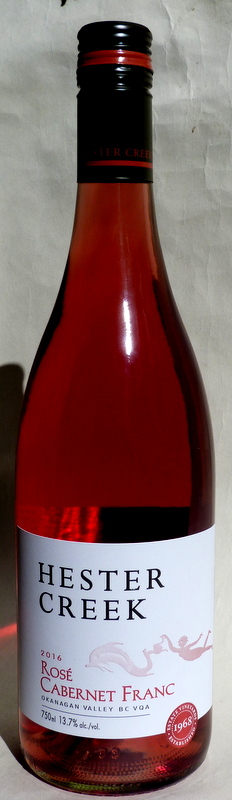
Hester Creek 2016 Rosé Cabernet Franc ($19.95).  This dry rosé has intensity both in the hue and in the flavours. It begins with aromas of strawberry and cherry, leading to a potpourri of rich berry flavours – strawberry, black cherry – with a touch of vanilla and red licorice on dry finish. 91.


Saturday, April 15, 2017

JoieFarm releases four 2016 wines


Photo: JoieFarm's Heidi Noble

As the white and rosé wines from the 2016 vintage show up at tastings, it confirms that 2016 in the Okanagan is an interesting vintage.

JoieFarm proprietor Heidi Noble offers a detailed commentary in her notes on the four 2016s she has just released.

“In a word, 2016 was a totally unprecedented growing season,” she writes. “The winter was extremely moderate with budbreak occurring April 13 – the earliest budbreak  on record in the Okanagan – which set the tone for the season. Flowering was early. Spring was hot, and record breaking temperatures in the mid-thirties extended growing degree days (even in March) and produced a full vineyard canopy by mid-May.”

Viticulturally, Heidi found this alarming. “We left all the shoots to create a heavier crop to retard the potential for early sugar ripeness. Once the fruit was set, we left more than usual to ripen.”

Then there was rain in June and July and those huge canopies had to be opened up to combat mildew. But the cooler temperatures in these months slowed the premature ripening.

“August saw a temperature spike before returning to cooler temperatures in September,” Heidi writes. “Veraison was early and uneven across the varietals.”

JoieFarm picked its first grapes (for sparkling wine) on August 22. Everything was picked by October 12 and fermentation was complete by the end of that month.

“Despite an early start, we saw low pH and lower brix than in previous vintages, demonstrating that 2016 will express a cooler vintage profile,” Heidi writes.  “Overall, expect more freshness, minerality, and better balance than in the warmer three preceding vintages.”

Visitors to Naramata Bench this year will be able to taste JoieFarm’s 2016s in the new tasting room that has replaced the original farm house. The picnic area and the wood-fired pizza oven, which were added a few years ago, remain. For a winery that operated tastings by appointment only, the expanded welcome to the public is as refreshing as the wines.

Here are notes.


JoieFarm A Noble Blend 2016 ($23.90 for 6,341 cases, 212 kegs). As always, this wine is a complex blend. In 2016, it is 38% Gewürztraminer, 37% Riesling, 11% Pinot Blanc, 8% Pinot Auxerrois and 5% Muscat. This aromatic white begins with notes of spice, guava and ripe peach on the nose. The rich medley of tropical fruit on the palate includes ripe mango and lychee with pink grapefruit, punctuated with spice on the finish. The finish is crisply dry. 91.

JoieFarm Un-Oaked Chardonnay 2016 ($22.90 for 536 cases). Like the Chablis wines that always inspire the style of this wine, The JoieFarm Un-Oaked Chardonnay’s bright acidity define its freshness and crispness. It begins with aromas of citrus and pineapple, leading to flavours of apple and lemon. 91.

JoieFarm Muscat 2016 ($22.90 for 443 cases). Ten years ago, JoieFarm planted a small block of Moscato Giallo, or Yellow Muscat. Not enough, judging from the small volume of production. This dry, perfumed wine with a moderate alcohol exceptional as an aperitif and surprising versatile at a meal. (I can recommend it even with a grilled cheese sandwich!) The wine begins with aromas of rose petals and white peach, leading to flavours of lemon, lime and classic Muscat grapiness. 91.


JoieFarm Rosé 2016 ($20.90 for 3,169 cases). The blend is 75% Pinot Noir, 25% Gamay. The wine presents a lovely jewel-like ruby in the glass to make a great first impression. The aromas of strawberry, cherry and pink grapefruit are echoed in the flavours. The mid-palate is juicy and full but the finish is crispy dry. 91.

Thursday, April 13, 2017

Okanagan Falls wineries tasting: Part Two.


Photo: Wild Goose Vineyards

Recently, the Painted Rock Merlot 2013 noted below was one of the Canadian wines served at a dinner in Stockholm at which Sweden’s King Carl XVI Gustaf was a guest. The king was so impressed with the wine that he asked if he could buy it in Sweden. Painted Rock owner John Skinner (who was not at the dinner) has initiated talks with Sweden’s liquor monopoly, the Systembolaget.

The anecdote is an example of the reaction British Columbia wines are receiving outside the province. Painted Rock is just one of the wineries beginning to export some wines.

It is a question that is asked all the time: are BC wines exported? Yes – but not is great volume (except for Icewine). On a world scale, the BC wine industry is small – and lucky BC consumers drink most of the wine.

Here are notes on the second half of Okanagan Falls Winery Association’s recent tasting in Vancouver.


Noble Ridge
Vineyard & Winery was opened in 2005 by former Calgary lawyer Jim D’Andrea and his wife, Leslie (right). The vineyard benefits from multiple exposures, enabling them to grow Cabernet Sauvignon on one slope and Pinot Noir on the opposite slope, among other varietals.

Noble Ridge “The One” 2012 ($40 for 234 cases). This sparkling wine is 81% Chardonnay, 19% Pinot Noir. It spent 41 months en tirage before being disgorged. Crisp and refreshing, the wine has aromas of green apples and citrus leading to flavours of apple and grapefruit framed by hints of biscuit. 92.

Noble Ridge Pinot Grigio 2015 ($19.90 for 422 cases). The winery delayed releasing this until this spring, having concluded that Pinot Gris benefits from some bottle age. The wine has aromas of citrus and peach which is echoed in the flavour. While the wine was fermented in stainless steel, two per cent was aged in four months in French oak. The touch of oak adds structure and complexity. 90.

Noble Ridge Reserve Chardonnay 2013 ($29.90 for 415 cases).  The 14 months this wine aged in French oak contributed to a rich and creamy texture. The wine begins with aromas of citrus, toffee and vanilla which are echoed in the marmalade flavours. 91.

King’s Ransom Pinot Noir 2013 ($55 for 93 cases). This wine begins with aromas of cherries and raspberries. The palate is intense, with flavours of spicy cherries mingled with toasted oak. The texture is full, leading to a velvet polish on the finish. 94.

Painted Rock Estate Winery opened in 2009, based on a vineyard sandwiched between the Skaha Climbing Bluffs and Skaha Lake. The view from the wine shop – itself stunning architecture – is one of the Okanagan’s most dramatic vistas (left).

Painted Rock Rosé 2015 ($21.69 for 483 cases). This is a blend of juice from Merlot, Cabernet Franc, Malbec, Cabernet Sauvignon, Syrah and Petit Verdot. It begins with aromas of strawberries, cherries and rhubarb, leading to tangy flavours of strawberries and red berries. 89.

Painted Rock Cabernet Franc 2014 ($44.99 for 438 cases). This wine was aged 18 months in French oak (30% new). It begins with rich, intense aromas of smoky black cherry and vanilla. The oak subtly frames the flavours of plum, black currant, black cherry and coffee. The finish is long, with hints of dark fruit and chocolate. The ripe tannins still have some grip, suggesting the wine will age well for a decade. Decant it is you want to drink it now. 92.

Painted Rock Merlot 2013 ($34.99 for 1,746 cases). The Swedish king got to taste a wine that is densely concentrated, delivering aromas and flavours of black currant, black cherry and blueberry, with dark chocolate on the finish. The oak aging has given this a touch of vanilla. 91.

Painted Rock Syrah 2013 ($34.99 for 1,622 cases). The wine begins with a whiff of pepper, plum and black cherry leading to earthy and meaty flavours of dark fruit, punctuated by pepper on the finish. 92.

Painted Rock Red Icon 2014 ($55 including tax). This is 33% Merlot, 21% Cabernet Franc, 19% Malbec, 16% Petit Verdot and 11% Cabernet Sauvignon. Once again, it was aged 18 months in French oak (30% new), accounting for the svelte, polished texture of its long, ripe tannins. It begins with aromas of black cherry, black currant, spice and vanilla. The palate is rich, with flavours of black cherry and black currant mingled with notes of blackberry, mocha, tobacco, vanilla and spice. The wine, if decanted, is accessible now but is built to age for 10 or 15 years. 94.

Pentâge Winery is on the southern outskirts of Penticton – too far south to belong to the Naramata Bench Winery Association. Its contribution to the Okanagan Falls group includes a unique 5,500-square-foot cellar and winery (right). Paul Gardner spent 10 years carving a cellar into rock at the top of the vineyard. The big glass doors at the front give him a view over the wines; and give visitors a view deep into cellar.

Pentâge Roussanne Marsanne Viognier 2012 ($27). This is a very complex white wine, with stone fruit aromas and flavours. Even though the wine is five years old, the fresh, crisp apple and pear flavours are remarkably youthful. Try it with fresh oysters. 90.

Pentâge Roussanne Fizz 2015 ($20). This is an excellent Charmat method sparkling wine with citrus aromas and flavours. The finish is crisp. 91.

Pentâge Hiatus 2013 ($23). The price signals the intention here is that this should be an approachable red. It is a blend of 37% Cabernet Sauvignon, 32% Cabernet Franc, 17% Merlot, 10% Malbec and 2% each of Petit Verdot and Tempranillo. The wine has aromas and flavours of plums and ripe cherries. 89.

Pentâge GSM 2013 ($30). This is 40% each of Grenache and Syrah and 20% Mourvedre Pentâge. Dark in colour, this wine has spicy fruit aromas, leading to flavours where deli spice mixes with dark fruit, black cherry and licorice. 91.

See Ya Later Ranch is high up on a hillside with picnic area overlooking Okanagan Falls. The winery has a dog-friendly policy inspired by a former owner of the property (before there was a winery). Major Hugh Fraser loved dogs and, when they died, buried them under headstones. The headstones now have all been placed around a tree at the front of the tasting room. Several wines also are named after various of his dogs.

See Ya Later Ranch Sparkling Brut NV ($23). This is 100% Chardonnay, bottle fermented in the traditional method. The wine has aromas and flavours of apples and grapefruit with a hint of brioche. The bubbles give a richness to the palate while the finish is crisp. 89.


See Ya Later Ranch Gewürztraminer 2016 ($18). The north-facing vineyard on the slope above winery is regarded one of the best sites in the Okanagan for this varietal. The wine begins with aromas of rose petals, spice and lychee which are echoed on the palate. Hats off to the winemaker: this is dry, food-friendly Gewürztraminer. If only more Okanagan wineries had the courage to dry out this varietal instead of producing palate-boring off-dry versions. 90.

See Ya Later Ranch Pinot Gris 2016 ($18). Pinot Gris also does well on this slope, although much of the fruit is from the Thomas Vineyard just south of Okanagan Falls. Six percent was fermented in stainless steel, 40% in French and American oak barrels. The oak notes remain in the background of this dry, fruity wine with flavours of apple and pear. Bright acidity leaves a crisp and fresh finish. 90.


See Ya Later Ranch Rover Shiraz Viognier 2014 ($25). Rover was the name of one of the major’s 12 dogs. The wine barks boldly with black pepper and dark fruit aromas. It has flavours of plum, fig and fruit cake punctuated by pepper on the finish. The firm texture suggests the wine will age well under its screwcap closure. 90.

Stag’s Hollow
Winery opened in 1996, one of the trio of wineries that laid a foundation for Okanagan Falls winegrowing. Owners Larry Gerelus and Linda Pruegger, in a major lifestyle change, formerly were in professional jobs in Calgary. A number of winemakers cycled through the cellar until 2008 when Dwight Sick (left), a former airline flight attendant with remarkable winemaking talent, came here.

Stag’s Hollow Albariño 2016 ($21.99 plus tax). This is the second vintage of Albariño, which Stag’s Hollow grows in its Shuttleworth Vineyard, just south of Okanagan Falls. The Spanish white seems to do well in the Okanagan. This is a zesty and fresh wine with aromas and flavours of melon and green apple. 91.

Stag’s Hollow Tragically Vidal 2015 ($16.99 plus tax). Vidal was already in this vineyard when Larry and Linda bought it. They began grafting some to Chardonnay, calling Vidal “tragic” because it was a vanishing variety. Then the wine developed a loyal following, perhaps because the juicy, tangy flavours of lime, lemon and apple are so appealing. 89.

Stag’s Hollow Tempranillo 2013 ($25.99 plus tax). This is a blend of 85% Tempranillo, 9% Cabernet Sauvignon, 4% Syrah and 2% Petit Verdot. The wine begins with what the winery calls “masculine” aromas of leather, prunes, coffee and sweet tobacco. I agree entirely with those descriptors. On the palate, there are flavours of black cherry, plum and vanilla. 91.

Stag’s Hollow Renaissance Merlot 2014 ($34.99 plus tax). This is perhaps the flagship red at this winery and this is the first closed with a screw cap. There is 10% Cabernet Sauvignon in the blend. The wine was fermented in small fermenters, finishing its fermentation and aging in small French oak (50% new) for 15 months. The wine begins with aromas of black cherry and vanilla. On the palate, the suite of dark fruit flavours includes black currant, black cherry and plums mingled with mocha and coffee. 92.

Synchromesh Wines, opened in 2011 by Alan Dickinson (right), is emerging as a pre-eminent specialist in Riesling. Synchromesh fans will be delighted to learn that he has recently bought more land adjacent to his vineyard. The intent is to plant more Riesling.

Synchromesh Riesling 2016 ($22). This is a blend of grapes from four different vineyards. The wine is juicy with flavours of lemon and lime. The balance between the residual sugar and the bright acidity gives the wine a crisp finish. 90.

Synchromesh Riesling Bob Hancock Vineyard 2016 ($26 for 442 cases). This vineyard is at the northern end of Naramata Road. The wine balances 38.2 grams of residual sugar with a total acidity of almost 10. The aromas and flavours are intense, beginning with apple and lemon on the nose and evolving to lime and grapefruit on the palate. 92.

Synchromesh Riesling Four Shadows Vineyard 2016 ($26 for 504 cases). The  Four Shadows Vineyard is just east of Penticton. This wine has 52.2 grams of residual sugar balanced with 8.85 total acidity. This gives the wine fleshy texture on the juicy palate, with flavours of pineapple, grapefruit and mango. 92.

Synchromesh Riesling Stormhaven Vineyard 2016 White Label ($26 for 88 cases). Stormhaven is the vineyard at the estate in Okanagan Falls. The grapes for this wine are from a 2010 planting. This wine again balances racy acidity against residual sugar. The perception is that the wine is dry (technically, it is not) but with generous fruit flavours of lime, apple, mango with a spine of minerality. 91.

Synchromesh Riesling Stormhaven Vineyard 2016 Black Label ($40 for 182 cases and 24 magnums). In typical Synchromesh style, bright acidity balances 38 grams of residual sugar, resulting in a perception of dryness. The wine is packed with intense aromas and flavours of lime, mango and peach with a spine of minerality. This wine will age spectacularly well. 93.

Wild Goose Vineyards & Winery  was opened in 1990 by the Kruger family; it was the original farmgate wine in the Okanagan Falls area. Adolf Kruger, the family’s elder statesman, died last year, leaving the business in the hands of his sons, Hagen and Roland, and grandson Nik.

Wild Goose Riesling 2016 ($16.62 plus tax). This is a crisp, refreshing Riesling with aromas and flavours of grapefruit and lemon with a backbone of minerals. 90.

Wild Goose Pinot Gris 2016 ($16.52 plus tax for 5,200 cases). The winery boasts that this wine “will make you the most popular person at dinner parties!” It just might. It is packed with generous fruit, with peach and pear aromas and flavours. There is a touch of spice on the finish. 91.

Wild Goose Mystic River Gewürztraminer 2016 ($20 plus tax for 200 cases). This is a wine of superb intensity, beginning with aromas of spice and lychee. On the palate, there are flavours of lychee and grapefruit, punctuated with rose petal spice. 93.


Wild Goose Red Horizon Meritage 2014 ($21.74 plus tax for 500 cases). This is a blend of 55% Merlot, 25% Cabernet Sauvignon and 20% Petit Verdot., It begins with aromas of cassis and black cherry, leading to flavours of dark fruit, dark chocolate and licorice. 90.